 Bellingham Window
 Windows in Ferndale Face a Different Fight Than Windows Inland
Ferndale sits close enough to Bellingham Bay and the Strait of Georgia that salt-laden air is a constant, low-grade factor in how exterior materials age here. Add Whatcom County's long wet season, driving rain that comes in sideways off frontal systems, and the shaded, moisture-heavy conditions that let moss and algae take hold on north-facing walls and trim, and you get a climate that is genuinely harder on windows than what homeowners in drier parts of the state deal with. None of this is dramatic on its own. It's cumulative. A window that would last three decades in a dry inland climate can start showing seal failure, frame softening, or hardware corrosion well ahead of schedule here if it wasn't installed with this environment in mind.
We work on homes throughout Ferndale and the surrounding Whatcom County area regularly enough to know what tends to fail first, where builders commonly cut corners on flashing and drainage, and which materials hold up versus which ones just look fine at first.
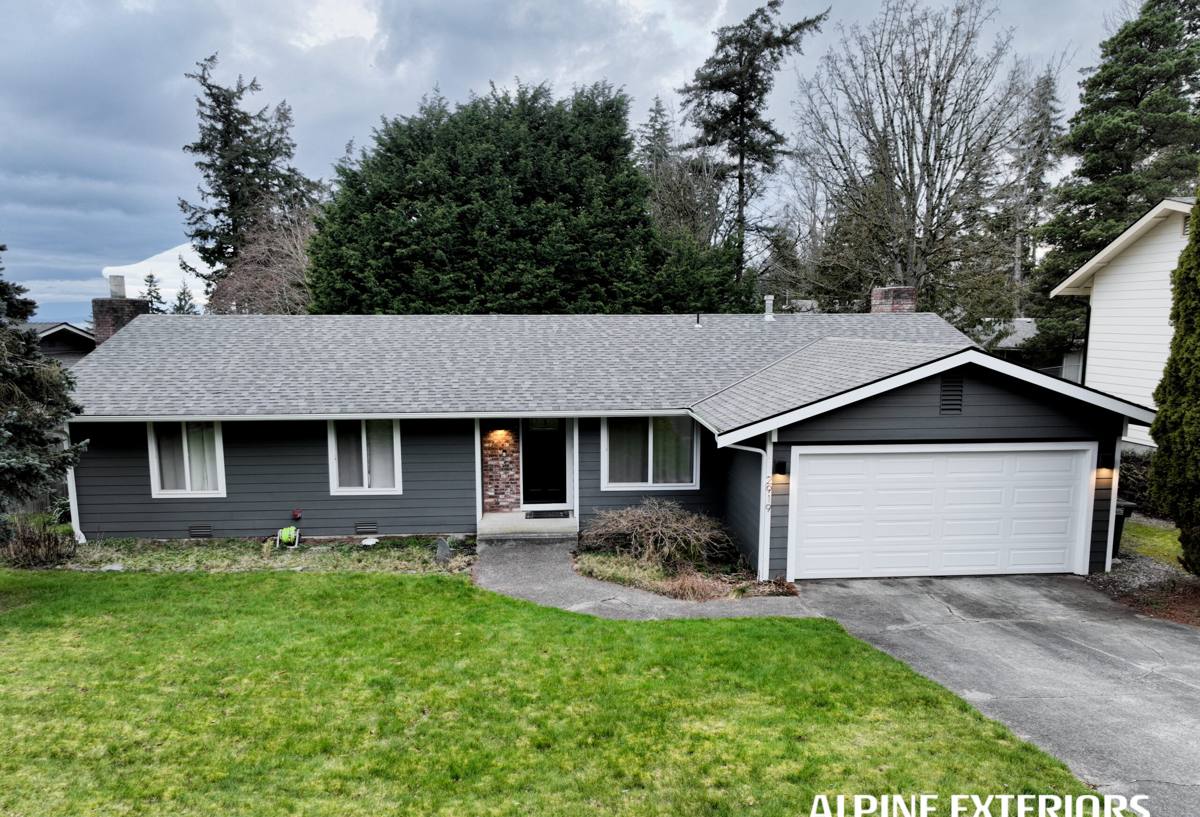
What Salt Air, Rain, and Moss Actually Do to a Window
Salt Air
Airborne salt is corrosive to exposed metal hardware — hinges, locks, balance mechanisms, and screen frames. On aluminum-clad or metal-frame windows it can also contribute to pitting and finish breakdown over time. It's rarely the reason a window fails outright, but it accelerates wear on the moving parts and fasteners that keep a window operating smoothly.
Driving Rain
Wind-driven rain doesn't just fall on a window, it pushes against it and finds any gap in the flashing, sealant, or trim detail. Most of the water damage we find around windows isn't from the glass unit itself — it's from water getting behind the frame through failed caulking or missing flashing and working into the wall assembly, where it can sit unnoticed for a long time.
Moss and Persistent Moisture
Shaded elevations, especially north- and east-facing walls under overhangs or tree cover, stay damp longer through fall, winter, and spring. That's exactly where moss and algae establish on sills, trim, and siding. Beyond the cosmetic issue, sustained moisture against wood trim or sills promotes rot, and rot around a window opening compromises the seal long before the sash itself is the problem.
Signs Your Windows Are Ready for a Closer Look
- Fogging or a persistent haze between the panes of a double- or triple-pane unit — the seal has failed and the insulating gas has escaped
- Soft or spongy wood at the sill or lower frame corners, or paint that bubbles and peels repeatedly in the same spot
- Drafts you can feel near the frame on a windy day, even with the window fully latched
- Windows that are difficult to open, close, or lock, or that have started sticking with seasonal humidity changes
- Visible daylight or gaps around the frame from outside
- Condensation on the interior glass or frame that shows up consistently through the wet months
- Moss, algae, or dark staining building up on the sill or surrounding trim year after year
- Noticeably higher heating costs with no other explanation, especially in rooms with older windows
Any one of these on its own might just mean a minor repair. Several of them together, especially on the same window, usually point toward replacement being the more sensible long-term move.
Repair or Replace? How We Actually Decide
We don't default to recommending replacement just because it's the bigger job. A lot of window problems in this area are legitimately fixable — failed weatherstripping, a worn balance mechanism, a cracked pane in an otherwise sound frame, or resealing around a frame where the caulking has given out. We assess the frame, the seal, the glass, and the surrounding wall condition before recommending either path.
| Factor | Repair usually makes sense | Replacement usually makes sense |
|---|---|---|
| Frame condition | Solid, no rot or softening | Soft wood, rot, or visible decay at sill or corners |
| Seal failure | Isolated to one pane, frame is sound | Multiple units foggy, or unit is 20+ years old |
| Operation | Sticking or hard to lock, otherwise intact | Won't stay open, hardware is corroded through |
| Energy performance | Drafts limited to weatherstripping | Single-pane or old aluminum-frame units |
| Water intrusion | Caulking failure only, wall behind is dry | Evidence of moisture in the wall assembly |
If the frame and surrounding structure are sound, a repair can add years of useful life for a fraction of replacement cost. If we find rot, chronic water intrusion, or a frame that's simply reached the end of its service life, we'll tell you plainly and explain why — not just push a bigger job.
Window Materials We Install and Why
Vinyl
Vinyl frames are a solid, cost-effective choice for most Ferndale homes. They don't corrode from salt air, they don't need repainting, and modern vinyl units perform well thermally. The trade-off is a more limited color and profile selection compared to other materials, which matters more on some architectural styles than others.
Fiberglass
Fiberglass frames hold up extremely well to our wet climate specifically because the material doesn't absorb moisture or expand and contract with temperature swings the way wood or even vinyl can. It costs more upfront, but for homeowners planning to stay put long-term, the durability against our rain and humidity is a genuine advantage.
Wood and Wood-Clad
Wood windows still have their place, particularly on homes where matching an existing architectural character matters. The honest trade-off is maintenance: exposed wood exteriors need regular painting or sealing to keep moisture out, and in a climate with this much sustained dampness, that upkeep schedule isn't optional. Wood-clad units with an exterior-facing aluminum or vinyl skin reduce that burden while keeping a wood interior.
Glass Packages
We typically recommend double-pane, low-E glass as the baseline for this climate, with argon or triple-pane upgrades where noise reduction or a particularly exposed elevation justifies the added cost. The right glass package depends more on the specific wall and exposure than on a one-size-fits-all recommendation.
How We Handle a Window Replacement
Assessment
Before we quote anything, we look at the actual condition of the frame, sill, and surrounding wall — not just the glass. This is where we catch hidden rot or water damage that changes the scope of the job.
Removal and Flashing
This is the step that determines whether a new window will actually perform in our weather. Proper flashing integration with the house wrap or building paper, and correct sill pan installation, are what keep wind-driven rain from getting behind the frame — regardless of how good the window itself is. We treat this as the most important part of the job, not a formality.
Installation and Sealing
The new unit is set, shimmed level and plumb, and sealed with materials suited to our climate rather than whatever's fastest. Interior and exterior trim is finished to match the surrounding wall.
Final Check
We test operation, check the seal, and walk the job with you before we consider it done.
Why a Local Crew Matters Here
A crew that only occasionally works in coastal Whatcom County can miss things that are second nature to a crew that works here every week — where moss tends to build up first on a given roofline, how much overhang a north-facing wall needs to actually shed driving rain, or which flashing details hold up through a real wet season versus which ones look fine on installation day and fail two winters later. We're not flying in for one job. We're working on homes in Ferndale and nearby communities on an ongoing basis, which means we see how our own work holds up over time and adjust accordingly.
Windows Are Part of a Bigger Exterior Picture
Window problems rarely exist in isolation. A window with a failed seal on a wall that also has aging siding or a roofline shedding water poorly is often one piece of a larger moisture management issue. Because we handle siding, roofing, windows, and decks, we can look at how these systems work together on your specific house — whether water is actually getting redirected away from window openings, whether trim and flashing details are consistent across the exterior, and whether a window replacement should be coordinated with siding or trim work happening in the same area. That's a more useful conversation than looking at the windows alone.
Maintenance That Actually Helps in This Climate
- Clear moss and debris from sills and surrounding trim before it packs in and holds moisture against the wood or frame
- Check caulking around frames each fall, before the wet season sets in, and recaulk any cracked or separated sections
- Keep gutters and downspouts clear so water isn't sheeting down over window openings
- Operate windows periodically through the year, including winter, so hardware doesn't seize up from disuse
- Watch for soft spots at the sill early — caught early, wood repair is minor; caught late, it can mean replacing the whole unit
Get a Straight Answer on Your Windows
If you're dealing with drafts, fogged glass, sticking sashes, or just want an honest read on whether your windows have years left or need attention now, we're glad to come take a look. There's no pressure and no obligation — just a clear assessment from a crew that works on Ferndale and Whatcom County homes regularly and understands what this climate does to a house over time. Use the form below to request a free estimate.