 Bellingham Window
 Windows Built for Birch Bay's Waterfront Conditions
Birch Bay sits right where Whatcom County's marine climate hits hardest. Homes here face a combination that inland Bellingham properties don't deal with in the same way: salt-laden air off the water, wind-driven rain that hits window seals from angles most products aren't tested for, and a moss and mildew season that can stretch nine months or more in a wet year. Bellingham Window Co works throughout Whatcom County, but Birch Bay gets a different look from us because the failure points are different. We're not just swapping glass and calling it done — we're thinking about how a window assembly holds up against salt corrosion on hardware, moisture intrusion at the frame, and the freeze-thaw cycles that hit low-lying coastal lots in the winter.
If you own a home along the bay or a few streets back from it, you've probably already noticed things a Fairhaven or Sunnyland homeowner might not: pitted or discolored window hardware, condensation between panes on older double-glazed units, or trim that stays damp longer than it should after a storm rolls through. None of that is unusual for the area — it's just what salt air and sustained moisture do to building materials over time. The fix isn't cosmetic touch-ups every couple of years. It's choosing window products and installation details that are built to shed water and resist corrosion from day one.
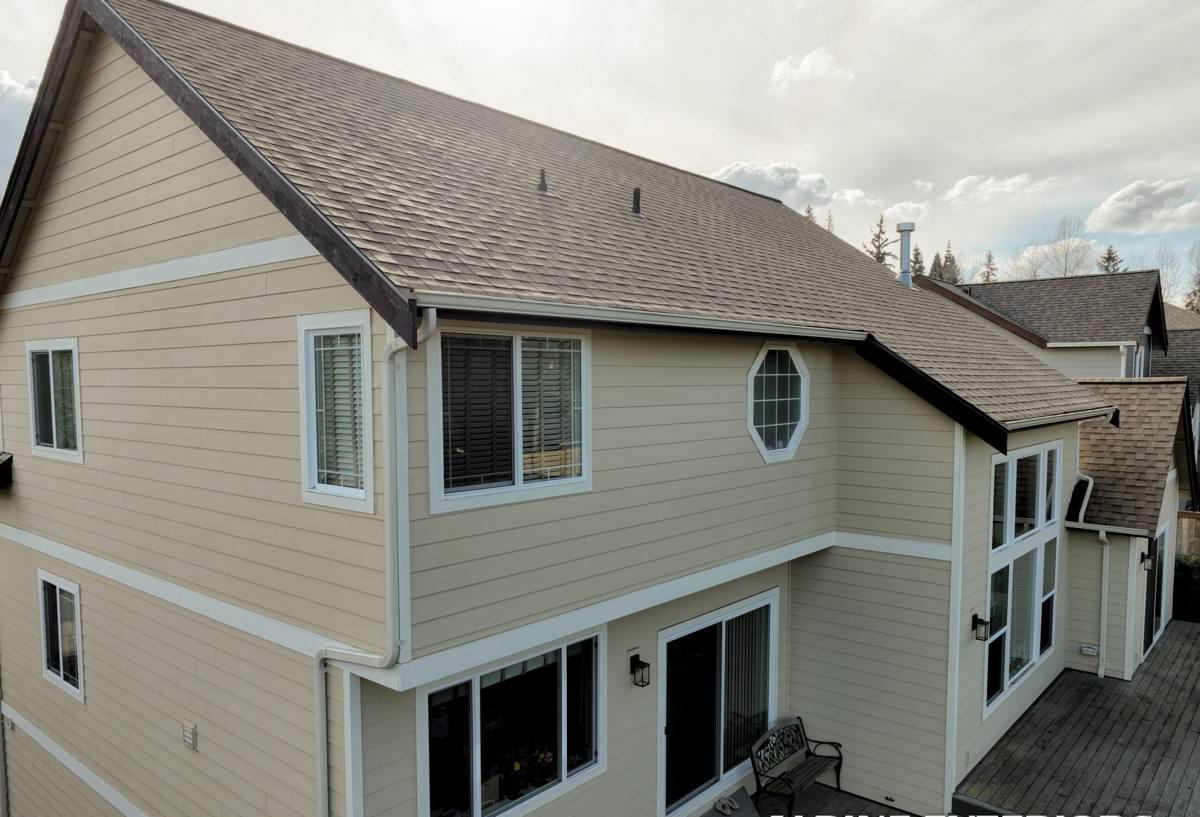
What Coastal Exposure Actually Does to a Window
Salt Air and Hardware
Salt in the air accelerates corrosion on anything metal — hinges, cranks, locks, and screws. Cheaper hardware finishes break down faster near the water, which is why we pay attention to hardware specification on Birch Bay jobs, not just frame material. A window that looks identical to one installed in a drier part of the county can perform very differently after five winters on the waterfront if the hardware wasn't chosen with that exposure in mind.
Wind-Driven Rain
Rain that comes in sideways off the water tests a window's weep system and flashing details in ways that vertical rainfall doesn't. A window can be perfectly good on paper and still leak if the flashing behind the trim wasn't lapped correctly, or if the sill pan wasn't sloped to drain outward. This is an installation issue as much as a product issue — it's one of the main reasons we don't treat window replacement as a one-size-fits-all job.
Moss, Mildew, and Sustained Dampness
Whatcom County's long wet season keeps wood trim and sills damp for extended stretches, which is exactly the environment moss and mildew need to establish. Once organic growth takes hold on a window sill or the trim around it, it holds moisture against the material and speeds up rot. Good drainage detailing and the right cladding choice around the window opening go a long way toward keeping that cycle from starting in the first place.
Signs a Birch Bay Home Needs Window Attention
- Fogging or a hazy film between panes of double- or triple-glazed windows — a sign the seal has failed
- Hardware that's stiff, corroded, or difficult to lock all the way
- Visible gaps or soft, spongy wood at the sill or lower frame corners
- Drafts you can feel near the frame even when the window is fully closed
- Moss or dark staining building up on the sill, trim, or the wall just below the window
- Noticeably higher heating bills in winter with no other explanation
- Condensation forming on the inside of the glass regularly, even in mild weather
How We Approach a Birch Bay Window Project
Every job starts with an honest look at the existing windows and the wall assembly around them, not just a measurement for new units. We check how water has historically moved around the opening, whether previous flashing was done correctly, and what condition the sheathing and framing are in once trim is pulled back. On coastal properties, we'd rather find a moisture problem during the estimate than discover it mid-installation.
From there we talk through frame material, glazing options, and hardware finish with the salt-air factor specifically in mind. We're not going to sell you the same package we'd recommend for a house in Sunnyland — the conditions aren't the same, and treating them the same is how homeowners end up redoing work sooner than they should.
Frame Material Considerations for Coastal Exposure
| Frame Material | How It Handles Salt Air & Moisture | Maintenance Trade-Off |
|---|---|---|
| Vinyl | Resists corrosion well; doesn't rot or rust | Low maintenance, but color and finish can fade faster under sun and salt exposure over many years |
| Fiberglass | Very stable in coastal conditions; low expansion/contraction | Higher upfront cost, minimal upkeep |
| Aluminum | Strong but prone to corrosion near saltwater without a quality coating | Needs a marine-grade finish to hold up long-term near the bay |
| Wood | Handsome but most vulnerable to sustained moisture and rot without diligent upkeep | Requires regular sealing/painting; higher maintenance burden in this climate |
We'll walk you through which of these actually makes sense for your specific exposure — a home set back from the water with wind protection from trees or terrain has different needs than one sitting exposed right along the shoreline.
Installation Details That Matter More on the Coast
The window unit itself is only part of the equation. How it's installed determines whether it performs for fifteen years or fails in five. On Birch Bay jobs we're particularly careful about:
- Flashing sequence — water needs a continuous path to drain outward, lapped correctly with the house wrap or building paper beneath the siding
- Sill pan drainage — a sloped sill pan under the window keeps any water that does get past the glazing from sitting against the frame
- Sealant selection — not every caulk or sealant is rated for the UV and salt exposure this area sees; we use products suited to marine-adjacent climates
- Gap and insulation detail — properly insulating the gap between the window frame and rough opening prevents both drafts and condensation points
Skipping any one of these doesn't usually cause an immediate problem — it shows up two or three winters later as a leak, a soft spot in the wall, or a window that won't seal right anymore. That delayed failure is exactly why installation quality matters more here than in a drier, more sheltered part of the county.
Windows Alongside Siding, Roofing, and Decks
Because we handle siding, roofing, and decks in addition to windows, we're often looking at a Birch Bay home's full exterior envelope, not just the openings. Window trim and flashing tie directly into the siding around them — if the siding is compromised or the wall behind it stayed wet for years, the window replacement is a good moment to address that rather than install new windows into a wall assembly that still has a moisture problem. Homeowners doing a broader exterior refresh — siding replacement, roof work, or deck rebuilding — often bundle window work into the same project timeline, since scaffolding, trim removal, and weather-sealing overlap between trades.
What to Expect From an Estimate
A window estimate for a Birch Bay property should include a look at the wall assembly around each opening, not just a count of windows and a price per unit. We'll talk through frame and glazing options suited to your exposure, flag any moisture or rot issues we find while we're assessing the site, and give you a straightforward explanation of what's driving the cost — the windows themselves, the installation labor, and any repair work the opening needs before a new window goes in.
What Affects Cost
| Factor | Why It Matters |
|---|---|
| Frame material chosen | Vinyl, fiberglass, aluminum, and wood carry different material costs and longevity in coastal conditions |
| Number and size of openings | Larger or custom-sized windows cost more in both materials and labor |
| Condition of existing framing | Rot or water damage found during removal adds repair scope before the new window can go in |
| Glazing package | Double- vs. triple-pane and specific coatings affect both price and energy performance |
| Access and site conditions | Second-story or hard-to-reach openings take more time and equipment |
Why a Local Crew Matters Here
Whatcom County has a lot of microclimates packed into a small area, and Birch Bay's is distinct even from the rest of Bellingham. A crew that mostly works drier, more inland projects can still do competent work, but they may not default to the flashing, sealant, and hardware choices that hold up long-term this close to the water. Being local means we've seen how homes in this specific area age — what fails first, what holds up, and what's worth spending a little more on upfront versus what's genuinely optional. That local track record is the difference between a window installation that looks right at handoff and one that's still performing well after a decade of Birch Bay winters.
If you're dealing with drafty, foggy, or hard-to-close windows, or you're planning ahead for a home along the bay, we're happy to take a look. Reach out for a free, no-pressure estimate — we'll assess your windows and the wall assembly around them and give you a straightforward read on what your home actually needs.