 Bellingham Window
 Windows Built for Columbia's Corner of Bellingham
The Columbia neighborhood sits close to Bellingham Bay, which means homes here deal with a version of our regional climate that's a little more intense than what you'd find further inland. Salt-laden air off the water, wind-driven rain that comes in sideways during winter storms, and long stretches of damp, shaded weather that keep moss and mildew active for most of the year — all of it works on window frames, seals, and glazing in ways that add up over a decade or two. We've worked on homes throughout this part of Bellingham and understand what that exposure does to different window materials, which is why we don't take a one-size-fits-all approach to window replacement or repair here.
Whether you're in an older home with original wood-frame windows or a newer build with vinyl units that are starting to fog or stick, the goal is the same: windows that keep water out, hold their seal, and don't turn into a maintenance chore every fall.
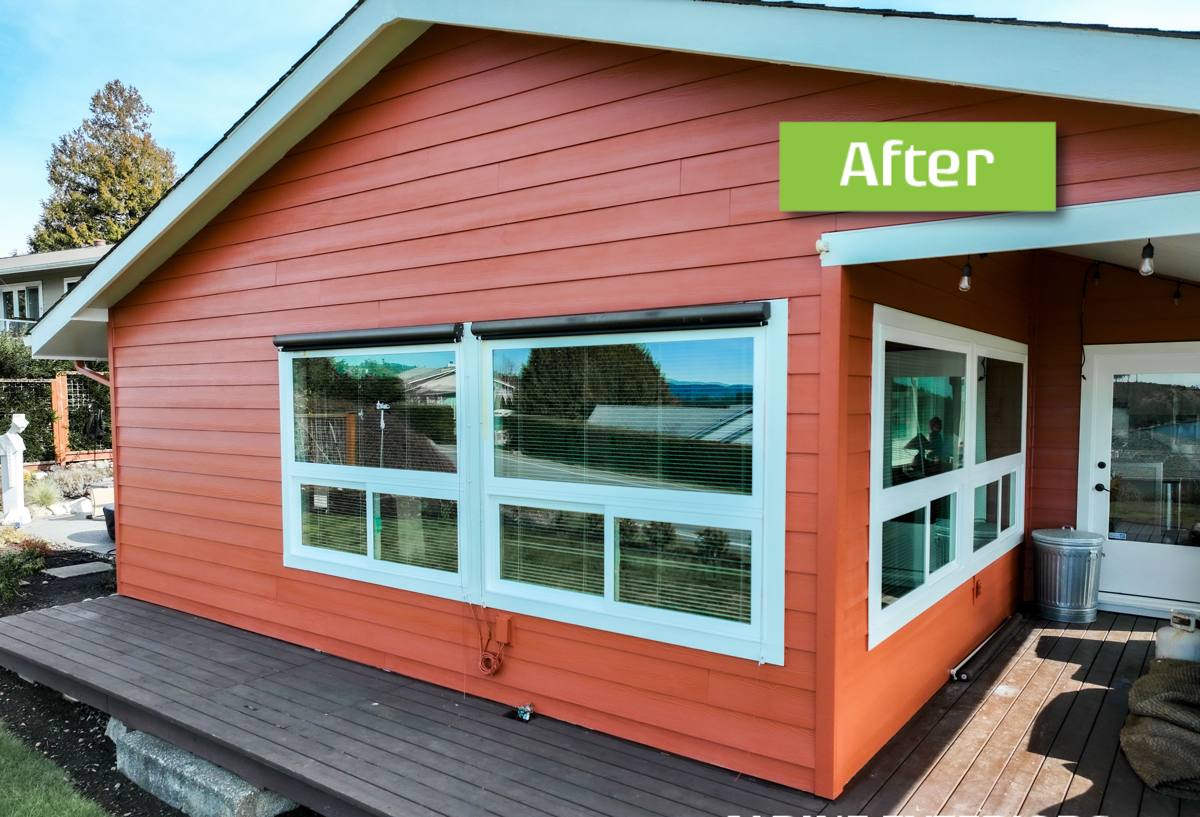
What Salt Air and Coastal Moisture Do to Windows
Proximity to the water changes the math on window performance. A few things we see consistently in homes near the bay:
- Faster corrosion on window hardware — hinges, cranks, and locks on older aluminum or steel-frame windows in particular
- Seal failure showing up earlier than the manufacturer's timeline, especially on double-pane units facing prevailing wind and rain
- Wood sills and frames that hold moisture longer because of persistent humidity, leading to soft spots or paint failure
- Condensation between panes (a sign the seal has failed and the argon or air gap has been compromised)
- Moss and algae staining on sills and lower sashes where water sits instead of draining away
None of this means windows near the water are doomed to fail early — it means the frame material, installation detail, and flashing work have to be right for the exposure, not just installed to a generic spec.
Driving Rain and Flashing
A lot of window leaks in this area aren't actually a window problem — they're a flashing and installation problem. Wind-driven rain finds any gap in the water-resistive barrier around a window opening, and once it's behind the siding, it can travel and cause damage well away from the window itself before anyone notices. Proper head flashing, correctly lapped house wrap, and sealed sill pans matter more here than in drier parts of the state, because the volume and direction of rain during a winter storm will find any shortcut.
Signs Your Windows Are Due for Attention
Most window problems don't show up overnight. They tend to announce themselves gradually, and it's easy to write off early signs as normal aging. Some of the more common ones we hear about from homeowners in the Columbia area:
- Fog or haze between the panes that doesn't clear — a failed seal, not a cleaning issue
- Windows that are hard to open, close, or lock, especially after a cold snap
- Visible gaps or drafts you can feel with your hand near the frame on a windy day
- Soft, discolored, or spongy wood on sills or the bottom of the frame
- A noticeable jump in heating costs without any other explanation
- Water staining on interior drywall or trim below or beside a window
Any one of these on its own might just mean a repair or reseal. Several at once, or a leak with visible interior damage, usually means it's time to talk about replacement rather than patching.
Window Materials: What Holds Up Here
There's no single "best" window material — it depends on your home's exposure, your budget, and how much upkeep you want to take on. Here's how the common options compare for a coastal Bellingham climate specifically:
| Material | How It Handles This Climate | Maintenance |
|---|---|---|
| Vinyl | Good moisture resistance, won't rot or corrode; performance varies a lot by manufacturer quality | Low — occasional cleaning |
| Fiberglass | Excellent stability in wet, temperature-swinging conditions; holds paint well if you want a custom color | Low |
| Wood (clad exterior) | Attractive, especially on older or historic-style homes; exterior cladding protects the wood from direct weather | Moderate — interior wood still needs periodic attention |
| Solid wood | Classic look but most vulnerable to sustained moisture and salt exposure without diligent upkeep | High — regular painting/sealing |
| Aluminum | Prone to corrosion and poor thermal performance in this climate; we generally don't recommend it for new installs here | Moderate to high |
For most homes in this part of Bellingham, we lean toward vinyl or fiberglass for straightforward replacements, and clad-wood when a homeowner wants a specific traditional look and understands the tradeoffs. We're happy to walk through the reasoning for your specific house rather than push one product line.
Glass and Seal Options
Double-pane, argon-filled glass with a low-E coating is the standard baseline for this region, and it's worth it — the energy savings and condensation resistance matter given how much of the year is cool and damp here. Triple-pane can make sense on north-facing walls or homes right along the waterfront with heavier wind exposure, though it's a real cost jump that doesn't always pencil out for every wall of a house.
Repair vs. Replacement
Not every window problem calls for full replacement. A single failed seal, a sticking sash, or worn weatherstripping can often be repaired for a fraction of the cost of a new unit, and there's no reason to replace a window that's structurally sound just because one component has worn out. We'll tell you honestly when a repair makes sense.
Replacement becomes the better call when the frame itself has moisture damage, when multiple panes across the house are failing around the same age (a sign the original installation or product generation had a systemic issue), or when the cost of repeated repairs starts to approach what new, better-performing windows would cost. Age matters too — most quality windows are built to perform well for 20-30 years, and once you're past that window, ongoing repairs are often just delaying an inevitable replacement.
How We Approach a Window Job
Assessment
We start by looking at the actual condition of your existing windows and the surrounding wall assembly — not just the glass, but the flashing, sill pans, and how water has historically moved around each opening. This matters more here than in drier climates because a new window installed over an existing flashing problem will fail again regardless of how good the window itself is.
Installation
Proper flashing and sealing is where most of the long-term performance comes from, more than brand or price point of the window itself. We flash and seal each opening to shed water correctly, given how much wind-driven rain this area sees over a typical winter, and we don't consider a window job finished until the surrounding wall is sealed as well as the unit itself.
Coordination With Siding and Trim
Because we also handle siding work, we can address window replacement alongside any surrounding siding or trim repair in the same visit, which matters if moisture has already gotten into the wall assembly around an opening. Tackling both at once usually costs less than two separate projects and avoids opening up the same wall section twice.
Maintenance That Actually Extends Window Life
A little seasonal attention goes a long way in this climate. Some habits worth keeping up with:
- Clear moss and debris from sills and tracks before it holds moisture against the frame
- Check and clean weep holes on vinyl windows so water can drain out rather than pool
- Inspect caulking around frames each fall before the heavy rain sets in and touch up as needed
- Lubricate hardware (locks, cranks, hinges) annually to fight the corrosive effect of salt air
- Wipe down and dry interior sills after heavy storms to prevent wood damage where applicable
Why a Local Crew Matters for This Kind of Work
Window performance in Whatcom County isn't the same problem as window performance in a drier or more inland part of the state, and a crew that mostly works elsewhere won't necessarily know which details matter most here. We're familiar with how the Columbia neighborhood's proximity to the bay affects wind loading, salt exposure, and drainage needs, and we bring that into how we spec and install every job — not just which window brand we recommend, but how it gets flashed, sealed, and finished against this specific climate. That local knowledge is free with every estimate; it doesn't cost anything extra to get it right the first time.
If your windows are drafty, fogged, hard to operate, or just older than you'd like to admit, we're glad to come take a look. We'll give you a straightforward assessment of what's actually going on and a free, no-pressure estimate for repair or replacement — no obligation either way.