 Bellingham Window
 Window Installation Built for Barkley's Weather
Barkley homes sit close enough to Bellingham Bay to catch salt-laden air off the water, and far enough into the Pacific Northwest weather pattern to get months of steady, driving rain every year. That combination is hard on windows. Salt air accelerates corrosion on hardware and fasteners that aren't rated for it. Wind-driven rain finds any gap in flashing or sealant and pushes water sideways into wall cavities instead of letting it run off harmlessly. And Whatcom County's long, damp, low-light stretch from fall through spring keeps north- and shade-facing walls wet enough, long enough, for moss and algae to take hold on sills, trim, and cladding.
None of that is dramatic on its own. What it does is expose shortcuts. A window that's caulked instead of properly flashed, or installed without attention to how water is supposed to shed off the wall, will usually look fine for a year or two before problems show up as soft trim, stained drywall, or a window that won't latch square anymore. Our approach to window installation in Barkley is built around avoiding that outcome, not just getting a new window into the opening.
What Barkley Homes Typically Need
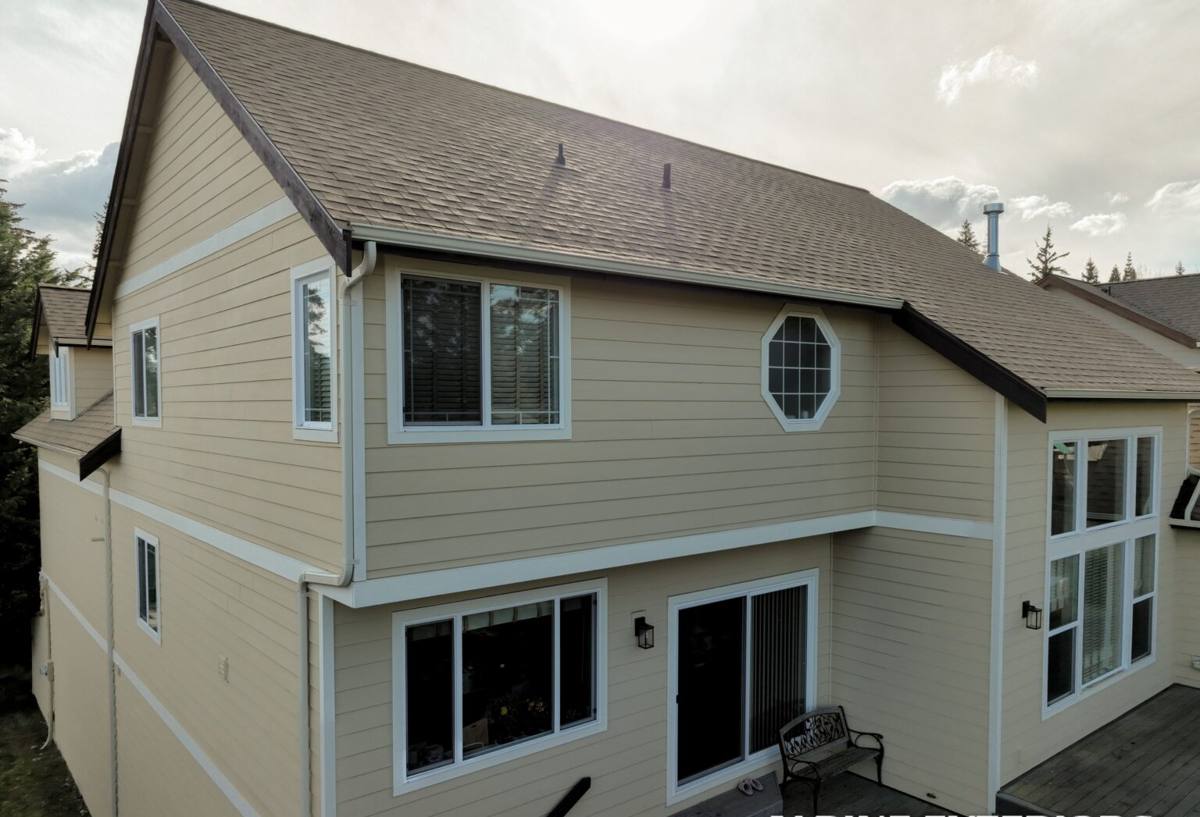
Barkley is a mix of newer construction near the village core and older homes on the surrounding streets, so the right approach depends heavily on what's already there. A few patterns we see regularly:
- Older single-pane or early dual-pane windows that have lost their seal, fogged between the panes, or gone stiff and hard to operate — usually paired with wood trim that's showing early moisture damage.
- Original builder-grade vinyl windows in homes from the last couple decades, which are often still functional but were installed with minimal flashing detail and are due for an upgrade in both performance and water management.
- North- and west-facing units that take the brunt of driving rain and see the most moss and algae growth on adjacent trim and siding, and generally need the most careful flashing work during replacement.
- Homes near mature landscaping where shade keeps siding and trim damp longer after storms, which shows up as soft wood or dark staining around window openings even when the glass itself is fine.
A walk-through before any quote is how we figure out which of these situations we're actually dealing with — it changes both the scope of the job and what we recommend.
Signs a Barkley Home Is Ready for New Windows
- Fogging or a visible haze between the panes (the seal has failed and the gas fill is gone)
- Drafts you can feel near the frame even with the window fully latched
- Wood trim or sill that's soft, discolored, or growing moss when probed with a screwdriver
- Windows that are difficult to open, close, or lock, especially after damp weather
- Visible daylight or gaps around the frame from outside
- Noticeably higher heating bills relative to similar-sized homes nearby
What a Correct Installation Actually Involves
Setting a new window into an existing opening is straightforward in dry weather with a clean opening. Doing it in a way that holds up through fifteen or twenty Whatcom County winters takes more care, particularly around water management. The parts that matter most:
Flashing and Water Management
Every window opening needs a drainage path that assumes water will get behind the cladding eventually — because in this climate, eventually it will. That means sill pan flashing at the bottom of the opening, house wrap integrated correctly with the window flange, and head flashing that directs water outward rather than trapping it against the frame. This is the single biggest factor in whether a window installation lasts.
Sealant Is a Backup, Not the Plan
Caulk and sealant matter, but they're the last line of defense, not the water management system. A window that relies on a bead of sealant to stay dry will eventually fail once that sealant ages, shrinks, or gets UV-damaged — which happens faster than most homeowners expect on south- and west-facing exposures.
Fastener and Hardware Selection
Given the salt content in the air this close to the bay, we pay attention to fastener and hardware ratings rather than defaulting to whatever's standard inland. Corrosion-resistant screws and hardware cost a little more up front and save a callback five years down the line.
Insulation Around the Frame
Gaps between the window frame and the rough opening need to be filled with low-expansion foam or backer rod and sealant — not stuffed with fiberglass, which does little for air sealing and nothing for water control if moisture gets in.
Comparing Window Options for This Location
There's no single "best" window for every Barkley home — the right choice depends on the home's age, exposure, and budget. Here's how the common options stack up for this specific climate:
| Window Type | How It Handles Local Climate | Maintenance | Typical Fit |
|---|---|---|---|
| Vinyl (standard) | Good moisture resistance, won't rot; performance depends heavily on installation quality | Low — occasional cleaning | Most homes; best value for straightforward replacements |
| Fiberglass | Excellent dimensional stability in temperature and moisture swings; holds up well to sustained damp exposure | Low | Homes wanting a longer-term upgrade, especially on rain-exposed walls |
| Wood-clad | Attractive but needs a well-sealed exterior cladding to keep moisture off the wood core | Higher — exterior cladding and joints need periodic inspection | Homes prioritizing a traditional look and willing to maintain it |
| Aluminum | Prone to condensation and thermal transfer in our wet, cool climate unless thermally broken | Moderate | Limited use; mainly where thermally-broken frames are specified |
We steer most Barkley homeowners toward vinyl or fiberglass for the simple reason that both handle sustained moisture exposure without the ongoing maintenance burden that wood-clad and standard aluminum carry in this climate. That's a maintenance and moisture-behavior tradeoff, not a knock on any product — some homeowners specifically want the look of wood-clad and are willing to keep up with it, and that's a reasonable choice too.
Our Installation Process
Every job follows the same sequence, whether it's one window or a full-home replacement:
- On-site assessment. We look at the existing windows, the surrounding trim and siding condition, and the exposure of each opening before quoting anything.
- Product selection. We walk through frame material, glass package, and hardware options based on that specific opening's exposure and the home's overall condition.
- Removal and opening inspection. Once the old window is out, we check the rough opening for hidden rot or water damage before installing anything new — this is where problems that weren't visible from outside often turn up.
- Flashing and installation. Sill pan, flashing, and house wrap integration happen before the window ever goes in, followed by careful shimming and fastening to keep the unit square and properly supported.
- Insulation and sealing. Low-expansion foam or backer rod around the frame, then exterior sealant as the final water barrier.
- Trim and finish work. Interior and exterior trim goes back on clean, and we check operation on every window before calling the job done.
- Final walkthrough. We go through each window with the homeowner — operation, locks, and appearance — before we consider the job finished.
Questions Worth Asking Any Contractor Bidding This Work
- Will you install sill pan flashing, or is the plan to rely on caulk alone?
- What happens if you find rot or water damage in the opening once the old window is out?
- What fastener and hardware materials do you use, given the salt air this close to the bay?
- Is the installation crew the same crew that will handle a warranty callback, or is that outsourced?
- What's the manufacturer's warranty versus your own labor warranty, and what's the difference?
Why Local Installation Experience Matters Here
A crew that mostly installs windows in drier inland climates can do fine work there and still underestimate what Bellingham's rain and salt air demand — not because the work is harder, but because the failure points are different. Flashing details that are optional in a low-rain climate aren't optional here. Hardware that's fine fifty miles inland corrodes faster a few blocks from the bay. A crew that regularly works Barkley and the surrounding Bellingham neighborhoods has already seen how these specific conditions play out on real houses, and builds the installation around that from the start rather than treating it as an afterthought.
It also means we're not guessing about how a particular street or exposure behaves. Whatcom County's microclimates vary block to block depending on tree cover, wind exposure, and proximity to the water, and that local pattern recognition is part of what a homeowner is paying for when they hire a crew that already works the area.
Cost Factors to Expect
Every job is different, but a few factors consistently move the price up or down on Barkley window installations:
| Factor | Effect on Cost |
|---|---|
| Number of windows replaced at once | Per-window cost typically drops with larger projects |
| Frame material (vinyl vs. fiberglass vs. wood-clad) | Fiberglass and wood-clad run higher than standard vinyl |
| Condition of the existing opening | Rot or water damage found during removal adds repair time before installation can proceed |
| Window size and configuration | Larger units, custom shapes, or multi-panel configurations cost more than standard sizes |
| Glass package (standard vs. upgraded low-E, gas fill) | Upgraded glass packages add cost but improve comfort and efficiency |
| Trim and finish work required | Extensive interior or exterior trim replacement adds labor |
We give a firm number after seeing the actual openings, not a phone estimate, because hidden opening damage is common enough in this climate that a guess without a look isn't a real number.
If your Barkley home has windows that are drafty, foggy, hard to operate, or showing moisture damage at the trim, we'll take a look and give you a straightforward, no-pressure estimate — no obligation, and no pressure to replace more than what actually needs it. Use the form below to get started.