 Bellingham Window
 Windows Built for Silver Beach's Lake-Side Climate
Silver Beach sits along Lake Whatcom on Bellingham's east side, tucked under a heavy canopy of fir and cedar that gives the neighborhood its shade and its character. That same setting creates a specific set of conditions for the windows on your house: lake-driven humidity that lingers longer than it does in more open parts of the city, deep shade that keeps north- and east-facing walls damp well after a storm has passed, and a steady drop of needles, pollen, and moss spores that settles into every horizontal surface a window frame has to offer. None of this is dramatic on its own, but stacked up year after year it is exactly the kind of slow wear that ages a window faster than the manufacturer's warranty ever accounted for.
We've worked on homes throughout this part of Whatcom County long enough to know that a window that performs well on a dry, open lot in Ferndale can still struggle in a shaded, lake-adjacent yard in Silver Beach. The fix isn't a fundamentally different product — it's paying attention to installation detail, drainage, and frame material choices that actually matter here.
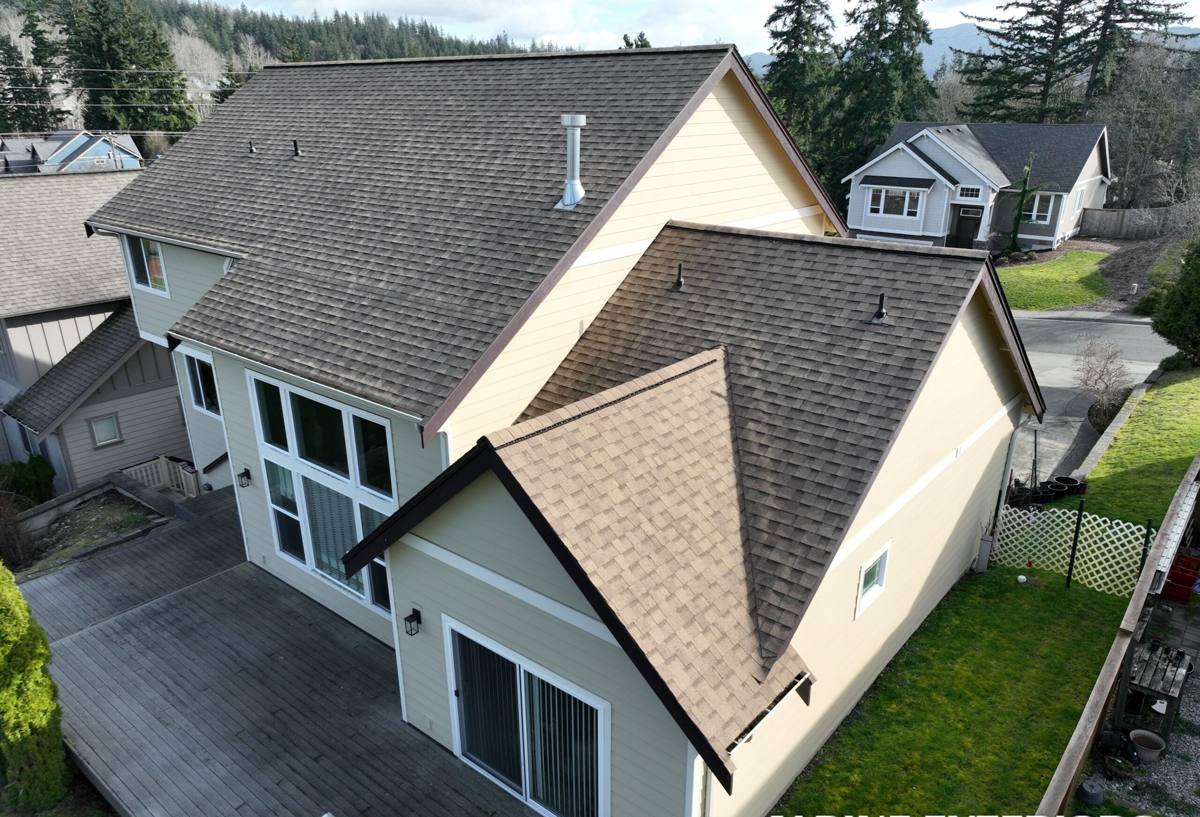
What the Local Climate Does to Windows
Humidity That Doesn't Fully Dry Out
Lake Whatcom moderates temperatures nearby, but it also keeps ambient moisture higher than you'd find a few miles inland. Combined with tree shade, that means siding and window trim around Silver Beach homes often stay damp for days after a rain event instead of hours. Wood-framed windows without a properly maintained finish are the first to show it — soft spots at the sill, paint that lifts at the corners, glazing putty that starts to crack.
Moss, Algae, and Organic Debris
Bellingham's long wet season is well known for turning north-facing roofs and siding green, and window sills catch the same treatment. Moss and algae hold moisture against the frame and sash, and needle litter from overhead trees clogs weep holes — the small drainage channels built into most modern window frames to let water escape. When those weep holes clog, water has nowhere to go but into the wall cavity.
Wind-Driven Rain
Whatcom County storms regularly come in sideways off the Sound and the lake basin, not straight down. That matters for window performance because a unit can be perfectly sealed against vertical rain and still leak under wind-driven rain if the flashing details around it aren't done correctly. This is an installation issue as much as a product issue, and it's the single most common cause of the "how did water get in there" calls we get from homeowners in shaded, exposed lots.
Temperature Swings and Condensation
Older single-pane or early-generation double-pane windows in this area often show interior condensation on cold, damp mornings. That's a sign the glass unit is no longer keeping indoor humidity from meeting cold outdoor air efficiently — sometimes a sign of a failed seal, sometimes just a product that's reached the end of its useful thermal performance.
How We Approach a Silver Beach Window Project
Every job starts with an honest look at what's actually going on with your current windows, not a sales pitch for the biggest package we sell. That usually means:
- Checking sills, jambs, and the wall framing behind the window for soft wood or moisture staining
- Testing whether weep holes and drainage paths are open or clogged
- Looking at existing flashing and how it ties into the siding — the part most DIY and budget installs skip
- Assessing whether tree cover or shade is a factor in ongoing moss or algae growth near the opening
- Confirming the window's current condition against Washington's energy code requirements for replacements
From there we talk through realistic options — repair versus full replacement, frame material, and how the new window will be flashed and sealed against the specific direction water tends to hit that wall of your house.
Repair or Replace: How to Decide
Not every window in a Silver Beach home needs to be torn out. We repair when the frame structure is sound and the problem is isolated — failed glass seals, worn weatherstripping, hardware that's stopped locking tight, or glazing that's cracked from age. We recommend replacement when the frame itself has taken on rot, when a wood sill has gone soft from years of trapped lake-side moisture, or when the window is old enough that its insulating performance is costing you more in heating bills than a replacement would over time.
| Situation | Usually Repair | Usually Replace |
|---|---|---|
| Foggy glass, sound frame | Yes — glass unit swap | No |
| Soft or rotted sill/jamb | No | Yes |
| Sticking sash, worn hardware | Yes | No |
| Persistent leak despite caulking | Sometimes — depends on flashing | Often, if flashing is the root cause |
| Single-pane, original to an older home | Rarely worth it long-term | Yes, for comfort and efficiency |
| Visible moss/algae staining at sill | Yes, if wood is still sound | Yes, if wood has softened |
Frame Material Choices for a Shaded, Damp Lot
We install a range of frame materials, and the right one depends on the house, the budget, and how exposed a given window is to shade and moisture.
Vinyl
The most common choice for good reason — it doesn't rot, doesn't need repainting, and handles Whatcom County's wet cycles without the maintenance burden wood carries. It's a solid fit for most Silver Beach homes, especially windows on shaded or hard-to-reach walls where you don't want to be up a ladder every couple of years doing upkeep.
Fiberglass
A step up in dimensional stability and often a better long-term match for larger openings or homes where the owner wants a narrower sightline and a very low-maintenance frame. It costs more than vinyl but holds up well to the freeze-thaw and moisture cycling this climate produces.
Wood and Wood-Clad
We still install wood and clad-wood windows where the look matters to a homeowner, but we're upfront about the trade-off: any exposed wood on a shaded, lake-adjacent lot needs a maintenance schedule — finish checks, sealant renewal, and periodic inspection at the sill — or it will take on moisture faster than it would on a sunnier, more open lot elsewhere in the county. It's not that the material is inferior; it's that this particular setting is demanding on unprotected wood.
Aluminum
Less common in residential replacement work here because it conducts heat and cold efficiently, which isn't what you want in a marine climate with cool, damp winters. We generally steer homeowners toward vinyl or fiberglass unless there's a specific architectural reason for aluminum.
Installation Details That Matter More Here Than Elsewhere
A window is only as good as the flashing and sealing work around it. On a shaded, moisture-prone lot like much of Silver Beach, we pay particular attention to:
- Flashing sequencing — installed so water is shed down and out over each layer, never trapped behind it
- Sill pan protection — a sloped, waterproof barrier under the window opening so any water that does get past the frame drains outward instead of sitting on the sill
- Weep hole placement — kept clear and positioned so debris from overhead trees doesn't block drainage
- Sealant selection — products rated for sustained damp conditions, not just general-purpose caulk
- Proper shimming and square — a window installed slightly out of square stresses the seals and hardware early, shortening its service life regardless of how good the product itself is
These details rarely show up in a sales brochure, but they're the difference between a window that performs for decades in this climate and one that starts leaking within a few wet seasons.
Windows Alongside Siding, Roofing, and Decks
Because we handle siding, roofing, windows, and decks as one crew, we look at a window replacement in the context of the whole exterior, not as an isolated swap. If the siding around a window opening shows moisture damage, or if a roofline is directing runoff straight down onto a wall of windows, we'll flag it — because replacing the window without addressing the water source just delays the same problem. For Silver Beach homes especially, where tree cover and lake humidity put sustained pressure on the whole building envelope, that whole-house view catches issues a windows-only company would miss.
What to Expect From the Process
- An on-site assessment where we look at your current windows, note any moisture or drainage issues, and measure openings
- A straightforward proposal covering frame material, glass package, and installation scope — no pressure, no inflated urgency
- Scheduling that accounts for Whatcom County's wet-season windows, since some sealants and finishes need dry conditions to cure properly
- Installation with attention to flashing, sill protection, and weatherproofing specific to your home's exposure
- A final walkthrough so you know how to operate, clean, and maintain your new windows
Maintenance Tips for Silver Beach Homeowners
- Clear needles and debris from window sills and tracks each fall before the heavy rains set in
- Check weep holes on the exterior frame periodically to make sure they're not clogged with moss or dirt
- Gently rinse and, if needed, treat frames showing early moss or algae growth before it spreads
- Inspect exterior caulking annually, especially on shaded walls that stay damp longest
- Watch for interior condensation on cold mornings — it's an early signal worth having looked at before it becomes a bigger issue
Why a Local Crew Matters
A window contractor working across the whole Pacific Northwest treats every job the same way. A crew based in and around Bellingham knows that a house in Silver Beach, tucked under trees and close to the lake, needs different flashing and drainage attention than a house out on an open lot near Ferndale or a windswept spot closer to the bay. That's not marketing — it's just the accumulated experience of doing this work across Whatcom County's varied microclimates, year after year, and seeing which shortcuts come back to bite homeowners and which details actually hold up.
If you're noticing drafts, fogged glass, sticking sashes, or any sign of moisture around your windows, we're happy to take a look. Reach out for a free, no-pressure estimate — use the form below and we'll get back to you to schedule a time that works.