 Bellingham Window
 Windows in Puget Face a Different Set of Problems
If you own a home in the Puget area of Bellingham, you already know your windows work harder than windows do most other places. You're close enough to the water that salt-laden air finds its way onto glass, frames, and hardware. Winter storms roll in off the Sound with wind-driven rain that doesn't just fall on your windows, it gets pushed sideways into every gap and seam. And for a good stretch of the year, especially on the shaded or north-facing sides of a house, moss and algae take hold on anything that stays damp long enough. None of that is dramatic on its own, but stacked together year after year, it's exactly the kind of slow, steady exposure that wears out window seals, frames, and finishes faster than a manufacturer's brochure ever accounts for.
We've worked on enough homes around Bellingham and Whatcom County to know that "the windows are getting old" usually means something more specific: seals have failed, frames have started absorbing moisture, or hardware has corroded to the point where a window won't latch properly anymore. Understanding what's actually happening is the first step to deciding whether you need a repair, a partial replacement, or a full window upgrade.
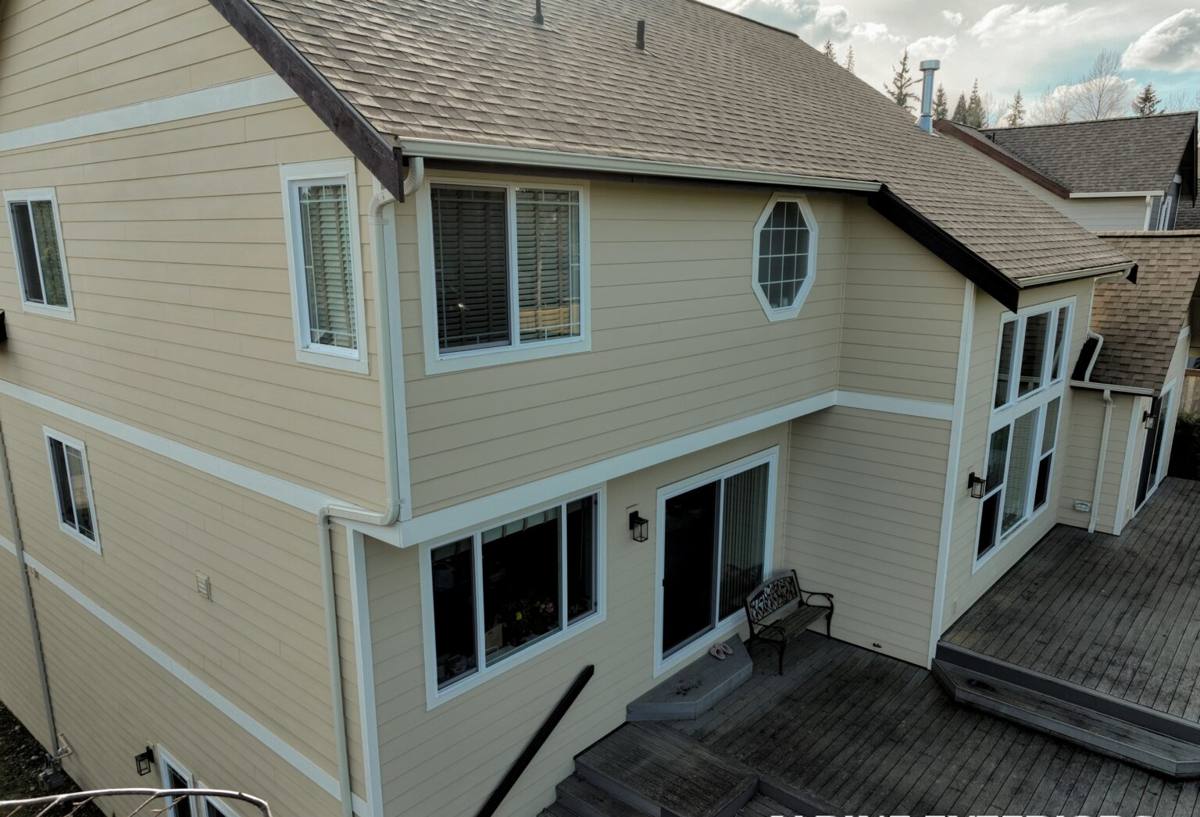
What Salt Air, Rain, and Moss Actually Do to a Window
Salt Air
Salt in the air is corrosive to metal. Window hardware, aluminum frames, and even some vinyl reinforcement components can pit, discolor, or seize up over time when they're regularly exposed to salt-carrying wind off Puget Sound. This shows up first as hardware that feels stiff or gritty, then eventually as locks and cranks that stop working smoothly.
Driving Rain
Wind-driven rain is a different problem than a normal downpour. It gets pushed horizontally against a house, which means it finds its way into any gap in flashing, caulking, or window trim that a gentler rain would never reach. Over time, this is what causes soft spots in the wood trim around a window, water staining on interior sills, or a musty smell near a window that otherwise looks fine from across the room.
Moss and Sustained Dampness
Moss doesn't damage glass, but it's a sign of a bigger issue: a spot on your house that stays wet longer than it should. Window sills, trim, and the wood or fiber-cement siding around a window frame are common places for moss and algae to take hold, especially on shaded elevations. Left alone, that sustained moisture is what eventually rots trim, degrades caulking, and lets water get behind the window flashing.
Signs It's Time to Look at Your Windows
- Fogging or a hazy film between panes on a double-pane window, which means the seal has failed and the insulating gas or air gap is gone
- Visible moisture or condensation on the inside of the glass, even when the house isn't especially humid
- Drafts you can feel near the frame, especially during a windy rain
- Wood trim or sills that feel soft, spongy, or show paint that keeps bubbling and peeling
- Windows that are hard to open, close, or lock, or that no longer sit flush in the frame
- Visible moss, algae, or black staining building up on the sill or surrounding trim
- A noticeable jump in heating costs without any other explanation
Any one of these on its own might just need a repair. Several of them together, especially on an older window, usually means it's more cost-effective to replace than keep patching.
Repair or Replace? How We Think About It
Not every window that's showing its age needs to come out. A window with solid, dry framing and functioning glass can often be brought back to good condition with new weatherstripping, resealing, hardware repair, or glass replacement. We'd rather tell you honestly that a repair will hold up than sell you a full replacement you don't need yet.
That said, once moisture has gotten into the frame itself, or a seal failure has let fog build up permanently between panes, repair becomes a temporary fix at best. In a climate like ours, where a house can go weeks without a real dry stretch in the winter, a compromised window doesn't get a chance to recover on its own. We'll walk the window with you, explain what we're seeing, and give you a straight answer about which category it falls into.
Choosing Window Materials for This Climate
Not all window frame materials handle wet, salty, coastal-influenced air the same way. This is one of the more important decisions on a replacement project, and it's worth understanding the real trade-offs rather than just picking on price.
| Frame Material | Moisture Resistance | Maintenance | Typical Lifespan | Notes for This Area |
|---|---|---|---|---|
| Vinyl | Good — won't rot, resists corrosion | Low; occasional cleaning | 20-30+ years | Solid all-around choice for coastal wind and rain exposure at a moderate price point |
| Fiberglass | Excellent — very stable in wet, temperature-swinging conditions | Low | 30-40+ years | Handles our freeze-thaw and damp cycles with minimal expansion or contraction |
| Wood | Fair — needs a sound finish to keep moisture out | Higher; periodic refinishing | Varies widely with upkeep | Classic look, but the maintenance burden is real in a climate this wet — we're upfront about that trade-off |
| Wood-Clad | Good on the exterior face, interior still wood | Moderate | 20-30+ years | Exterior cladding shields wood from rain; a reasonable middle ground if you want the wood interior look |
| Aluminum | Fair — prone to corrosion near salt air without proper coating | Moderate | 20-30 years | Not our first recommendation this close to the Sound unless it's a marine-grade or well-coated product |
We don't push one material on every job. A lot of it comes down to your home's style, your budget, and how much upkeep you actually want to sign up for. What we won't do is put a high-maintenance product on your house without telling you exactly what that maintenance will look like five and ten years from now.
Glass Packages Worth Knowing About
Beyond the frame, the glass itself matters. Double-pane windows with a low-E coating are the standard baseline for this climate and do a solid job cutting heat loss and UV fading. Triple-pane glass adds another layer of insulation and can be worth it on north-facing rooms or homes that catch the brunt of the wind, though it comes at a higher cost and added weight. Argon or krypton gas fills between panes improve insulation performance, but that benefit only holds as long as the seal stays intact — which is exactly why seal quality and installation matter as much as the glass spec on the label.
How a Window Project Works With Us
- Walkthrough and assessment. We look at each window in question, check for moisture, seal failure, and frame condition, and give you a clear read on repair versus replacement.
- Honest estimate. You get a written estimate that spells out material, scope, and cost — no vague allowances.
- Proper flashing and sealing. Given how much driving rain this area gets, correct flashing and sealing around the new window matters as much as the window itself. A great window installed poorly will leak anyway.
- Cleanup and walkthrough. We show you the finished work and make sure everything operates the way it should before we call it done.
Windows Don't Work in Isolation
A window is only as good as what surrounds it. If the siding or trim around a window is already compromised, moisture will keep finding its way in no matter how good the new window is. Because we handle siding, roofing, windows, and decks, we're able to look at the whole picture on a home in Puget rather than treating a window as a standalone project. If we notice soft trim, roof flashing that's directing water toward a window, or siding that's failing near a frame, we'll tell you, because fixing the window without addressing that just delays the same problem.
Why a Local Crew Makes a Difference Here
Bellingham and the surrounding Whatcom County communities have their own weather patterns, their own building stock, and their own quirks — homes near the water deal with different exposure than homes further inland, and older Puget-area houses often have original windows and trim details that a crew unfamiliar with the area might not recognize. A local crew that works this area regularly knows what driving rain off the Sound does to a window over a decade, what moss growth typically signals, and how to size up a job accurately instead of guessing. That local knowledge translates into fewer surprises, more accurate estimates, and work that's built for the actual conditions your home faces, not generic conditions from a different climate.
A Practical Checklist Before You Call Anyone
- Note which windows fog, feel drafty, or won't operate smoothly, and which room they're in
- Check for soft or discolored trim and sills around each problem window
- Look for moss, algae, or staining on the exterior trim near your windows
- Have a rough sense of your budget range and whether you're open to phasing the project (some windows now, others later)
- Ask any contractor for proof of licensing and insurance before work starts
- Get the scope, materials, and price in writing before you sign anything
Getting Started
If you're noticing drafts, fogged glass, stiff hardware, or trim that's showing its age around your windows, it's worth having someone take a real look before winter storms make the problem worse. We offer free, no-pressure estimates for homes in the Puget area and throughout Bellingham and Whatcom County — you'll get an honest read on what your windows actually need, with no obligation to move forward. Use the form below to get in touch and set up a time.