 Bellingham Window
 Board & Batten Siding in Birchwood: Built for Whatcom County Weather
Board and batten is one of the most requested siding profiles we install in Birchwood, and it's easy to see why. The vertical lines read as clean and modern on newer builds, but the same profile also suits the farmhouse and craftsman styles common in this part of Bellingham. What most homeowners don't realize until they've lived through a few Whatcom County winters is that the look is only half the story. The material behind that look, and how it's installed, determines whether the siding still looks sharp in fifteen years or whether it's cupping, staining, and rotting at the seams by year eight.
Birchwood sits close enough to Bellingham Bay and the Salish Sea that salt-laden air is a real factor in how exterior materials age here, not just a talking point. Add in our long stretch of driving rain each fall and winter, plus a shoulder season where shaded, north-facing walls stay damp long enough to grow moss and algae, and you've got a climate that's genuinely tough on siding. Board and batten, with its vertical seams and layered battens, either sheds that moisture cleanly or traps it — and which one happens comes down to material choice and installation detail, not the style itself.
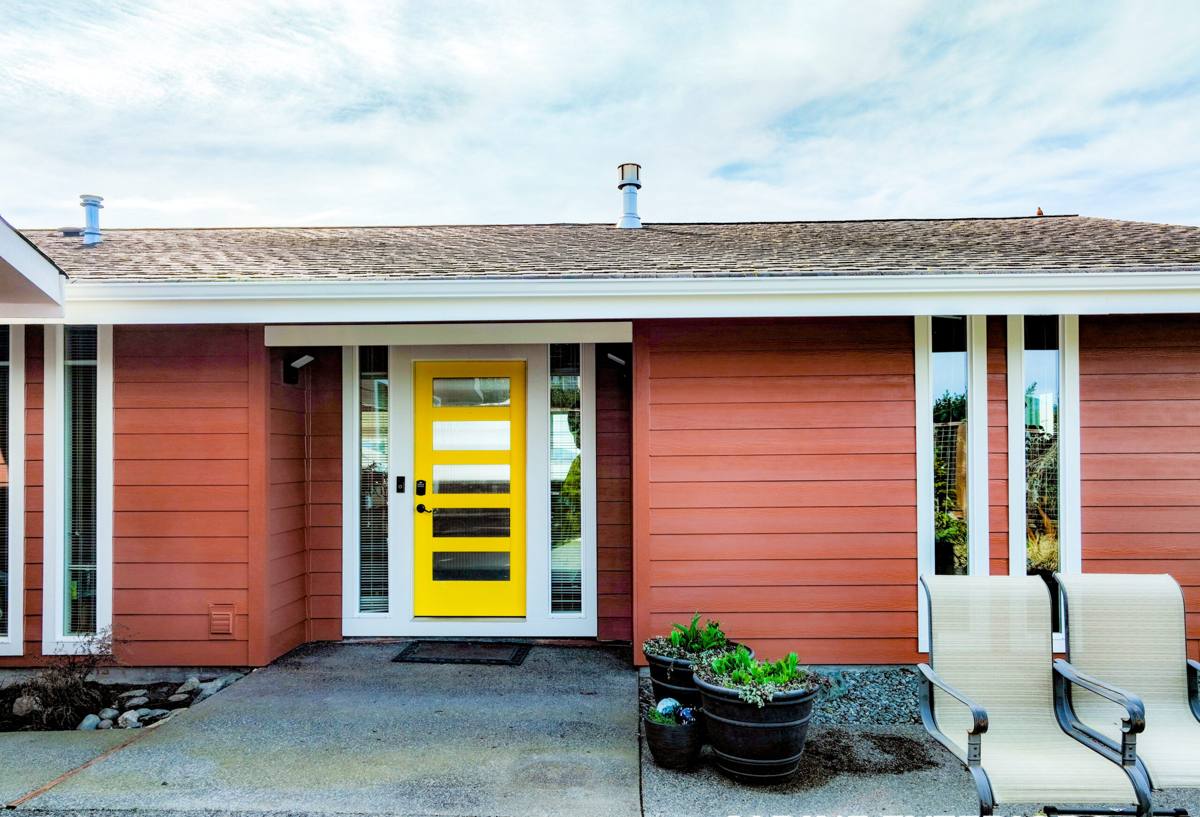
What Salt Air, Rain, and Moss Season Actually Do to This Profile
Board and batten siding has more seams and more places for water to travel than a lapped horizontal profile. That's not a flaw in the style — it's just a fact that changes what the material needs to be able to handle. In Birchwood specifically, three conditions do most of the damage over time:
- Salt air corrosion: Airborne salt accelerates the breakdown of fasteners, cheaper paint films, and untreated wood fiber. Over years, it also pulls moisture into porous materials faster than drier inland air would.
- Driving rain: Wind-driven rain off the water pushes moisture sideways into vertical seams and batten joints, not just straight down. A board and batten system has to be detailed to reject that lateral moisture, not just shed water downward.
- Extended moss and algae season: Shaded walls, tree cover, and our mild, wet winters mean organic growth gets a long runway. Materials that absorb moisture feed that growth; materials that don't, resist it.
Put those three together and you get the two failure patterns we see most often on older or poorly installed board and batten in this neighborhood: batten strips that have swollen, split, or pulled away from fasteners, and panel faces that have gone soft, delaminated, or stained dark with sustained moss growth in shaded corners.
Why We Only Install James Hardie for This Profile
We install James Hardie fiber cement exclusively, and board and batten is a good example of why. This profile depends on the vertical panel and the horizontal batten strip both staying dimensionally stable and moisture-resistant for decades, because every batten joint is a potential water entry point. Wood battens swell and shrink with moisture cycles and eventually split or cup. Engineered wood products can perform well for a while but rely on factory-applied coatings and resin-treated cores that are more sensitive to installation errors and long-term moisture exposure. Vinyl board and batten avoids rot but expands and contracts noticeably with temperature swings, and it can't match the flat, factory-finished look that makes this style attractive in the first place.
James Hardie's fiber cement is non-combustible, doesn't swell or rot from moisture the way wood-based products can, and holds a ColorPlus factory finish that's baked on and warrantied against fading — not touched up on site with field-applied paint that ages differently across a wall. For a coastal, high-rain climate like Whatcom County's, the HardiePanel vertical siding system used for board and batten is manufactured to James Hardie's HZ5 climate specification, engineered for regions that see sustained moisture and freeze-thaw cycles rather than dry heat. That's the right specification for Birchwood, and it's one of the concrete reasons we standardized on this product instead of carrying multiple siding lines.
How the System Actually Goes Together
Board and batten with James Hardie isn't just panels with strips nailed over the seams. The system is HardiePanel vertical siding, installed over a code-compliant water-resistive barrier and drainage plane, with battens fastened through the panel into framing at engineered spacing. Every seam, corner, and penetration gets flashed and detailed so water that reaches the wall assembly has somewhere to go besides into your sheathing.
What a Correct Board & Batten Installation Involves
The material is only as good as the install behind it. On every board and batten job in Birchwood, there are specific details that separate a siding system that lasts from one that fails early:
- Drainage plane first. A weather-resistive barrier with a rainscreen gap behind the panels lets any moisture that gets past the siding drain and dry out instead of sitting against the sheathing.
- Panel and batten fastening to spec. James Hardie publishes exact fastener type, spacing, and penetration requirements. Skipping these is the single most common cause of early failure we see on other contractors' work.
- Flashing at every horizontal transition. Window heads, roof-to-wall intersections, and deck ledgers all need proper flashing under the siding, not caulk relied on as the primary water barrier.
- Correct joint treatment. Panel seams and batten ends need to be detailed per manufacturer spec so they don't become wicking points during driving rain.
- Factory-primed cut edges sealed in the field. Any field cut exposes raw fiber cement that has to be primed before installation to hold up long-term.
None of this is visible once the job is finished and the wall looks clean. That's exactly why it matters who does the work — a rushed or corner-cutting install can look identical to a correct one on day one and start showing problems within a few wet seasons.
How We Approach Board & Batten Jobs in Birchwood
We start every project with a walk of the exterior to look at existing moisture damage, wall orientation relative to prevailing wind and rain, and any shaded areas likely to hold moss or algae longer than the rest of the house. That assessment shapes decisions on drainage detailing and flashing before a single panel goes up.
From there, our process is straightforward: remove existing siding down to the sheathing, repair or replace any damaged sheathing or framing we find, install the water-resistive barrier and rainscreen system, then install HardiePanel and battens to manufacturer spec with attention to every seam and penetration. We finish with trim, caulking at appropriate joints only (not as a substitute for flashing), and a final walkthrough. Because we work this profile regularly in Bellingham and the surrounding Whatcom County neighborhoods, we're not learning the moisture-management details on your house — we already know which walls in a typical Birchwood lot need extra attention and which don't.
Comparing Board & Batten Material Options
| Material | Moisture Resistance | Maintenance | Typical Lifespan | Finish Durability |
|---|---|---|---|---|
| James Hardie Fiber Cement | Excellent — won't rot or swell | Occasional wash; no repainting for years | 30+ years to specified lifespan | Factory ColorPlus finish, warrantied against fading |
| Cedar or Primed Spruce | Fair — vulnerable to moisture without diligent upkeep | Regular repainting/staining, caulk inspection | 15-25 years with upkeep | Field-applied, ages unevenly |
| Engineered Wood (e.g. LP-type products) | Good if sealed edges maintained, sensitive to installation gaps | Periodic inspection of edges and seams | 20-30 years, install-dependent | Factory coating, but edge sensitivity is a known trade-off |
| Vinyl Board & Batten | Won't rot, but expands/contracts with temperature | Low, but can crack or warp over time | 20-30 years | Color molded through, but flattens/fades with UV over decades |
Maintenance Expectations Once It's Installed
One of the practical advantages of James Hardie board and batten in a climate like ours is how little ongoing maintenance it asks for compared to wood-based alternatives. You're not staining or repainting on a recurring cycle. That said, "low maintenance" doesn't mean "no maintenance," especially given Birchwood's moss season:
- Rinse siding annually, focusing on shaded, north-facing walls where moss and algae are most likely to establish.
- Keep gutters clear so overflow doesn't run down and concentrate moisture at specific wall sections.
- Trim back vegetation and tree cover that keeps a wall section damp and shaded longer than the rest of the house.
- Inspect caulking at trim and penetration points every couple of years and have it refreshed if it's cracking or pulling away.
- Address any impact damage promptly — fiber cement resists rot, but a cracked panel left unaddressed can still let moisture into the wall assembly behind it.
Why Hiring Local Experience Matters for This Profile
Board and batten installed wrong doesn't usually fail in year one — it fails in year five or eight, after enough wet seasons have worked their way into a poorly flashed seam or an under-fastened batten. That delay is exactly why installation quality is hard for a homeowner to judge at the time of the job. A crew that's put this system on multiple houses in Birchwood and similar Bellingham neighborhoods has already seen which wall orientations need extra flashing attention here, how the local rain pattern behaves against vertical siding, and where moss tends to establish first on homes with this kind of tree cover and lot layout. That local repetition is what turns manufacturer specs into a system that actually holds up through Whatcom County winters, not just through the installer's warranty period.
Get a Straightforward Estimate
If you're weighing board and batten for a home in Birchwood, or replacing siding that's already showing moisture damage, we're happy to take a look and give you a straightforward, no-pressure estimate — what your walls actually need, what correct installation involves, and what it will cost. Use the form below to get started.