 Bellingham Window
 Roof Replacement in Puget: What This Corner of Bellingham Asks of a Roof
Puget sits close enough to the water that salt air is a daily fact of life for anything on a roof, not just for boats at the marina. Add Whatcom County's long wet season, driving rain that comes in sideways off the Sound, and a moss season that can stretch from October well into spring, and you have a set of conditions that wears roofs down faster and less evenly than homeowners expect. A roof that would last three decades in a dry inland climate often needs real attention here well before that mark, especially if it was installed without the right underlayment, flashing detail, or ventilation for this environment.
Roof replacement isn't just picking a shingle color and having a crew swap old material for new. Done correctly in a coastal Bellingham neighborhood like Puget, it's a system: decking, underlayment, flashing, ventilation, and the finish material all working together to shed water fast and resist the moss, moisture, and salt-laden air that this part of Whatcom County deals with year-round.
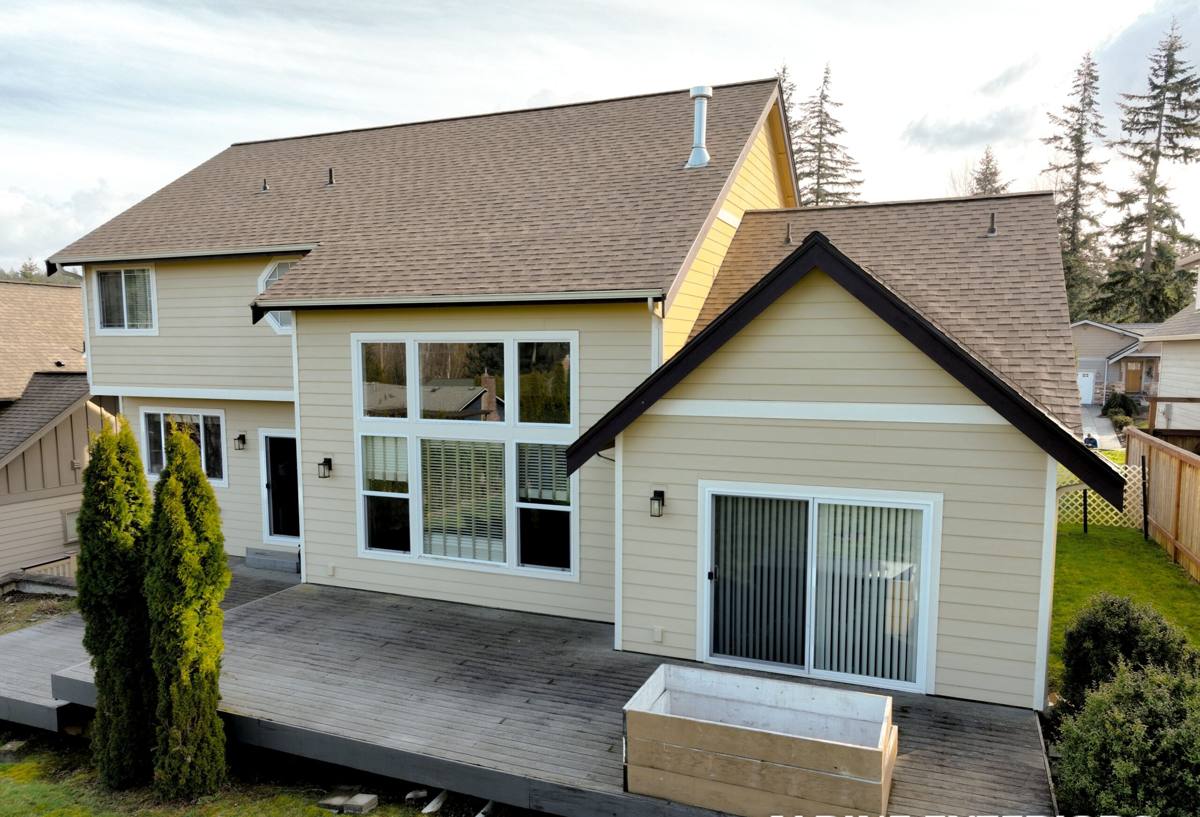
Signs a Puget Home Needs Replacement, Not Another Repair
Not every roof problem calls for a full reroof, and we'd rather tell a homeowner the truth than sell a bigger job than they need. But there's a point where patching becomes throwing money at a roof that's structurally past its useful life. Some signs worth taking seriously:
- Granule loss heavy enough that you're finding grit in gutters and downspouts every time it rains
- Shingles that are cupping, curling at the edges, or cracking when you look closely from the ground
- Moss growth that keeps coming back within a season or two of cleaning, especially on north-facing slopes that stay shaded and damp
- Soft spots in the decking you can feel underfoot, or sagging visible along the roofline
- Daylight visible through the attic roof boards, or water stains on ceilings and in the attic after heavy rain
- A roof that's already had multiple repairs in the last few years and keeps developing new leak points
If a roof is showing one or two of these signs and is under 15 years old, a targeted repair may still make sense. Past that point, or with multiple signs present at once, replacement is usually the more honest recommendation, both for the homeowner's wallet and for what's protecting the house underneath.
What a Correct Roof Replacement Actually Involves
Tear-Off and Deck Inspection
We don't install new roofing over old material. A full tear-off lets us see the roof deck itself, which is where a lot of hidden damage from years of Puget's rain shows up first. Soft, delaminated, or water-stained decking gets replaced before anything new goes down. Skipping this step is one of the most common shortcuts in the roofing trade, and it's how a brand-new roof ends up with problems within a few years.
Underlayment That Matches the Climate
In a region that sees driving rain off the water, we use a synthetic underlayment rated for high wind and moisture exposure, with ice-and-water shield style membrane at eaves, valleys, and around every penetration. This layer is what actually keeps a house dry if wind-driven rain gets under the finish shingles, which it eventually will on any roof exposed to Puget's weather.
Flashing Details
Chimneys, skylights, vent pipes, and roof-to-wall transitions are where the large majority of roof leaks originate, not the open field of shingles. Correct flashing means new metal, properly stepped and counter-flashed, not old flashing reused or caulk used as a substitute for a mechanical seal. Caulk fails; correctly formed and layered flashing sheds water on its own.
Ventilation
A roof deck that can't breathe traps moisture, which speeds up rot and feeds the moss and algae growth that's already a constant fight in this climate. We check intake at the soffits and exhaust at the ridge as part of every replacement, and correct imbalances rather than just replacing what was there.
Material Options for Puget's Coastal Exposure
| Material | How It Handles Salt Air & Rain | Moss Resistance | Typical Lifespan Here |
|---|---|---|---|
| Architectural asphalt composition | Good with proper underlayment and flashing; algae-resistant granule options help | Moderate; still needs periodic cleaning | 20-30 years |
| Standing seam metal | Excellent; sheds water fast and doesn't absorb moisture | High; little for moss to grip on a clean, smooth panel | 40-50+ years |
| Synthetic/composite shake | Good; engineered to resist moisture absorption better than wood | Moderate to high depending on product | 30-40 years |
| Natural cedar shake | Requires diligent maintenance in this climate; absorbs moisture | Low without regular treatment | 20-25 years with upkeep |
We install cedar shake when a homeowner wants that look and understands the maintenance commitment, but we're upfront that in a wet, moss-prone environment like Puget, it demands more attention than composite or metal alternatives. That's a maintenance and moisture-behavior trade-off we explain honestly, not a reason to avoid the product altogether.
Our Roof Replacement Process
- On-site inspection and estimate — we walk the roof, check the attic, and assess deck condition before quoting anything
- Material selection — we go over options suited to your home's exposure, slope, and budget
- Scheduling around weather — we plan tear-off days with realistic Whatcom County forecasts in mind, not just calendar convenience
- Tear-off and deck repair — old material removed, decking inspected and replaced where needed
- Underlayment and flashing installation — the waterproofing layer that does the real work
- Finish material installation — installed to manufacturer spec so warranties stay valid
- Ventilation check and cleanup — intake and exhaust balance confirmed, site cleared of debris and nails
- Final walkthrough — we go over the finished roof with you before calling the job done
What Affects the Cost of a Roof Replacement
| Factor | Why It Matters |
|---|---|
| Roof size and pitch | Steeper roofs take longer and require more safety setup |
| Number of layers to remove | Tear-off of multiple old layers adds labor and disposal cost |
| Deck condition | Rot or soft decking found during tear-off adds material and labor |
| Material choice | Asphalt, metal, and composite shake carry different material and install costs |
| Roof complexity | Valleys, dormers, skylights, and chimneys all add flashing work |
| Access | Tight lots or difficult staging areas can affect labor time |
Because of these variables, we don't quote roof replacement prices over the phone. A roof that looks straightforward from the street can turn up deck damage or a complicated valley layout that changes the scope once we're actually up there. An honest number comes from an in-person look.
Moss and Ventilation: The Long Game for Puget Roofs
Moss isn't just cosmetic. Left unchecked, it holds moisture against the roof surface, works into shingle edges and granules, and shortens the life of the material underneath it. A new roof gives you a clean start, but keeping it that way in a moss-prone area like Puget takes a bit of ongoing attention: periodic gentle cleaning, keeping overhanging branches trimmed back so roofs get more sun and airflow, and making sure gutters stay clear so water isn't sitting against roof edges. We're happy to talk through a simple maintenance routine as part of any replacement, since a roof installed correctly still benefits from a little seasonal upkeep in this climate.
Why Hiring a Crew That Already Works This Area Matters
A roof crew that regularly works Bellingham neighborhoods near the water understands things a generic quote can't capture: how salt air affects fastener and flashing choices over time, which slopes in this kind of terrain tend to hold moss longest, and how to sequence a job around the region's rain patterns instead of getting caught mid-tear-off in a downpour. That local familiarity shows up in fewer surprises during the job and a roof that's built for the conditions it will actually face, not just a textbook installation.
Checklist: Questions to Ask Before You Sign a Roofing Contract
- Does the estimate include a full tear-off, or is this a layover install?
- Is deck repair priced as an allowance, or will it be a surprise change order?
- What underlayment and flashing materials are specified, by name?
- Is the contractor licensed and insured in Washington, and can they provide proof?
- What manufacturer warranty applies, and does it require certified installation to stay valid?
- Will ventilation be assessed and corrected if it's inadequate?
- Is there a written timeline, including a plan for weather delays?
- Who handles cleanup, including magnetic sweeps for stray nails?
If your roof in Puget is showing its age or you just want an honest second opinion before committing to a repair versus a full replacement, we're glad to come take a look. The estimate is free, there's no pressure to sign anything on the spot, and you'll get a straight answer about what your roof actually needs.