 Bellingham Window
 Windows Take a Different Kind of Beating in Silver Beach
Every Bellingham neighborhood deals with Pacific Northwest weather, but homes in and around Silver Beach face a specific combination of stressors that shortens the life of ordinary windows. Salt-laden air drifting in off Bellingham Bay reaches homes across much of the city, and it doesn't take direct waterfront exposure to cause slow corrosion of hardware, fasteners, and unprotected metal components. Add in wind-driven rain that hits window walls at an angle rather than straight down, and you get moisture intrusion at joints and sills that a house facing a drier climate would never experience.
Then there's moss. Whatcom County's mild, wet stretch from fall through spring means moss and algae get a long runway to establish themselves on north-facing walls, trim, and window sills that don't dry out quickly. Moss holds moisture against wood and painted surfaces for weeks at a time, which is exactly the condition that rots sills, swells sashes, and breaks down caulk lines. None of this is dramatic on its own — it's cumulative. A window that would last three decades in a dry inland climate can show real trouble in half that time here if it wasn't built or installed with this climate in mind.
How to Tell a Silver Beach Home Actually Needs Replacement
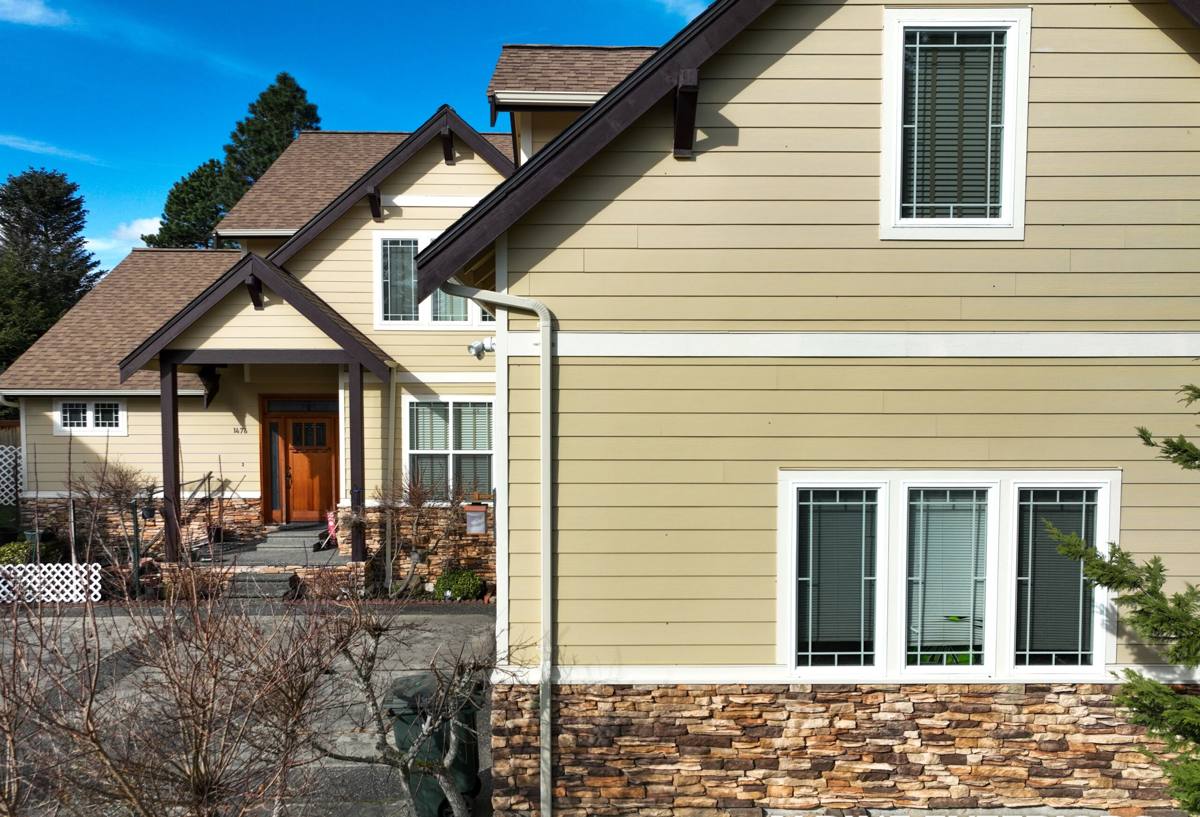
Not every drafty or sticky window needs full replacement — sometimes it's a repair, a reglaze, or new weatherstripping. But certain signs point to windows that are past the point of patching:
- Visible fogging or a permanent haze between panes, meaning the seal has failed and the insulating gas is gone
- Wood sills or corners that feel soft, spongy, or crumble under light pressure
- Paint that keeps failing on the same window no matter how often it's redone
- Sashes that stick, won't stay open, or have to be forced closed
- Visible moss or algae growth on the sill or lower sash that keeps returning after cleaning
- A noticeable draft or cold spot near the window even with it fully closed and locked
- Metal hardware — hinges, cranks, locks — that shows rust or pitting
- Condensation forming on the inside of the glass regularly, especially on the frame itself
If you're seeing two or more of these on the same window, replacement is usually the more honest recommendation than another round of caulk and paint.
What a Correct Job Actually Involves
Flashing and Water Management Come First
The window itself is often not where a job fails — the flashing and integration with the wall's water-resistive barrier is. In a climate with sustained wind-driven rain, water will find any gap in the flashing sequence around a window opening and work its way behind the siding over time. A correct installation means the housewrap or building paper laps over the flashing at the top, sides are sealed to shed water outward and down, and the sill pan is sloped and sealed so any water that does get past the window drains back outside instead of pooling against the framing.
Frame Material Suited to the Climate
Not every window frame material holds up the same way against salt air and constant moisture cycling. We steer homeowners toward materials with proven resistance to corrosion and moisture-driven decay in this climate, and we're upfront when a product's maintenance demands or moisture behavior make it a poor long-term fit for a Silver Beach exposure, even if it looks fine on a showroom floor.
Glass and Energy Performance
Double-pane, low-E glass with an argon fill is the practical standard for this region — it cuts heat loss during our long heating season and reduces condensation risk on the interior glass surface, which matters when humidity runs high for months at a time. For homes with more direct exposure to weather or road noise, upgraded glass packages are worth discussing, but they should be chosen for a specific reason, not just because they cost more.
Comparing Frame Materials for a Marine Climate
| Material | Salt Air / Moisture Resistance | Maintenance | Typical Lifespan Here |
|---|---|---|---|
| Vinyl (quality-grade) | Strong — won't rust or rot, minimal seam exposure | Low — occasional cleaning | 20-30+ years |
| Fiberglass | Very strong — dimensionally stable, resists corrosion | Low | 30+ years |
| Aluminum | Moderate — prone to corrosion and condensation unless thermally broken | Moderate | 15-25 years, shorter near salt exposure |
| Wood (unclad) | Weak in this climate without diligent upkeep | High — regular repainting/sealing required | Highly maintenance-dependent |
| Wood-clad | Good if cladding and joints stay sealed | Moderate | 25-30+ years with proper care |
This is a general guide, not a rule for every home — architectural style, budget, and how exposed a particular wall is all factor into what we'd actually recommend for your house.
Our Process for a Silver Beach Window Replacement
1. On-Site Assessment
We look at each window opening individually — not just the glass, but the sill, the surrounding siding, and any signs of past water intrusion. Some openings need more attention to flashing and sill repair than others, and we'd rather flag that up front than discover it mid-installation.
2. Product Selection Based on Exposure
A window on a sheltered wall doesn't need the same spec as one that takes direct wind and rain. We walk homeowners through material and glass options based on what each opening actually faces, not a one-size answer for the whole house.
3. Removal and Opening Prep
Old windows come out carefully to avoid damaging the surrounding wall assembly. If we find rot, deteriorated flashing, or past water damage behind the old window — which isn't uncommon in older Bellingham-area homes — we address it before anything new goes in. Installing a new window over a compromised opening just hides the problem.
4. Installation and Sealing
Proper shimming, fastening per manufacturer spec, and a correct flashing and sealant sequence — this is the step that determines whether the window performs for decades or starts leaking within a few wet seasons.
5. Final Check and Cleanup
We test operation, check for square and level, confirm weathertightness, and leave the site clean. You get a plain explanation of what was done and what, if anything, needs attention down the road.
What Drives Cost on a Project Like This
| Factor | Why It Matters |
|---|---|
| Frame material | Vinyl, fiberglass, and clad-wood price differently and hold up differently long-term |
| Window size and configuration | Larger openings, custom shapes, or multi-panel units cost more than standard single units |
| Condition of the existing opening | Hidden rot or flashing failures add repair scope beyond a straight swap |
| Glass package | Upgraded low-E coatings, gas fills, or laminated glass raise cost but target specific performance needs |
| Number of windows done at once | Bundling a full-house or multi-window project is generally more efficient than one-off replacements |
| Access and site conditions | Second-story windows or tight access can add labor time |
We give straightforward, itemized estimates so you can see what you're paying for and why — no inflated ranges meant to be negotiated down.
Why It Matters to Hire a Crew That Already Works This Area
A window that's technically well-made can still fail early if it's installed without accounting for local conditions — wrong flashing sequence for wind-driven rain, a sealant that isn't suited to constant moisture cycling, or a frame material that wasn't chosen with salt air in mind. Crews who regularly work Whatcom County homes have already seen how these conditions play out over years, not just on install day. That experience shows up in the details: how a sill is sloped, how flashing laps are sequenced, and which products we simply don't recommend for this climate because we've seen how they age here.
Local experience also means we're realistic about permitting and typical construction in older Bellingham-area homes, so there are fewer surprises once work is underway.
Keeping New Windows Performing Long-Term
New windows still need basic upkeep in this climate, especially where moss and algae are a recurring issue:
- Rinse sills and lower sashes periodically to keep moss and organic buildup from taking hold
- Keep gutters and downspouts clear so runoff isn't sheeting directly across window walls
- Check exterior caulk lines annually and touch up before small gaps become water paths
- Trim back vegetation or overhangs that keep a window shaded and damp for long stretches
- Operate hardware a few times a season so mechanisms don't seize between uses
A little routine attention goes a long way toward getting the full lifespan out of a well-installed window in this climate.
Get a Straight Answer for Your Home
If you're dealing with foggy glass, soft sills, sticking sashes, or windows that just feel past their prime, we're glad to take a look and give you an honest read on repair versus replacement — no pressure either way. Request a free estimate below and we'll walk your Silver Beach home in person before recommending anything.