 Bellingham Window
 Storm Damage Roof Repair for Puget-Area Homes
Roofs in the Puget area of Bellingham take a different kind of beating than roofs inland. Winter storms roll in off the water with sideways rain and gusts that catch roof edges, ridge caps, and anything already loose. A roof that looks fine from the ground can be hiding lifted shingles, cracked flashing, or a soaked layer of underlayment that's slowly rotting the decking underneath. Storm damage repair isn't just patching what you can see — it's finding what the wind and water actually did, then fixing it in a way that holds up through the next storm, not just until the next dry week.
We work on homes throughout the Puget area regularly, which matters more than it might sound. A roof here isn't dealing with a generic "Pacific Northwest climate" — it's dealing with the specific combination of salt-laden air off the water, near-constant winter rain, and a moss season that runs longer than most homeowners realize. Repairs done without accounting for that combination tend to fail again within a year or two.
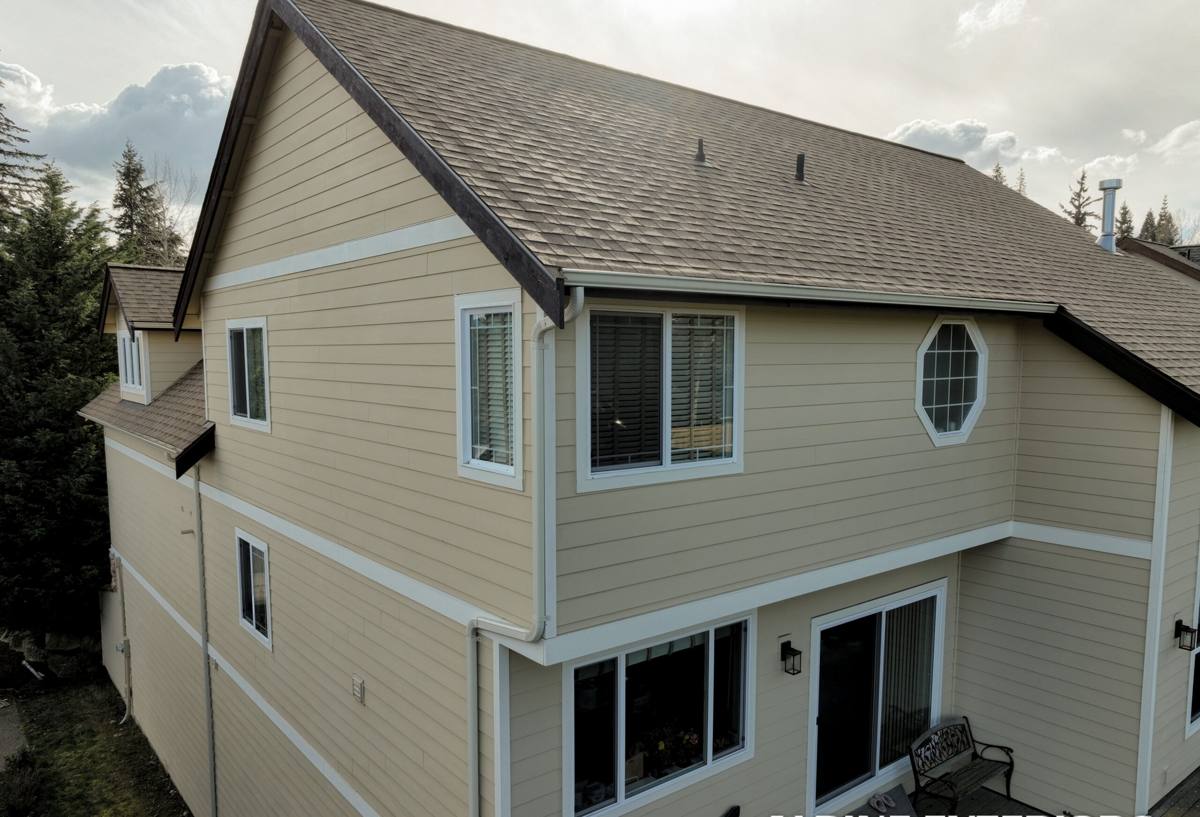
What Bellingham's Climate Does to a Roof Over Time
Salt Air and Metal Fasteners
Homes closer to Bellingham Bay and the broader Puget Sound shoreline get a steady dose of salt-carrying air. Over years, that air accelerates corrosion on exposed metal — nail heads, flashing, drip edge, and the fasteners holding ridge caps and vents in place. A storm doesn't have to be severe to finish off a fastener or flashing seam that salt air has already been working on for a decade. That's often why storm damage shows up worse on one section of roof than another: it's not random, it's the section that was already weakened.
Driving Rain and Wind-Driven Water
Whatcom County storms rarely deliver rain straight down. Wind pushes it sideways and up under shingle tabs, around chimney flashing, and into any gap that a calm-weather rain would never reach. This is why a roof can pass a casual visual check after a storm and still be leaking into the attic a week later — the water found its way in sideways, not through an obvious hole.
A Long Moss Season
Bellingham's mild, wet climate keeps roofs damp for long stretches of the year, especially on north-facing slopes and anywhere shaded by trees. Moss doesn't just look bad — its root structure lifts shingle edges and holds moisture against the roofing material, and a storm will exploit any spot moss has already loosened. When we're repairing storm damage on an older roof, moss-related lifting is one of the first things we check, because it changes what "repair" needs to include.
Signs a Puget-Area Roof May Have Storm Damage
Some storm damage is obvious. A lot of it isn't, especially from ground level. Here's what we tell homeowners in the Puget area to watch for after a windstorm or heavy rain event:
- Shingles that look curled, cracked, or creased, even if none are missing outright
- Granules collecting in gutters or at downspout outlets — a sign of shingle surface wear from wind abrasion
- Soft spots or discoloration on ceilings, especially near exterior walls or chimneys
- Flashing around chimneys, vents, or skylights that looks bent, lifted, or gapped
- A musty smell in the attic, which usually means moisture is getting in somewhere
- Visible moss buildup on one section of roof but not others — often the section most at risk
- Gutters pulling away from the fascia, which can point to water backing up under the roof edge
If you see any of these after a storm, it's worth a proper inspection before the next round of rain finds the same weak point again.
What a Correct Storm Damage Repair Actually Involves
Inspection Before Estimate
We don't quote storm repair work from a photo or a drive-by look. A correct assessment means getting on the roof, checking the decking for soft spots, pulling back shingles at suspect areas, and checking the attic side for moisture staining. Storm damage is frequently worse — or in a different spot — than what caused the homeowner to call in the first place.
Matching Materials, Not Just Covering Gaps
A patch that doesn't match the surrounding shingle course, weight, or age will shed water differently than the rest of the roof, which just relocates the problem. When we repair a storm-damaged section, we match shingle type and, where possible, color and age so the repair sheds water the same way the rest of the roof does — not just so it looks even.
Flashing and Moisture Points Get Checked, Not Assumed
Most roof leaks after a storm trace back to flashing, not the shingle field itself — chimney flashing, valley flashing, vent boots, and the flashing where a roof meets a wall. A repair that replaces damaged shingles but ignores compromised flashing underneath is a repair that leaks again in the next storm.
Decking Repair When Needed
If wind-driven rain has been getting into the same spot for a while before anyone noticed, the plywood decking underneath can be soft or delaminated. Shingles laid over damaged decking won't hold properly and won't protect the home the way they're supposed to. We replace compromised decking as part of the repair rather than shingling over it.
Our Process, Start to Finish
- Initial call and scheduling — we get a description of the damage and timing, especially urgent if there's active leaking.
- On-roof inspection — we check the damaged area and the roof generally, since storm stress often shows up in more than one place.
- Written estimate — a clear scope of what needs repair, what materials we'll use, and an honest cost range before any work starts.
- Repair work — matched materials, proper flashing and underlayment work, and decking replacement if needed.
- Final check — we walk the repair with you and confirm the area is sealed and shedding water correctly.
For active leaks, we prioritize getting the roof watertight quickly, then follow up with the full permanent repair once materials are matched and scheduled.
Repair vs. Replacement: How We Help You Decide
Not every storm-damaged roof needs full replacement, and not every roof should be patched indefinitely. The right call usually comes down to the roof's age, how much of it is affected, and whether this is an isolated storm event or the latest in a pattern of recurring damage.
| Factor | Points Toward Repair | Points Toward Replacement |
|---|---|---|
| Roof age | Under 10–12 years, otherwise in good condition | Nearing or past typical shingle lifespan |
| Extent of damage | Isolated section or single storm event | Damage spread across multiple sections |
| Decking condition | Solid, no rot or soft spots found | Widespread soft spots or delamination |
| Storm history | First significant damage in years | Repeated storm damage in the same areas |
| Moss and moisture history | Minimal moss, roof drains and dries well | Heavy moss history, chronic damp sections |
We'll always tell you honestly which side of that table your roof falls on, even if that means recommending a smaller repair instead of a larger job.
Cost Factors for Storm Damage Repair
Every roof and every storm is different, so we don't quote pricing without seeing the damage first. In general, though, cost is driven by a handful of factors:
| Cost Factor | Why It Matters |
|---|---|
| Size of damaged area | A single lifted section costs far less than a multi-plane repair |
| Decking condition | Rotted or soft decking adds material and labor beyond the shingle work |
| Flashing complexity | Chimneys, skylights, and valleys take more time and material than open field repairs |
| Material matching | Older or discontinued shingle lines can require sourcing a close match |
| Roof pitch and access | Steeper roofs and difficult access add labor time |
As a rough guide, many isolated storm repairs on a Puget-area home fall in the low-to-mid four figures, while jobs involving significant decking replacement or multiple damaged sections run higher. We'll give you a firm number after inspecting the roof, not a guess based on square footage alone.
Working With Insurance on Storm Damage Claims
Many storm-related roof repairs are covered under homeowners insurance, particularly when the damage traces to a specific wind or storm event. We can document the damage with photos and a written scope that you can submit to your insurer, and we're glad to walk an adjuster through what we found on the roof. We don't handle the claim itself — that's between you and your insurance company — but we make sure the documentation reflects what's actually wrong, not just what's visible from the ground.
Why Hiring a Crew That Already Works in Puget Matters
A roofer who works regularly in this part of Whatcom County has already seen how salt air, driving rain, and long moss seasons interact on real roofs — not just in general Pacific Northwest terms, but specific to homes near the water. That experience shows up in small decisions during a repair: which flashing details tend to fail first here, which shingle lines hold up better against salt exposure, and where moss is likely to come back if it isn't fully addressed. It also means a faster response when a storm has just come through and you need someone who can look at the roof soon, not weeks from now.
If your roof took damage in a recent storm, or you're seeing signs of wear that might be storm-related, we're happy to take a look. We offer a free, no-pressure estimate — just fill out the form below and we'll get in touch to schedule a time to inspect the roof and give you a straight answer on what it needs.