 Bellingham Window
 Why Sudden Valley Decks Wear Differently
Decks in Sudden Valley take on a specific combination of stresses that decks in drier, more open parts of Whatcom County don't deal with. Many homes here sit on wooded or hillside lots near Lake Whatcom, which means more shade, more standing moisture, and slower drying times after every rain. Add in the driving rain that comes off the Salish Sea corridor through Bellingham most of the fall and winter, plus a moss season that can run six months or longer, and you get decks that look fine on the surface while the structure underneath is quietly failing.
Salt-tinged marine air moving inland from Bellingham Bay accelerates corrosion on fasteners, brackets, and ledger connections. Combine that with tree cover that keeps deck surfaces damp long after a storm passes, and you have the two biggest enemies of any deck: trapped moisture and slow-acting metal corrosion. Neither one announces itself with a dramatic failure. Both show up first as small, easy-to-miss problems that get expensive if they sit for another wet season.
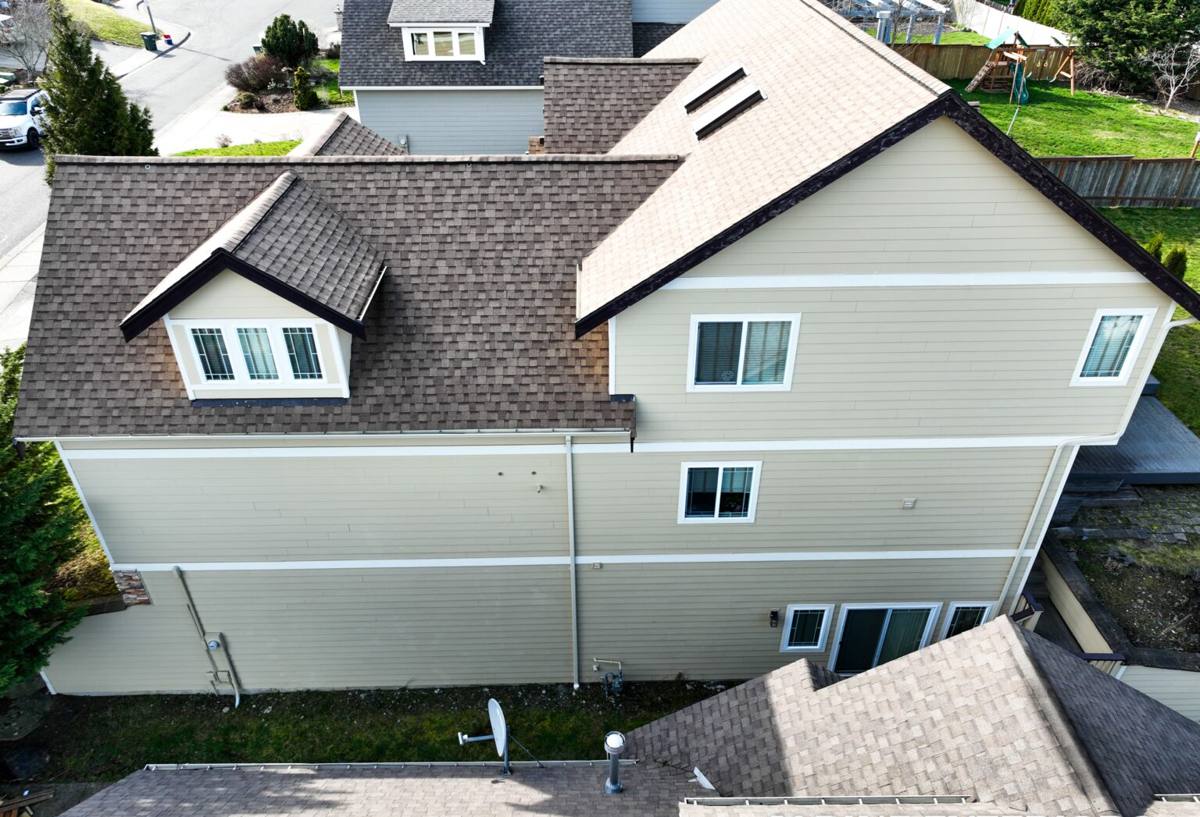
Signs Your Deck Needs Repair, Not Replacement
Homeowners often assume any deck problem means a full tear-out. In our experience working on decks throughout Whatcom County, most decks brought to us for "replacement" actually need targeted repair — if the framing and posts are sound, there's usually no reason to rebuild the whole structure.
- Boards that feel spongy or spring underfoot in specific spots, rather than across the whole deck
- Green or black staining concentrated where the deck meets the house, under planters, or in shaded corners
- Nails backing out or fasteners showing rust streaks down the board face
- A railing that has developed noticeable play or wobble when pushed
- Gaps opening up between the ledger board and the house siding or band joist
- Water pooling on the surface instead of running off toward the edge
- Stair stringers that flex or creak more than they used to
Any one of these on its own is often a straightforward repair. Several at once, especially combined with soft framing you can find with a screwdriver or awl, is when we start talking about partial or full replacement.
What a Correct Deck Repair Actually Involves
A repair that actually holds up through another Bellingham winter goes well past swapping out the board that looks bad. Here's what we check and address on every deck repair, whether the visible problem is one loose board or a whole section that needs rebuilding.
Structural Inspection First
Before any decking comes up, we check the ledger board connection to the house, the condition of the posts and footings, joist spacing and condition, and how the deck is flashed where it meets the structure. This is the part that's invisible from the top of the deck and the part most likely to cause a real safety issue if it's ignored.
Moisture Path Correction
Most repeat rot problems trace back to water that has nowhere to go — a missing or failed ledger flashing, decking laid without proper spacing for airflow, or grading that pushes water back toward the house. We fix the moisture path as part of the repair, not just the damaged wood, because replacing boards without correcting drainage means the same failure returns in a year or two.
Fastener and Hardware Upgrade
Older decks in this area were often built with fasteners and joist hardware that weren't rated for the corrosion this climate produces. During repair we replace these with stainless or heavy hot-dip galvanized hardware sized correctly for the connection, which matters more here than in drier inland climates.
Board Replacement Done Right
Replacement boards get properly gapped for drainage and expansion, cut ends get sealed before installation (a step that's frequently skipped and is a major reason end-grain rot shows up again within a couple of seasons), and fastener patterns match the rest of the deck so the repair doesn't stand out or create a new weak point.
Common Deck Problems We See in Sudden Valley Homes
Because so many lots here are wooded and shaded, we see a recurring pattern: moss and algae buildup on the deck surface holding moisture against the wood far longer than a comparable deck in full sun. Over a season or two, that constant dampness works into fastener holes and board seams, and what starts as a cosmetic moss problem becomes a structural one.
The other pattern we see often is ledger rot — the area where the deck attaches to the house. This connection carries a huge share of the deck's load, and it's also the spot most exposed to water running off the house wall during Bellingham's long stretches of driving rain. When ledger flashing was installed incorrectly or has failed over time, this is usually where we find the worst hidden damage, even on decks that otherwise look well maintained.
Stairs and railings take more direct weather exposure than the deck field itself, since they're rarely covered by an overhang. On hillside properties, stair stringers embedded too close to grade or sitting in a spot that collects runoff are a common point of early failure.
Repair vs. Replace: What Actually Drives the Decision
We give homeowners a straight answer on this rather than defaulting to whichever job is bigger. The table below covers the factors that actually determine whether repair makes sense.
| Factor | Leans Toward Repair | Leans Toward Replacement |
|---|---|---|
| Framing & posts | Solid, no soft spots when probed | Soft or crumbling at multiple points |
| Ledger connection | Sound, flashing intact | Rotted band joist or failed flashing |
| Extent of damage | Isolated boards or one section | Damage spread across the whole deck |
| Age of structure | Under 15-20 years, built to code | Older, undersized framing by current standards |
| Footings | Adequate size, no heaving or settling | Undersized, shifted, or frost-affected |
| Budget goal | Extend service life affordably | Want a different layout, size, or material |
We won't recommend a full rebuild just because it's a bigger job. If the bones are good, a well-done repair can add another decade or more of service life for a fraction of the cost of starting over.
Our Deck Repair Process
- On-site assessment — we inspect the deck from underneath as well as from the surface, checking framing, ledger, footings, and hardware condition, not just the boards you can see.
- Written scope — you get a clear description of what's failing, what's sound, and what we recommend, with repair and (if relevant) replacement options priced separately so you can compare.
- Moisture and drainage fixes — any flashing, grading, or spacing issues get corrected as part of the repair, not treated as optional add-ons.
- Structural repair — damaged framing, posts, or ledger connections are repaired or replaced with properly rated, corrosion-resistant hardware.
- Surface repair — decking, railings, or stair components are replaced or repaired to match the existing deck as closely as possible.
- Final walk-through — we go over what was done and what maintenance will keep the repair performing through the wet season.
Materials We Use and Why
For repairs, matching the existing deck's material is usually the right call for both appearance and budget, but it's worth understanding the trade-offs, especially in a climate that stays damp as long as this one does.
| Material | Best For | Maintenance in This Climate |
|---|---|---|
| Pressure-treated lumber | Budget-friendly framing and decking repairs | Needs regular cleaning and resealing to resist moss and moisture |
| Cedar | Matching an existing cedar deck's look | Naturally rot-resistant but still needs periodic sealing in shaded, damp spots |
| Composite decking | Surfaces prone to repeat moss and moisture problems | Low maintenance, but still needs surface cleaning to prevent slick moss film |
We're straightforward about the trade-offs of each option rather than pushing one product. Composite decking, for example, holds up well against moss staining but can still develop a slick surface film in constant shade and needs occasional cleaning like anything else exposed to this much moisture. Cedar and treated lumber cost less up front but ask more of the homeowner in terms of upkeep. The right call depends on your budget, how much shade the deck sits in, and how much maintenance you want to do going forward.
Maintenance Checklist to Protect Your Repair
A good repair is only as good as what happens to it afterward. These are the habits that make the biggest difference for decks in this area.
- Clear leaves and debris off the deck surface regularly, especially in fall and through the wet months
- Sweep or gently pressure-wash moss and algae growth before it has a chance to stain or hold moisture against the wood
- Check the ledger area where the deck meets the house once a year for gaps, staining, or soft wood
- Keep gutters and downspouts near the deck clear so runoff isn't dumping directly onto or under the structure
- Reseal wood decking on the schedule appropriate to the product — don't wait until it's visibly graying
- Trim back overhanging branches to let the deck surface get more light and air movement
- Check railings and stair connections for looseness at the start of each season
Why Hire a Crew That Already Works in Sudden Valley
Deck problems in this part of Whatcom County follow patterns that aren't the same as decks built and maintained in a drier climate. A crew that regularly works Bellingham's wooded, moisture-heavy neighborhoods knows to check the ledger connection first, knows which hardware actually holds up against the salt-tinged, moss-prone conditions here, and knows how to correct drainage instead of just replacing whatever board looks worst. That local pattern recognition is the difference between a repair that lasts one season and one that lasts fifteen.
It also means a more honest estimate. We're not guessing at how this climate treats a deck over time — we're telling you what we've actually found on similar homes nearby, and pricing the repair based on that, not a generic checklist.
If you've got a deck in Sudden Valley that's showing soft spots, moss buildup, loose railings, or staining near the house, we're happy to take a look and give you a straightforward assessment of what it needs. Fill out the form below for a free, no-pressure estimate — there's no obligation, just a clear picture of what's going on and what it'll take to fix it right.