 Bellingham Window
 Roofing in Barkley Deals With Bellingham's Weather Every Single Day
Barkley sits close enough to Bellingham Bay and the surrounding waterways that homes here take on a specific mix of punishment: salt-tinged air, wind-driven rain that finds its way under loose flashing, and long stretches of gray, wet months that give moss all the time it needs to take hold. An asphalt shingle roof in Barkley isn't just shedding water — it's fighting a slow, steady chemical and biological process that a roof in a drier, inland climate never has to deal with.
That's the backdrop for every roofing decision in this neighborhood, from the underlayment you choose to how often you get on a ladder to check things. Whatcom County's marine climate rewards roofs that are built correctly the first time and punishes shortcuts fast — usually within a few wet seasons, not decades.
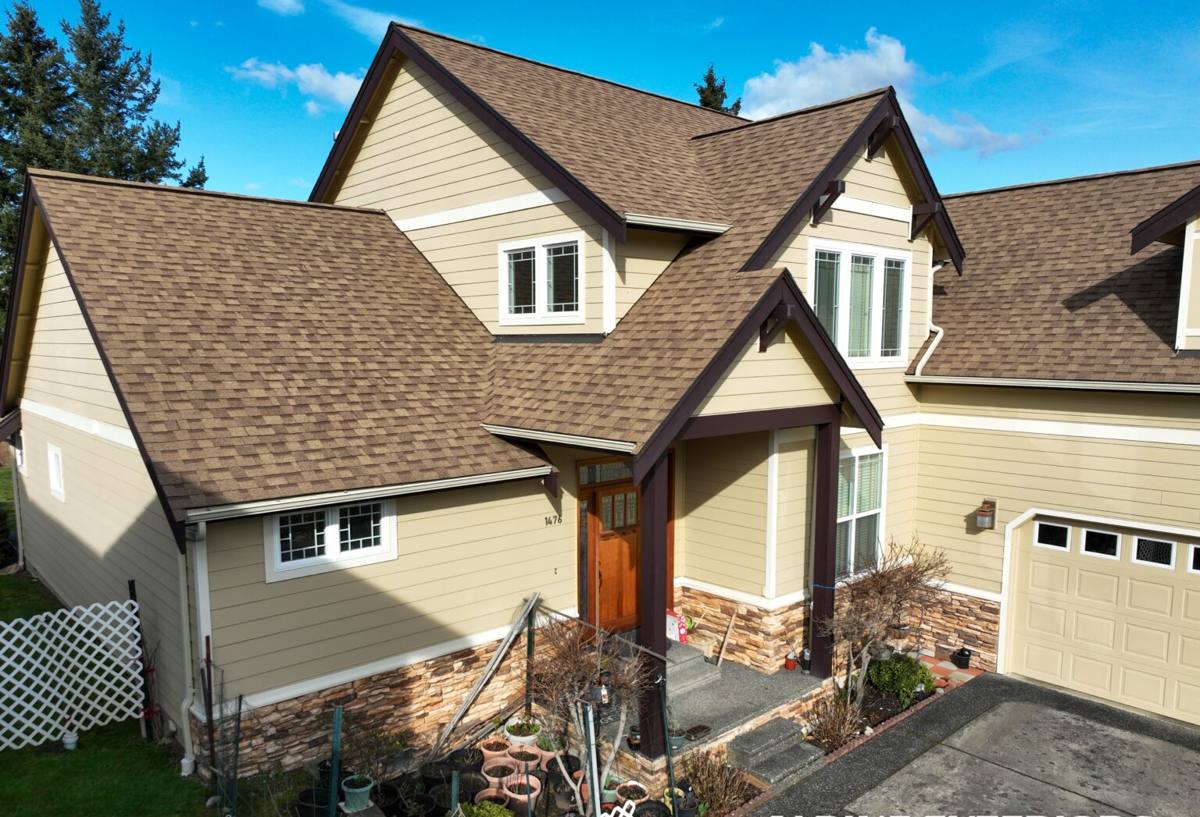
What Barkley Homes Actually Need From an Asphalt Shingle Roof
A shingle roof that holds up here needs more than good shingles. It needs a full system — underlayment, flashing, ventilation, and the shingles themselves — matched to constant moisture and salt exposure rather than assembled to a generic spec sheet.
Moisture Management Comes First
Driving rain in this area doesn't fall straight down; wind pushes it sideways and up under shingle tabs and around penetrations. Self-adhered, waterproof underlayment at eaves, valleys, and around every vent pipe or skylight isn't optional here — it's the difference between a roof that stays dry and one that develops slow leaks nobody notices until there's a stain on a ceiling.
Ventilation Prevents Problems You Can't See
A poorly ventilated attic traps moisture underneath the roof deck, and in a climate this damp, that moisture doesn't evaporate quickly. Over time it can rot sheathing from below even while the shingles on top still look fine. Balanced intake and exhaust ventilation keeps air moving so the deck can dry out between storms instead of staying saturated all winter.
Flashing Details Separate a Good Roof From a Problem Roof
Most roof leaks we get called out for in this area don't start in the open field of the roof — they start at a flashing point: a chimney, a wall intersection, a skylight curb, a vent boot cracked from years of sun and salt air. Correctly formed step flashing, counterflashing, and sealed penetrations matter more here than in a mild, dry climate simply because there's more water looking for a way in.
Salt Air Adds Its Own Wear on Metal Components
It's easy to think about roofing damage purely in terms of water, but the salt-laden air common near Bellingham Bay accelerates corrosion on anything metal — nail heads, flashing, vent caps, and gutter hardware. Standard fasteners and flashing that would hold up fine forty miles inland can start showing rust streaks and weak points years sooner this close to salt water. That's why we lean toward corrosion-resistant fasteners and flashing metals on Barkley roofs rather than treating every project as identical regardless of distance from the water.
Moss: The Slow Damage Most Homeowners Underestimate
Whatcom County's long wet season is close to ideal moss-growing weather, and asphalt shingles give moss spores plenty to grip onto. Moss doesn't just sit on top of a roof — it holds moisture against the shingle surface, works its way under tabs, and gradually lifts them as it grows. Left alone for a few seasons, a moss-covered section of roof sheds water far less effectively than a clean one, even if the shingles underneath look intact.
Algae staining is a related but separate issue — the dark streaks visible on older roofs are usually blue-green algae, not dirt. It's mostly cosmetic, but it's a sign the roof surface is staying damp longer than it should.
- Moss growth concentrated on shaded, north-facing sections of the roof
- Granule buildup collecting in gutters or at the base of downspouts
- Shingle tabs that look slightly lifted or curled, especially near valleys
- Dark streaking on shingles that doesn't rinse off with rain
- Soft spots or gentle sagging felt when the roof is walked on
- Daylight visible through the roof deck from inside an unfinished attic
If more than one of these shows up on your own roof, it's worth having someone take a real look rather than waiting for a leak to appear inside the house.
Choosing Shingles That Make Sense for This Climate
Not every asphalt shingle product performs the same way in a marine climate. The table below is a general comparison of the common tiers homeowners in Barkley choose between — it isn't a sales pitch for any one option, just an honest look at the trade-offs.
| Shingle Type | Typical Lifespan Here | Moss/Algae Resistance | Best Fit |
|---|---|---|---|
| Standard 3-tab | Shorter end of the range in this climate | Low unless treated | Budget-conscious rentals or short-hold properties |
| Architectural (laminate) | Longer, more consistent performance | Moderate; better with algae-resistant granules | Most owner-occupied homes in Barkley |
| Algae-resistant architectural | Comparable to standard architectural | Higher — copper/zinc granules slow algae growth | Shaded lots and north-facing roof slopes |
| Impact-rated architectural | Longer, with added durability | Moderate to high depending on the product line | Homes wanting extra resistance to storm debris |
In practice, most homes in this neighborhood do well with an architectural shingle that includes algae-resistant granules. The upgrade cost over standard 3-tab is modest, and in a climate with constant algae and moss pressure, it's one of the more worthwhile upgrades available.
Our Asphalt Shingle Roofing Process
We approach every roof in Barkley the same methodical way, because skipping steps is exactly what causes early failures in this climate.
- Roof and attic inspection — we check the existing deck, ventilation, flashing points, and attic moisture before quoting anything, so the estimate reflects what your roof actually needs.
- Tear-off and deck assessment — old shingles come off completely so we can inspect the sheathing underneath for rot or soft spots, which is the only reliable way to catch deck damage before it gets covered up again.
- Deck repair as needed — any damaged sheathing is replaced, not patched over, before new underlayment goes down.
- Waterproof underlayment installation — self-adhered membrane at eaves, valleys, and penetrations, with synthetic underlayment across the rest of the field.
- Flashing and ventilation work — new flashing at chimneys, walls, and skylights, plus ventilation upgrades wherever the attic needs them.
- Shingle installation — installed to manufacturer nailing and exposure specs, not just "close enough," since fastening pattern directly affects wind and rain performance.
- Final walkthrough — cleanup, a magnetic nail sweep, and a walk through the finished roof with you before we call the job done.
Repair or Full Replacement? What to Weigh
Not every roofing problem in Barkley means a full tear-off. The right call depends on the roof's age, how widespread the damage is, and what's happening underneath the shingles.
| Factor | Leans Toward Repair | Leans Toward Replacement |
|---|---|---|
| Roof age | Under roughly half its expected lifespan | Nearing or past its expected lifespan |
| Extent of damage | Isolated to one section or a handful of shingles | Spread across multiple roof planes |
| Deck condition | Sheathing is dry and solid | Rot or soft spots found during inspection |
| Moss/algae coverage | Light, surface-level growth | Heavy growth that's already lifted shingle tabs |
| Underlayment | Modern, waterproof underlayment already in place | Old felt underlayment with no water barrier at eaves or valleys |
An honest inspection should be able to tell you which side of that table your roof falls on before any work starts — and if a repair genuinely solves the problem, that's what we'll recommend.
What Actually Drives the Cost of a Barkley Roofing Project
Every roof is different, so we won't quote a number without seeing yours, but the main factors that move a project up or down in price are consistent from house to house.
- Total roof area and how many stories tall the home is
- Roof pitch — steeper roofs take longer and require more safety setup
- Whether existing shingles need to be torn off or, in rare cases, layered over
- How much of the deck needs repair once the old shingles come off
- Number of penetrations — chimneys, skylights, plumbing vents, dormers
- Shingle tier chosen, from standard 3-tab up to impact-rated architectural
The inspection at the start of the process is what turns these general factors into a real number for your house, rather than a rough guess based on square footage alone.
Keeping a Shingle Roof Sound Through a Whatcom County Winter
Maintenance in this climate is less about scheduled ceremony and more about staying ahead of moisture and moss before they compound. A yearly check — ideally before the wet season sets in — covering gutters, flashing, and any visible moss growth catches most problems while they're still cheap to fix.
Gentle moss removal methods matter too. Pressure washing shingles strips away granules and shortens their life; a better approach is low-pressure treatment that lets the product do the work of killing moss without tearing up the shingle surface. Keeping gutters and downspouts clear matters more here than in drier climates, since standing water at the eaves during a long rainy stretch is exactly where leaks get started.
Why It Matters to Hire a Crew That Already Works in Barkley
A roofing crew that works this neighborhood regularly already knows which slopes hold moss the longest, which older homes are more likely to have outdated underlayment, and how wind off the bay tends to drive rain into flashing details that a crew from a drier region might not think twice about. That familiarity shows up as fewer callbacks and fewer surprises once tear-off starts.
It also means working with someone who understands Bellingham's permitting and inspection expectations, and who isn't guessing at how a roof needs to perform through a Pacific Northwest winter versus assuming it will behave like a roof from a milder, drier climate.
If your roof in Barkley is showing moss, aging shingles, or you're just not sure what condition it's really in, we're happy to take a look and provide a straightforward, no-pressure estimate — no guesswork, no upsell, just an honest read on what your roof actually needs.