 Bellingham Window
 Deck Building in Barkley, Built for the Climate It Sits In
Barkley has grown into one of Bellingham's more active neighborhoods for outdoor living — a mix of newer subdivisions, townhomes, and single-family homes where a deck is often the main connection between the house and the yard. But a deck built to a generic national spec doesn't always hold up here. Whatcom County's marine climate — damp air rolling in off Bellingham Bay, long stretches of driving rain, and a moss season that can run from fall through spring — asks more of a deck's structure and finish than drier inland regions ever will. Building a deck in Barkley means building for that reality from the ground up, not bolting on weatherproofing as an afterthought.
This page covers what a Barkley deck actually needs, what separates a correctly built deck from one that just looks finished on install day, and how our process works from first estimate to final walkthrough.
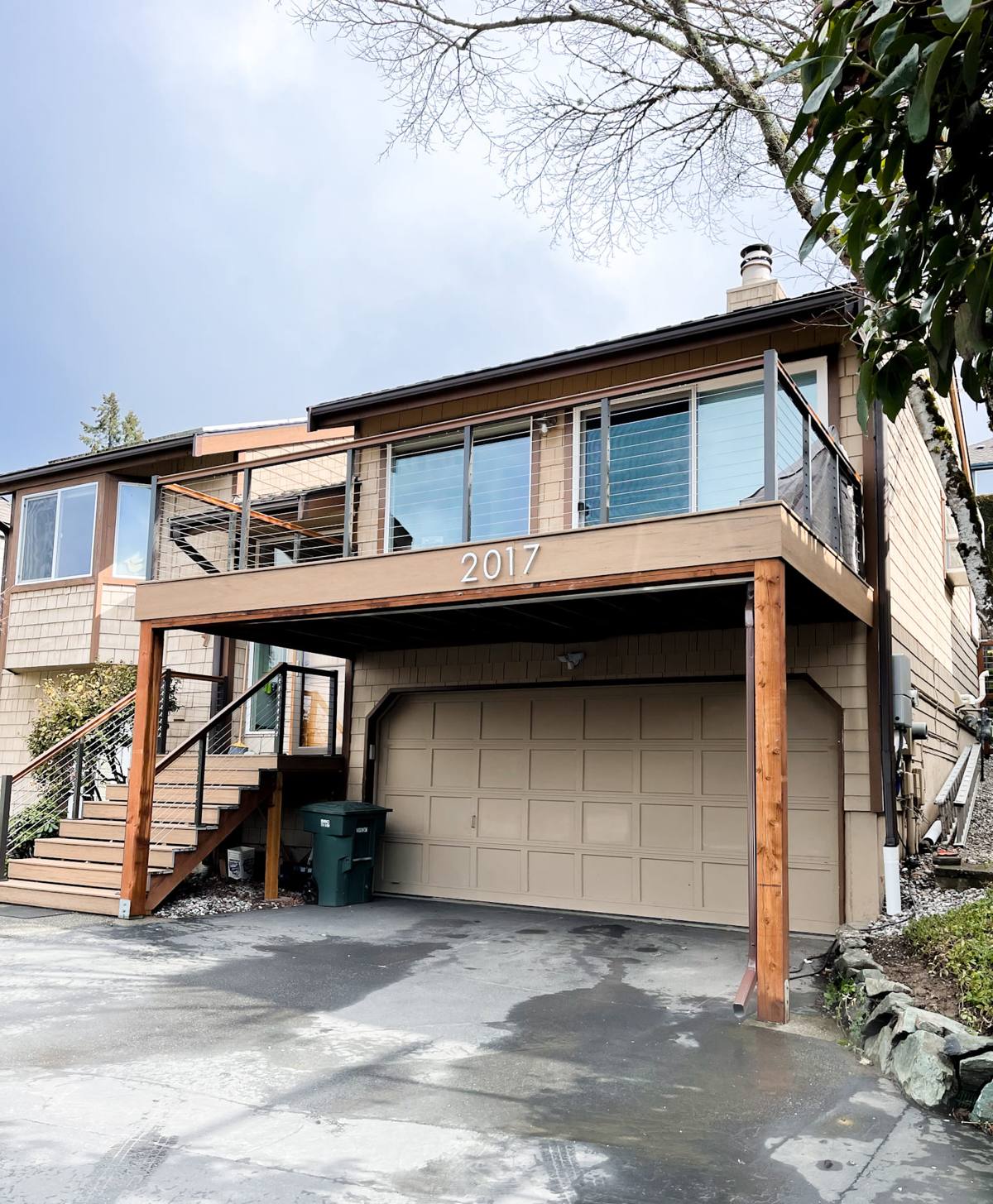
What Bellingham's Weather Does to an Outdoor Deck
Every material and fastener decision on a deck should be made with the local climate in mind. In Barkley and the surrounding Bellingham area, three things do most of the damage over time.
Moisture That Doesn't Let Up
Driving rain doesn't just fall straight down here — wind pushes it sideways, up under rail caps, and into any gap that isn't properly flashed or sealed. Decks that trap water against the house, at ledger connections, or between decking boards end up with rot and hidden decay long before the surface shows any sign of a problem.
Moss, Algae, and Slick Surfaces
Whatcom County's extended damp season is ideal for moss and algae growth on any horizontal wood or composite surface that doesn't drain and dry quickly. Beyond the cosmetic issue, a mossy deck surface is a real slip hazard on stairs and landings, and moss holding moisture against a board accelerates whatever decay process is already underway.
Corrosion and Fastener Failure
Salt-tinged marine air moving inland from the bay speeds up corrosion on fasteners, brackets, and hardware that aren't rated for coastal exposure. A deck can look structurally sound while the screws and joist hangers holding it together are quietly rusting from the inside.
Choosing Decking Material for a Barkley Home
There's no single "correct" decking material — the right choice depends on budget, how much upkeep you want to take on, and how the deck will be used. Here's how the common options actually perform in this climate.
| Material | How It Handles Our Climate | Maintenance |
|---|---|---|
| Pressure-treated wood | Affordable and strong, but needs consistent sealing to resist moisture and moss buildup | Annual cleaning and re-sealing recommended |
| Cedar | Naturally moisture- and insect-resistant, ages to a gray patina if left unfinished | Periodic cleaning; staining optional but extends life |
| Capped composite | Resists moisture absorption and moss staining far better than wood; won't rot | Occasional washing, no sealing or staining |
| PVC decking | Fully synthetic, handles constant damp exposure with no moisture absorption at all | Lowest maintenance; occasional washing only |
We don't push one product line over another as a default. Real cedar or quality pressure-treated lumber, properly detailed and maintained, performs well here — but it asks more of the homeowner over time. Capped composite and PVC cost more up front and trade some of that traditional wood look for a much lower long-term maintenance burden, which matters in a climate where moss and moisture are working against the deck year-round. We'll walk through the honest trade-offs for your specific project rather than steering you toward whatever's easiest to install.
What a Correctly Built Deck Actually Involves
The parts of a deck that matter most for longevity are the ones you can't see once it's finished. This is where a lot of corner-cutting happens on lower-quality builds.
Footings Set Below Frost Depth
Deck footings need to be sized and set to local frost depth and soil conditions, not guessed at. Undersized or shallow footings lead to a deck that shifts, settles unevenly, or develops gaps at the ledger connection over a few winters.
Ledger Board Flashing
Where a deck attaches to the house is the single most common failure point on decks in wet climates. Correct flashing — installed in the right order behind the siding and over the ledger board — keeps water from working its way into the house's rim joist and wall framing. This is a detail that's invisible once the deck is built, but it's the difference between a deck that lasts decades and one that causes hidden rot behind the wall.
Fasteners and Hardware Rated for the Coast
Every screw, joist hanger, and structural bracket should be rated for exterior or coastal exposure, not standard interior-grade hardware. Given the corrosion pressure from Bellingham's marine air, this isn't optional — it's the difference between hardware that holds for the life of the deck and hardware that starts failing in five to seven years.
Drainage and Airflow Underneath
A deck built low to the ground or with poor airflow underneath stays damp longer after every rain, which speeds up decay in the framing and encourages moss on the surface above. Proper spacing, grading beneath the deck, and gapping between boards all help the structure dry out between storms instead of staying saturated.
Railings, Stairs, and Local Code
Railing height, baluster spacing, and stair geometry aren't style choices — they're set by building code, and Bellingham and Whatcom County both enforce them through the permitting process. Elevated decks typically require guardrails at a minimum height with baluster gaps narrow enough to prevent a small child from passing through, along with proper stair rise-and-run consistency and secure handrails on longer stair runs. A deck that skips a required permit or inspection can create real problems later — at resale, with insurance, or if the structure is ever questioned after a repair or an addition. We handle the permitting process as part of the job so you're not left figuring out Whatcom County requirements on your own.
Our Deck Building Process
We keep the process straightforward from the first conversation to the final walkthrough:
- On-site assessment — We look at your yard's grade, drainage, sun and rain exposure, and how the deck will connect to the house.
- Material and design conversation — We go over decking, railing, and layout options with honest pros and cons for your budget and how you'll use the space.
- Written estimate — A clear scope of work and price before anything is scheduled, no vague allowances.
- Permitting — We handle the application and inspection scheduling required by the City of Bellingham or Whatcom County, depending on your property.
- Construction — Footings, framing, ledger flashing, decking, and railings installed in the correct sequence, with attention to the details that don't show once it's finished.
- Final walkthrough — We go over the finished deck together and cover basic care so it holds up the way it's built to.
Keeping a Deck in Good Shape Through Bellingham's Wet Season
Whatever material you choose, a little regular upkeep goes a long way in this climate. A basic seasonal routine looks like this:
- Sweep leaves and debris off the deck surface regularly in fall to prevent trapped moisture and staining
- Clean moss and algae off boards and stairs before it builds up, especially in shaded areas
- Check railings and stair connections annually for looseness or corrosion at fasteners
- Re-seal or re-stain wood decking on the schedule the product calls for — don't wait until it looks weathered
- Confirm gaps between boards and airflow underneath the deck haven't been blocked by planters, storage, or landscaping
- Inspect the ledger board area near the house each year for any sign of water staining or soft wood
Why It Matters to Hire a Crew That Already Works in Barkley
A deck builder who works regularly in Barkley and the greater Bellingham area already knows the local permitting process, has a feel for how the area's soil and drainage behave, and understands exactly what this climate does to a deck over ten or twenty years — not just what looks good on installation day. That local familiarity shows up in fewer surprises during the permit process, footing and drainage decisions that account for your specific lot, and a finished deck that's built for the weather it will actually face, not a one-size-fits-all national spec.
If you're planning a new deck or replacing one that's showing its age, we're happy to take a look and walk you through your options. Reach out for a free, no-pressure estimate using the form below.