 Bellingham Window
 Metal Roofing in Barkley: What the Climate Actually Demands
Barkley homeowners looking at metal roofing usually come to it for one of two reasons: an asphalt roof that's aging out sooner than it should, or a straightforward decision to install something that will genuinely outlast the alternative. Both are reasonable starting points, but the more useful question is what a roof in this specific part of Whatcom County has to stand up to year after year. Salt air drifting in off the water, rain that gets pushed sideways by wind more often than it falls straight down, and a moss season that runs longer here than in drier parts of the state all put steady pressure on a roof — not in one dramatic event, but in the slow accumulation of small failures that eventually add up to a leak, a rust streak, or a premature tear-off.
Metal roofing, installed correctly, handles that combination better than most other roofing materials available to Barkley homeowners. But "installed correctly" is doing a lot of work in that sentence, and getting there depends on details that a crew unfamiliar with this specific climate can easily miss.
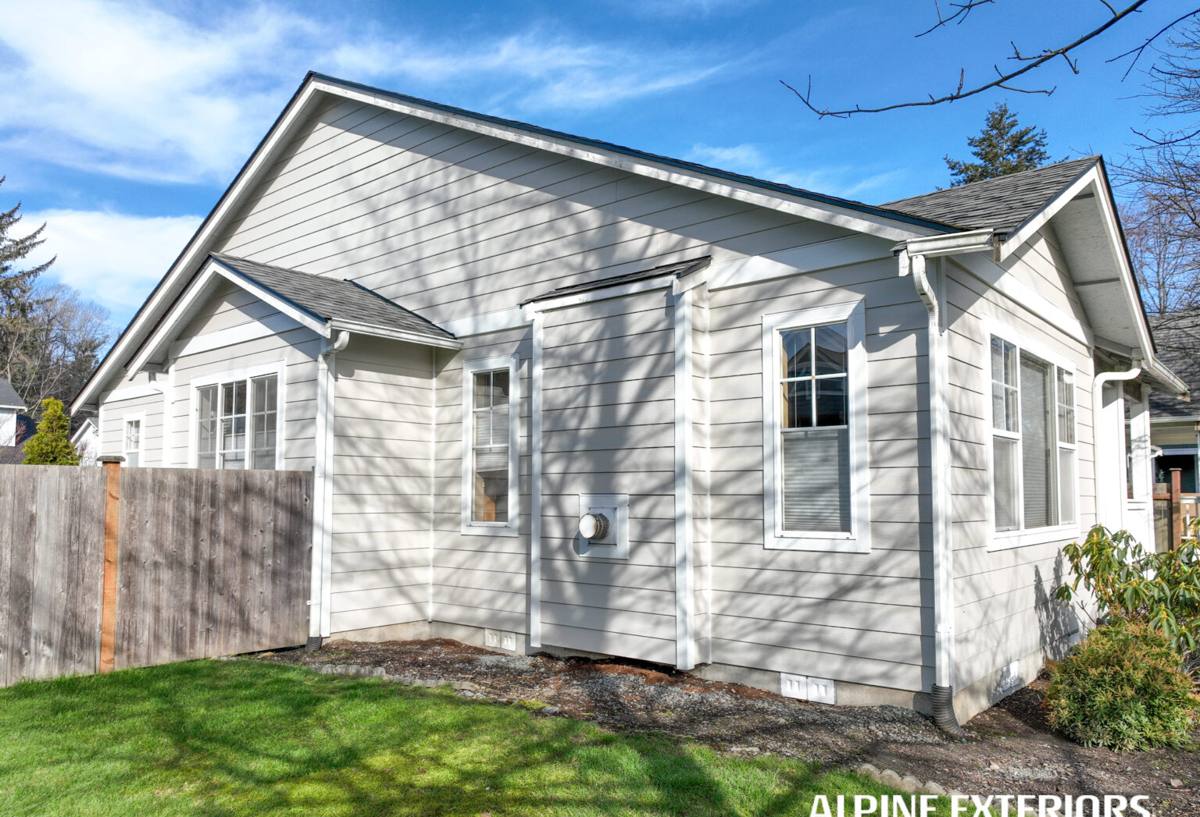
What Salt Air, Driving Rain, and Moss Do to a Roof
Salt-laden air is corrosive to exposed metal, full stop. It doesn't matter whether that metal is a fastener head, a flashing seam, or a panel edge — sustained salt exposure will find any weak point in a coating or finish over enough years. That's why the specific metal, gauge, and finish matter as much as the fact that it's "metal roofing" in general. Not every metal roofing product is built for a coastal-influenced climate, and choosing the wrong one can mean dealing with rust streaks and premature finish failure well before the panels themselves would otherwise need replacing.
Driving rain is the second factor, and it changes what "watertight" actually requires. Rain that's pushed sideways by wind doesn't just run downhill off a roof plane the way it would in a calm, straight-down shower — it gets forced up under laps, into fastener penetrations, and along ridge and valley seams that a fair-weather installation wouldn't need to account for. On a metal roof, that means seam design, fastener placement, and underlayment all carry more weight here than they would in a drier, calmer inland region.
Moss is the third piece, and it's easy to underestimate on a metal roof specifically because metal doesn't feed moss the way an organic shingle surface can. But moss and debris can still accumulate in valleys, around penetrations, and on north-facing or heavily shaded roof planes that stay damp for extended stretches through fall, winter, and much of spring. Left alone, that buildup traps moisture against the roof surface and can accelerate finish wear or contribute to standing water at trapped points — a maintenance issue rather than a material failure, but one worth planning for from the start.
Metal Roofing Systems We Install
"Metal roofing" isn't one product — it's a category, and the differences between the main systems matter more in a climate like this one than they would somewhere drier and calmer.
| System | How It's Attached | Best Fit for Barkley Conditions |
|---|---|---|
| Standing seam | Concealed fasteners under raised, interlocking panel seams | Strongest option against wind-driven rain since there are no exposed fastener penetrations for water to work into over time |
| Exposed-fastener panels | Fasteners driven through the panel face, typically with a gasketed washer | Lower upfront cost, but gaskets are a maintenance item — they age and compress, and eventually need inspection or replacement to keep performing in sustained wet weather |
| Metal shingles/shakes | Interlocking panels formed to resemble shingle or shake profiles | A good fit where a homeowner wants metal's durability with a more traditional roofline appearance |
We walk through these tradeoffs with every homeowner rather than defaulting to one system regardless of the project. A detached garage or outbuilding may make sense with exposed-fastener panels at a lower cost, while a primary residence exposed to more direct weather often justifies the added cost of standing seam. The right call depends on the roof's exposure, the home's roofline, and the budget — not a one-size-fits-all recommendation.
Coatings and Finishes
The finish on a metal roof is what actually holds up against salt air and UV exposure over the long run, and it's worth understanding before choosing a product. Factory-applied paint systems, typically baked on under controlled conditions, resist fading, chalking, and corrosion far better than field-applied coatings, and they carry a manufacturer warranty that a site-applied finish generally can't match. We specify coated systems rated for coastal-influenced exposure rather than a generic finish meant for a drier, calmer inland climate.
What Correct Installation Actually Involves
A metal roof performs the way it's engineered to only when the details underneath it are right. That includes a properly lapped underlayment or synthetic weather barrier across the full deck, correct panel overlap and seam engagement so wind-driven rain sheds rather than gets forced upward, flashing detailed at every valley, penetration, and roof-to-wall transition, and fastener spacing and type matched to the panel manufacturer's specification rather than a generic standard. Metal also expands and contracts more with temperature swings than asphalt does, so panels need to be fastened in a way that allows for that movement without stressing seams or working fasteners loose over time.
Ventilation matters too. A roof deck that can't breathe traps moisture underneath the metal, and sustained trapped moisture is a problem for the decking and structure below regardless of how good the roofing material on top is. Getting intake and exhaust ventilation right is part of a correct installation, not an optional add-on.
Our Process, From Estimate to Finished Roof
Every project starts with an honest look at the existing roof — what condition the decking is in underneath the current material, what the roofline and penetrations look like, and what system actually makes sense given the home's exposure and the homeowner's budget. From there:
- We walk the roof and attic space to check decking condition, ventilation, and any signs of existing moisture damage before recommending a scope
- We provide a clear estimate that lays out the system, underlayment, flashing approach, and total cost — no vague allowances
- Tear-off and decking repair happen first, since a metal roof installed over a compromised deck won't perform regardless of the panel quality
- Underlayment, flashing, and panels go on to manufacturer specification, with attention to how each roof plane's orientation affects its exposure to wind-driven rain
- We do a final walkthrough with the homeowner so you know what was done and what, if anything, needs periodic attention going forward
We also handle windows, siding, and decks, and we treat a roofing project as connected to the rest of the exterior rather than an isolated job. A new roof that dumps water onto a wall or window head below without proper drip edge and flashing just relocates a moisture problem instead of solving it — getting those transitions right is part of doing the roof correctly in the first place.
What Metal Roofing Costs, and What Drives the Range
Metal roofing costs more upfront than asphalt shingles, and it's worth understanding why before deciding it's out of reach. The following factors move the price on any given Barkley project more than the base "metal roofing" label does on its own.
| Cost Factor | How It Affects the Project |
|---|---|
| System type | Standing seam runs higher than exposed-fastener panels due to labor and material differences |
| Roof complexity | Steep pitches, multiple planes, and dormers add labor time and material waste |
| Existing deck condition | Rot or damage found during tear-off adds repair cost before new roofing can go on |
| Coating/finish grade | Coastal-rated finishes cost more than standard finishes but hold up longer against salt air |
| Ventilation upgrades | Bringing an older roof's ventilation up to spec adds cost but protects the investment |
Metal roofing's higher upfront cost is generally offset by a much longer service life and lower long-term maintenance than asphalt shingles require in this climate — but we'd rather walk a homeowner through the real numbers on their specific roof than lean on a broad industry average that may not reflect their situation.
Metal Roofing vs. Asphalt Shingles in This Climate
Most homeowners weighing metal roofing have already priced out asphalt shingles, so it's worth comparing the two directly rather than treating the decision as settled from the start.
| Factor | Metal Roofing | Asphalt Shingles |
|---|---|---|
| Wind-driven rain performance | Strong when seams and laps are engineered correctly, especially with standing seam | Adequate when installed to spec, but shingle edges and nail penetrations are more exposed over time |
| Salt air / corrosion resistance | Depends heavily on coating and fastener quality — coastal-rated finishes hold up well | Less affected by salt air directly, since asphalt doesn't corrode the way exposed metal can |
| Moss and debris | Doesn't feed moss growth, though debris can still accumulate in valleys | Granule surface can hold moisture and support moss growth more readily |
| Typical service life | Multiple decades when installed and maintained correctly | Shorter service life, more sensitive to repeated wet-dry and freeze-thaw cycling over the years |
| Upfront cost | Higher | Lower |
Neither material is the wrong answer for every home. Asphalt shingles remain a reasonable, lower-cost option for plenty of Barkley homeowners, especially on a shorter ownership timeline. Metal roofing makes the most sense for homeowners planning to stay long-term and wanting to minimize roofing maintenance over the decades ahead.
Signs a Barkley Roof Might Need Attention
Whether you currently have asphalt or an existing metal roof, it's worth knowing what to watch for before a small issue turns into an interior leak:
- Rust streaks at fasteners, seams, or panel edges on an existing metal roof
- Moss or debris buildup collecting in valleys or around penetrations
- Granule loss or curling shingle edges on an aging asphalt roof
- Soft spots or sagging when a roof is walked or inspected up close
- Water stains on interior ceilings, especially near valleys or chimney flashing
- Gaps or separation at flashing around vents, skylights, or roof-to-wall transitions
- A roof that's simply nearing or past its expected service life for its material
Any one of these on its own isn't necessarily an emergency, but they're worth having a professional look at directly rather than waiting, since moisture problems in this climate tend to compound rather than stay static.
Why a Local Crew That Works Barkley Matters
A lot of what determines whether a metal roof performs for decades or develops problems early comes down to details that a crew unfamiliar with this specific area can overlook — how much wind-driven rain a given roof plane actually takes on based on its orientation, where debris and moss are likely to collect based on shade and roof geometry, and how flashing needs to be layered so it sheds water correctly through an entire wet season rather than just looking finished on installation day.
A crew that works Whatcom County roofs regularly starts to recognize these patterns property to property. That shows up in small on-site decisions — how tight a valley flashing lap needs to be, where extra fastener density is worth the labor given local wind exposure, which roof planes need a heavier ventilation strategy — that homeowners rarely notice directly but absolutely feel in how the roof holds up over the following twenty or thirty years.
If your Barkley home could use a straightforward look at whether metal roofing makes sense, or you want a second opinion on an aging roof before committing to a material, we're glad to take a look. Reach out using the form below to schedule a free, no-pressure estimate.