 Bellingham Window
 Roof Repair in Barkley: Built for Bellingham's Climate
Homes in the Barkley area of Bellingham deal with a specific combination of weather that's harder on a roof than most homeowners realize. Salt-tinged air drifting in off Bellingham Bay, long stretches of driving rain through fall and winter, and a moss season that can run nine months out of the year all work on a roof at the same time. None of these are dramatic events on their own. It's the accumulation, year after year, that turns a small problem into a leak, and a leak into interior damage. A roof repair done right in this part of Whatcom County has to account for all three, not just patch the symptom in front of you.
This page covers what roof repair actually means for a Barkley home, what a thorough job looks like, and how our process works from the first call to the final cleanup.
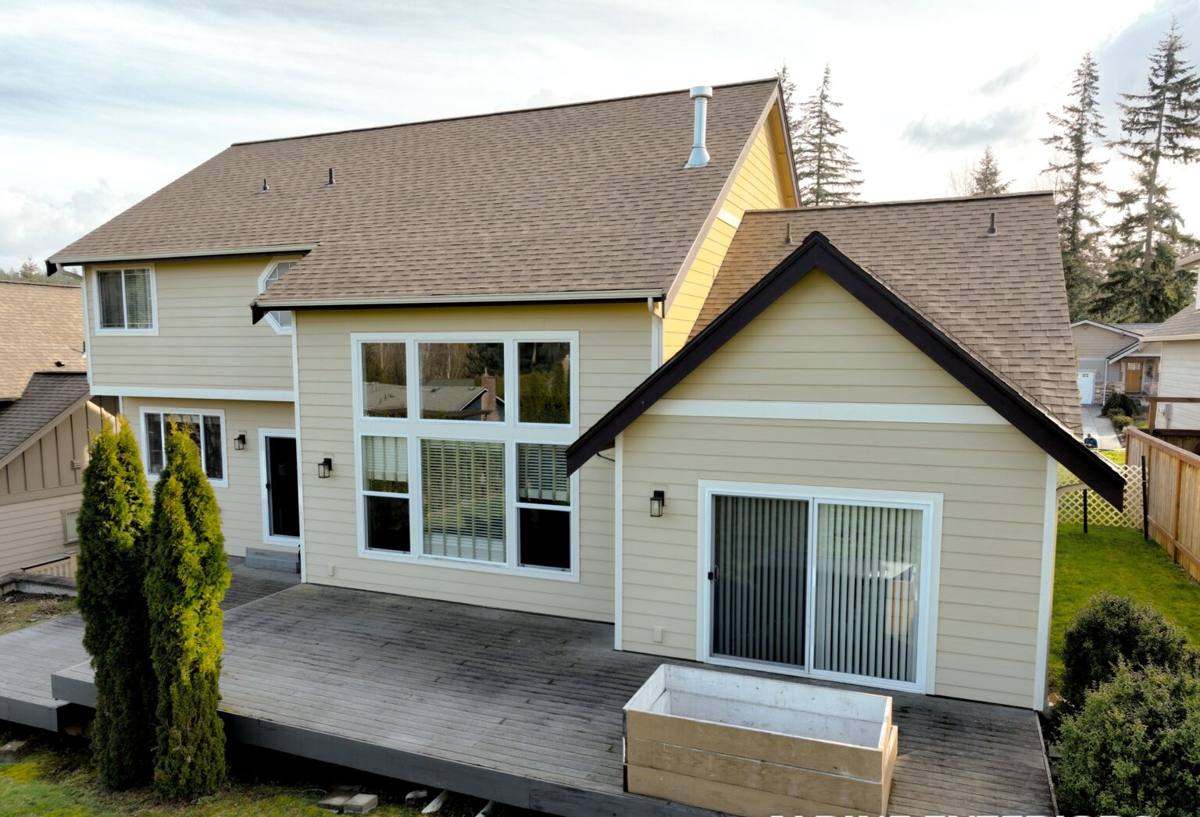
Signs a Barkley Roof Needs Repair
Most roof problems don't announce themselves with a dramatic leak. They show up as small, easy-to-miss signs first.
Moss and Organic Growth
Moss is the most visible issue on roofs throughout this region, and Barkley is no exception. It's not just cosmetic. Moss holds moisture against the roofing material long after the rest of the roof has dried out, and its root structure works its way under shingle edges and granules over time. A roof with heavy moss coverage is usually retaining water somewhere it shouldn't, which is exactly the condition that leads to soft decking and granule loss underneath.
Flashing and Valley Leaks
Flashing — the metal used around chimneys, skylights, roof valleys, and where a roofline meets a wall — is the single most common source of leaks we find on repair calls, more often than the roofing material itself. Driving rain, the kind that comes sideways off the bay during a fall storm, tests flashing in a way that light, straight-down rain never does. If a valley or a step-flashing seam was sealed poorly or has started to lift, sideways-driven rain will find it.
Wind and Storm Damage
Winter windstorms can lift shingle tabs, crack ridge caps, or knock debris loose from nearby trees onto a roof. Sometimes the damage is obvious. Often it's a lifted tab or a cracked seal that isn't leaking yet but will be within a season or two if it's left alone.
What a Correct Roof Repair Actually Involves
A repair that's done right addresses the cause, not just the spot where water showed up inside the house. Water travels before it drips — a stain on a ceiling in one room can trace back to a flashing failure several feet away on the roof. A repair that only patches the visible leak point without tracing it back to the source tends to resurface within a year, usually during the next hard rain.
A thorough repair typically includes:
- Identifying the actual entry point, not just the interior symptom
- Checking the surrounding roofing material and decking for hidden moisture damage
- Removing moss and organic debris from the repair area and clearing it back from the edges
- Replacing or re-sealing flashing rather than just caulking over a failure
- Matching replacement shingles or roofing material as closely as possible in type, style, and weathering
- Confirming the repair holds under water testing before calling the job finished
Roofing Materials Found on Barkley Homes
Repair approach depends heavily on what's already on the roof. Barkley has a mix of home ages and styles, so we see a range of materials, each with its own repair considerations in this climate.
| Roofing Type | Common Issue in This Climate | Repair Consideration |
|---|---|---|
| Asphalt composition shingle | Moss lifting granules; UV and rain aging seal strips | Widely available materials; matching older shingle color can be difficult |
| Cedar shake or shingle | Moisture retention, splitting, moss and moderate rot risk | Requires careful matching and attention to underlying ventilation |
| Metal roofing | Fastener backout, seam sealant breakdown, coastal air affecting some coatings over time | Repairs need fastener and sealant systems matched to the existing panel type |
| Flat or low-slope membrane | Ponding water, seam separation over years of freeze-thaw cycling | Seam and flashing detail work is critical; patching alone rarely holds long-term |
Whatever material is on the roof, our standard is the same: use a repair method appropriate to that material's manufacturer guidelines, not a generic patch that happens to be handy.
Our Roof Repair Process
We keep the process straightforward so you know what to expect from the first call.
1. Inspection
We get on the roof, not just in the attic, and look at the full picture — the reported leak area, the flashing, moss coverage, ventilation, and overall material condition. We also check the attic or interior side where accessible, since staining patterns tell us a lot about how water is moving.
2. Diagnosis and Plan
We explain what we found in plain terms — what's causing the issue, what needs to be repaired now, and what's worth keeping an eye on but doesn't need immediate work. You get a clear scope before anything happens, not a surprise later.
3. The Repair
We do the work with materials matched to what's already on your roof, following manufacturer installation standards rather than shortcuts. If we uncover additional hidden damage once we open up the area — which happens more often than homeowners expect — we stop and talk it through with you before proceeding.
4. Cleanup and Check
We clear debris, old material, and moss buildup from the work area, and where relevant, do a water test to confirm the repair is actually holding before we consider the job done.
Repair vs. Replacement: How We Decide
Not every roof problem calls for a full replacement, and not every repair is worth doing on its own. We look at a few honest factors before recommending either path.
- Age of the roofing material relative to its expected service life
- How isolated the damage is — a single flashing failure is a repair; widespread granule loss or multiple failed sections point toward replacement
- Decking condition underneath — soft or rotted decking changes the math significantly
- How many prior repairs the roof has already had in the same areas
If a repair is the right call, we'll say so plainly. If the roof is past the point where repair makes financial sense, we'll explain why rather than patching something that's likely to fail again soon.
Cost Factors in Barkley Roof Repairs
Every roof and every repair is different, so we don't quote prices sight unseen, but a few factors reliably drive cost up or down:
- How accessible the roof and repair area are (steep pitch, height, obstructions)
- Whether the repair is surface-level or involves opening up decking
- How closely replacement material needs to match existing roofing for appearance and warranty continuity
- Extent of moss removal and any related cleaning needed before the repair can be done properly
- Whether hidden water damage is found once the area is opened up
Minor flashing or spot repairs are generally a modest cost. Larger repairs involving decking replacement or extensive moss and moisture damage cost more, simply because more material and labor are involved. We'll always walk you through the actual scope before we start so there are no surprises.
Why a Crew That Already Works Barkley Matters
Roofing problems in this part of Whatcom County aren't generic. A crew that mostly works drier climates tends to under-detail flashing and moss management because those issues simply don't come up as often where they're from. A crew that works Bellingham roofs regularly already knows which details — flashing laps, moss-prone valleys, ventilation in older homes — tend to fail first here, and builds the repair to hold up against another wet season, not just to look finished on the day it's done.
Familiarity with the area also means faster, more accurate diagnosis. A repair crew that has worked on homes throughout Bellingham has usually seen the roofing systems common to a given neighborhood's build era, which shortens the guesswork on the initial inspection.
Maintaining Your Roof Between Repairs
A repair holds longer with a bit of regular attention. This is worth doing on your own between professional inspections:
- Check for moss buildup at least once a year, especially on north-facing slopes that stay shaded and damp longer
- Clear gutters and downspouts before the fall rains start so water isn't backing up under roof edges
- Look at flashing around chimneys and skylights after major windstorms
- Trim back tree limbs that overhang the roof to reduce debris buildup and moss spread
- Address small leaks or stains as soon as you notice them rather than waiting for the next dry spell
If you're seeing moss buildup, a stain on a ceiling, or storm damage on a roof in the Barkley area, we're happy to take a look and give you a straight answer on what it actually needs. Use the form below to request a free, no-pressure estimate.