 Bellingham Window
 Metal Roofing in Birch Bay: Built for a Waterfront Climate
Birch Bay sits right on the water in the northwest corner of Whatcom County, and that location puts homes here in one of the more demanding exterior environments in the region. Salt-laden marine air moves off the water and onto every roof plane, wind pushes rain sideways instead of letting it fall straight down, and a long, mild moss season settles in on any roof surface that stays shaded or damp for weeks at a stretch. Roofing that performs fine a few miles inland doesn't always hold up the same way out here.
Bellingham Window Co works on windows, siding, roofing, and decks across Whatcom County, and metal roofing has become one of the most requested upgrades among Birch Bay homeowners specifically because of how well a correctly installed metal roof handles this exact combination of salt, wind, and sustained moisture. This page focuses on that one service for that one area — what Birch Bay's climate actually demands from a metal roof, what a correct installation looks like, and how our process works from first look to final walkthrough.
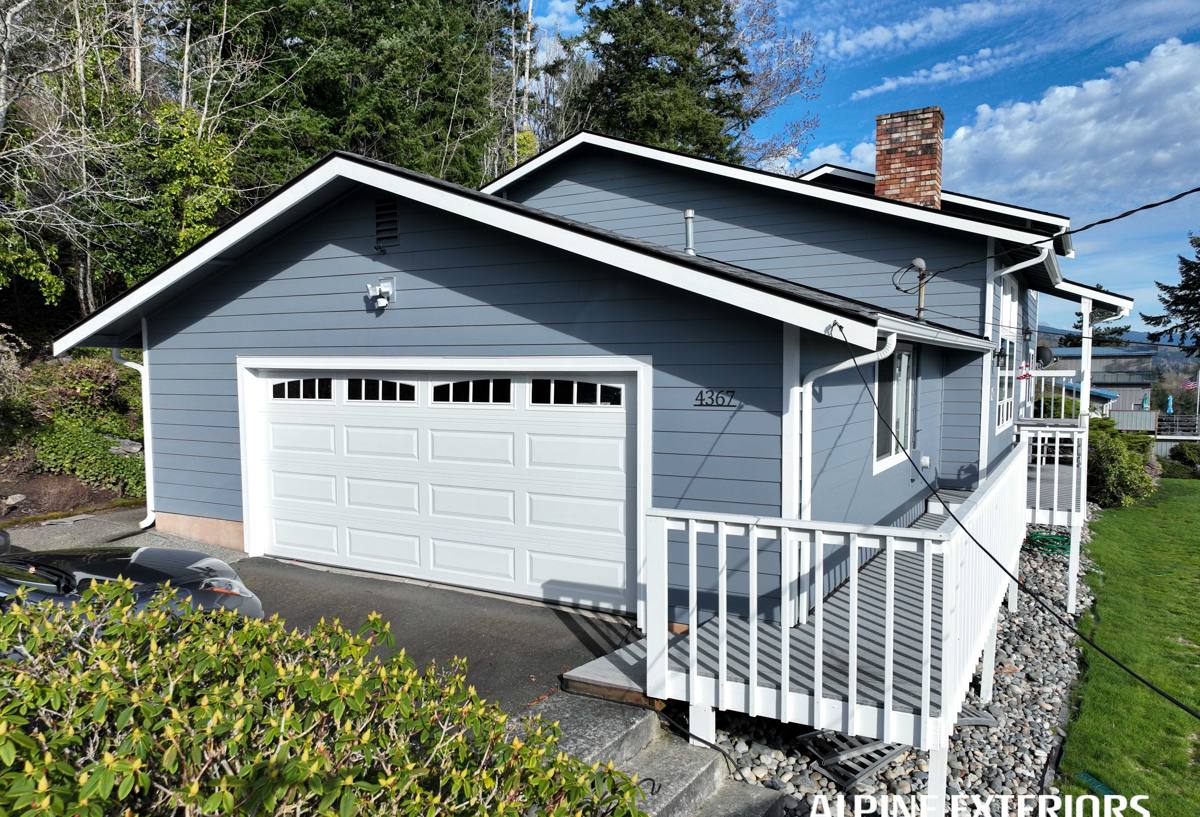
What This Climate Does to a Roof in Birch Bay
Salt Air and Corrosion
Being on the bay means more direct salt exposure than most inland Whatcom County properties see. Salt accelerates corrosion on exposed metal, and roofing is almost entirely exposed metal by nature — panels, fasteners, flashing, and trim. Lower-grade coatings and uncoated hardware show pitting, streaking, and eventual failure far sooner here than they would on a roof set back from the water.
Wind-Driven Rain
Waterfront exposure also means more wind, and wind-driven rain doesn't behave like a straight-down shower. It gets forced sideways and even upward under panel edges, around vent pipes, and into any flashing detail that wasn't built to handle it. A roof design that assumes water only ever moves downhill runs into trouble the first time a real storm rolls in off the water.
A Long Moss Season
Mild temperatures and near-constant moisture give moss, algae, and lichen a long growing season across this part of the county. Shaded and north-facing roof planes are usually the first to show it. Metal sheds moss more readily than porous roofing materials because there's no textured surface for spores to take hold of, but a metal roof still needs debris cleared from valleys and low-slope sections or organic buildup will find a foothold there too.
Why Metal Roofing Performs Well Here
Metal isn't the right material for every home or every budget, but for a waterfront property in Birch Bay it holds up against this specific combination of stresses better than most alternatives when it's installed correctly. It sheds wind-driven rain more effectively than a lapped material because panels run in long, continuous runs with far fewer seams for water to work into. It resists moss and algae growth better than porous materials because there's nothing for organic growth to root into on a smooth painted or coated surface. And a correctly finished metal roof, whether steel or aluminum, resists the kind of corrosion that eats away at lower-grade materials in salt air, provided the coating and fastener system are matched to a coastal environment rather than a generic inland spec.
Standing Seam vs. Exposed-Fastener Panels
Most metal roofs installed on homes fall into one of two systems, and the difference matters more in a place like Birch Bay than it does further inland. Standing seam panels use concealed clips and interlocking vertical seams, with no fasteners penetrating the panel face at all. That keeps every fastener out of direct weather exposure, which is a real advantage in a climate this hard on hardware. Exposed-fastener panels cost less upfront and install faster, but every screw penetrates the panel face and relies on a rubber washer to stay sealed. Those washers degrade over time, and in a climate with this much sustained rain and UV exposure, exposed-fastener roofs generally need more attention over their life than standing seam does. We'll walk you through both honestly rather than defaulting to whichever is easier to install.
What a Correct Metal Roof Installation Involves
A metal roof is only as good as the details underneath and around the panels. Most of the problems we see on metal roofs in this area trace back to shortcuts in these steps, not to the panels themselves.
Underlayment and Moisture Barrier
A high-temperature synthetic or self-adhered underlayment gives the roof deck a real second line of defense if wind-driven rain ever works its way past the panel seams. Ice-and-water shield at eaves, valleys, and low-slope transitions adds extra protection exactly where water is most likely to find a way in.
Flashing and Penetrations
Valleys, vent pipes, chimneys, and wall-to-roof transitions are where the great majority of roof leaks actually start, on metal roofs just as much as any other type. Flashing at these points needs to be properly formed, lapped in the right direction, and integrated with the underlayment rather than sealed over with caulk as a substitute for correct detailing.
Fasteners, Clips, and Galvanic Corrosion
Mixing incompatible metals is a real problem in a salt-air environment. Uncoated steel fasteners on an aluminum panel, or the wrong flashing metal against the wrong panel material, can set off galvanic corrosion that eats away at the contact point over time — a slow failure that's easy to miss until a leak shows up years later. Every fastener, clip, and flashing piece needs to be matched to the panel material, not just whatever happens to be on the truck that day.
Ventilation
Balanced intake and exhaust ventilation keeps the underside of the roof deck dry, which matters for the wood structure underneath a metal roof just as much as it does under any other roofing material. Trapped moisture in an unventilated attic causes problems that have nothing to do with the roofing material on top and everything to do with airflow underneath it.
Comparing Roofing Options for a Birch Bay Home
| Material | Salt Air & Corrosion Resistance | Moss & Moisture Behavior | Typical Lifespan Here |
|---|---|---|---|
| Standing seam metal | Excellent when coating and fasteners are matched to coastal exposure | Sheds moss well; concealed fasteners stay out of direct weather | 40-60+ years |
| Exposed-fastener metal panel | Good, but exposed fastener washers are the weak point over time | Sheds moss well; seams need periodic fastener checks | 25-40 years |
| Architectural asphalt shingle | Moderate; metal flashing components still need corrosion-resistant grade | Moss-resistant granule options help but still needs periodic cleaning | 20-30 years |
| Cedar shake | Wood is not directly affected by salt but hardware needs upgrading | Absorbs moisture readily; high moss and rot risk in shaded areas | 20-30 years with consistent upkeep |
There's no single right answer for every home — roof pitch, budget, how long you plan to stay in the house, and how exposed the property is to direct wind all factor in. What matters is choosing with this specific waterfront exposure in mind rather than a generic spec sheet.
Cost Factors Worth Understanding
Metal roofing bids can vary significantly between contractors, and the difference usually comes down to real scope differences rather than one company simply charging more for identical work.
| Factor | What It Affects |
|---|---|
| Panel system (standing seam vs. exposed-fastener) | Upfront cost, long-term maintenance, and fastener exposure to weather |
| Panel gauge and coating quality | Corrosion resistance and how long the finish holds up in salt air |
| Tear-off vs. install over existing roof | Whether hidden deck damage gets found and addressed before new panels go on |
| Underlayment grade | How well the roof resists wind-driven rain that gets past the panel seams |
| Flashing and fastener hardware | Corrosion resistance and long-term leak prevention at penetrations |
| Roof pitch and complexity | Labor time, staging, and the number of valleys and transitions to detail |
Metal roofing typically costs more upfront than asphalt shingles, but it also lasts considerably longer with less maintenance in a climate like this one. A detailed, itemized written estimate — not a single lump-sum number — is the best way to compare bids honestly.
Our Process
- In-person inspection: We walk the existing roof and attic in person and document what we find, rather than estimating from a photo or a drive-by.
- Written estimate: You get a clear, itemized bid covering underlayment, flashing, panel system, fasteners, and cleanup — no vague single-line pricing.
- Scheduling around weather: We build reasonable flexibility into the timeline, since wet-season delays are a normal part of working on the water in Whatcom County.
- Tear-off and deck repair: Old roofing comes off completely where a tear-off is called for, and any deck damage is addressed before new material goes down.
- Underlayment, flashing, and panel installation: Each layer goes on to manufacturer specification, with extra attention at valleys, penetrations, and wall transitions.
- Final walkthrough: We review the completed roof with you and confirm every detail before calling the job done.
Why Hiring a Crew That Already Works Birch Bay Matters
A contractor who works this specific stretch of coastline regularly already knows how salt air, wind exposure, and sustained moisture behave differently here than they do even a few miles inland. That familiarity shows up in the small decisions — which fastener grade to use, how flashing gets lapped at a valley facing prevailing wind, where extra underlayment is worth the added material cost — and those details are exactly what determines whether a metal roof lasts several decades or develops problems within a handful of years.
A Practical Checklist Before Hiring for Metal Roofing in Birch Bay
- Ask which panel system they recommend — standing seam or exposed-fastener — and why, for your specific roof
- Confirm the panel coating and fastener hardware are rated for coastal, salt-air exposure
- Ask how they detail flashing at valleys, penetrations, and wall transitions specifically for wind-driven rain
- Confirm they carry current Washington contractor licensing and liability insurance
- Get a clear, written, itemized estimate before signing any contract
- Ask about their experience with metal roofing specifically, not just roofing in general
Signs Your Birch Bay Roof May Need Attention
Metal roofs give warning signs before they become real problems, and catching them early is usually the difference between a minor repair and a bigger job.
- Fasteners that have backed out, loosened, or show visible rust streaking
- Panel seams or edges that have lifted after a windstorm
- Rust spots or coating failure, especially near cut edges or fastener heads
- Water staining on interior ceilings near valleys, penetrations, or wall transitions
- Moss or debris buildup collecting in valleys or low-slope sections
Any one of these is worth a professional look before the next stretch of heavy weather.
Beyond the Roof
Roofing is only one part of how a Birch Bay home holds up to this climate. We also handle windows, siding, and decks, and we see the same combination of salt air, wind-driven rain, and sustained moisture show up in all of them. If a roof project turns up moisture damage at a wall-to-roof transition, aging trim, or windows nearby that could use attention, we can address it as part of the same conversation instead of sending you to find a second contractor.
If you're weighing options for a new metal roof, a repair, or just want an honest read on what your current roof needs, we're glad to take a look. Reach out using the form below for a free, no-pressure estimate.