 Bellingham Window
 Sudden Valley's Roofs Face a Different Set of Problems
Sudden Valley sits in the trees along Lake Whatcom, and that setting is exactly what makes roofing here different from a typical Bellingham street. Heavy fir and cedar canopy means long stretches of shade, slower drying after every storm, and a steady drop of needles and debris into valleys and gutters. Add Whatcom County's driving winter rain and the salt-laden marine air that moves in off Bellingham Bay and settles across the whole region, and you get a roof that's working harder than the label on the shingle bundle suggests.
None of this means asphalt shingles are the wrong choice for Sudden Valley — they're not. It means the installation details that get glossed over on an easier lot (ventilation, underlayment, flashing, shingle selection) matter more here, not less. A roof that would perform fine on an open, sunny lot in another part of Bellingham can fail early in a shaded, tree-covered spot if it's built to the same generic spec.
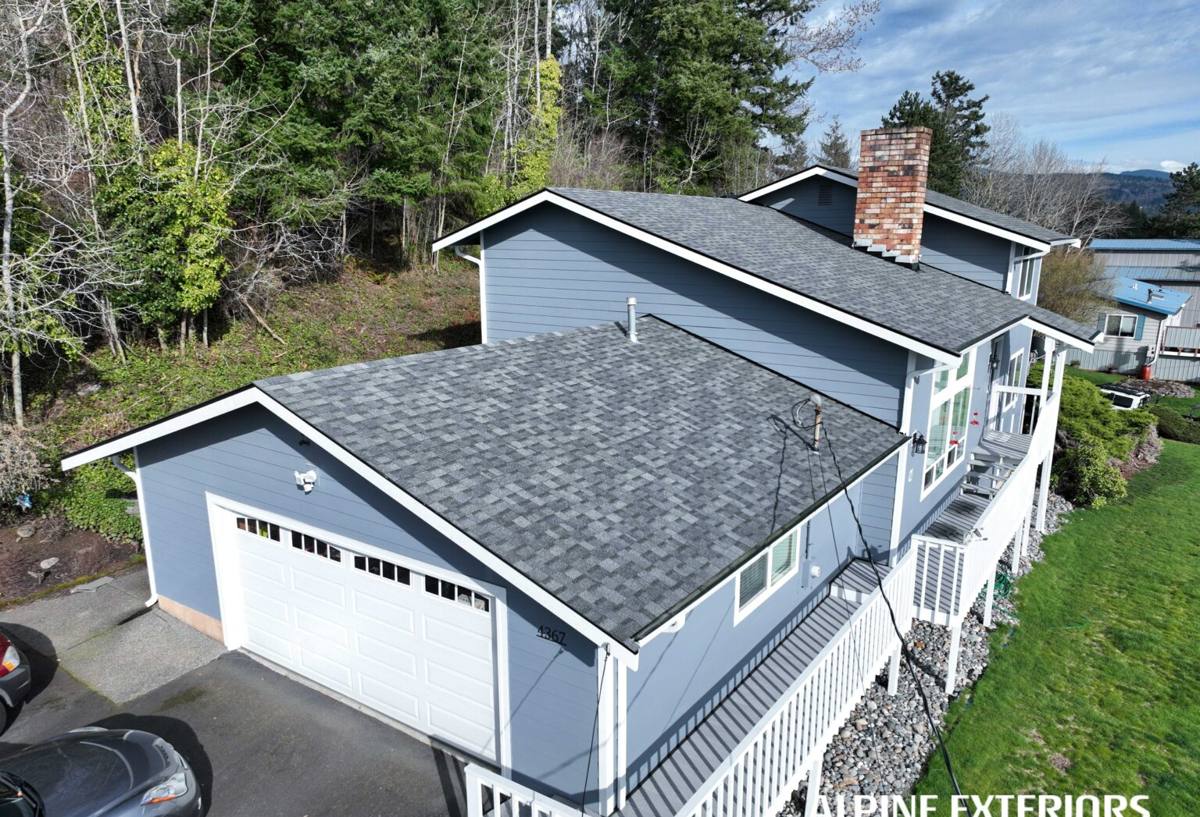
What Shade and Moss Actually Do to a Shingle Roof
Moss and Algae Aren't Just Cosmetic
The dark streaking and green moss you see on shaded roofs around the lake aren't only an appearance issue. Moss holds moisture against the shingle surface long after the rest of the roof has dried, and as it grows it lifts shingle edges and works its way under tabs. Over time that trapped moisture accelerates granule loss and can work into the deck itself, especially at north-facing slopes and anywhere tree limbs overhang the roof.
Granule Loss Speeds Everything Up
Asphalt shingles are protected by the granule layer on their surface — it's what shields the asphalt from UV and physical wear. Once moss, debris buildup, or aggressive cleaning strips those granules away, the shingle underneath breaks down faster. On a shaded lot, granule loss driven by moss is usually a bigger factor in early roof failure than sun exposure ever is.
Valleys and Low-Slope Sections Take the Worst of It
Water and debris both concentrate in valleys, and on a wooded lot those valleys also collect needles and leaf litter that dam up water during heavy rain. That's where we see the earliest leaks on Sudden Valley roofs — not in the open field of the roof, but at valleys, chimney flashing, and low-slope tie-ins where debris and standing moisture have the most time to do damage.
Choosing the Right Shingle for a Shaded, Wooded Lot
Not every asphalt shingle is built the same way, and on a lot like this the differences matter. We generally steer Sudden Valley homeowners toward algae-resistant (AR) shingles, which use copper- or zinc-infused granules that discourage algae and moss growth over the life of the roof. It's a modest upcharge that pays for itself in slower moss regrowth and fewer premature granule-loss problems.
| Shingle Type | Typical Lifespan | Best Fit for Sudden Valley |
|---|---|---|
| 3-tab (standard) | 15–20 years | Budget builds on open, sunnier lots; struggles under heavy shade and debris |
| Architectural / dimensional | 25–30 years | Better wind and impact resistance; standard recommendation for wooded, shaded lots |
| Algae-resistant (AR) architectural | 25–30 years | Our default recommendation for shaded, lake-adjacent, moss-prone properties |
| Impact-resistant (Class 4) | 25–30+ years | Worth discussing where falling branches or storm debris are a recurring concern |
We'll walk through actual product lines and warranty terms during your estimate — the table above is about the category of shingle, not a specific brand recommendation, because the right pick depends on your roof's pitch, sun exposure, and how much canopy sits directly overhead.
What a Correct Installation Actually Involves
The shingle itself is only one part of a roof system. On a shaded, high-moisture lot, the assembly underneath the shingles is what determines whether moss and trapped moisture stay a surface nuisance or become a structural problem. A correct installation includes:
- Full tear-off to bare deck when the existing roof has more than one layer or hidden deck damage — no shingling over problems we can't see
- Deck inspection and replacement of any soft, delaminated, or water-damaged sheathing before anything new goes down
- Ice and water shield membrane at all valleys, eaves, and roof-to-wall transitions, not just where code minimums require it
- Synthetic underlayment across the full deck for a secondary moisture barrier under the shingles
- Balanced intake and exhaust ventilation, since shaded, damp attics are more prone to condensation issues than sun-exposed ones
- Properly lapped step flashing and counterflashing at chimneys, skylights, and wall intersections
- Manufacturer-spec nailing pattern and placement — under-driven or over-driven nails are a common, preventable cause of early shingle failure
- Final walk-through covering valleys, penetrations, and gutter lines before we call the job done
Skipping any one of these doesn't usually show up right away. It shows up two or three winters later, when the shortcut meets a hard rain and a shaded roof that never got the chance to dry out.
Our Process, From Estimate to Cleanup
The Estimate
We get on the roof, not just in the driveway. That means checking the deck condition where accessible, looking at valley and flashing wear, and noting how much tree canopy sits over each slope, since that affects both shingle choice and how often the roof will need attention going forward.
The Plan
You get a written scope covering tear-off, deck repair allowances, underlayment and ice-and-water placement, shingle selection, and ventilation — no vague line items. If your lot has limited truck or dumpster access, which is common on Sudden Valley's private roads and wooded driveways, we plan staging and material delivery around that up front rather than figuring it out on install day.
The Work
Tear-off, deck repair as needed, underlayment, flashing, shingles, and ventilation, in that order, with daily cleanup so nails and debris aren't left in the yard overnight — a bigger deal on tree-covered lots where debris blends into groundcover.
Cleanup and Walk-Through
Magnetic sweep for nails, gutter and valley check, and a walk-through with you before we consider the job finished.
Living With Moss: What Homeowners Can and Can't Handle Themselves
Some moss maintenance is reasonable for a homeowner to do; some isn't. Gentle removal of loose debris from valleys and gutters on a low, safely accessible section is fine. Pressure-washing shingles, climbing steep wet slopes, or scraping moss with hard tools is where we see homeowners either strip granules themselves or get hurt — asphalt shingles are genuinely dangerous to walk on when they're wet and shaded, which on this lot is much of the year.
If you want to stay ahead of moss between professional visits, zinc or copper control strips installed near the ridge let rainwater carry trace metal down the roof slope, which suppresses regrowth without any scrubbing. It's a reasonable add-on to discuss at install time rather than a fix for an existing problem on its own.
What Drives Cost on a Sudden Valley Roof
Every roof is priced on its own specifics, but a few factors come up consistently on wooded, lake-area lots and are worth understanding before you start comparing quotes.
| Factor | Why It Matters Here |
|---|---|
| Roof access and staging | Private roads, steep driveways, and tree cover can limit truck and dumpster placement, affecting labor time |
| Tear-off layers and deck condition | Older roofs with hidden moisture damage under moss-covered areas often need more deck repair than expected |
| Number and complexity of valleys | Wooded lots often have more roof complexity, and valleys are the highest-risk, most labor-intensive part of any job |
| Ventilation upgrades | Shaded, damp attics sometimes need added intake or exhaust venting beyond what's already there |
| Shingle tier selected | Standard architectural versus algae-resistant or impact-rated products shifts material cost per square |
We'll break down exactly which of these apply to your roof during the estimate — the table is meant to help you ask informed questions, not to substitute for a real number tied to your property.
Why Local, Sudden Valley-Specific Experience Matters
A crew that mainly works open, sunny rooflines elsewhere in Bellingham can still do a technically fine install and still get moss control, ventilation, and valley detailing wrong for a lot like this, because the failure points are different. Working regularly in Sudden Valley means knowing to plan around private-road access and gated-community logistics, knowing which slopes on a lake-adjacent, tree-covered lot need extra ventilation or algae-resistant shingle, and knowing that a roof here needs to be built to shed water fast and resist moss — not just to look good in dry weather.
If your community has HOA guidelines on exterior materials or roof color, we'll work within those from the estimate stage rather than after the fact.
Get a Straightforward Estimate
If you're dealing with moss, dark streaking, a valley that never seems to dry out, or a roof that's simply due, we're happy to take a look and give you an honest read on what it actually needs. Use the form below to request a free, no-pressure estimate for your Sudden Valley home.