 Bellingham Window
 What Bellingham's Climate Does to Exterior Siding
Whatcom County sits in a marine climate that doesn't take a season off. Rain rolls in off the water for months at a time, wind-driven storms push moisture sideways into wall assemblies that were only designed to shed water falling straight down, and salt-carrying air moves inland across the region and slowly works on anything with exposed fasteners, paint, or raw wood grain. On top of that, this part of Washington grows moss like it's a crop. Add a shaded, tree-lined residential street like the ones in Birchwood, and you have siding that stays damp longer after every rain event than siding on an open, sun-exposed lot across town.
None of this is unique to one house. It's the baseline every exterior surface in Bellingham has to survive, year after year, for decades. The difference between siding that looks good at year 20 and siding that's rotting, cupping, or growing algae by year 8 almost always comes down to two things: what material was used, and whether it was installed correctly for this specific climate. This page is about both, specifically for Birchwood.
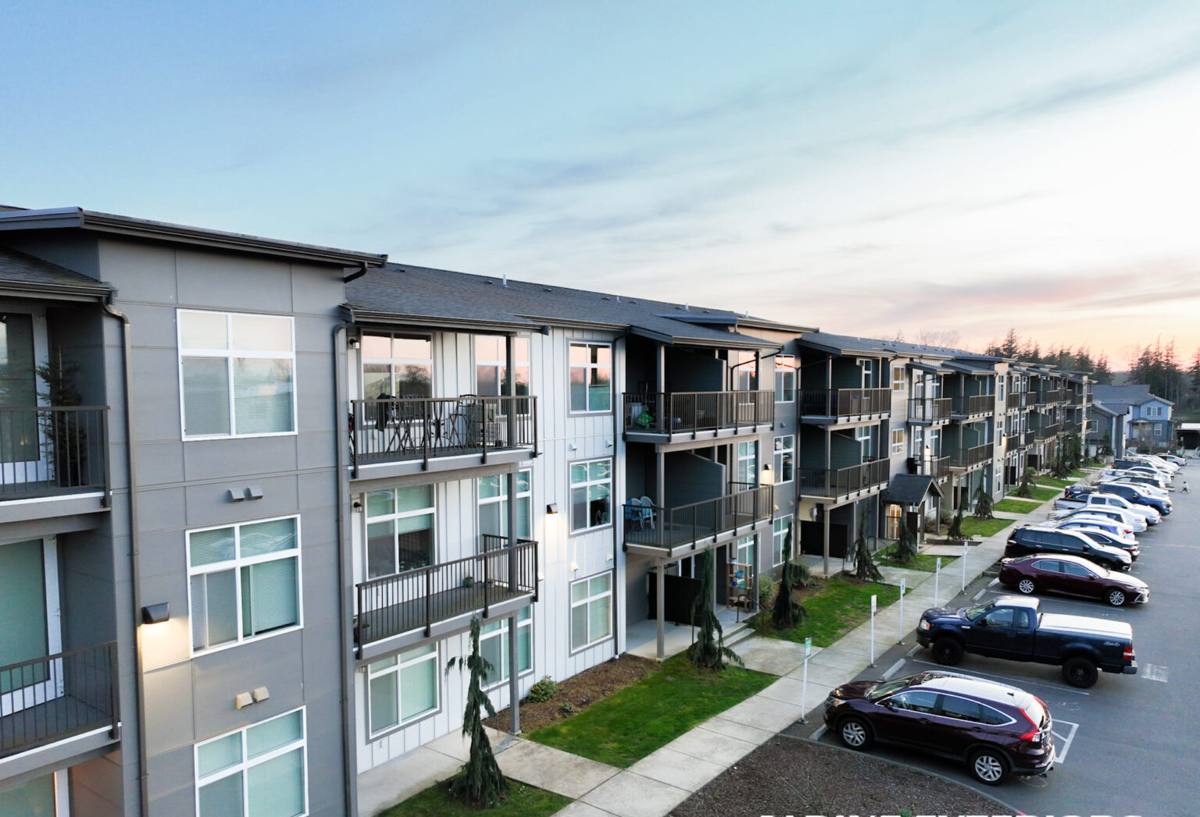
Why Birchwood Homes Are Especially Prone to Moss and Moisture Buildup
Birchwood is a settled, established part of Bellingham, and that maturity cuts both ways. Mature trees and established landscaping mean more shade on walls, and shade means siding that doesn't dry out between rain events the way it would on a newer, more open subdivision. North- and east-facing walls in particular can stay damp for days at a stretch through the fall and winter. That's exactly the environment moss, algae, and mildew need to take hold — and once organic growth is established on a wall, it holds even more moisture against the surface, accelerating whatever damage is already happening underneath.
Older homes in neighborhoods like this one were also often sided decades ago with whatever was standard at the time — sometimes wood lap, sometimes an early composite product. Those materials age very differently than what's available today, and a lot of the siding problems we get called out to look at in Birchwood aren't dramatic failures — they're slow, decades-long moisture creep that finally shows up as soft trim, peeling paint, or siding that's started to separate at the seams.
Why We Only Install James Hardie Fiber Cement Siding
We made a deliberate decision as a company to install one siding system: James Hardie fiber cement. We don't install vinyl, LP SmartSide, Cemplank, Allura, primed spruce, or cedar. That's not a marketing position — it's a standard we hold because of what we've seen happen to other materials in exactly this climate, and what fiber cement does differently.
| Material | How It Tends to Perform in Bellingham's Wet, Shaded Conditions |
|---|---|
| Cedar / solid wood lap | Attractive natural look, but end grain and cut edges absorb moisture readily; needs frequent refinishing and is prone to rot in shaded, slow-drying spots. |
| Vinyl | Low upfront cost and low maintenance, but panels can warp or fade with UV and temperature swings, and seams don't manage wind-driven rain as well as a properly flashed fiber cement joint. |
| Engineered wood-based siding (OSB/strand core) | Factory treatments resist moisture at first, but if the outer coating is breached — at a cut edge, a nail hole, or a failed caulk line — the wood-fiber core can swell and delaminate from the inside out. |
| James Hardie fiber cement | Cement-based core doesn't rot, swell, or provide organic material for moss to feed on; factory-applied finish resists UV and moisture better than field-applied paint; still needs periodic cleaning like any exterior surface. |
James Hardie also engineers specific product lines by climate zone, and the Pacific Northwest falls into their HZ5 category — built with this kind of rain and moisture load in mind rather than a generic, one-size-fits-all formulation. That, combined with a factory ColorPlus finish and a strong transferable warranty backing the product, is why it's the only system we put our name behind.
What a Correct Siding Installation Actually Involves
Fiber cement siding is only as good as the installation underneath it. A high-quality product installed to a low standard will still trap moisture, and in a climate like this, trapped moisture finds problems fast. A correct installation isn't visible once the project is done — but it's the part that determines whether the siding lasts 10 years or 40.
The details that matter most
- Weather-resistive barrier installed and lapped correctly behind the siding, not just stapled up as an afterthought.
- Flashing at every penetration — windows, doors, hose bibs, light fixtures — installed so water is directed out and away from the sheathing, not just caulked over.
- Correct clearances from grade, roof lines, decks, and patios so siding doesn't sit in standing water or trap moisture against concrete or soil.
- Manufacturer-spec fastening — the right nail type, spacing, and depth, since over-driven or under-driven fasteners are one of the most common causes of early siding failure.
- Proper joint and butt-seam treatment, including factory-primed cut edges, so raw fiber cement is never left exposed to weather.
- Expansion gaps sized to spec, not caulked shut, which allows the material to move with temperature and moisture changes without cracking.
Every one of those steps is spelled out in James Hardie's installation instructions, and skipping any of them can void the manufacturer's warranty — which defeats the point of choosing a premium product in the first place.
Our Process for a Birchwood Siding Installation
The steps don't change dramatically from house to house, but the sequence matters, especially when we're re-siding an older home where we don't yet know what's under the existing wall.
- On-site assessment. We look at the current siding, trim, window flashing, and any visible signs of moisture damage or moss buildup, and walk the site for drainage, shade, and exposure issues specific to that lot.
- Tear-off and sheathing inspection. Once the old siding is off, we inspect the sheathing and framing underneath for rot or water damage that wasn't visible before — this is often where the real story of a house's moisture history shows up.
- Repair before cover-up. Any soft sheathing, damaged framing, or compromised flashing gets repaired. Covering a moisture problem with new siding instead of fixing it just delays the same failure.
- Weather barrier and flashing installation. New house wrap and flashing go in at every window, door, and penetration before a single piece of siding is hung.
- Hardie siding installation to manufacturer spec. Panels or planks go up with correct fastening, clearances, and joint treatment for the specific product line chosen.
- Trim, caulk, and finish work. Trim boards, corner treatments, and any ColorPlus touch-up are completed and inspected against Hardie's finish standards.
- Final walkthrough and cleanup. We walk the finished exterior with the homeowner, and the site is cleared of debris and old material.
James Hardie Product Lines That Fit This Climate
Not every Hardie product looks the same, and picking the right profile matters both for the look of the home and for how it sheds water.
- HardiePlank lap siding — the most common choice for Bellingham homes, available in several exposure widths and finishes, with a horizontal lap profile that's proven at managing driving rain.
- HardieShingle siding — a staggered or straight-edge shingle profile for homes going for a more traditional Pacific Northwest look, without the moisture vulnerability of real wood shingles.
- HardiePanel siding — used for accent walls, gable ends, or a more modern vertical look, often paired with trim boards for contrast.
- ColorPlus finish — a factory-applied, baked-on finish available in a range of colors, engineered to hold color and resist fading and moisture better than a field-applied paint job.
James Hardie backs its siding with a long-term limited product warranty, plus a separate finish warranty on ColorPlus color — and because it's transferable, that coverage carries real value if the home is ever sold.
Cost Factors for a Siding Project in Birchwood
Every home is different, so we won't quote a number without seeing the house — but these are the factors that consistently move the price up or down on a Birchwood siding project.
| Factor | Why It Affects Cost |
|---|---|
| Home size and wall area | More square footage of siding, trim, and flashing means more material and labor hours. |
| Full tear-off vs. new construction | Removing and disposing of old siding adds labor that a new build or addition doesn't require. |
| Sheathing or framing repair | Rot discovered once old siding comes off has to be repaired before new siding goes on — this is the most common source of scope changes. |
| Siding profile and detail level | Shingle profiles, multiple accent materials, and detailed trim work take more time than a straightforward lap-siding job. |
| Site access and lot conditions | Tight side yards, mature landscaping, slopes, or limited staging area all affect how efficiently a crew can work. |
| Number of penetrations | Windows, doors, vents, and fixtures each need individual flashing and trim work. |
Why a Crew That Already Works in Birchwood Matters
Siding installation isn't just a product — it's a set of judgment calls made on-site, and a crew that's already worked on homes in this part of Bellingham has a head start on those calls. They've seen how shade and moisture play out on similar lots, they know how the City of Bellingham and Whatcom County handle permitting for exterior work, and they're not learning the neighborhood's quirks on your dime.
What to look for when hiring a siding contractor
- Manufacturer training or certification specific to the product they're installing, not just general carpentry experience.
- A written scope that spells out flashing, weather barrier, and fastening details — not just "install siding."
- Willingness to inspect and repair sheathing if problems are found during tear-off, rather than covering them up.
- Local references or a track record of work in Bellingham and Whatcom County specifically.
- Clear communication about warranty coverage — both the manufacturer's product warranty and the contractor's workmanship warranty.
Caring for Your Siding Through Moss Season
Fiber cement doesn't rot or feed moss the way wood does, but no siding is maintenance-free in this climate. A little seasonal attention goes a long way toward keeping a Birchwood home's siding looking like it did on installation day.
- Soft-wash the exterior periodically to remove surface moss, algae, and grime before it builds up — avoid high-pressure washing, which can force water behind panels.
- Keep gutters and downspouts clear so overflow doesn't run directly down siding walls.
- Trim back trees and shrubs that keep specific wall sections shaded and slow to dry.
- Do a yearly visual check of caulk lines and trim joints, especially after major windstorms.
- Address any small chips or scuffs in the finish promptly rather than letting exposed edges sit through a wet season.
If you're weighing a siding project for a Birchwood home, we're happy to take a look and talk through what your specific house needs — no pressure, no obligation. Use the form below to request a free estimate.