 Bellingham Window
 Storm Damage in Birchwood: Why the Climate Makes It Different
Birchwood sits inland from Bellingham Bay but still gets the full effect of what Whatcom County weather throws at a roof. Winter storms roll in off the water carrying salt-laden air, and that air settles on every roof surface in the area, working on metal fasteners, flashing, and exposed granules year after year. Add driving rain that comes in sideways during a real blow, and water finds its way into gaps that would stay dry in a calmer climate. Then there's the moss. Bellingham's long wet season gives moss and algae months to establish themselves on north-facing slopes and shaded sections of roof, and a storm-damaged roof with moss already growing on it is in worse shape than a clean roof with the same wind or impact damage.
None of this means Birchwood roofs are doomed — it means storm repair here has to account for conditions that a generic repair approach doesn't. A patch that would hold up fine in a dry climate can fail here within a season if it doesn't account for how much moisture this area sees and how long that moisture sits on the roof before it dries out.
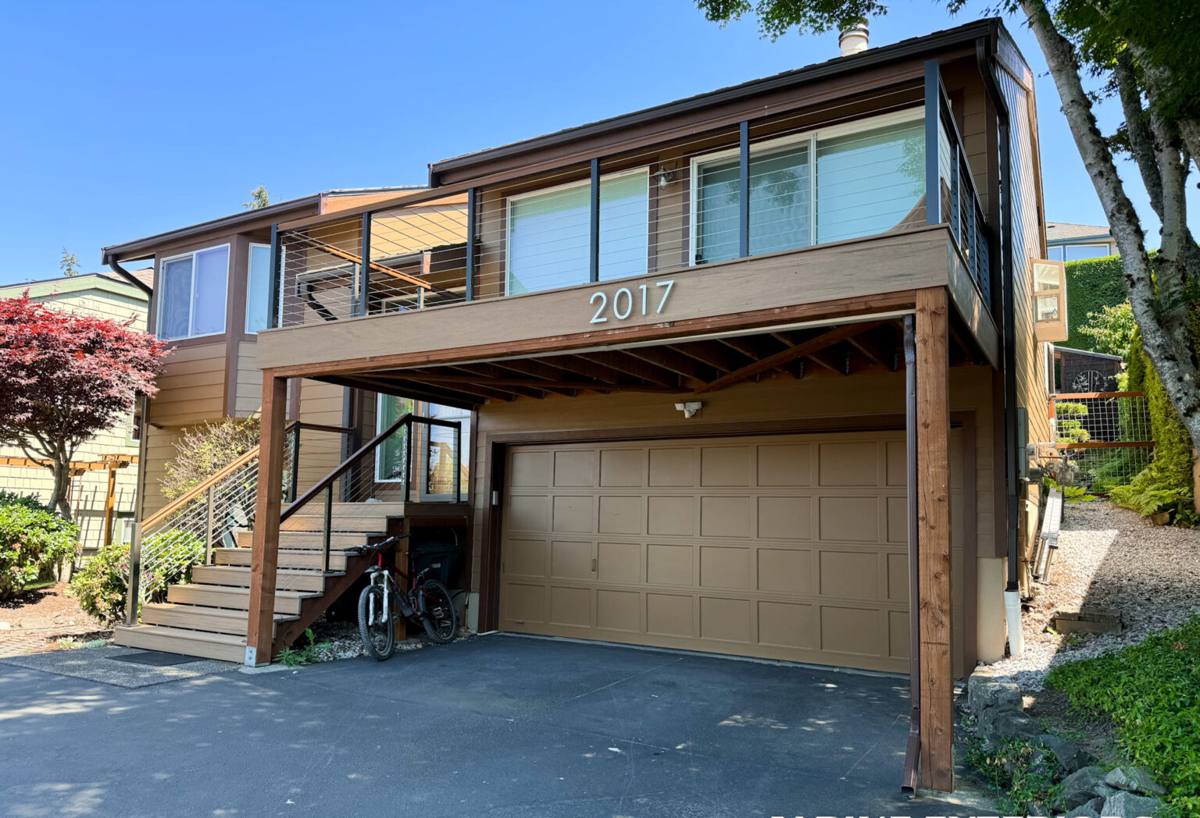
What Storm Damage on a Bellingham Roof Actually Looks Like
Wind Damage
Sustained wind and gusts during a Pacific storm system lift shingle tabs, crack sealant bonds, and pull ridge cap shingles loose. Sometimes the damage is obvious — shingles in the yard or hanging loose. Often it isn't. A shingle can be lifted and re-seated by the wind, looking normal from the ground while the seal underneath is broken. That's the kind of damage that turns into a slow leak weeks or months later.
Impact Damage
Birchwood has mature trees throughout the neighborhood, which is part of what makes it a nice place to live — and part of what puts roofs at risk during storms. Falling branches and debris can crack or puncture shingles, dent metal flashing, and knock granules loose in a concentrated area. Impact damage tends to be localized, which is good news: it's usually repairable without touching the rest of the roof, as long as it's caught before water gets underneath.
Moisture and Moss-Related Damage
Storm damage and moss damage often show up together on roofs in this area, because a compromised roof surface gives moss and algae an easier foothold, and existing moss growth holds moisture against shingles longer after a storm passes. A roof that was already carrying moss going into a storm is more likely to show wood rot or granule loss when we get up there to inspect it.
Why a Small Storm Repair Can't Be "Just Patch It"
The temptation after a storm is to get the visible problem covered and move on. That works for genuinely minor, isolated damage. But a roof is a system — shingles, underlayment, flashing, decking, and ventilation all work together — and storm damage often affects more than what's visible from the ground or even from a quick walk on the roof.
A few reasons a proper assessment matters before repair work starts:
- Wind can lift and reseal shingles without visibly displacing them, hiding a broken seal until it leaks
- Water that gets under a damaged shingle can travel sideways before it shows up as a ceiling stain, so the leak's source and the leak's symptom are often in different spots
- Decking underneath damaged shingles can be softened by trapped moisture, and that won't show until the old material is pulled back
- Flashing around chimneys, vents, and valleys is a common failure point that's easy to miss if the inspection only looks at shingle condition
Skipping the full check to save time on a repair almost always costs more later, once a missed problem has had a wet season to get worse.
Our Storm Damage Repair Process
1. Inspection and Documentation
We start with a full roof inspection, not just a look at the obvious damage. That includes checking flashing, ridge lines, valleys, and any areas where debris landed. We document what we find with photos, which matters both for your records and if you decide to file an insurance claim.
2. A Straight Answer on Repair vs. Replace
Most storm damage in Birchwood is repairable — that's the honest, common outcome. We'll tell you plainly if a section needs replacing rather than patching, and we'll tell you just as plainly if a full roof replacement isn't warranted by what we find. We don't upsell storm calls into full roof jobs that aren't justified by the actual damage.
3. Matching Materials Correctly
Repairing a section of roof means matching the existing shingle profile, and where possible, the color and age-weathering, so the repair doesn't stand out as a patch. This isn't always exact — shingles fade over years — but a careful match minimizes the visual difference.
4. The Repair Itself
Damaged shingles, underlayment, and flashing are removed and replaced. If decking underneath is compromised, that gets addressed before anything new goes down — covering rotten or soft decking with new shingles just hides a problem that will resurface. Fasteners, seals, and flashing details are done to hold up against the wind and rain this area sees regularly, not just to pass a quick visual check.
5. Cleanup and Final Walkthrough
We clear debris and old material from the site and walk the repair with you so you know exactly what was done and why.
Insurance Claims: What to Know Before You Call
Many storm repairs in Whatcom County are covered in whole or part by homeowner's insurance, depending on your policy and the cause of damage. A few general points worth knowing:
- Document damage with photos as soon as it's safe to do so, before any repair work starts
- A written, itemized inspection report from a roofing contractor supports your claim far better than a verbal description
- Insurance adjusters look at cause of damage closely — storm and wind damage is usually treated differently than damage attributed to age or lack of maintenance, so an honest, accurate assessment matters
- We're happy to provide documentation for your claim, but we're not a public adjuster and don't negotiate with your insurer on your behalf
If you're not sure whether damage is claim-worthy, an inspection first gives you something concrete to decide with, rather than guessing.
What Drives the Cost of a Storm Repair
Every roof and every storm is different, so we don't quote prices without seeing the roof. What we can tell you is what actually moves the number up or down:
| Factor | Why It Matters |
|---|---|
| Extent of damage | A few displaced shingles is a different job than a wind-torn section across multiple slopes |
| Decking condition | Sound decking under the damage keeps costs down; soft or rotted decking adds material and labor |
| Roof material | Composition shingle repairs are generally more straightforward than matching metal panels or specialty materials |
| Roof pitch and access | Steeper roofs and hard-to-reach sections take more time and safety setup |
| Existing moss or moisture damage | Pre-existing moss growth or trapped moisture often means more area needs attention beyond the storm damage itself |
| Flashing and ventilation issues | Failed flashing found during repair needs to be corrected, not just worked around |
Broad honest range for most isolated storm repairs on a typical Birchwood home runs from a few hundred dollars for a small, contained fix up to a few thousand for repairs involving decking replacement or larger affected areas. Anything beyond that scope starts moving toward a section or full replacement conversation, which we'll flag clearly rather than let a "repair" quietly become something bigger.
After the Storm: A Homeowner's Checklist
If a storm has come through Birchwood and you're not sure whether your roof needs attention, here's what's worth checking or having checked:
- Look in the attic or crawlspace above the ceiling for damp spots, staining, or daylight coming through the decking
- Check gutters and downspouts for shingle granules, which can indicate accelerated wear or fresh damage
- Note any branches or debris that landed on the roof, even if they've since been cleared
- Watch for shingles in the yard or driveway after high wind
- Check ceilings for new stains, especially near chimneys, skylights, or roof valleys
- Avoid climbing onto the roof yourself after a storm — wet, storm-damaged roofing is not safe footing
- Get an inspection promptly rather than waiting for a leak to confirm the damage — by then it's usually done more harm
Why Local Experience in Birchwood Matters
A crew that regularly works in Birchwood and the surrounding Bellingham area knows what this climate does to a roof over time, not just what a single storm did last week. That means recognizing the difference between fresh wind damage and long-term wear from salt air and moss exposure, knowing which repair approaches actually hold up through another wet Whatcom County winter, and not being surprised by the tree cover and drainage patterns common to this neighborhood. It also means being genuinely reachable after a storm, when response time matters and roofs across the area are competing for attention.
We'd rather give you a straight assessment of what your roof needs — and what it doesn't — than a sales pitch. If your Birchwood home has storm damage, or you're not sure whether recent weather affected your roof, we're glad to take a look and put together a free, no-pressure estimate.