 Bellingham Window
 Blaine's Marine Climate Is Rough on Siding
Blaine sits at the far northwest edge of Whatcom County, right up against the water, which means the air moving through this town carries salt pretty much year-round. Pair that with the long, wet stretch of a Western Washington fall through spring, and the heavy shade many Blaine lots get from mature evergreens, and a home's exterior is dealing with three separate stresses at once: salt exposure that eats away at finishes and fasteners, near-constant driving rain looking for a way behind the cladding, and a moss and algae season that can run most of the year. None of that is unusual for this part of the state. It's just relentless, and it's the reason a siding job done right in Blaine looks a little different from one done in a drier, more sheltered part of the county.
When siding isn't matched to that reality, the failures show up in predictable ways. Wood trim and raw cedar cup, split, and hold moss longer than they should. Vinyl gets brittle in cold snaps and can warp or discolor faster under sustained salt exposure. Caulk joints that aren't detailed correctly let wind-driven rain track behind the cladding, where it does damage nobody sees until there's a soft spot in the sheathing. None of this is exotic engineering — it's just attention to detail that either happens or doesn't.
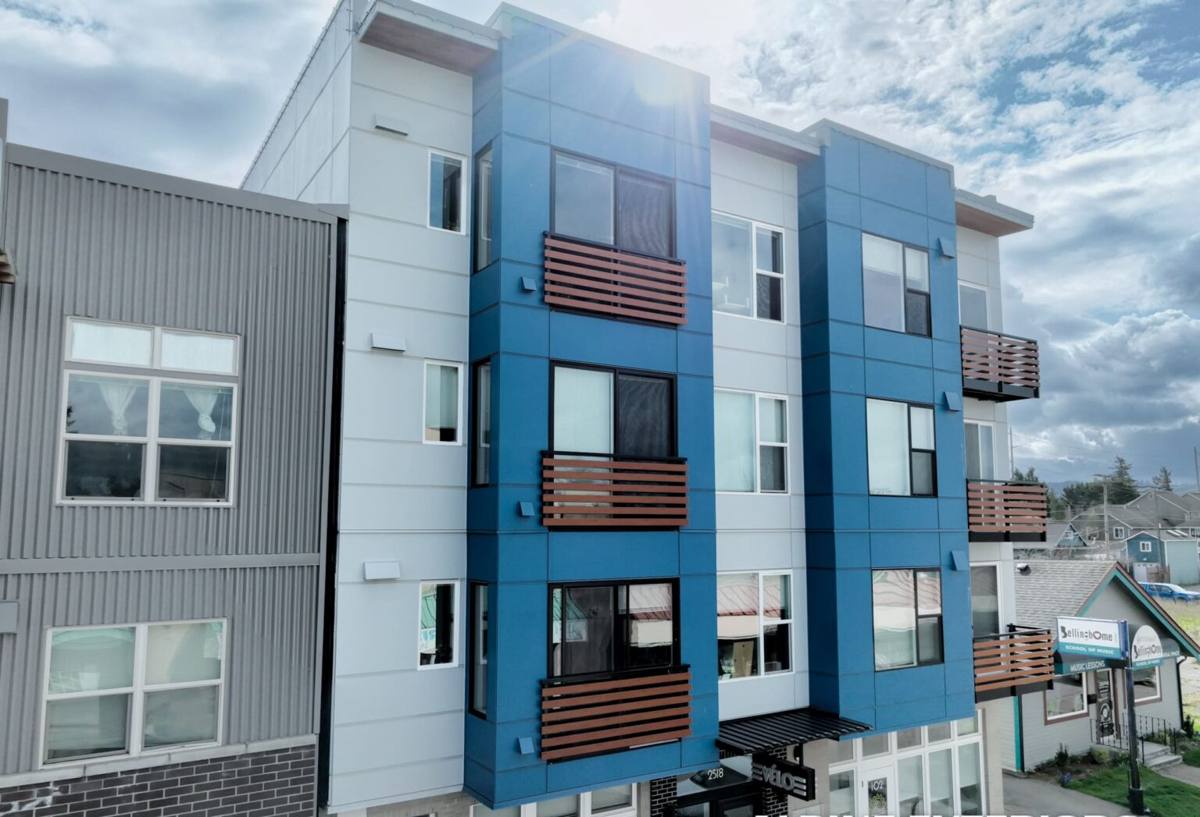
What a Correct Fiber Cement Install Actually Requires Here
Fiber cement siding is only as good as the assembly it's part of. In a climate like Blaine's, the siding itself is the last line of defense, not the only one — what's behind it matters just as much.
Moisture Management Behind the Siding
A correct install starts with a continuous weather-resistive barrier, properly lapped so water sheds downward and never gets trapped behind a seam. Behind that, we install a rainscreen gap — a small air space that lets any moisture that does get past the cladding drain and dry out instead of sitting against the sheathing. In a town that sees as much horizontal rain as Blaine does, skipping the rainscreen is one of the most common ways a fiber cement job underperforms its potential lifespan. Flashing at every window, door, deck ledger, and roof-to-wall transition has to be installed in the right order relative to the water-resistive barrier, not just caulked over as an afterthought.
Fastening and Manufacturer Clearances
James Hardie publishes exact fastener types, spacing, and clearance requirements — how far the siding needs to sit above grade, roof lines, decks, and other flush surfaces. Those clearances exist specifically to keep the bottom edge of the siding from sitting in standing water or trapped moisture, which is exactly the failure mode a wet coastal climate creates. Fasteners that are overdriven or underdriven, or spaced incorrectly, can both compromise the siding's ability to move slightly with temperature changes and open small gaps where water gets a foothold. This is also where warranty coverage gets decided — an install that doesn't follow the manufacturer's published spec can put that coverage at risk regardless of how good the material is.
Why We Only Install James Hardie in Blaine
We don't install vinyl, LP SmartSide, cedar, or other fiber cement brands, and that's a deliberate standard, not an oversight. James Hardie's fiber cement is non-combustible, holds up to sustained moisture exposure without the swelling or rot risk that wood-based products carry, and comes from the factory with a baked-on ColorPlus finish rather than a field-applied coat of paint. In a salt-air environment, that factory finish matters — it resists fading and chalking in a way that touch-up paint applied on site typically can't match over the long run. Hardie also engineers its siding by climate zone, and the formulation used across Western Washington accounts for the freeze-thaw swings and sustained moisture our winters bring, rather than treating every region the same way.
We're not going to tell a homeowner that cedar or vinyl are bad products — they're not, and each has legitimate uses elsewhere. But we've made a professional call that for the maintenance burden, moisture behavior, and long-term performance we want to stand behind on a home in this climate, fiber cement — specifically Hardie's system — is what we're willing to put our name on.
Matching the Right Hardie Product to a Blaine Home
Most Blaine homes we work on end up with HardiePlank lap siding as the primary field material, sometimes paired with HardieShingle in gable ends or accent areas, or HardiePanel for a more modern look on entries and porches. The ColorPlus finish options let a homeowner match an existing neighborhood palette or go with something different without worrying about repainting on the same schedule a field-painted product would need. For homes closer to open water and heavier salt exposure, we also pay closer attention to trim material and fastener selection — small details that don't show up in a brochure but matter over ten or twenty years.
How the Common Siding Options Compare in This Climate
| Factor | James Hardie Fiber Cement | Vinyl | Cedar | LP SmartSide |
|---|---|---|---|---|
| Moisture/rot resistance | High — cement-based, doesn't rot | High, but seams can trap water | Moderate — needs consistent sealing | Moderate — engineered wood, vulnerable at cut edges and exposure |
| Salt air performance | Strong; factory finish holds up well | Can discolor/embrittle over time | Weathers and grays quickly near salt air | Finish can degrade faster in coastal exposure |
| Moss/algae resistance of finish | Good; smooth ColorPlus surface | Fair; textured surfaces hold spores | Poor; porous wood grain holds moisture | Fair |
| Ongoing maintenance | Low — occasional wash, caulk checks | Low, but hard to repair when damaged | High — regular sealing/staining | Moderate — finish upkeep at seams and edges |
| Fire resistance | Non-combustible | Melts/deforms under heat | Combustible | Combustible (wood-based core) |
Our Installation Process for Blaine Homes
Every job starts with a walk-around assessment, not a guess from a photo. On homes where we're replacing existing wood or vinyl siding, that assessment is where we find out whether the sheathing underneath is sound or whether there's hidden moisture damage that needs to be repaired before anything new goes up — covering a rot problem with new siding just hides it, it doesn't fix it.
- Tear-off and full inspection of the sheathing and framing behind the old siding
- Repair of any rot, soft spots, or compromised framing found during tear-off
- Installation of a continuous weather-resistive barrier with correct shingle-lap sequencing
- Installation of rainscreen furring to create a drainage gap behind the siding
- Flashing at every window, door, deck, and roof-to-wall intersection
- Hardie siding installed to manufacturer fastener spec and clearance requirements
- Field-sealing and painting of all cut edges, per Hardie's installation instructions
- Final walk-through inspection before we consider the job complete
What Should Be True When the Crew Leaves
- A visible, consistent rainscreen gap behind the siding, not siding nailed flat to the wall
- Correct clearance between the bottom of the siding and grade, roofs, and decks
- All cut edges primed and painted, not left raw
- Flashing visible and properly lapped at every window, door, and roofline transition
- Fasteners set flush, not overdriven or underdriven, at the correct spacing
- Butt joints and courses staggered rather than stacked in a repeating pattern
- No caulk used as a substitute for missing flashing
Maintenance Blaine Homeowners Should Expect
Fiber cement is low-maintenance compared to wood, but "low" isn't "none," especially with Blaine's moss season factored in. A periodic gentle wash — not a high-pressure blast that can force water behind laps — keeps moss and algae from getting a foothold on north-facing and shaded walls. Gutters and downspouts that are cleaned and functioning matter more than most homeowners expect, since overflowing gutters are one of the most common sources of concentrated water hitting siding right where it's most vulnerable. It's also worth a yearly look at caulk joints around windows, doors, and trim; caulk is a maintenance item everywhere, but a marine climate accelerates its breakdown.
Why a Crew That Already Works in Blaine Matters
Wind-driven rain patterns, tree cover, and moss pressure aren't uniform across Whatcom County, or even across Blaine itself — a lot depends on how exposed a given lot is to the water and how much shade it sits under. A crew that's already installed and maintained siding in this specific environment has seen what happens when a rainscreen gets skipped, when clearances get ignored, or when a lower-cost product gets pushed into a climate it wasn't built for. That experience shows up in the small decisions made on site — how flashing gets sequenced, where extra attention goes on a shaded north wall, how a job gets scheduled around the wet season — that don't show up in a proposal but matter for how the siding performs ten and twenty years out.
If you're weighing a siding project on a Blaine home, we're happy to take a look and give you a straightforward, no-pressure estimate — what your home actually needs, what it would involve, and a realistic sense of cost, with no obligation attached.