 Bellingham Window
 Roofing in Columbia Faces a Different Kind of Wear
Homes in the Columbia neighborhood sit close enough to Bellingham Bay that the air itself works against a roof. Salt-laden moisture drifts inland, driving rain comes in sideways during winter storms, and the shaded, damp stretches of fall through spring give moss every advantage it needs to take hold. None of this is unique to one street or one block — it's the reality of roofing anywhere near the water in Whatcom County — but it does mean a roof here ages differently than one thirty miles inland, and it should be built and maintained with that in mind.
Asphalt shingles remain the most practical roofing material for the vast majority of homes in this area. They're proven, repairable, reasonably priced, and available in options built specifically to resist the algae and moss growth that this climate encourages. The key isn't avoiding asphalt shingles — it's specifying and installing them correctly for what a Columbia roof actually has to survive year after year.
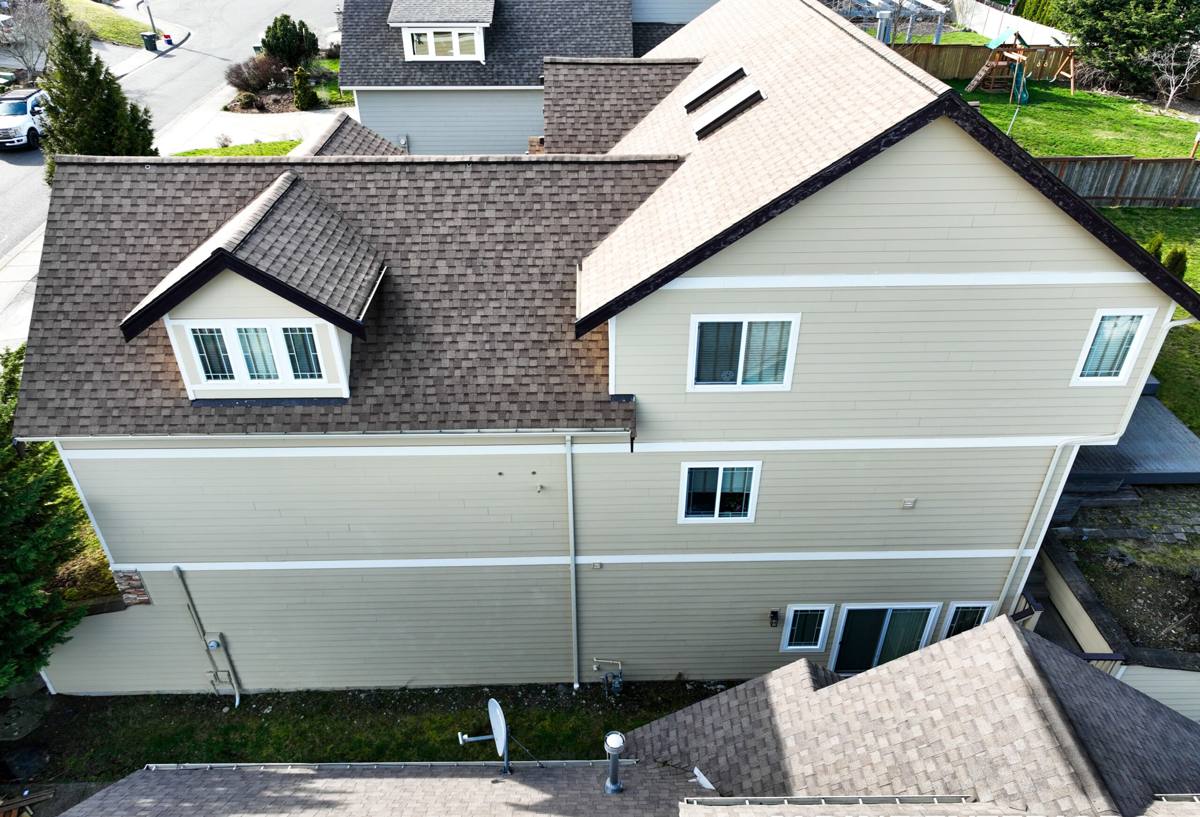
What Salt Air, Rain, and Moss Actually Do to a Shingle Roof
It helps to understand the specific failure patterns we see, because they shape everything about how the job should be done.
Salt Air and Corrosion
Airborne salt accelerates corrosion on exposed metal — nail heads, flashing, and vent stacks in particular. When lower-grade fasteners or flashing are used, rust streaks and early leaks around penetrations show up years before the shingles themselves are due for replacement.
Driving Rain and Wind-Driven Water
Storms off the Salish Sea don't just drop rain straight down — wind pushes it sideways and even slightly upward under shingle edges and around valleys. A roof that isn't detailed correctly at those transition points will leak long before the field of the roof shows any wear.
Moss and Sustained Moisture
Shade, cool temperatures, and long stretches of damp weather are exactly what moss needs. Once moss establishes itself, it holds moisture against the shingle surface, lifts shingle edges as it grows, and can work its way under tabs — turning a cosmetic issue into a moisture problem underneath the roofing material itself.
Warning Signs Worth Checking From the Ground
Most homeowners don't need to get on a roof to catch problems early. A few minutes with binoculars, or a look from an upstairs window, tells you a lot.
- Dark streaking or green-black patches on north-facing or shaded slopes
- Moss visible along the lower edge of shingles or in valleys
- Granules collecting in gutters or at downspout outlets
- Shingle tabs that look curled, lifted, or cupped rather than lying flat
- Rust staining below metal flashing, vent stacks, or nail heads
- Daylight visible through the roof deck from inside the attic
- Soft or discolored ceiling spots, especially near chimneys, skylights, or valleys
Any one of these on its own isn't necessarily an emergency, but they're worth having looked at before the next wet season, not after it's caused interior damage.
What a Correct Asphalt Shingle Installation Actually Involves
A shingle roof is only as good as everything installed underneath it. In a climate like this, the details most people never see are what determine whether a roof lasts fifteen years or thirty.
Tear-Off and Deck Inspection
We remove the old roofing down to the deck rather than layering over it, because you can't evaluate — or properly waterproof — a deck you can't see. Any soft, delaminated, or water-damaged sheathing gets replaced before anything new goes down.
Ice and Water Barrier at Vulnerable Points
Eaves, valleys, and areas around chimneys and skylights get a self-adhering waterproof membrane underneath the shingles. This is the single biggest defense against wind-driven rain finding its way in, and it's not optional in a climate that sees this much of it.
Synthetic Underlayment
Across the rest of the roof, a synthetic underlayment provides a secondary water barrier and holds up far better than older felt products in damp, humid conditions during installation and over the life of the roof.
Correct Flashing and Ventilation
Metal flashing at valleys, walls, and penetrations has to be formed and layered correctly — not caulked over as a shortcut. Balanced intake and exhaust ventilation keeps the attic dry, which matters both for the roof deck's lifespan and for controlling condensation that can otherwise mimic a roof leak from the inside.
Manufacturer-Spec Fastening
Nail placement, pattern, and count affect wind resistance and warranty validity alike. This is a step that's easy to rush and easy to verify — we don't skip it.
Choosing the Right Shingle for This Climate
Not every asphalt shingle is built the same way, and the differences matter more here than in a drier climate.
| Shingle Type | Typical Lifespan | Algae Resistance | Best Fit |
|---|---|---|---|
| Standard 3-tab | 15-20 years | Limited unless AR-rated | Budget-conscious re-roofs, secondary structures |
| Architectural (laminated) | 25-30 years | Available with algae-resistant granules | Most Columbia homes — good balance of cost and durability |
| Premium/designer | 30+ years | Typically includes enhanced AR granules | Homes prioritizing appearance and longer warranty coverage |
We generally recommend algae-resistant (AR) shingles for anything installed near the water — the copper or zinc-infused granules actively discourage algae and moss growth, rather than simply resisting it passively. The upgrade cost is modest compared to the labor cost of an early re-roof or repeated moss treatments.
Cost Factors Beyond the Shingle Itself
Homeowners are often surprised that the shingle material is only part of the price. What usually moves the number more is roof complexity — the number of valleys, penetrations, and slopes — plus deck condition, tear-off layers, and whether ventilation upgrades are needed. We break all of this down at the estimate stage so there are no surprises once work starts.
Our Process From First Look to Final Cleanup
- Inspection and estimate. We walk the roof, check the attic where accessible, and give you a written scope and price — not a vague ballpark.
- Material selection. We go over shingle tiers, color options, and ventilation needs based on your specific roof, not a generic recommendation.
- Property protection. Landscaping, siding, and gutters get protected before tear-off begins.
- Tear-off and deck repair. Old roofing comes off, the deck gets inspected, and any damaged sheathing is replaced.
- Waterproofing and installation. Ice and water barrier, underlayment, flashing, shingles, and ventilation go in to spec.
- Cleanup and magnetic sweep. We clear debris and run a magnetic sweep for stray nails around the property.
- Final walkthrough. We review the finished roof with you before calling the job done.
Maintenance That Actually Matters Here
A well-installed roof still benefits from a little regular attention in a climate this wet and shaded. A few habits go a long way:
- Keep gutters and downspouts clear so water isn't backing up under the lower shingle courses
- Trim back overhanging branches to reduce shade, debris buildup, and moss-friendly conditions
- Address moss early with an appropriate treatment rather than letting it spread across a slope
- Avoid pressure washing shingles — it strips granules and shortens the roof's life
- Have the roof looked at after major windstorms, not just on a fixed annual schedule
None of this replaces a proper inspection every few years, but it does reduce the odds of a small issue turning into a deck-level repair.
Why It Matters to Hire a Crew That Already Works in Columbia
Roofing crews who work regularly in this part of Bellingham already understand how homes here behave — where moss tends to build up first, how much of a role wind direction plays in leak locations, and what level of ventilation actually keeps an attic dry through a wet Whatcom County winter. That familiarity shows up in fewer callbacks and fewer surprises once the tear-off starts. It also means faster response if a storm causes damage and you need someone who already knows the neighborhood, not a crew learning the local conditions on your roof for the first time.
When you're vetting a roofing contractor, ask directly about local experience, manufacturer certifications, how they handle deck repairs discovered mid-project, and what their warranty actually covers — workmanship as well as materials. A straight answer to all four is a good sign you're dealing with a crew that does this correctly, not just quickly.
If you're weighing repair against replacement, or just want an honest read on where your roof stands, we're happy to take a look and walk you through your options. The form below gets you a free, no-pressure estimate — no obligation, just a clear picture of what your roof needs.