 Bellingham Window
 Decking Built for Columbia's Weather, Not Just Any Weather
The Columbia area sits close enough to Bellingham Bay that salt-laden air is a daily fact of life, not an occasional nuisance. Add in Whatcom County's driving winter rain and the long stretch of gray, damp months when moss and algae get a real head start on any outdoor surface, and you have a climate that is genuinely hard on decks. A composite deck installed here needs to handle three things at once: constant moisture exposure, airborne salt that accelerates corrosion on hardware, and shade patterns from mature trees and close-set homes that keep boards from ever fully drying out between storms.
This page is about composite decking specifically for Columbia homeowners — what the climate demands, what a correct installation actually involves, and why a crew that already works this neighborhood tends to get better long-term results than one starting from scratch.
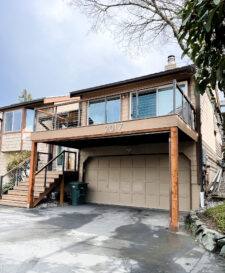
What Bellingham's Climate Does to a Deck Over Time
Composite decking was developed partly to solve problems that wood decking struggles with in coastal, marine-layer climates like ours. Understanding the specific failure points helps explain why installation quality matters as much as the material itself.
Moisture That Never Fully Leaves
Bellingham's rainy season runs long, and Columbia's tree cover and proximity to the water keep humidity elevated even between storms. Wood decking swells, cups, and eventually rots under that kind of sustained dampness. Composite boards resist water absorption at the board level, but the deck still needs proper drainage and airflow underneath — composite doesn't rot, but the framing it sits on still can if moisture gets trapped.
Moss and Algae Growth
Whatcom County's long moss season is not an exaggeration — shaded, north-facing, or low-airflow deck areas in Columbia can develop moss and green algae film within a single wet season if the surface texture and drainage aren't right. Some composite board profiles shed water and resist organic growth far better than others, and board placement relative to shade and airflow matters just as much as the product itself.
Salt Air and Hardware
Salt air corrodes standard fasteners, brackets, and ledger hardware faster than most homeowners expect. A deck that looks fine on the surface can have compromised connections underneath within a few years if the wrong hardware was used. This is one of the most common corner-cutting mistakes we see on decks that weren't built with coastal exposure in mind.
What a Correct Composite Deck Installation Involves
Composite decking is often marketed as low-maintenance, and the boards themselves are. But the installation underneath the boards is where a deck's real lifespan gets decided, especially in a climate like this one.
Substructure and Drainage
Joists need proper spacing for the specific composite product being used (composite boards often require tighter joist spacing than wood, particularly at angles or stair applications). We use joist tape on framing to seal out moisture at fastener penetrations, and we grade and gap the structure so water sheds away instead of pooling against the house or ledger board.
Ledger and Flashing
Where the deck attaches to the house, correct flashing is what keeps water from working its way behind siding and into the wall assembly over time. This is one of the most common places we find problems on older decks in wet coastal areas — a ledger board attached without proper flashing is a slow leak waiting to happen, and it's invisible until there's already damage.
Fastening Method
Hidden fastener clip systems give a cleaner surface with no exposed screw heads (fewer places for water and grime to sit), while face-screwing is sometimes necessary at stair treads, picture-frame borders, or certain board profiles. We use corrosion-resistant, marine-rated hardware throughout given the salt air exposure in this area.
Ventilation
Low-clearance decks (close to grade) need extra attention to airflow underneath. In a shaded, damp neighborhood like Columbia, restricted airflow is a direct contributor to moss growth on the deck surface and mildew on the underside of boards.
Composite vs. Wood vs. PVC: An Honest Comparison for This Climate
There's no single "best" decking material for every home — it depends on budget, maintenance appetite, and how much shade and moisture the specific deck location gets. Here's how the main options compare for Columbia's conditions specifically.
| Material | Moisture & Moss Resistance | Maintenance | Typical Lifespan Here |
|---|---|---|---|
| Pressure-treated wood | Absorbs water, prone to moss/algae in shade | Annual staining/sealing, regular cleaning | 10-15 years with upkeep |
| Capped composite | Strong resistance; surface sheds water and resists staining | Periodic washing, no sealing or staining | 25-30+ years (manufacturer-dependent) |
| Uncapped composite | Moderate; more prone to surface moisture absorption than capped boards | More frequent cleaning to prevent mold | 15-20 years |
| Cellular PVC | Excellent; essentially non-porous | Low; occasional washing | 25-30+ years |
We install capped composite decking as our standard recommendation for most Columbia homes because it strikes the right balance of moisture performance, appearance, and cost in a climate this wet. Uncapped composite and PVC both have legitimate uses depending on budget and specific site conditions, and we'll walk through the honest trade-offs for your situation rather than pushing one product line.
Color and Board Selection for a Moss-Prone Climate
Board color isn't just an aesthetic choice here. Very light, uniform colors can show green algae staining and pollen buildup faster than variegated, multi-tonal boards, which are engineered to hide the kind of streaking and surface debris that's common under Pacific Northwest tree cover. Darker or mixed-tone composite lines tend to hold up visually better in shaded Columbia yards, while lighter tones work best on decks with good sun exposure and airflow. We'll look at your specific site — shade pattern, tree proximity, sun exposure — before recommending a color and board profile.
Our Installation Process
We keep the process straightforward and don't skip steps that matter, even the ones that aren't visible once the deck is finished.
- Site evaluation — We assess drainage, shade, existing structure (if replacing an old deck), and how the deck ties into the house.
- Structural plan — Joist spacing, ledger attachment, and footing layout are specified to code and to the manufacturer's requirements for the chosen composite product.
- Permitting — Whatcom County and City of Bellingham permitting requirements are handled as part of the job, not left for the homeowner to sort out.
- Framing and flashing — Substructure, ledger flashing, and joist tape go in first, since this is the work that determines long-term durability.
- Decking installation — Boards, fastening system, and any picture-framing or stair details are installed per manufacturer spec.
- Final walkthrough — We go over the finished deck with you, including what maintenance (if any) it actually needs.
What Affects the Cost of a Composite Deck
Costs vary by size, structure, and product line, so we won't quote a number without seeing the site — but these are the factors that move the price up or down.
| Factor | Why It Matters |
|---|---|
| Deck height and structure | Elevated decks need more substantial framing, footings, and often railing and stairs |
| Board tier (uncapped vs. capped vs. PVC) | Material cost per square foot varies significantly between product lines |
| Existing structure condition | Replacing boards on sound framing costs less than a full tear-out and rebuild |
| Railing and stair complexity | Custom railing systems and multi-level stairs add labor and material |
| Site access | Tight lots or limited equipment access in some Columbia yards can affect labor time |
Maintenance: What Composite Decking Actually Needs Here
One of the real advantages of composite over wood in this climate is how little upkeep it needs — but "low-maintenance" doesn't mean "zero-maintenance," especially given our moss season.
- Sweep off leaves, needles, and debris regularly, especially in fall — trapped organic matter holds moisture against the board surface
- Wash the deck surface a couple of times a year with a soft-bristle brush and mild soap-and-water solution, more often in heavily shaded areas
- Avoid pressure washing at high PSI directly into board grooves or fastener points — it can drive water where it shouldn't go
- Check that gaps between boards near the house and along the perimeter stay clear so water keeps draining as designed
- Inspect railing and stair hardware periodically for corrosion, given the salt air exposure in this area
- Trim back overhanging branches where possible to improve airflow and reduce moss pressure on shaded sections
Why a Crew That Already Works Columbia Makes a Difference
A lot of composite decking problems in this region trace back to installation decisions that would be fine in a drier climate but don't hold up here — insufficient flashing, standard hardware instead of corrosion-resistant fasteners, or board layouts that don't account for how shaded and damp a specific yard gets. A crew that regularly works in Columbia and the surrounding Bellingham neighborhoods has already seen how local conditions play out over years, not just at the moment of installation. That means fewer surprises: correct joist spacing for coastal humidity, ledger flashing done right the first time, and board and color recommendations based on how a deck actually performs in this specific microclimate rather than a manufacturer's generic spec sheet.
Get a Free, No-Pressure Estimate
If you're considering composite decking for your Columbia home, we're happy to take a look at your site, talk through the material and layout options that make sense for your yard's sun and shade pattern, and give you a straightforward estimate — no pressure, no upsell. Fill out the form below to get started.