 Bellingham Window
 New Roof Installation for Columbia Homes
Columbia is one of Bellingham's older, established neighborhoods, and that means a lot of its roofs are original, or close to it, on houses built well before today's underlayment and ventilation standards existed. When a roof in Columbia reaches the end of its life, it usually isn't one dramatic failure — it's a slow accumulation of moss, soft decking, and flashing that's been patched one too many times. A new roof installation done right resets that clock and gives the house a roofing system built for the specific way weather behaves this close to Bellingham Bay, not a generic install borrowed from a drier climate.
This page covers what a correct new roof installation actually involves for a Columbia home, what the regional climate demands from the materials and details, and how our process works from first look to final walkthrough.
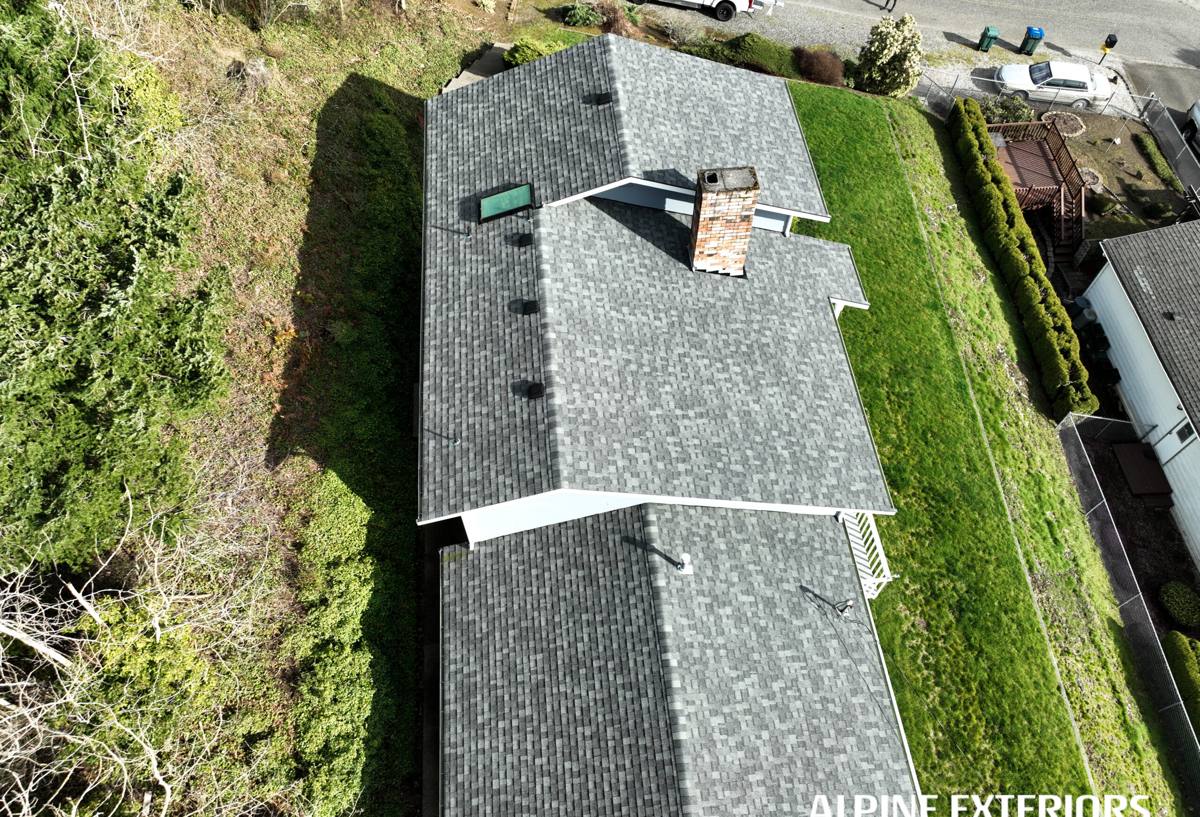
What Bellingham's Climate Does to a Roof
Whatcom County doesn't get the harshest winters in the state, but it gets something arguably tougher on a roof over time: near-constant moisture combined with salt-laden air off the bay. Three things drive most of the roofing problems we see in Columbia specifically.
Salt Air
Homes closer to the water deal with airborne salt that accelerates corrosion on exposed metal — nails, flashing, vent caps, and gutter hardware age faster here than they would a few miles inland. A roof spec that ignores this ends up with rusted fasteners and failed flashing well before the shingles themselves wear out.
Driving Rain
Bellingham rain rarely falls straight down. Wind off the water pushes it sideways into roof-wall intersections, valleys, and any exposed nail head. A roof that's only built to shed water moving downhill will leak the first time a storm comes in at an angle — which, here, is most storms.
A Long Moss Season
Shade, moisture, and mild temperatures mean moss has a season that runs most of the year in Columbia's tree-covered lots. Moss holds water against the roofing material, works its way under shingle edges, and slowly lifts and cracks whatever it's growing on. Left unmanaged, it shortens the life of an otherwise sound roof by years.
Signs a Columbia Home Needs a New Roof, Not Another Repair
Not every roof problem means full replacement — but there's a point where patching starts costing more than it saves. Here's what tells us a Columbia homeowner is past that point:
- Granules collecting in gutters or at downspout outlets in noticeable amounts
- Moss established across large sections rather than isolated patches, especially on north-facing slopes
- Soft or spongy decking felt underfoot during inspection, not just at one spot
- Daylight visible through the roof deck from inside the attic
- Multiple past repairs in different areas, meaning the roof is failing broadly rather than at one weak point
- Shingles cupping, curling, or cracking across more than one slope
- Rusted or deteriorating flashing at chimneys, valleys, and wall intersections
- Roof age at or beyond the manufacturer's expected service life for this climate
If a roof shows two or three of these at once, replacement is almost always the more honest recommendation — a repair at that point is a delay, not a fix.
What a Correct New Roof Installation Actually Involves
A new roof is more than new shingles laid over the old surface. Every layer underneath does specific work, and skipping or shortcutting any of them is where premature failures come from — especially in a climate that punishes shortcuts faster than most.
Full Tear-Off and Deck Inspection
We remove the existing roofing down to the deck rather than layering over it. That lets us actually see the plywood or plank decking underneath, replace any sections that are soft or water-damaged, and confirm the deck is properly fastened before anything new goes down. Covering up a compromised deck just hides the problem.
Ice-and-Water or Synthetic Underlayment
Underlayment is the roof's real waterproof layer — shingles are the first line of defense, but underlayment is what keeps the house dry if wind-driven rain gets past them. In a climate like this one, we treat underlayment coverage at eaves, valleys, and penetrations as non-negotiable, not an upgrade.
Flashing at Every Transition
Chimneys, skylights, sidewalls, and valleys are where roofs actually leak — the open field of shingles rarely fails first. Properly formed and sealed flashing at every one of these transitions is what separates a roof that handles decades of sideways rain from one that needs a bucket in the attic by year five.
Ventilation Built for Moisture Control
A roof deck that can't breathe traps moisture underneath it, which rots decking from below and feeds the exact conditions moss thrives in from above. Balanced intake and exhaust ventilation is part of a correct installation, not an accessory.
Fasteners and Metal Rated for Salt Exposure
Given the corrosion pressure from salt air, we spec fasteners, flashing, and vent components that are built to hold up near the water rather than standard hardware that's fine fifty miles inland but starts rusting here within a few seasons.
Roofing Material Options for Columbia Homes
There's no single "best" roofing material — the right choice depends on the home's roof pitch, budget, and how much long-term maintenance the homeowner wants to take on. Here's an honest comparison of the options we install most often in this climate.
| Material | Moss & Moisture Resistance | Typical Lifespan | Maintenance |
|---|---|---|---|
| Architectural asphalt shingle | Good with proper ventilation and periodic moss treatment | 25–30 years | Low to moderate |
| Standing seam metal | Excellent — sheds moisture, sheds moss growth surface | 40–50+ years | Low |
| Synthetic composite shingle | Very good, resists moisture absorption | 30–40 years | Low |
| Cedar shake | Requires active maintenance in this climate to control moss and rot | 20–30 years with upkeep | High |
Cedar shake can still be the right call on the right home, particularly where matching an existing architectural style matters, but we're upfront that it demands more ongoing attention here than asphalt or metal — the moisture and shade conditions in a neighborhood like Columbia work against low-maintenance wood roofing more than they would in a drier part of the state.
Our Installation Process
- On-site inspection. We walk the roof and attic, check the deck, flashing, and ventilation, and give a straight assessment of whether replacement or repair is the right call.
- Written scope and estimate. You get a clear breakdown of materials, tear-off scope, and price before any work is scheduled — no vague allowances.
- Material selection. We walk through the options that fit the home's pitch, style, and budget, including the honest trade-offs of each.
- Tear-off and deck repair. Full removal of old roofing, deck inspection, and replacement of any compromised sheathing.
- Underlayment, flashing, and ventilation installation. The layers that do the actual water and moisture management work.
- New roofing installation. Installed to manufacturer spec and matched to wind and rain exposure for the property's location.
- Final walkthrough. We review the completed roof with you, including gutter and downspout tie-in, before calling the job done.
Ventilation and Moss Prevention After Installation
A new roof's long-term performance depends partly on what happens after installation day. Proper ventilation reduces the moisture buildup that feeds moss, and simple habits extend the life of the investment: keeping overhanging branches trimmed back so shaded areas of the roof get more light and airflow, clearing debris from valleys and gutters before the fall rains set in, and having moss growth treated before it establishes rather than after. None of this replaces a correct installation — it protects it.
What Affects the Cost of a New Roof in Columbia
| Factor | Why It Matters |
|---|---|
| Roof size and pitch | More surface area and steeper pitches increase material and labor time |
| Number of layers to remove | Tear-off of multiple existing layers adds disposal and labor cost |
| Deck condition | Rotted or soft sheathing found during tear-off requires replacement before new roofing goes down |
| Material choice | Asphalt, metal, synthetic, and cedar carry different material and installation costs |
| Roof complexity | Valleys, dormers, chimneys, and skylights each add flashing detail and labor |
| Access and site conditions | Tree cover, tight lot lines, and staging space affect crew efficiency |
We don't quote a roof over the phone. Costs vary enough between two similar-looking Columbia homes that an accurate number requires actually getting on the roof and into the attic first.
Why a Bellingham-Based Crew That Already Works Columbia Matters
A roofing crew that works this neighborhood regularly already understands its specific pressures — the tree cover and shade patterns that drive moss growth, the salt exposure that shortens the life of standard hardware, and the wind-driven rain patterns off the bay that make flashing detail non-negotiable rather than optional. That local familiarity shows up in small decisions during installation that a crew unfamiliar with the area might not think to make. It also means straightforward access for inspections, warranty follow-up, and any questions that come up after the job is done, without a long drive being part of the equation.
If your Columbia home's roof is showing its age, we're happy to take a look and give you a straight assessment — no pressure, no upsell, just an honest read on whether it's time for a new roof and what that would actually involve. Use the form below to request a free estimate.