 Bellingham Window
 Decking in Barkley Has to Answer to Real Weather
Barkley homeowners don't need a lecture on Pacific Northwest weather — you live it. But it's worth saying plainly why a deck in this part of Bellingham behaves differently than one in a dry inland climate: the combination of salt-tinged air off Bellingham Bay, long stretches of driving rain, and a moss season that can run from early fall through late spring puts more strain on outdoor materials than most manufacturers' warranty language really accounts for. Wood decking in this environment is in an ongoing fight it eventually loses — checking, graying, splintering, and growing a slick film of algae and moss almost as fast as you can clean it off. Composite decking was built to change that equation, but only when it's specified and installed correctly for this exact climate. A lot of composite deck problems we get called out to fix in Whatcom County aren't material failures — they're installation shortcuts that didn't account for how much water this region actually moves through a structure over a year.
What Composite Decking Solves — and What It Doesn't
Composite decking is a mix of wood fiber and plastic, capped (in most modern products) with a protective polymer shell. Done right, it gives Barkley homeowners a few specific advantages over wood:
- No annual sanding, staining, or sealing — the surface doesn't absorb water the way bare wood does
- Much better resistance to splintering, cupping, and rot in a climate that rarely gives lumber time to fully dry out
- Color and surface texture that hold up to UV and moisture cycling without the graying wood shows within a season or two
- Better footing when wet, if the board profile and grain texture are chosen with rain in mind
What composite decking does not do is eliminate the need for good building practices underneath it. Composite boards are more forgiving of moisture on the surface, but the framing, flashing, ledger connection, and drainage plane below the boards still have to be built for a wet climate — otherwise you've just put a nicer face on a structure that's still failing underneath.
Choosing the Right Composite for a Barkley Lot
Not all composite decking is built the same, and the differences matter more here than in drier regions. The table below is a general comparison of the main categories you'll run into when shopping this project.
| Decking Type | Moisture & Moss Resistance | Maintenance | Typical Lifespan |
|---|---|---|---|
| Uncapped composite | Fair — can absorb moisture at cut edges and fastener holes over time | Occasional cleaning; more prone to surface staining | 15–20 years |
| Capped composite | Good to very good — polymer shell sheds water and resists mold growth on the surface | Periodic rinsing/scrubbing, especially in shaded or low-airflow areas | 25–30 years |
| Solid PVC decking | Very good — no wood fiber content, so there's nothing organic for moss or mildew to feed on | Low; mainly surface cleaning | 25–30+ years |
| Pressure-treated wood | Poor to fair — absorbs and releases water constantly, accelerating checking and rot | Annual cleaning, sealing, and spot repairs | 10–15 years with upkeep |
For most Barkley properties, we lean toward capped composite as the sweet spot of cost, appearance, and climate performance. On decks with heavy shade from mature trees, low airflow, or north-facing exposure — all common in this neighborhood — solid PVC is worth the upgrade cost because it removes the organic material moss and algae actually need to take hold. We'll walk your specific lot with you before recommending one over the other; sun exposure, tree cover, and how close the deck sits to grade all factor in.
Board Profile Matters More Than Color
Homeowners tend to shop composite decking by color first. In this climate, we'd argue board profile matters just as much. Deeper wood-grain embossing looks great in a showroom but can hold a thin film of water and grime longer after rain, which gives moss spores more time to settle. A slightly smoother, more consistent texture often performs better here even though it photographs less dramatically. We'll show you samples in person so you can feel the difference, not just see it in a catalog photo.
Where Deck Failures Actually Start: Substructure and Drainage
Almost every composite deck problem we're asked to diagnose in Whatcom County traces back to the framing and drainage details, not the decking material itself. A correct installation for this climate includes:
- Joist tape or a full moisture barrier on top of every joist, protecting the wood framing from the constant wet-dry cycling that causes rot
- Proper flashing at the ledger board where the deck meets the house — the single most common source of hidden water intrusion we find
- Adequate slope and gap spacing so water actually sheds off the deck surface instead of pooling between boards
- Joist spacing tightened to the composite manufacturer's spec, since composite boards can flex more than solid wood between supports, especially when saturated
- Ventilation underneath the deck so the substructure can dry out between rain events instead of staying damp for weeks at a time
Skip any of these and you can end up with a deck surface that looks brand new while the frame underneath is quietly rotting — a failure mode that's common enough in this region that we check for it on every deck we're asked to inspect, new or old.
Our Process for a Barkley Composite Deck
We keep the process straightforward and transparent from the first walk-through to final cleanup:
- On-site assessment — we look at sun exposure, tree cover, drainage patterns, and how the deck will tie into your home before recommending a specific product line
- Structural evaluation — if you're replacing an existing deck, we check ledger attachment, footings, and framing condition rather than just deck the surface over a compromised structure
- Written estimate — clear scope, material selection, and timeline, with no surprise add-ons buried in fine print
- Permitting — we handle the paperwork with the City of Bellingham or Whatcom County as needed, based on your deck's size and height
- Framing and moisture protection — joist tape, flashing, and drainage details installed to spec, not skipped to save a day of labor
- Decking, railing, and trim installation — fastened per manufacturer requirements for proper expansion and contraction, which matters in a climate with real seasonal temperature swings
- Final walkthrough — we go over basic care with you before we consider the job done
Railings, Fascia, and Details That Hold Up Here
The decking surface gets most of the attention, but railings, fascia boards, and stair components are just as exposed to Bellingham's weather — often more so, since vertical surfaces catch driving rain directly. We match railing and fascia materials to the decking system so the whole structure ages consistently instead of the trim failing years before the deck surface does. Metal hardware, fasteners, and post connections are all rated for coastal moisture exposure; using interior-grade or mismatched hardware here is one of the more common shortcuts we see on older Barkley decks, and it shows up as rust streaks and loosening railings well before the deck itself is due for attention.
Living With a Composite Deck in a Moss-Prone Climate
Composite decking cuts maintenance dramatically compared to wood, but "low-maintenance" isn't "no-maintenance," especially with a moss season as long as this region's. A simple seasonal routine keeps a composite deck performing the way it's supposed to:
- Fall: clear fallen leaves and debris regularly — trapped organic matter is exactly what moss and algae need to establish, and it happens fastest in shaded corners and against the house
- Winter: keep drainage gaps between boards clear of debris so meltwater and rain can actually drain instead of sitting on the surface
- Spring: rinse and, if needed, gently scrub with a soft-bristle brush and a composite-safe cleaner — avoid pressure washers on close settings, which can damage the cap layer
- Summer: check railing posts and fastener points for any looseness after a wet winter's freeze-thaw cycling
- Year-round: trim back overhanging branches where you can — reducing shade and debris fall is one of the most effective ways to slow moss growth on any exterior surface, decking included
Why a Crew That Already Works Barkley Matters
Composite decking installation isn't exotic work, but installing it correctly for this specific climate takes local judgment: knowing which lots hold moisture longer, which orientations need extra ventilation underneath the frame, and which fastening and flashing details actually hold up through a Whatcom County winter instead of just passing inspection. A crew that's worked other decks in and around Barkley has already seen how the neighborhood's mix of tree cover, sloped lots, and coastal exposure plays out over time — which means fewer guesses and fewer callbacks. We're licensed and insured to work in Bellingham and throughout Whatcom County, and we build every composite deck to hold up under this region's weather, not a generic national spec.
What Drives the Cost of a Composite Deck
Every project is different, but these are the factors that most often move the price up or down on a composite deck installation:
| Cost Factor | Why It Matters |
|---|---|
| Existing structure condition | Rotted framing or an undersized ledger connection has to be corrected before new decking goes on, adding labor and material |
| Square footage and shape | Larger and more complex layouts (angles, multiple levels) take more time and generate more waste-factor cuts |
| Decking tier | Uncapped, capped, and PVC composite products span a wide price range per square foot |
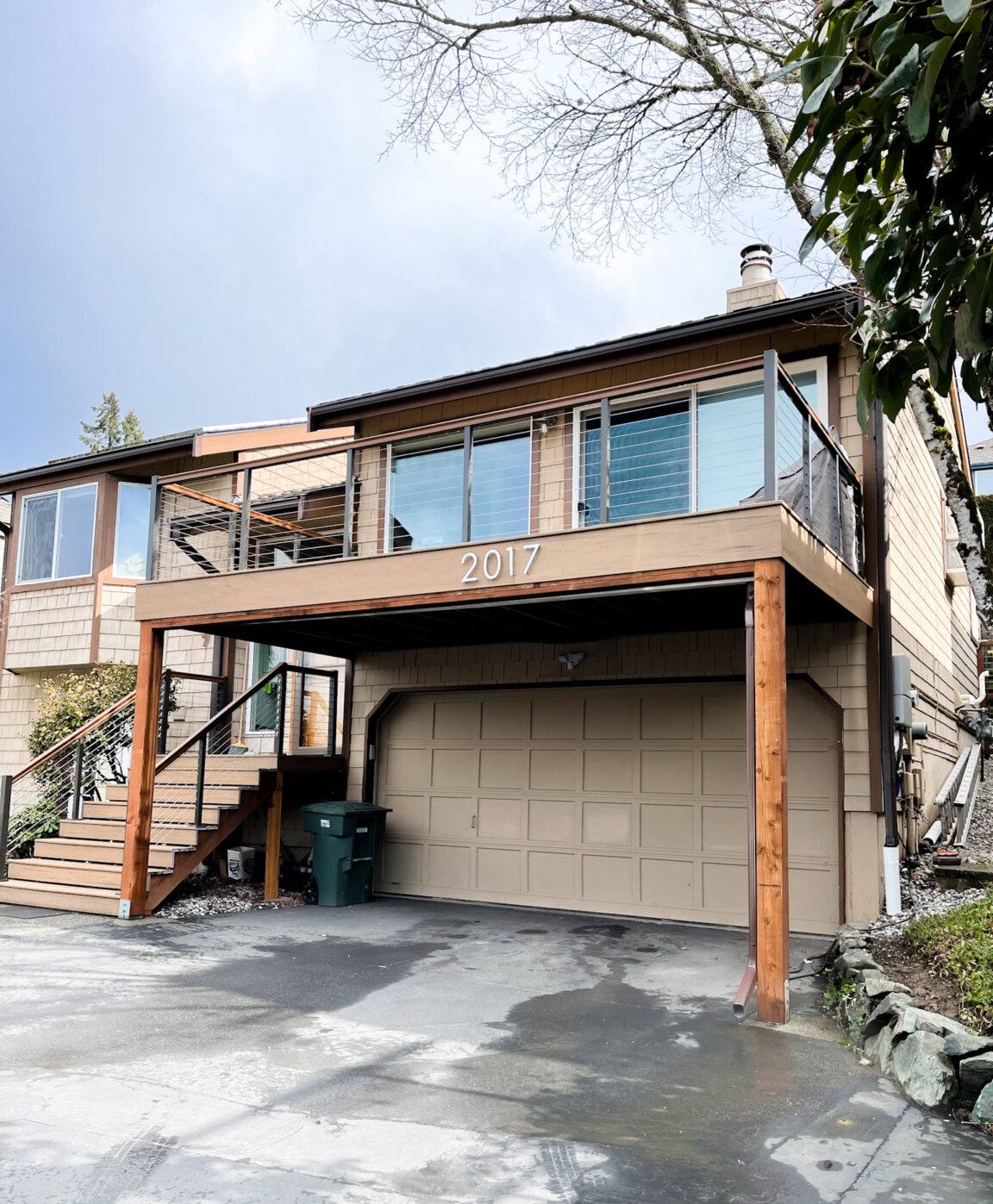
| Railing style | Cable, glass, and metal railing systems cost more than standard composite balusters |
| Height and access | Elevated decks need stronger footings, stairs, and sometimes additional permitting |
| Site access | Sloped or tree-crowded lots — common in Barkley — can slow material staging and demolition |
We'll break down where your budget is going in the written estimate so you're not choosing blind between "cheap" and "expensive" without understanding why.
Get a Straight Answer for Your Deck
If you're planning a new composite deck in Barkley or replacing one that's showing its age, we're happy to take a look and give you an honest read on what your home actually needs — no pressure, no inflated scope. Reach out for a free estimate using the form below, and we'll walk the site with you before recommending a single board.