 Bellingham Window
 Why Roofs in Cordata Wear Differently
Cordata sits in north Bellingham, close enough to Bellingham Bay and the Salish Sea that homes here deal with a mix of conditions you don't get further inland: salt-tinged marine air, rain that comes in sideways during winter storms, and a lot of mature tree cover throwing shade across rooflines for much of the year. None of these things individually is unusual for Whatcom County. Together, on the same roof, they add up to faster wear than a homeowner might expect from a roof that's "only" 12 or 15 years old.
Salt Air and Metal Components
Asphalt shingles themselves aren't much affected by salt air, but the metal parts of your roof system are — flashing, drip edge, fasteners, and any exposed vent hoods. Lower-grade or mismatched metals corrode faster near the water, and once flashing starts to pit or thin, it stops doing its job long before the shingles around it are due for replacement.
Wind-Driven Rain
Storms coming off the Sound don't always drop rain straight down. Wind-driven rain gets pushed up and under shingle laps, into valleys, and around anything that penetrates the roof deck — vents, chimneys, skylights. A roof that would hold up fine in a calmer inland climate can leak in Cordata if the underlayment and flashing weren't detailed for sideways rain in the first place.
Shade and a Long Moss Season
Many lots in this part of Bellingham have significant tree cover, which is part of what makes the neighborhood pleasant to live in — and part of what keeps roofs damp longer after every rain. Shaded, slow-drying shingles are exactly what moss and algae need to establish themselves, and once moss takes hold under the shingle tabs, it lifts them and lets water in underneath.
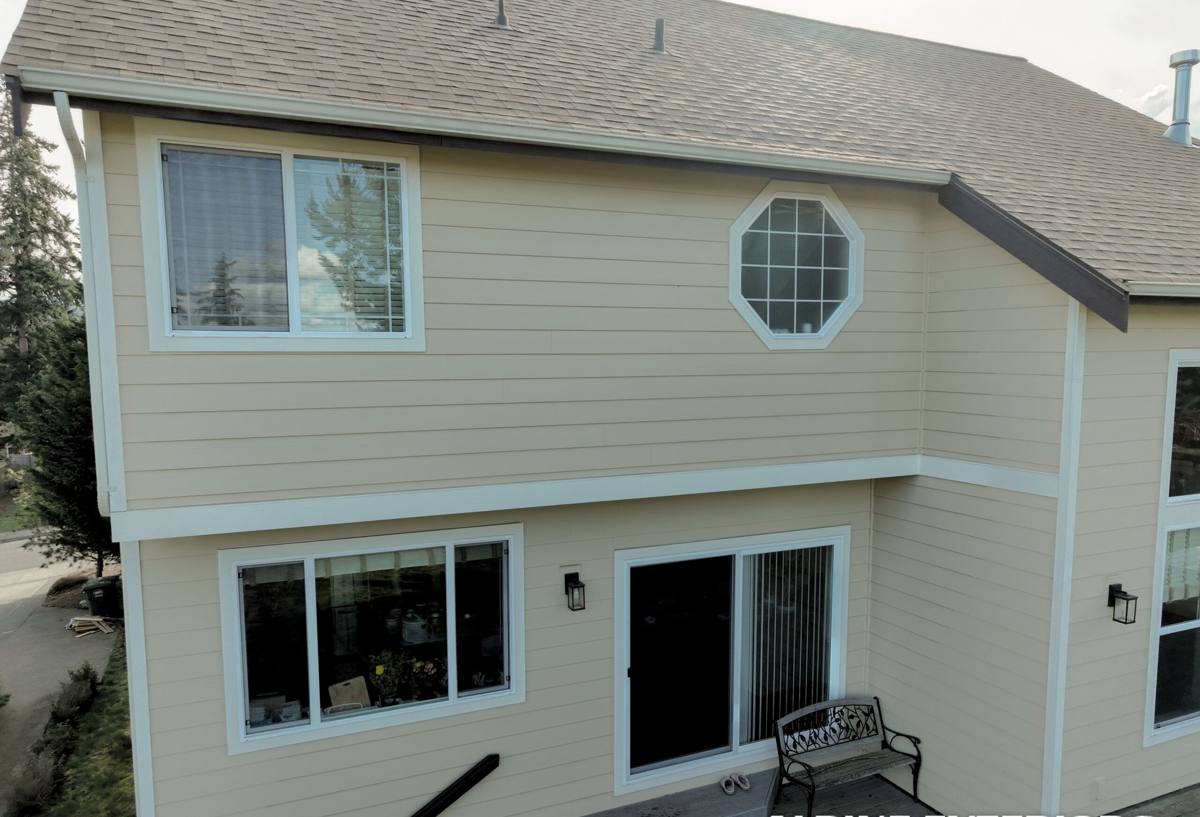
What a Correct Asphalt Shingle Installation Actually Involves
"Correct" isn't a marketing word — it's a specific set of details underneath the shingles that determine whether a roof performs for its full rated life or starts causing problems in year eight. On a reroof, the shingles themselves are the last thing installed and the least likely part to fail if everything under them was done right.
Underlayment and Ice-and-Water Protection
A synthetic underlayment goes down first as a secondary water barrier, and self-adhered ice-and-water shield membrane belongs in the spots most likely to see standing or driven water: eaves, valleys, and around penetrations. In a climate that sees as much sustained rain as ours, skipping or skimping on this layer is one of the most common causes of hidden leaks.
Flashing Details
Step flashing at walls, continuous flashing in valleys, and properly lapped flashing at chimneys and skylights all have to be installed in the correct sequence with the shingles — not caulked on afterward as a shortcut. Given the salt air in this area, we use corrosion-resistant metal rather than the cheapest option available.
Nailing Pattern and Wind Rating
Every shingle has a manufacturer-specified nailing pattern — number of nails, placement, and depth — that determines its actual wind rating. Nails driven at an angle, too high, or too few per shingle quietly void the warranty and reduce wind resistance, even though the roof looks fine from the ground.
Choosing a Shingle Built for This Climate
Not every asphalt shingle is a good fit for a shaded, rain-heavy, occasionally windy site. The table below is a general guide to how the common tiers compare — your actual best choice depends on your roof's pitch, sun exposure, and budget, which is something we'll walk through on site.
| Shingle Tier | Typical Lifespan | Wind Rating | Algae Resistance | Best For |
|---|---|---|---|---|
| Standard 3-tab | 15–20 years | Lower | Often minimal | Budget-driven projects, secondary structures |
| Standard architectural | 25–30 years | Moderate to high | Varies by line | Most primary homes |
| Algae-resistant architectural | 25–30+ years | Moderate to high | Built-in (copper/zinc granules) | Shaded, tree-covered lots like much of Cordata |
| Impact-rated architectural | 30+ years | High | Varies by line | Homes wanting extra durability, possible insurance discount |
For most Cordata homes with any real tree cover, we steer people toward an algae-resistant architectural shingle. It costs more up front than a basic 3-tab, but the streaking and moss-friendly surface you avoid over the next two decades makes it the better long-term value — not a hard sell, just a trade-off worth understanding before you decide.
Ventilation: The Detail Most Roofs Get Wrong
A shingle roof isn't just the surface layer — it's a system that needs to breathe. Balanced ventilation, with intake at the soffits and exhaust near the ridge, keeps air moving through the attic space. Without it, warm moist air from inside the house condenses against the underside of the roof deck, which rots sheathing and cooks shingles from below, shortening their life regardless of how good the shingle itself is.
In our climate, where the air outside is already damp much of the year, poor ventilation is one of the more common causes of a roof failing well before its rated lifespan. On every reroof we check existing intake and exhaust and correct the balance where it's off, rather than just installing new shingles over the same underlying problem.
Moss and Debris: Keeping a New Roof Looking Like One
No shingle roof in this part of Whatcom County is entirely moss-proof, but a few habits go a long way toward keeping a new roof clean and dry for its full lifespan:
- Keep gutters and valleys clear of needles and leaf litter, which hold moisture against the shingles
- Trim back branches that overhang the roof to cut down on shade and debris
- Have moss and algae growth removed gently — soft washing, not pressure washing, which can strip granules and shorten shingle life
- Watch for dark streaking, which is usually algae rather than dirt and worth addressing before it spreads
- Schedule a periodic roof check rather than waiting for a visible leak inside the house
Zinc or copper strips installed near the ridge during a reroof can also help suppress moss growth on the courses below them, using rainwater to carry trace metal down the roof slope.
How We Approach a Cordata Reroof
The steps don't change much from house to house, but the details within each step are where the quality of the finished roof gets decided.
- On-site inspection of the existing roof, decking, flashing, and ventilation
- Written estimate covering scope, materials, and any decking repair contingencies
- Material selection based on your home's exposure, shade, and budget
- Protection of landscaping, siding, and gutters before tear-off begins
- Full tear-off and inspection of the deck for soft spots or rot
- Repair of any damaged decking before underlayment goes down
- Underlayment, ice-and-water membrane, and flashing installed per manufacturer spec
- Shingle installation with correct nailing pattern for the rated wind exposure
- Ventilation check and correction where intake or exhaust is inadequate
- Full site cleanup, including a magnetic sweep for stray nails
- Final walkthrough and warranty paperwork
What Actually Drives the Cost of a Reroof
Two roofs of the same square footage can come in at noticeably different prices once you account for the details below.
| Cost Factor | Why It Matters |
|---|---|
| Roof pitch and complexity | Steeper roofs and roofs with many valleys, dormers, or hips take longer to work safely and use more material |
| Layers to remove | Tearing off two layers of old shingles takes more labor and disposal cost than a single-layer tear-off |
| Decking condition | Rotted or soft sheathing found during tear-off needs replacement before anything else can go on |
| Ventilation upgrades | Adding or correcting intake and exhaust vents is a smart investment but adds to the scope |
| Accessibility | Steep pitches, tall walls, or tight lot access can require additional safety equipment or staging |
| Shingle tier chosen | Algae-resistant and impact-rated shingles cost more per square than standard architectural |
We walk through these factors during the estimate so you understand what's driving the number, rather than handing over a total with no explanation behind it.
Why It Matters That We Already Work in Cordata
A crew that regularly works this neighborhood knows the practical things that don't show up on a spec sheet: how much shade a given lot typically has by mid-afternoon, how quickly moss tends to return on north-facing slopes here, and how to sequence a tear-off around our wet-weather windows so your deck isn't exposed longer than it needs to be. We also carry relationships with local material suppliers, which keeps lead times shorter than working with an out-of-area crew ordering from scratch.
Just as important, we're still here after the job is done. If a warranty question or a storm-related concern comes up two years down the road, you're calling a local business with a truck in Whatcom County, not chasing down a crew that moved on to the next region after a storm season.
Get a Straightforward Estimate
If your roof is showing moss, streaking, or you're just past due for an honest look at its condition, we're glad to come out, walk the roof, and give you a clear picture of what it needs — no pressure, no inflated scare tactics. Use the form below to request a free estimate.