 Bellingham Window
 Composite Decking Built for Cordata's Climate, Not Just Its Looks
Cordata is one of the newer, fast-growing corners of north Bellingham, and it's got a mix of housing stock — recent subdivisions alongside older homes tucked under mature evergreens. What almost every property here shares is exposure to the same weather pattern that shapes decks all over Whatcom County: long stretches of driving rain, salt-tinged air rolling in off the Sound, and a moss season that can run most of the year in shaded yards. A deck that looks great in July and starts showing black streaks, soft spots, or slick green film by the following spring usually wasn't built with that pattern in mind. Composite decking, installed correctly for this climate, is one of the more reliable ways to avoid that cycle.
This page is specifically about composite decking for homes in and around Cordata — what the material needs to hold up here, what a correct installation actually involves, and how we approach the job differently than a crew that doesn't work this area regularly.
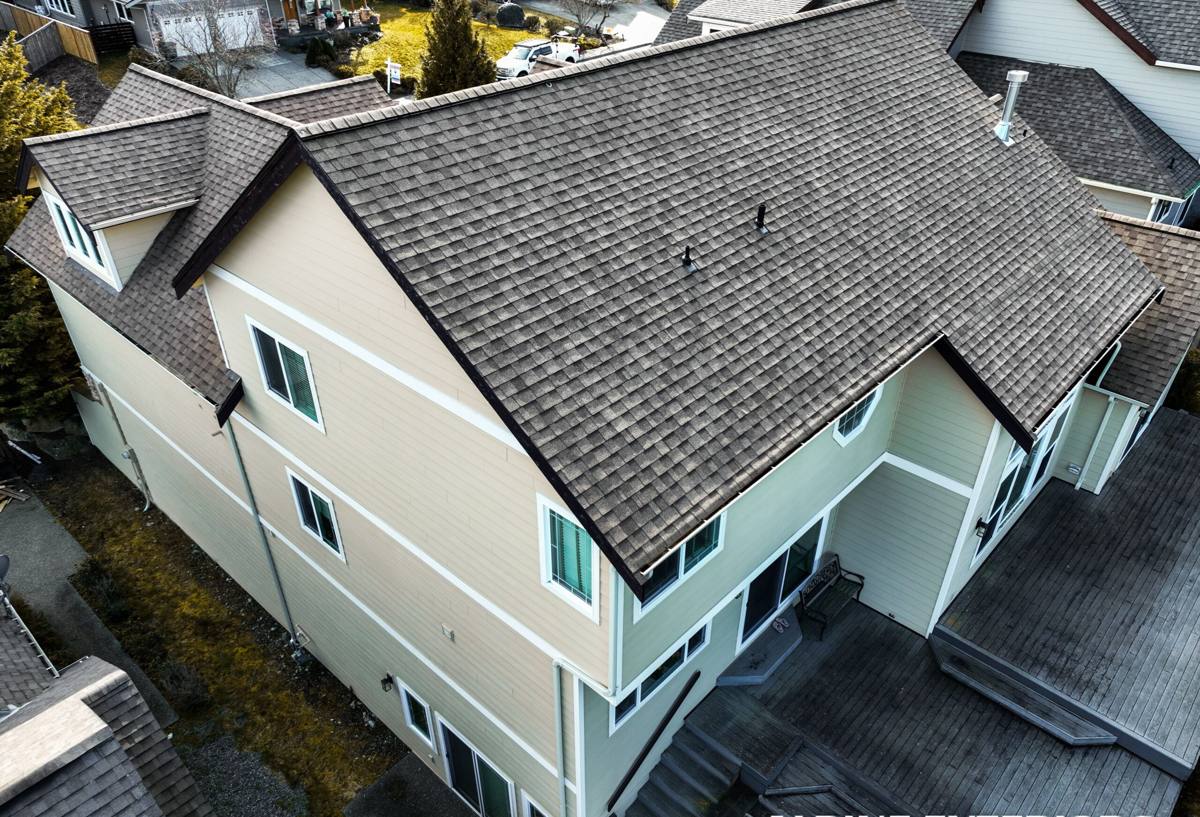
What Bellingham's Weather Actually Does to a Deck
It helps to be specific about the mechanisms, because "wet climate" undersells what's really happening to a deck surface here over a few seasons.
- Driving rain doesn't just fall straight down — wind-driven rain gets pushed sideways into board gaps, fastener heads, and end cuts, which is where most moisture-related failures start.
- Salt-tinged air off Bellingham Bay accelerates corrosion on any exposed metal — screws, brackets, joist hangers — long before the decking itself shows wear.
- Extended moss and algae season means organic growth gets a foothold on any surface that stays damp and shaded, and once established it holds moisture against the board, which compounds the problem.
- Freeze-thaw swings, while milder here than inland Whatcom County, still happen enough to stress joints and fasteners that were installed too tight or without expansion gaps.
None of this is unique to Cordata specifically, but it's the baseline every deck in this part of Bellingham has to be built to handle — and it's why generic, one-size-fits-all installation advice doesn't hold up here the way it might in a drier climate.
Why Composite Decking Fits This Environment
Composite decking — wood fiber and recycled plastic bonded together, usually with a protective cap layer — was developed largely to solve the problems that wood decking struggles with in wet climates: rot, splintering, and the endless cycle of sanding and re-sealing. That makes it a strong fit for Whatcom County conditions, with some caveats worth being honest about.
What it handles well
Capped composite boards don't absorb water the way solid wood does, so they don't swell, cup, or rot from the driving rain and long damp stretches typical here. They also don't need annual staining or sealing, which matters if your deck sits under tree cover and drying time between rain events is limited most of the year.
What it doesn't solve on its own
Composite is more resistant to moss and algae than bare wood, but it isn't immune — organic growth can still take hold on the surface, especially in shaded, low-airflow spots, and needs periodic cleaning. It's also less forgiving of installation mistakes than wood: gaps, fastening, and substructure ventilation all have to be right the first time, because composite doesn't hide sloppy work the way a weathered cedar board sometimes does.
Composite vs. Other Decking Materials: Honest Cost Factors
There's no single "best" material for every budget and every yard. Here's how the main options actually compare for a Cordata property, factor by factor.
| Factor | Pressure-Treated Wood | Cedar | Capped Composite | PVC |
|---|---|---|---|---|
| Upfront cost | Lowest | Low-mid | Mid-high | Highest |
| Moisture/rot resistance | Fair, needs sealing | Fair, needs sealing | Strong | Very strong |
| Moss/algae resistance | Poor | Poor-fair | Good with occasional cleaning | Good with occasional cleaning |
| Annual maintenance | Sealing/staining | Sealing/staining | Occasional wash | Occasional wash |
| Typical lifespan (PNW conditions) | 10-15 yrs before major repair | 15-20 yrs with upkeep | 25-30+ yrs | 25-30+ yrs |
| Feel underfoot / appearance | Natural, ages fast | Natural, ages fast | Consistent, wood-grain look | Can feel more plastic-like |
Composite tends to land in the sweet spot for this climate: meaningfully lower maintenance than wood without the higher cost and different feel of full PVC systems. We'll walk through the real trade-offs for your project during the estimate rather than push one material by default.
What a Correct Composite Deck Build Actually Involves
The board itself is only part of the story. Most composite deck problems we get called out to inspect in this area trace back to the substructure or the details underneath the boards, not the decking material failing on its own.
Substructure and framing
Joists, ledger boards, and framing need to be sized and spaced correctly for composite's weight and flex characteristics, which differ from wood. Ledger board attachment to the house also needs proper flashing — this is one of the most common failure points we see on older decks in wet climates, where water gets behind the ledger and rots the rim joist long before anyone notices.
Ventilation underneath
Low-clearance decks or ones built close to grade need enough airflow underneath to let moisture escape. Without it, ground moisture and rain runoff get trapped under the deck, which speeds up moss growth on the underside and accelerates corrosion on fasteners and hardware.
Fastening and gapping
Composite boards expand and contract with temperature more than people expect. Hidden fastener systems need to be installed with the manufacturer's specified gap — too tight and boards can buckle or crack at the fastener; too loose and you get an uneven, rattly surface.
Fascia, stairs, and edge details
Cut ends of composite boards expose the core material underneath the cap, which is more vulnerable to moisture intake. Edges, stair stringers, and fascia need to be capped or trimmed with matching edge boards so raw cut ends aren't left exposed to weather.
Hardware selection
Given the salt-tinged air common near Bellingham Bay, we spec corrosion-resistant fasteners and brackets rather than standard-grade hardware — the cost difference is small, but standard hardware corrodes noticeably faster in this environment.
How Our Process Works
- On-site assessment. We look at drainage, sun/shade exposure, existing structure (if it's a replacement), and how the deck ties into the house.
- Material and layout discussion. We go over composite board options, color/finish choices, and layout — including how to handle stairs, railings, and any transitions to patios or entries.
- Written estimate. Clear scope, materials, and price — no vague allowances that turn into surprise add-ons later.
- Permitting. Most deck rebuilds and many new builds in Whatcom County require a permit; we handle that process rather than leaving it to the homeowner.
- Demo and structural work. Old decking removed, framing inspected and repaired or replaced as needed, ledger flashing corrected if it's substandard.
- Composite installation. Boards, hidden fasteners, edge trim, and railing installed to manufacturer spec.
- Final walkthrough. We go over care basics with you before we consider the job done.
Living With a Composite Deck Through Bellingham's Moss Season
Low maintenance doesn't mean zero maintenance. A composite deck in a shaded Cordata yard still needs some basic seasonal attention:
- Sweep debris (needles, leaves, seed pods) off the surface regularly — trapped organic matter is what feeds moss and algae growth.
- Rinse or wash the deck a couple of times a year with a soft-bristle brush and a composite-safe cleaner, especially shaded areas that don't get much direct sun.
- Avoid pressure washers on the highest settings directly against the board surface — it can etch the cap layer over time.
- Check that gaps between boards stay clear so water keeps draining through rather than pooling on top.
- Keep gutters and downspouts near the deck clear so runoff isn't dumping directly onto the deck surface or the ledger connection.
What to Ask Before Hiring a Deck Contractor in Cordata
Composite decking is a durable material, but it's not installer-proof. Before hiring anyone for a deck project in this area, it's worth asking:
- Will you pull the required permit, and is that included in the estimate?
- How do you handle ledger board flashing and attachment to the house?
- What's your plan for under-deck ventilation given the site's grade and drainage?
- Are you using corrosion-resistant fasteners and hardware, or standard-grade?
- What's the manufacturer's warranty, and does your installation method keep that warranty valid?
- Can I see how you finish cut edges, stairs, and fascia so raw board ends aren't left exposed?
Why Local Experience in This Area Matters
A deck built to a generic national spec sheet doesn't always account for what north Bellingham actually throws at it — the specific mix of rain volume, shade patterns from mature trees, and the salt air drifting in off the water. Crews that work Cordata and the surrounding Whatcom County neighborhoods regularly get a feel for which lots drain poorly, which yards hold moss longest, and where corrosion shows up first on hardware. That's the kind of judgment that doesn't come from a manufacturer's install manual alone — it comes from having done the work in these conditions repeatedly and seen what holds up and what doesn't.
If you're weighing a new composite deck or a replacement for an aging wood deck in Cordata, we're happy to take a look and give you a straightforward estimate — no pressure, no upsell, just an honest read on what your yard and your budget actually need. Use the form below to get started.