 Bellingham Window
 Building a Deck That Actually Holds Up in Sehome
Sehome sits close enough to Bellingham Bay to catch salt-laden air, and its mix of mature trees and sloped, wooded lots means a lot of homes here get less direct sun than you'd think. That combination — moisture, salt, and shade — is hard on outdoor structures. A deck built with generic, big-box specs might look fine for a year or two, then start showing soft spots at the ledger, rusted fasteners, or a green film that never fully goes away. A deck built correctly for this specific setting is a different thing entirely, and it starts with understanding what the climate is actually doing to the wood and hardware.
This page covers what a custom deck project in Sehome should include from the ground up: material choices, framing protection, code basics, and the maintenance realities of building outdoors in Whatcom County. It's meant to help you ask better questions, whether you're comparing bids or just trying to understand what you're paying for.
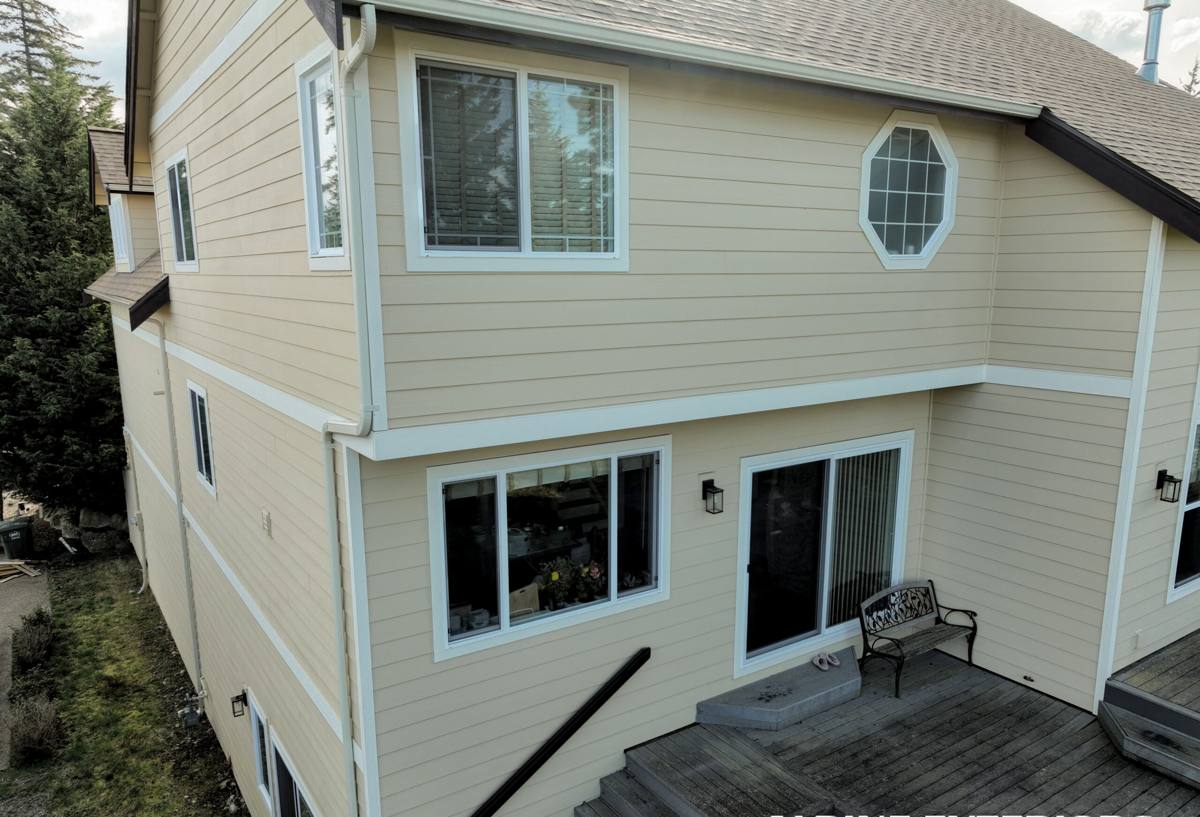
What Bellingham's Weather Does to an Outdoor Structure
Three things drive most of the deck problems we see in this area:
- Driving rain. Wind-driven rain gets under flashing, into end grain, and behind ledger boards that weren't detailed correctly. Once water gets trapped against a house band board, rot can develop out of sight for years.
- Salt air. Proximity to the bay accelerates corrosion on fasteners, hardware, and any metal connectors that aren't rated for it. Standard zinc-coated screws and hangers corrode faster here than they would inland.
- A long moss and algae season. Cool, damp, shaded conditions for much of the year let moss and mildew establish on horizontal wood and composite surfaces, especially under tree canopy or on the north side of a house — common on Sehome's more wooded lots.
None of this means a deck can't last decades here — it just means the build has to account for these conditions rather than ignore them.
Why Shade and Slope Matter More Than People Expect
A deck that gets afternoon sun dries out between rain events; one buried under tree cover often doesn't. On sloped lots — common in Sehome — drainage under and around the deck also matters more, since runoff has somewhere to go and can pool against footings or foundation walls if grading wasn't considered during design.
Framing and Structure: Where Decks Actually Fail
Most deck failures aren't about the decking boards on top — they're about what's underneath. In this climate, three details separate a deck that lasts from one that doesn't:
Ledger Attachment and Flashing
The ledger board (where the deck attaches to the house) is the single most common failure point in wet climates. It needs proper metal flashing that directs water away from the house band board, plus a gap or drainage path so trapped moisture can escape instead of sitting against the structure.
Joist Protection
Untreated cut ends and joist tops are where rot typically starts first, even on pressure-treated lumber. Sealing cut ends and running a self-adhering joist tape over the top of each joist keeps water from soaking into the wood through fastener holes and saw cuts.
Fasteners and Hardware
Given the salt air in this area, we use stainless steel or coated fasteners and connectors rated for coastal exposure rather than standard galvanized hardware. It costs a little more up front and saves you from rust streaks, loosened connections, and premature hardware failure later.
Choosing the Right Decking Material
There's no single "best" decking material — it depends on your budget, how much shade the deck gets, and how much upkeep you actually want to do. Here's how the common options compare for a Bellingham-area deck:
| Material | Moisture & Moss Resistance | Maintenance | Typical Lifespan |
|---|---|---|---|
| Pressure-treated fir/hem-fir | Good if sealed regularly; prone to splintering and moss in shaded spots | Annual cleaning, periodic sealing | 10–15 years |
| Cedar | Naturally rot-resistant, but still needs sealing to hold color and resist moss | Sealing every 1–2 years | 15–20 years |
| Composite (capped) | Excellent — doesn't absorb water, though surface film can still grow on shaded boards | Periodic washing, no sealing | 25–30 years |
| PVC | Excellent moisture resistance | Occasional washing | 25–30+ years |
In heavily shaded yards, we lean toward capped composite or PVC because they don't wick moisture the way wood does, which cuts down on moss buildup between cleanings. On sunnier lots, cedar or a quality pressure-treated deck with a good sealing schedule is a perfectly reasonable, lower-cost choice.
Code Basics: Footings, Guardrails, and Permits
Whatcom County's frost depth and soil conditions affect how deep footings need to go, and Bellingham's permitting process will look at guardrail height, stair geometry, and ledger attachment as part of any deck over a certain height or size. A few basics that come up on nearly every project:
- Footings need to bear on solid, undisturbed soil below frost depth — not just poured into loose fill.
- Guardrails are required above a certain deck height, with baluster spacing that meets code (typically no gap wide enough to pass a 4-inch sphere).
- Stair rise and run have to stay within a consistent range for safety — uneven steps are a common inspection flag on older, unpermitted decks.
- Decks attached to the house generally require a building permit in Bellingham; freestanding decks below a certain height sometimes don't, but it's worth confirming before assuming.
We pull permits and handle inspections as part of the build so you're not left guessing whether the deck meets current code — which matters both for safety and for resale down the road.
Living With Moss Season: Design Choices That Help
You can't eliminate moss risk on a shaded Bellingham lot, but design choices make a real difference in how much maintenance a deck needs:
Board Spacing and Airflow
Slightly wider gaps between deck boards let water drain through instead of pooling on the surface, which speeds drying time and reduces the conditions moss needs to take hold.
Under-Deck Ventilation
Low decks with poor airflow underneath trap moisture against the framing. Where grade allows, we build in enough clearance and, where needed, drainage systems that keep the space under the deck from staying wet all winter.
Surface Texture
Smooth-finish composite and wood surfaces tend to get slick with algae faster than boards with a bit of texture or grain. If part of your deck sits under tree cover, texture is worth factoring into the material decision.
How We Approach a Sehome Deck Project
The process is straightforward, but each step matters for a deck that's going to sit outside through a lot of Bellingham winters:
- Site visit. We look at sun exposure, slope, drainage, and the condition of the house band board where the ledger will attach.
- Design and material selection. We talk through decking material, footing layout, and guardrail/stair placement based on your yard and how you'll use the space.
- Permitting. We handle the permit application and coordinate required inspections with the county or city.
- Construction. Proper footings, flashed and taped framing, corrosion-resistant hardware, and decking installed to manufacturer spec.
- Final walkthrough. We go over maintenance basics for whatever material you chose, so you know what upkeep actually looks like year to year.
Why Local Experience Matters for This Job
A deck crew that regularly works Sehome and the surrounding Bellingham neighborhoods has already dealt with the sloped lots, shaded yards, and permitting steps specific to this area. That familiarity shows up in practical ways — knowing which drainage details actually hold up through a wet Whatcom County winter, having a realistic sense of how much sun a given yard orientation will get, and understanding what the local permitting process expects before it becomes a delay. It's the difference between a deck designed on paper and one designed for the lot it's actually going on.
Questions Worth Asking Any Deck Contractor
- Do you flash and tape the ledger and joists, or just fasten and cover?
- What fastener and hardware grade do you use, and is it rated for coastal/salt-air exposure?
- How deep do footings go, and how is that determined for my specific lot?
- Are you pulling the permit, and who handles the inspections?
- What does realistic long-term maintenance look like for the decking material you're recommending?
If you're planning a new deck or replacing one that's showing its age, we're happy to take a look at your yard and walk you through what makes sense for the site, the budget, and the climate. Fill out the form below for a free, no-pressure estimate.