 Bellingham Window
 Custom Windows for Blaine Homes
Blaine sits right on the water at the northern edge of Whatcom County, and that location shapes everything about how windows perform there. Homes here take a steady diet of salt-laden air, wind-driven rain that comes in sideways off the Strait, and long stretches of gray, damp months where moss and algae get a foothold on anything that stays wet too long. Stock, big-box replacement windows are built to a national average. Custom windows are built to fit your actual openings, your actual exposure, and the actual weather your house takes on the chin every winter.
Bellingham Window Co works throughout Whatcom County, and Blaine is one of the areas where we see the clearest gap between a window that's just "installed" and one that's actually built and fitted for the site. This page walks through what that difference looks like in practice.
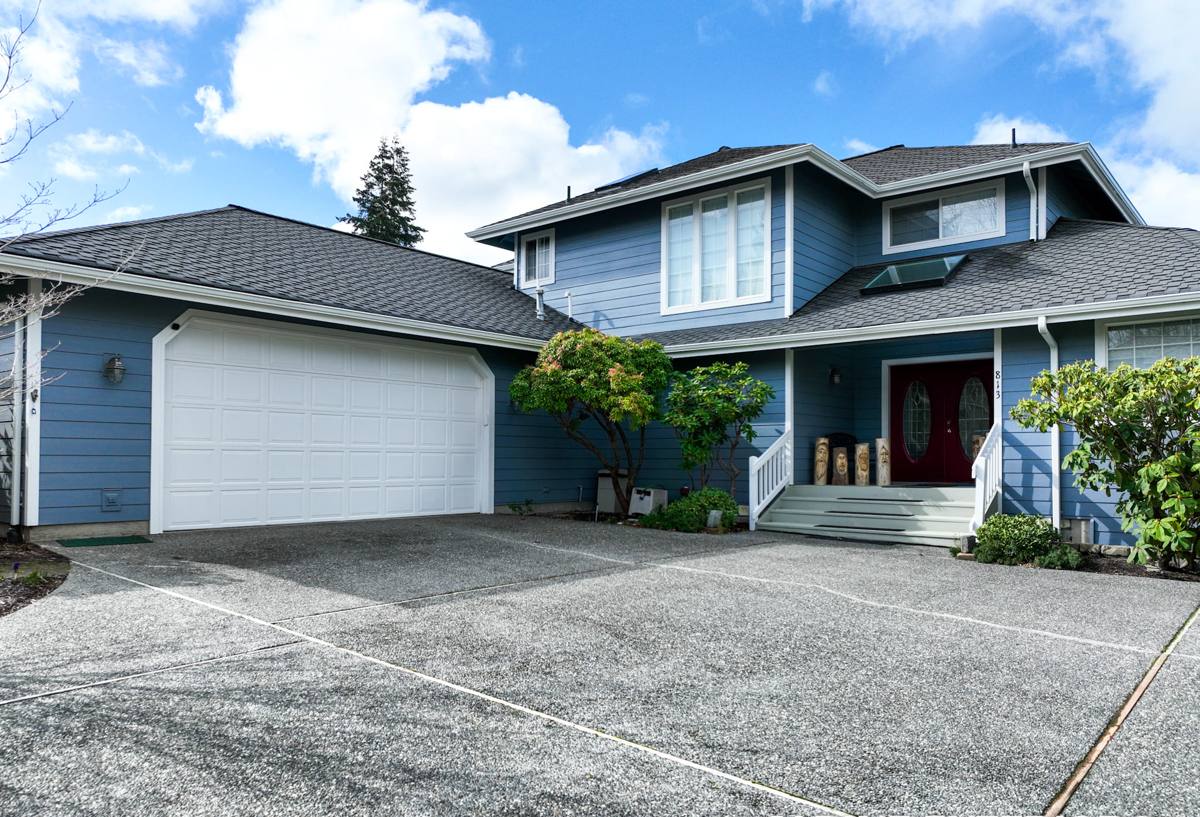
What Blaine's Climate Does to Windows Over Time
Three things drive most of the window problems we see in Blaine homes, and they compound each other over the years:
Salt Air
Proximity to salt water accelerates corrosion on hardware, screens, and metal components that would otherwise last decades inland. Cheaper mill-finish aluminum hardware and unprotected fasteners pit and seize up faster near the shoreline. It's not dramatic — it's slow, and it's usually the hardware that fails long before the glass or frame does.
Driving Rain
Wind off the water doesn't just fall on a window — it drives into it horizontally, which puts real pressure on every seam, sill, and flashing detail. A window that would stay dry in a calm rain in a more sheltered part of the county can leak in Blaine if the flashing and sealant details weren't done correctly the first time. This is the single biggest cause of the water damage we get called out to inspect.
Moss and Prolonged Dampness
Whatcom County's long wet season means anything with a horizontal ledge — a sill, a mullion, a poorly sloped sash track — stays damp for extended periods. That damp equals moss, algae, and eventually wood or composite degradation if the material and the drainage path weren't chosen with that in mind.
None of these are exotic problems. They're the ordinary cost of coastal Pacific Northwest living, and they're entirely manageable with the right materials and installation detailing — which is the whole point of doing the job custom rather than off-the-shelf.
What "Custom" Actually Means Here
"Custom windows" doesn't mean unusual shapes or luxury upgrades — most of the custom work we do in Blaine is standard-looking windows built to non-standard, precisely measured openings. Older Whatcom County homes rarely have perfectly square, standard-size rough openings, especially after decades of settling, prior remodels, or original construction that predates modern sizing conventions.
Custom manufacturing means:
- The window is built to your opening's actual measurements, not trimmed down or shimmed to fit a stock size
- Frame depth and jamb extensions match your wall assembly, including siding thickness and any exterior insulation
- Glass, hardware, and frame material are selected for your specific sun and wind exposure, not a one-size-fits-all default
- Flashing and drainage details are planned for the opening before the window ever arrives on site
The alternative — squeezing a stock size into an opening that doesn't quite match — is where a lot of long-term leaks and drafts originate, even when the window itself is a decent product.
Choosing the Right Frame Material for a Coastal Exposure
Material choice matters more in Blaine than it does a few miles inland, because salt air and moisture exposure are harder on some materials than others. Here's how the common options hold up:
| Material | Coastal Performance | Maintenance | Our Take |
|---|---|---|---|
| Vinyl | Good — won't rust or corrode, handles moisture well | Low; occasional cleaning | Solid default for most Blaine homes; budget-friendly and durable |
| Fiberglass | Excellent — very stable, resists warping and doesn't corrode | Low | Best long-term option for full water and wind exposure; higher upfront cost |
| Aluminum-clad wood | Fair to good, depends heavily on hardware and finish quality | Moderate — exterior clad protects wood, but seals need checking | Good for the interior wood look, but we're selective about hardware grade near the water |
| Bare wood | Poor without diligent upkeep in this climate | High | We generally steer homeowners away from unclad wood on exposed elevations here — the maintenance burden in constant damp and salt air is significant |
| Standard mill-finish aluminum | Poor near salt water — prone to pitting and corrosion | Moderate to high | Not something we recommend for Blaine's shoreline-adjacent lots |
We don't push one material on every job — the right call depends on the elevation, how exposed that side of the house is to wind and salt spray, and your budget. What we won't do is install a material on a wide-open, wind-exposed wall that we know will need constant upkeep or premature replacement. That's a maintenance headache we'd rather steer you away from up front than have you discover in year five.
Glass and Hardware: The Details That Actually Matter
The glass package is where a lot of a window's real-world performance lives, and it's worth getting right the first time since it's not something you upgrade later without replacing the sash.
Low-E Coatings and Gas Fills
A quality low-E coated, argon-filled double-pane unit is the practical standard for this region — it manages both heat loss in winter and unwanted solar gain, and it reduces interior condensation, which matters a lot in a climate this damp.
Condensation Resistance
Homes near the water often run higher interior humidity for parts of the year. A window with poor thermal performance at the edge of the glass will fog or sweat on cold mornings well before the center of the glass shows any issue. We pay attention to spacer and edge-of-glass detailing for exactly this reason.
Hardware Grade
This is where salt air does the most damage. We spec corrosion-resistant hardware — stainless or coated fasteners and hinges rather than standard mill-grade — on any Blaine installation, especially for windows on wind-exposed or water-facing walls. It costs a bit more up front and saves you a stuck sash or a rusted lock five years down the road.
How Our Installation Process Works
A correct custom window installation isn't just "pull the old one, drop in the new one." Here's what the job actually involves, start to finish:
- On-site measurement and assessment. We measure every opening individually and check the condition of the existing framing, sill, and any signs of past water intrusion before ordering anything.
- Material and glass selection. Based on that assessment and the wall's exposure, we recommend frame material, glass package, and hardware grade — and explain the trade-offs so you're choosing with full information.
- Manufacturing to spec. Windows are built to your exact opening dimensions rather than adjusted on site to fit a stock size.
- Removal and opening inspection. When we pull the old window, we inspect the rough opening for hidden rot, prior water damage, or inadequate flashing — problems that are invisible until the old unit is out.
- Flashing and drainage detail. This is the step that determines whether a window leaks in driving rain. We integrate flashing with the existing water-resistive barrier and siding so water is directed out and down, not behind the wall.
- Setting, shimming, and sealing. The window is set level and square, shimmed correctly so it operates smoothly, and sealed with products rated for this climate — not a generic caulk that will fail in a season or two of coastal weathering.
- Interior and exterior finish work. Trim, interior finish, and exterior detailing are completed to match the home, and every unit is tested for smooth operation and a proper seal before we consider the job done.
What Goes Wrong When This Is Rushed
Most of the window problems we're called to fix in Blaine didn't start with a bad window — they started with a rushed or incomplete installation. A few patterns we see repeatedly:
- Flashing that wasn't integrated with the house wrap, so water gets behind the siding instead of running off
- Gaps sealed with the wrong sealant for exterior, wind-driven-rain exposure
- Standard hardware installed on a water-facing wall, corroding well ahead of schedule
- Stock-size units forced into openings that were slightly out of square, leaving uneven gaps that let in drafts and moisture
- No inspection of the rough opening before the new window went in, missing rot that was already underway
Every one of these is preventable with the right process — it just takes doing the job in the right order instead of skipping steps to move faster.
Why a Crew That Already Works Blaine Matters
Whatcom County's building codes account for wind exposure and moisture, and requirements can vary depending on how exposed a given site is. A crew that already does regular work in Blaine and along the surrounding shoreline has a working sense of what a given elevation is likely to face, what permitting looks like locally, and which material and hardware choices actually hold up here versus what merely looks fine on a spec sheet in a showroom. That familiarity shows up in the details — flashing choices, hardware grade, sealant selection — more than in anything you'd notice on install day.
Maintaining Custom Windows in a Marine Climate
Even a well-installed window benefits from a little seasonal attention in a climate like this:
| Task | Frequency | Why It Matters Here |
|---|---|---|
| Rinse frames and sills | 2-3 times per year | Removes salt residue before it can accelerate corrosion or hardware wear |
| Check and clear weep holes | Twice yearly | Keeps drainage paths open so wind-driven rain has somewhere to go |
| Inspect exterior sealant | Annually | Coastal wind and UV exposure ages sealant faster than inland conditions |
| Clear moss/algae from sills and tracks | As needed through wet months | Prevents moisture retention and staining during the long damp season |
| Lubricate hardware | Annually | Salt air dries out lubrication and accelerates hardware wear |
What Custom Windows Typically Cost
Pricing depends on size, material, glass package, and how many openings are involved, but a few factors move the number more than others:
| Factor | Impact on Cost |
|---|---|
| Frame material (vinyl vs. fiberglass vs. clad wood) | Largest single factor; fiberglass and clad wood run higher than vinyl |
| Opening size and shape | Larger or non-rectangular openings increase manufacturing cost |
| Glass package (low-E, gas fill, tempered where required) | Moderate impact; upgraded packages add cost but pay back in comfort and durability |
| Hardware grade | Small increase for corrosion-resistant hardware, worth it near the water |
| Condition of existing opening | Hidden rot or flashing repair adds labor once the old window is out |
| Number of windows in the project | Per-unit cost usually improves with a multi-window job |
We give firm numbers only after we've actually measured your openings and looked at their condition — anything quoted sight unseen is a guess, and we'd rather not guess on something you're going to live with for the next 20-plus years.
Is It Time to Replace, or Can Your Current Windows Be Saved?
Not every window in a Blaine home needs full replacement. Signs that point toward replacement rather than repair include persistent fogging between panes (a failed seal that can't be fixed), soft or rotted framing around the opening, hardware that's corroded beyond simple replacement, or drafts that persist even after weatherstripping has been addressed. If a window is structurally sound and the problem is isolated to hardware or sealant, a repair may be the more sensible move — we'll tell you honestly which situation you're in rather than defaulting to a sale.
If you're weighing custom windows for a home in Blaine, we're glad to take a look and give you a straightforward, no-pressure estimate — no obligation, just an honest read on what your home actually needs. There's a form below to get that started.