 Bellingham Window
 Building Decks for Silver Beach's Waterfront Climate
Silver Beach sits close enough to the water that homes here deal with a different set of conditions than a deck built on the dry side of Bellingham. Salt-tinged air off the water, driving rain that comes in sideways during winter storms, and a moss season that seems to stretch longer every year all work on wood, metal, and even composite decking in ways that a generic "deck contractor" checklist doesn't account for. We've built and repaired decks in this part of Whatcom County long enough to know which details actually matter here and which ones are just upsells.
This page covers what a deck built for Silver Beach actually needs, from the framing under your feet to the fasteners you'll never see, and how our process is built around getting those details right the first time, rather than fixing them again in five years.
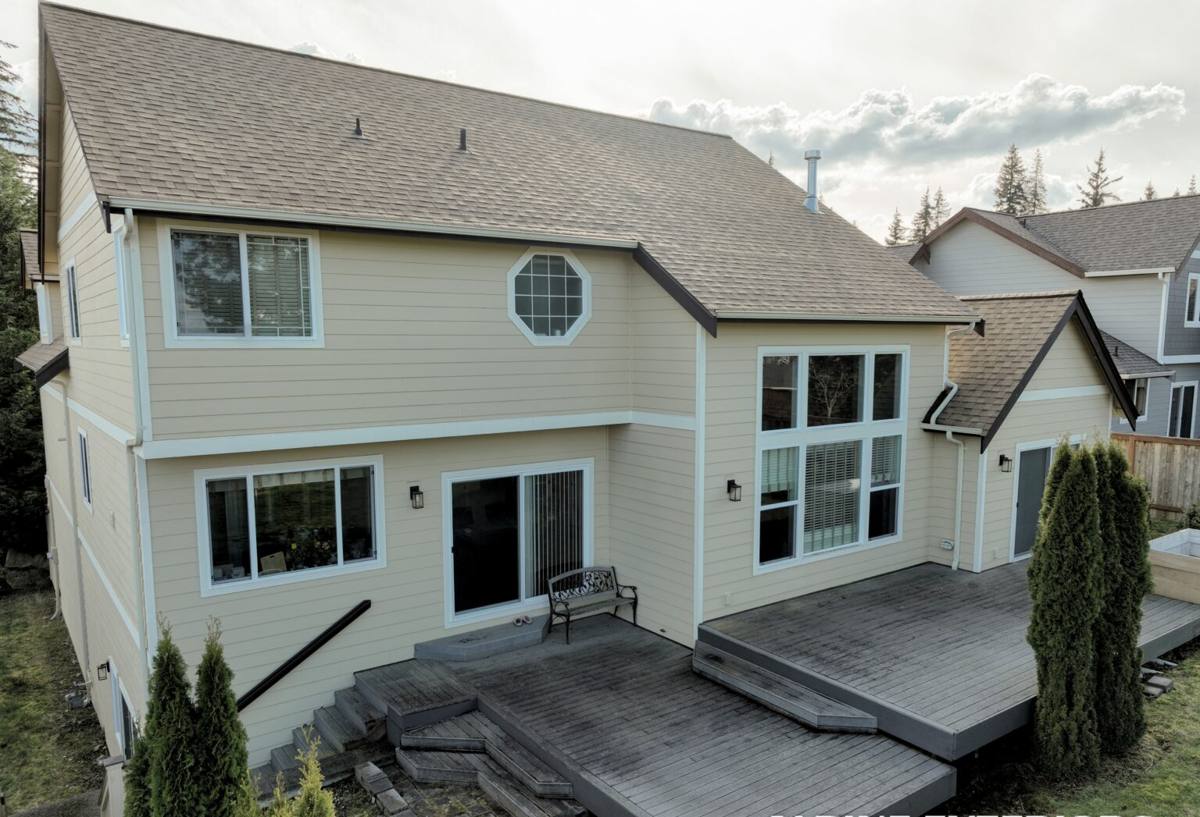
What Bellingham's Weather Does to a Deck
Every coastal Bellingham neighborhood shares the same basic climate pattern, but a deck takes the brunt of it directly, sitting outside year-round with no siding or roof overhang to shield it. A few specific mechanisms cause most of the damage we get called out to fix.
Salt air and corrosion
Even a few blocks from open water, airborne salt accelerates corrosion on fasteners, hardware, and hinges. A deck built with standard hardware-store screws and joist hangers can start showing rust streaks and weakened connections years before a comparable deck built further inland. Corrosion at a hidden structural connector doesn't announce itself the way a rotten board does, it just quietly loses strength until something gives. This is one of the few places where spending a little more on fastener grade pays for itself many times over.
Driving rain and water intrusion
Storms here don't just fall straight down, wind-driven rain gets pushed sideways into ledger boards, stair stringers, and any spot where two pieces of framing meet. Water that gets trapped instead of shed is the single biggest cause of deck failure we see, almost always at the ledger board connection to the house or at butt joints in the decking itself. Once water gets behind flashing or into an unsealed cut end, it has nowhere to go and nowhere to dry out quickly in our climate.
Moss, algae, and a long wet season
Bellingham's moss season isn't a two-month nuisance, it's most of the year. Moss and algae hold moisture against decking boards, stairs, and railings, which softens wood fiber over time and turns walking surfaces slick and dangerous, especially on shaded decks, decks tucked under trees, or decks that don't get much direct sun through the winter months. A deck that stays damp for weeks at a time needs different material choices and different maintenance habits than one that dries out between storms.
Choosing the Right Decking Material
There's no single "best" decking material, there's a best material for your budget, your maintenance appetite, and how exposed your particular deck is to sun, shade, and moisture. Here's how the common options stack up for a Silver Beach property specifically.
| Material | Upfront Cost | Maintenance | How It Handles This Climate |
|---|---|---|---|
| Pressure-treated wood | Lowest | Annual cleaning, periodic sealing | Good if sealed regularly; moss and mildew take hold fast if maintenance lapses |
| Cedar | Moderate | Regular sealing/staining | Naturally rot-resistant but still needs upkeep in constant damp and shade |
| Composite decking | Higher | Occasional washing | Doesn't absorb water like wood; still needs cleaning to prevent surface moss and mildew |
| PVC/capped polymer | Highest | Minimal | Best moisture resistance of the group; least susceptible to moss taking hold |
We're honest with clients that pressure-treated and cedar decks can absolutely last for decades here, they just require an owner willing to stay on top of cleaning and sealing on a real schedule, not "when I get around to it." If you know you won't keep up with that schedule, a composite or capped polymer product is the more realistic long-term choice, even with the higher upfront cost. There's no wrong answer here as long as the choice matches how much maintenance you actually intend to do.
Framing and Structure Built to Last
The decking boards are what you see and walk on, but the framing underneath is what determines whether the deck is still solid and safe in fifteen or twenty years. This is where cutting corners causes the most expensive problems down the road, because framing failures are hidden until they're serious.
Ledger board attachment
The ledger board, where the deck attaches to your house, is the most common source of water damage and structural failure on decks in wet climates like ours. Proper flashing that directs water away from the house, rather than letting it wick into the rim joist and wall framing, is not optional in our process, even when it adds a step that isn't visible in the finished result.
Footings and post connections
Whatcom County soil and drainage conditions vary from block to block, and footing depth needs to account for both frost and local drainage patterns. We size and place footings to current code requirements rather than matching whatever the old deck had, since a lot of older decks in this area were built to looser standards decades ago and simply haven't failed yet.
Hardware grade
Given the salt air, we use fasteners and structural hardware rated for corrosion resistance, typically stainless steel or heavy hot-dip galvanized, depending on the application, rather than standard-grade hardware that performs fine in a drier inland climate but underperforms here within a handful of years.
Drainage, Fasteners, and Moisture Control
A deck that sheds water well will outlast one that doesn't, regardless of what material sits on top. A few specific details make the difference between a deck that ages gracefully and one that needs early repair:
- Consistent, correct slope away from the house so water doesn't pool against the ledger board
- Gapping between deck boards sized for the material, so water drains through instead of sitting on the surface
- Flashing at every point where framing meets the house, not just the ledger
- Corrosion-resistant fasteners throughout, including hidden structural connectors
- Stair stringers and railing posts set with enough clearance to dry out between rain events
- End cuts and drilled holes sealed before installation, since raw cut ends absorb water fastest
None of these show up in a finished photo, which is exactly why they're the details some contractors skip to save time on a bid.
Repair, Resurface, or Full Rebuild?
Not every deck problem means starting over. Deciding what your deck actually needs is part of an honest estimate, and it usually comes down to whether the framing underneath is still sound.
| Situation | Likely Fix | What to Watch For |
|---|---|---|
| Surface wear, graying, minor moss, boards still solid | Cleaning, sealing, or resurfacing | Framing is fine; this is maintenance, not repair |
| A few soft or damaged boards, framing otherwise solid | Spot repair/board replacement | Confirm the cause before replacing, a leaking source will just damage new boards too |
| Soft framing, rusted hardware, sagging, or a failing ledger connection | Full or partial rebuild | Cosmetic fixes on top of bad framing are a safety risk, not a savings |
We'll tell you plainly which category your deck falls into rather than defaulting to the most expensive option. A deck with sound framing and tired-looking boards doesn't need to be torn out.
Railings, Stairs, and Everyday Safety
Railings and stair connections take a lot of hand contact and weather exposure at the same time, and they're often the first thing to loosen on an aging deck. Height, spacing, and load requirements for railings and guards are set by building code, and we build to those requirements rather than to whatever the previous deck happened to have, especially on older decks where railing height or baluster spacing sometimes doesn't meet current standards. Loose railing posts are also one of the more common issues we find during assessments, usually caused by corroded fasteners or a post that was never anchored deep enough into solid framing to begin with.
Permits, Setbacks, and Whatcom County Requirements
Most new decks and significant deck rebuilds in Bellingham require a building permit, and decks on lots near the water can also involve additional review depending on proximity to the shoreline and local setback rules. Requirements vary by lot, so we don't guess, we confirm the specifics for your property before finalizing a design rather than assuming your situation matches the house next door.
If your existing deck was built without a permit, or was built before current code and has never been reviewed, that's worth knowing before you sell the house or before you file an insurance claim, not after. We can tell you where a deck stands as part of an estimate, and handle the permit process if a rebuild or major repair is the right call.
How We Build Your Deck
Our process is the same whether we're replacing a failing deck or building a new one from scratch:
- Site visit and assessment, we look at the existing structure (if any), the slope of your yard, sun and shade exposure, and how close you are to the water
- Design and material discussion, an honest conversation about what fits your budget and how much maintenance you're realistically willing to do
- Permit handling, we pull the required permits and confirm any setback or shoreline requirements before work starts
- Demo and structural work, removal of the old deck if needed, framing, footings, and ledger flashing done to current code
- Decking, railing, and stairs, installed with the fastener and gapping details appropriate to the chosen material
- Final walkthrough, we go over care and maintenance specific to what we installed, so you actually know what upkeep looks like instead of guessing
Keeping a Silver Beach Deck Looking Good
Whatever material you choose, a little seasonal attention goes a long way in this climate. A basic checklist we give clients after a build:
- Sweep debris and standing leaves off the deck regularly, especially in fall
- Clean moss and algae off boards and stairs before it builds up, a stiff brush and mild cleaner is usually enough
- Check that gaps between boards are still clear and draining, not clogged with compacted debris
- Inspect railings and stair connections annually for looseness or corrosion at the hardware
- Reseal or restain wood decking on the schedule appropriate to the product, don't wait until it looks obviously worn
- Watch for soft spots underfoot, which usually mean moisture has already gotten into the wood
- Keep nearby vegetation trimmed back so the deck gets airflow and sun to help it dry out
Why a Local Silver Beach Crew Matters
A deck built by a crew that doesn't normally work this close to the water tends to default to generic specs, standard hardware, standard flashing details, standard maintenance advice pulled from a manual written for a drier climate. Those defaults show up as problems years earlier here than they would somewhere inland, and by the time they're obvious, it's a repair bill instead of a five-minute conversation at the design stage.
We work in Bellingham and across Whatcom County regularly enough to know which details are worth the extra cost in this specific environment and which upsells aren't necessary for your situation. That's the difference between a deck that needs major repair in eight years and one that's still solid in twenty-five, and it's why we walk every site in person before quoting anything.
If you're planning a new deck or want an honest look at whether your current one is still sound, we're happy to come out, walk the site, and give you a straightforward, no-pressure estimate. Use the form below to get started.