 Bellingham Window
 Deck Replacement for Cordata Homes
Cordata sits in north Bellingham, close enough to Bellingham Bay and the Sound to catch salt-laden air, and far enough inland to get the full brunt of Whatcom County's fall and winter storm systems. That combination is hard on decks. A deck that would last 20+ years in a dry inland climate can start failing structurally in half that time here if it wasn't built with our conditions in mind. When a deck in Cordata is nearing the end of its life, replacement usually isn't about looks — it's about moisture finding its way into places it shouldn't be for years before anyone notices.
This page covers what deck replacement actually involves for homes in this part of Bellingham: what the climate does to decking over time, what a properly built replacement looks like, and what to expect from a crew that works this neighborhood regularly.
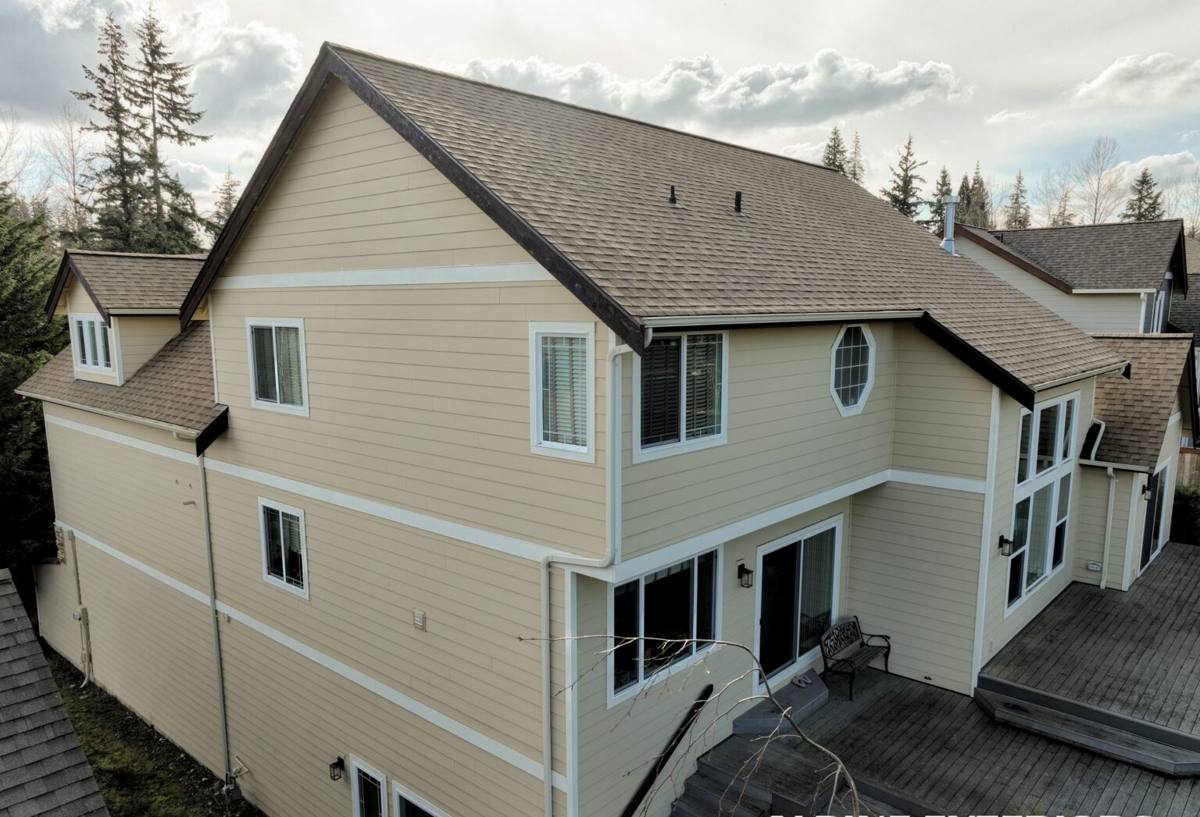
What Bellingham's Climate Does to an Aging Deck
Three things drive most of the deck failures we see in this area, and they compound each other over a wet Pacific Northwest winter.
Driving rain
Wind-driven rain doesn't fall straight down — it gets pushed sideways under railings, into ledger board connections, and between decking gaps that have closed up over time. Once water gets past the surface, it sits against untreated wood, joists, and hardware far longer than it would in a drier climate, because our humidity and rain frequency don't give lumber much of a chance to fully dry out between storms.
Moss and organic buildup
Bellingham's long moss season isn't just cosmetic. Moss and algae hold moisture directly against decking boards and in the gaps between them, which accelerates rot in wood decking and can stain or degrade the surface of some composite products if it's left to build up year after year. On older decks, moss growth in the shaded, low-airflow areas underneath is often where we find the worst hidden decay.
Salt air and fastener corrosion
Proximity to the bay means metal hardware — nails, screws, joist hangers, structural connectors — corrodes faster than it would further inland. Corroded fasteners are a structural issue, not a cosmetic one: a deck can look solid on the surface while the connections holding it to the house have quietly weakened underneath.
Repair or Replace? Signs It's Time
Not every tired-looking deck needs a full replacement. But there are signs that point past patch repairs and toward starting over:
- Soft, spongy, or spring-back decking boards, especially near the house or in low-airflow shaded areas
- Visible rot or discoloration at the ledger board where the deck attaches to the house
- Rusted, corroded, or missing joist hangers and structural screws
- Persistent moss or black staining that returns within weeks of cleaning
- A railing that feels loose or moves when leaned on
- Gaps between decking boards that have closed up, trapping water and debris instead of draining it
- A deck built more than 20-25 years ago, especially if it's never been re-flashed at the ledger
If you're only seeing one or two of these and the frame underneath is sound, repair or partial board replacement may be enough. When several show up together, that usually means the underlying structure has been absorbing moisture for a while, and replacement is the more honest recommendation.
What a Correct Replacement Actually Involves
A deck replacement done right isn't just pulling off old boards and screwing down new ones. The parts that actually determine how long the deck lasts in this climate are mostly hidden once the job is finished.
Ledger flashing
The ledger board — where the deck attaches to the house — is the single most common failure point we see locally. Proper flashing (and often a drainage gap or membrane behind it) keeps wind-driven rain from working its way behind the ledger and into the house's wall framing. This detail matters more here than almost anywhere else in the build.
Footings and structural framing
Footings need to be sized and set below frost depth and on stable, well-draining soil. Joist spacing and beam sizing should match the actual span and load, not just whatever the old deck happened to use — older decks in this area were sometimes built to standards that wouldn't pass inspection today.
Fasteners and hardware
Given the salt air exposure, hardware matters. Stainless steel or high-grade coated fasteners and connectors cost more upfront but hold up far longer against corrosion than standard galvanized hardware, particularly on decks facing open air or elevated exposure.
Airflow underneath
Decks built low to the ground or over unventilated space trap moisture and encourage the rot and moss growth described above. A correct replacement accounts for drainage and airflow underneath, not just what's visible from the top.
Board spacing and drainage
Decking gaps need to be sized so the deck can actually shed water and dry out between rain events, rather than closing up tight and holding moisture against the boards.
Decking Material Options for This Climate
Every decking material handles Bellingham's rain and moss season differently. None of them are maintenance-free — the honest question is what kind of maintenance you're willing to keep up with.
| Material | Moisture & Moss Behavior | Maintenance | Typical Lifespan Here |
|---|---|---|---|
| Pressure-treated wood | Absorbs water, needs sealing to resist rot and moss staining | Annual cleaning, re-sealing every 1-2 years | 10-15 years |
| Cedar | Naturally rot-resistant but still needs upkeep against moss and graying | Cleaning and periodic finish reapplication | 15-20 years |
| Capped composite | Resists moisture absorption; moss can still grow on the surface if not cleaned | Periodic washing, no sealing or staining | 25-30 years |
| PVC decking | Non-porous, best resistance to moisture and moss staining | Occasional washing | 25-30+ years |
We don't push one material as the only right answer. Wood costs less upfront and can look great, but it asks for more of your time every year. Composite and PVC cost more initially but trade ongoing maintenance for upfront material cost — that's a real trade-off, not a marketing line, and it's worth thinking through honestly before you decide.
Our Process, From Estimate to Finished Deck
- On-site assessment. We inspect the existing deck's framing, ledger connection, footings, and hardware to determine what's salvageable versus what needs to come out.
- Written estimate. You get a clear scope of work and pricing before anything is scheduled — no surprise add-ons once demo starts.
- Permitting. We handle the permit application and inspections required for the project so you don't have to navigate that process yourself.
- Demolition. The old deck comes out, including old footings or framing that don't meet current structural standards.
- Framing and flashing. New footings, framing, and ledger flashing go in first, since this is the structural work that determines how the deck holds up long term.
- Decking and railing installation. Boards and railing go on according to the material and layout you chose.
- Final walkthrough and inspection. We review the finished deck with you and coordinate any required final inspection.
Permits and Working With a Crew That Knows Cordata
Deck replacement in Bellingham typically requires a permit through the City, and inspections at key stages of the build — footings, framing, and final. Requirements can vary based on deck height, size, and attachment to the house, so it's worth having a contractor who pulls permits routinely rather than treating it as an afterthought.
Working a neighborhood like Cordata regularly also means knowing what to expect from the ground itself — drainage patterns, soil conditions, and how individual lots handle heavy rain — before footings ever get poured. A crew that's done several projects in the same part of Bellingham has already run into the local quirks that a contractor coming in from outside the county might be encountering for the first time.
What Affects the Cost of a Deck Replacement
| Factor | Why It Matters |
|---|---|
| Deck size and shape | Larger decks and multi-level or curved layouts require more material and labor |
| Decking material | Wood costs less upfront; composite and PVC cost more but reduce long-term upkeep |
| Height and footing depth | Elevated decks need more substantial footings and structural bracing |
| Ledger and flashing condition | Rot at the house connection may require additional siding or framing repair |
| Railing style | Cable, glass, and composite railing systems cost more than standard wood or metal balusters |
| Permitting requirements | Deck height and attachment type affect inspection steps and timeline |
We don't quote broad price ranges without seeing the actual deck — too many of these factors change the number. What we can promise is a written estimate that spells out exactly what you're paying for before work begins.
Keeping a New Deck Ahead of the Moss
A well-built deck still needs some seasonal attention in this climate. A short annual routine goes a long way:
- Sweep off leaves, needles, and debris regularly through fall, especially between decking boards
- Wash down the surface at least once a year to remove moss and algae before it takes hold
- Check railings and stair connections for movement each spring
- Inspect the ledger flashing area for any staining or gaps after major storms
- Re-seal wood decking on the schedule recommended for the specific product, typically every 1-2 years
- Keep gutters and downspouts near the deck clear so runoff isn't draining directly onto or under it
If you're weighing whether your current deck needs a repair, a partial rebuild, or a full replacement, or you're ready to plan a new deck built for what this climate actually does to a structure over time, we're happy to take a look and give you a straight answer. Fill out the form below for a free, no-pressure estimate.