 Bellingham Window
 Building a Deck in Edgemoor: What's Different Here
Edgemoor sits right up against Bellingham Bay, and that location shapes almost every decision that goes into a well-built deck. Homes here tend to be on sloped or bluff-style lots with mature tree cover, and many are positioned to take in water views — which means the deck is often the single most exposed structure on the property. A deck built the same way you'd build one in a dry inland subdivision will not hold up the same way in Edgemoor. The wood, the fasteners, the footings, and the drainage details all need to account for salt air coming off the bay, driving rain that hits at an angle instead of falling straight down, and a wet season that runs long even by Pacific Northwest standards.
This page is specifically about deck building for Edgemoor properties — not a general overview. If you're weighing a new deck, a rebuild, or a repair here, the details below are the ones that actually matter for this neighborhood.
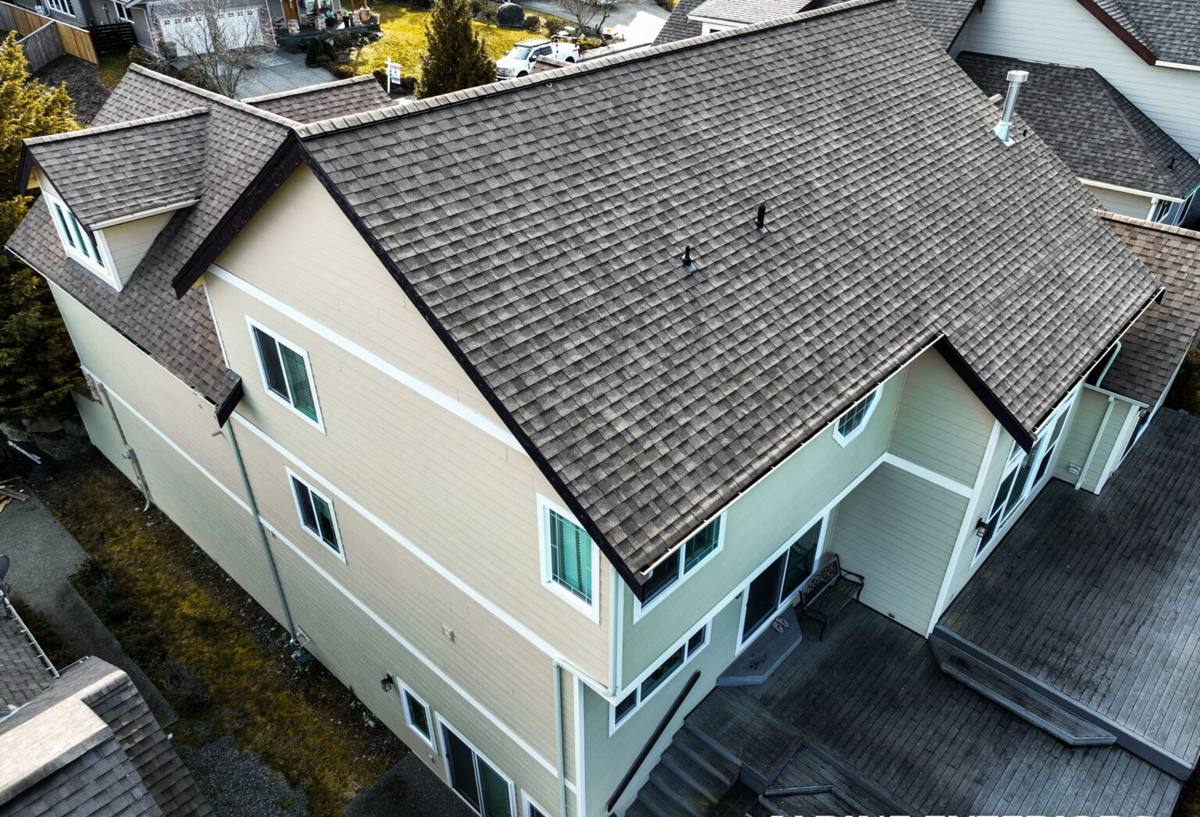
What Bellingham Bay Weather Does to a Deck
Salt Air and Corrosion
Homes closer to the water pick up salt-laden air more consistently than homes further inland, and that air accelerates corrosion on anything metal — fasteners, brackets, hinges, and hardware. A deck built with standard interior-grade screws or unprotected steel connectors will show rust streaks and weakened joints years before a comparable deck built with corrosion-resistant hardware. This is one of the most common shortcuts we see on older decks in this area, and it's almost always the first thing that fails.
Driving Rain and Water Management
Storms coming off the water don't just fall on a deck — they drive into it sideways, pushing water into places a straight-down rain never would: under ledger boards, behind fascia, into end grain, and along any gap where flashing was skipped. Over time, driving rain finds every weak seam in a deck's water management. Good flashing and drainage details aren't optional extras here; they're the difference between a deck that lasts decades and one that starts rotting from the inside within a handful of years.
Moss, Shade, and the Long Wet Season
Edgemoor's tree canopy is part of what makes the neighborhood attractive, but shaded, moisture-retaining decks are exactly where moss and algae take hold fastest. Combined with Whatcom County's long wet season, a deck that doesn't dry out between rains becomes a slip hazard and a rot risk at the same time. Surface choice, board spacing, and airflow underneath the deck all affect how quickly a deck dries after a storm.
Choosing Decking Material for Edgemoor's Conditions
There's no single "best" decking material — the right choice depends on how much sun exposure the deck gets, how close it is to the water, and how much upkeep the homeowner wants to take on. Here's how the common options actually compare for this specific setting.
| Material | Salt air / corrosion behavior | Moss & moisture behavior | Maintenance |
|---|---|---|---|
| Pressure-treated fir or hem-fir | Fine with stainless or coated fasteners; standard hot-dip galvanized can still corrode faster near the bay | Absorbs moisture readily; needs regular cleaning and resealing to resist moss | Higher — sealing every 1-2 years |
| Cedar | Naturally rot- and insect-resistant, but softer surface wears with driving rain over time | Better natural resistance to moss than fir, but still needs periodic cleaning in shaded spots | Moderate — occasional oil or sealer |
| Composite decking | No corrosion risk in the board itself; hidden fastener systems still need corrosion-resistant hardware | Resists rot, but can still grow surface moss/algae in deep shade — needs washing, not sealing | Lower — no staining or sealing, occasional cleaning |
| Tropical hardwoods (e.g., ipe) | Extremely dense and rot-resistant; stainless fasteners recommended given cost of the material | Naturally sheds moisture well; still benefits from periodic cleaning in shaded areas | Moderate — occasional oiling to maintain color |
For a shaded, water-adjacent Edgemoor lot, we usually steer homeowners toward composite or cedar unless there's a strong reason to go with pressure-treated lumber, simply because the maintenance burden of keeping a treated-wood deck sealed against this much rain is significant. That said, plenty of well-maintained pressure-treated and cedar decks in this neighborhood are performing fine — the material matters less than whether it's detailed and maintained correctly.
What's Underneath Matters More Than the Surface
Homeowners naturally focus on decking boards, but the structure underneath is what determines whether a deck stays sound. This is where we see the biggest gap between a deck that's "built to code" and one that's actually built for Edgemoor's conditions.
Ledger Flashing
The ledger board — where the deck attaches to the house — is the single most common failure point on decks anywhere, and driving rain makes it worse here. Proper step flashing and a water-resistive barrier behind the ledger keep water from wicking into the house rim joist. This detail is invisible once the deck is finished, which is exactly why it gets skipped on rushed jobs.
Joist Protection and Fasteners
Covering the tops of joists with a protective tape or cap before decking goes down keeps water from pooling in screw holes and starting rot from the top down — a slow failure mode that's easy to miss until boards start feeling soft. Combined with stainless or coated fasteners throughout, this is cheap insurance against the salt air and moisture this area sees year-round.
Footings on Sloped and Bluff Lots
Many Edgemoor properties sit on sloped ground, which changes footing depth, post height, and sometimes requires engineered connections rather than standard prescriptive framing. Taller posts need additional bracing against wind and lateral load, and footings need to be sized and placed correctly for the actual slope and soil — not just copied from a flat-lot deck plan.
Guardrails, Stairs, and Local Code
Any deck more than a modest height off grade needs a code-compliant guardrail, and most attached decks in the City of Bellingham and unincorporated Whatcom County require a building permit — the exact threshold depends on deck height and whether it's attached to the house. Stairs need consistent rise and run, a compliant landing, and a graspable handrail on longer runs. On view-oriented Edgemoor decks, cable rail or glass panel guardrails are popular because they preserve the water view, but they still have to meet the same load and baluster-spacing requirements as a standard rail — and they need the same corrosion-resistant hardware discussed above, since cable systems are especially sensitive to hardware failure.
Slip Safety and Moss Management
Because so many Edgemoor decks sit under tree cover or in the shadow of the house, moss and algae buildup on the deck surface is one of the most common calls we get — and it's a genuine safety issue, not just an appearance one. A few things make a real difference:
- Board spacing and orientation that let water drain and airflow reach the underside of the deck
- Keeping gutters and downspouts clear so runoff isn't dumping extra water onto or near the deck
- Cleaning shaded sections at least once a season before moss gets a foothold, rather than after
- Trimming back overhanging branches where practical to let more light and air reach the deck surface
- Checking fastener heads and hardware annually for early rust, especially near the water side of the property
- Re-sealing or oiling wood decking on the schedule appropriate to that material — don't wait for visible graying or cupping
Our Deck Building Process
Whether it's a new deck, a full rebuild, or repair work on an existing structure, our process for Edgemoor properties follows the same steps:
- On-site visit to assess the lot's slope, sun/shade exposure, existing structure (if any), and how close the deck is to the water and prevailing weather
- Material and layout recommendations based on that specific site — not a one-size-fits-all package
- Permit handling with the City of Bellingham or Whatcom County as required for the project
- Framing with corrosion-resistant hardware, proper ledger flashing, and joist protection built in from the start
- Decking installation with attention to drainage, spacing, and guardrail/stair code compliance
- Final walkthrough covering how to maintain the specific materials used, so the deck actually reaches its expected lifespan
Why a Crew That Already Works in Edgemoor Matters
A lot of deck problems in this neighborhood trace back to a crew that built the deck the way they'd build it anywhere else — treating Edgemoor like a generic job site instead of a bay-adjacent, tree-covered, sloped-lot property with its own weather pattern. Knowing to spec stainless fasteners without being asked, knowing how the local permitting process handles sloped-lot footings, and knowing which sections of a shaded lot will need extra drainage attention before the first winter — that comes from having done this work in Edgemoor before, not from a standard deck-building checklist. It shows up years later in which decks are still solid and which ones need early repair.
If you're planning a new deck or need an honest look at one that's already showing its age, we're happy to come take a look and put together a straightforward, no-pressure estimate — just use the form below to get started.