 Bellingham Window
 Why Fairhaven's Marine Climate Is Hard on Decks
Fairhaven sits right on Bellingham Bay, which means homes here deal with a combination most inland neighborhoods don't: salt-laden air off the water, driving rain that comes in sideways during winter storms, and a moss season that can stretch from October well into spring. Any decking material out there will eventually show the effects of that combination if it isn't chosen and installed with those conditions in mind. Wood decks in particular take a beating — the freeze-thaw-soak cycle common to Whatcom County winters opens up checking and splinters, and the shade from mature trees common in older Fairhaven lots keeps boards damp long after a storm has passed.
Composite decking was developed specifically to resist the kind of moisture cycling this climate produces. That doesn't mean every composite product performs the same way here, or that installation details stop mattering once you've picked a "good" board. A correctly built composite deck in Fairhaven still needs the right substructure, drainage, and fastening approach to actually deliver on the low-maintenance promise. Get those details wrong and even a premium board can trap moisture, grow moss on its surface, or fail early at the fasteners.
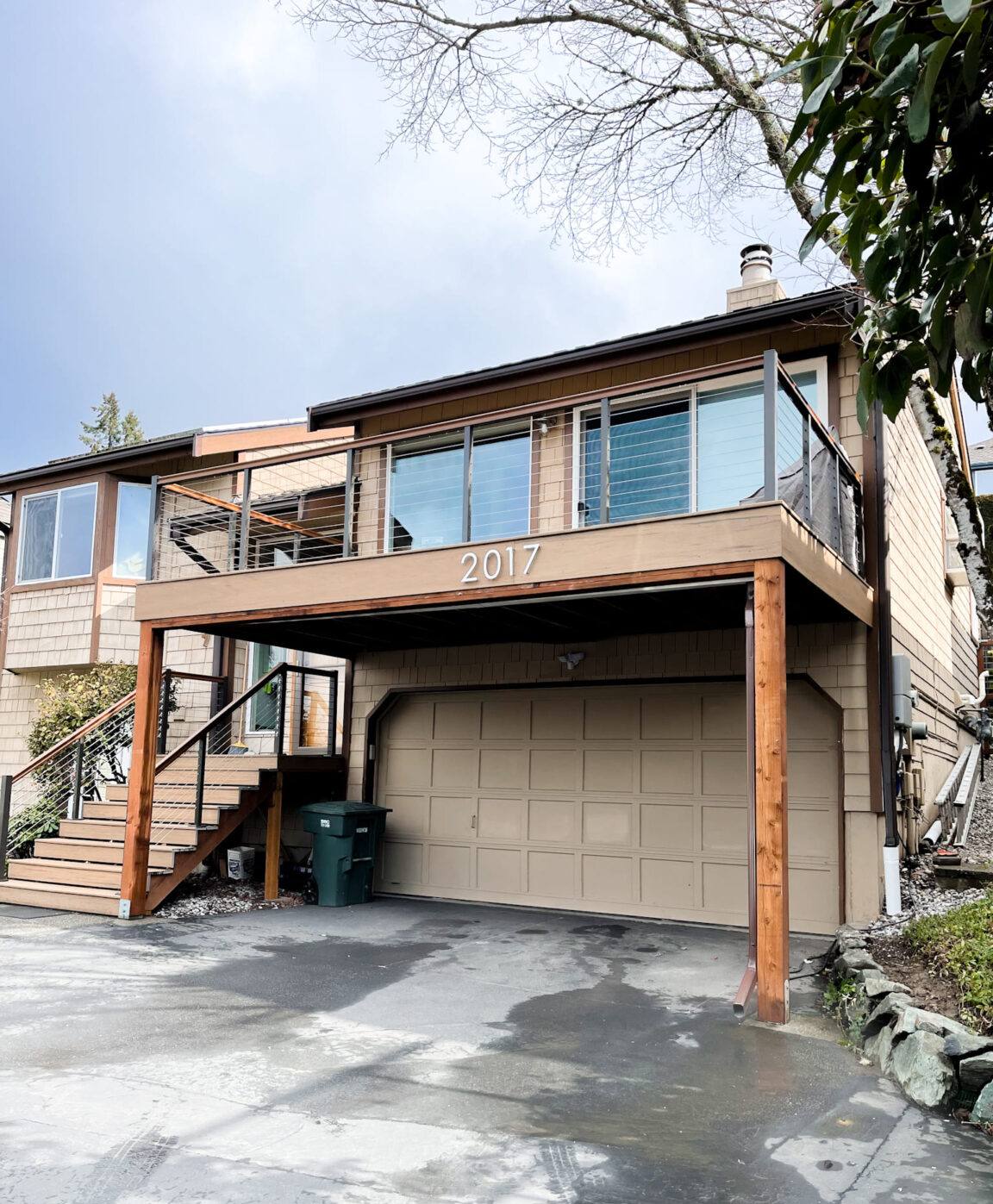
What Composite Decking Actually Solves Here
The appeal of composite boards for a bay-front or near-bay property comes down to three things: they don't rot, they don't need annual staining or sealing, and modern capped versions resist the surface staining that algae and moss thrive on. For a Fairhaven homeowner who wants a deck to actually get used — not treated as a maintenance project every spring — that combination matters more than it does in drier parts of the state.
It's worth being honest about the trade-offs too. Composite boards run warmer underfoot in direct summer sun than wood, though that's rarely a major issue given Bellingham's cooler summers. They also cost more upfront than standard pressure-treated lumber. What you're buying with that higher upfront cost is decades of not having to sand, strip, and refinish a deck that's exposed to salt spray and near-constant winter dampness.
Choosing the Right Composite Board for a Bay-Adjacent Lot
Capped Composite vs. PVC vs. Uncapped Composite
Not all composite decking is built the same, and the differences matter more in a marine climate than in a dry inland one. Uncapped composite — the older generation of wood-plastic blend boards — absorbs some moisture at the surface and can support moss and mildew growth over time, especially in the shaded, damp conditions common under tree cover in Fairhaven. Capped composite adds a protective polymer shell around the core, which sheds water and resists staining far better. Fully cellular PVC boards contain no wood fiber at all, so they're immune to rot by design, though they come at a higher price point and can feel less like traditional wood underfoot.
| Board Type | Moisture Resistance | Moss/Algae Resistance | Maintenance | Typical Warranty |
|---|---|---|---|---|
| Uncapped Composite | Moderate | Fair — surface can stain | Occasional cleaning | 10-25 years |
| Capped Composite | High | Good | Low — periodic rinse | 25-50 years |
| Cellular PVC | Highest | Very Good | Lowest | Often lifetime, limited |
For most Fairhaven projects, we steer homeowners toward capped composite as the practical middle ground — strong moisture and moss resistance without the premium cost of full PVC. That said, a deck tucked into heavy shade near mature evergreens, or one just steps from the water, is a case where the extra investment in PVC can make sense. We'll walk the specific site with you before recommending one over the other; sun exposure, tree cover, and proximity to the water all factor in.
What a Correct Composite Deck Build Actually Involves
Substructure and Framing
The composite boards get the attention, but the framing underneath is what determines whether the deck lasts. In a climate this wet, we use joist spacing appropriate to the specific board manufacturer's span ratings — composite boards typically require tighter joist spacing than wood to avoid sagging over time — and we flash the ledger board where the deck attaches to the house so water can't work its way behind the siding.
Drainage and Airflow Underneath
A deck that traps standing water or stagnant air underneath is a deck that grows moss, breeds mildew, and rots its own framing regardless of what the surface boards are made of. We grade and, where needed, add drainage beneath the structure so runoff moves away from the house rather than pooling. Skirting, if you want it for appearance, still needs enough ventilation gaps to let air move through — a fully sealed skirt in this climate just creates a damp box.
Fasteners and Hardware
Salt air corrodes standard fasteners faster than most homeowners expect. We use stainless steel or coated fasteners rated for coastal exposure, along with hidden fastener systems on composite boards where the manufacturer supports it — that keeps water from pooling in screw heads on the walking surface, which is one of the more common early failure points we see on decks that weren't built with the coastline in mind.
Our Installation Process in Fairhaven
Every deck starts with a site visit, not a sales pitch. We look at drainage patterns, sun and shade exposure, tree cover, and how close the site sits to the bay, since all of that shapes both the board recommendation and the substructure approach. From there:
- We confirm the framing plan and joist spacing against the specific board manufacturer's requirements — not a generic spec
- We pull the required City of Bellingham permit before any framing work begins
- We flash all ledger and house connections to keep water out of the wall assembly
- We install the substructure, checking level and drainage slope as we go
- We lay the decking with the fastening method appropriate to the board and site exposure
- We do a final walk-through with you to check fit, fastening, and any trim or edge details
We don't rush the framing stage to get to the visible work faster. On a coastal property, the framing is the part of the job that decides whether you're dealing with a maintenance headache in five years or a deck that just keeps working.
Living With a Composite Deck Through the Wet Season
Composite decking cuts maintenance dramatically compared to wood, but "low-maintenance" isn't "no-maintenance," especially with Whatcom County's long damp stretches. A little seasonal attention keeps a composite deck looking and performing the way it should:
- Sweep leaves and debris off regularly in fall — trapped organic matter is what feeds moss and algae growth
- Rinse the deck surface a few times a year with plain water, or a mild soap and soft-bristle brush for built-up grime
- Keep gutters and downspouts near the deck clear so runoff isn't dumping directly onto the boards
- Check that any planters or furniture aren't sitting in permanent contact with the surface, which can trap moisture underneath
- Glance underneath once a year to confirm airflow and drainage are still working as intended
None of that requires stripping, sanding, or re-sealing — which is the whole point of putting composite decking on a property that gets this much rain.
Cost Factors for a Fairhaven Composite Deck
Composite decking costs more per square foot than pressure-treated wood, and the total for any project depends on deck size, board tier, substructure complexity, and site access. A few things tend to move the number more than homeowners expect: elevation changes and multi-level decks require more framing and railing; difficult site access on some of Fairhaven's sloped lots can add labor time; and railing systems — glass, cable, or composite — vary widely in cost on their own. We give straightforward, itemized estimates so you can see exactly what's driving the number, rather than a single lump figure.
Why Hiring a Crew That Already Works Fairhaven Matters
A lot of deck problems we get called out to fix started with a build that treated Fairhaven like any other job site — same framing spec, same fasteners, same drainage approach you'd use in a dry inland yard. That approach doesn't hold up against consistent salt air and a wet season that runs half the year. Knowing which board tiers actually perform near the bay, how tight joist spacing needs to be under a specific manufacturer's warranty terms, and how to detail drainage on Fairhaven's sloped, tree-shaded lots comes from having built decks in this exact neighborhood, not from a general contracting background applied to a new zip code.
We also know the permitting process through the City of Bellingham for this type of work, which keeps projects moving instead of stalling on paperwork. That local familiarity is part of what you're paying for when you hire a crew based here rather than one traveling in from out of the area.
Get a Free Estimate
If you're weighing options for a new composite deck or replacing an aging wood deck in Fairhaven, we're happy to walk the site, talk through board options honestly — including the trade-offs, not just the upsides — and give you a clear, no-pressure estimate. Use the form below to get started.