 Bellingham Window
 Why Fairhaven's Climate Is Hard on Siding
Fairhaven sits close to Bellingham Bay, and that proximity to the water shapes everything about how siding ages here. Salt-laden air moves off the bay and settles on exterior surfaces day after day, working into seams, fasteners, and any spot where a coating has started to thin. Add Whatcom County's driving rain — the kind that comes in sideways off the water rather than falling straight down — and siding on this side of Bellingham takes on moisture from angles that products designed for drier climates were never built to handle.
Then there's moss. Between the shade from mature trees, the humidity, and a rainy season that stretches for much of the year, moss and mildew get a long runway to establish themselves on north-facing walls, under eaves, and anywhere airflow is limited. Moss doesn't just look bad — it holds moisture directly against the siding surface for weeks at a time, which is exactly the condition that causes rot, coating failure, and swelling in materials that aren't engineered for it.
None of this is unique to one house or one street. It's the baseline condition for exterior materials anywhere near Bellingham Bay, and it's why the right siding choice and the right installation details matter more here than they would in a drier inland climate.
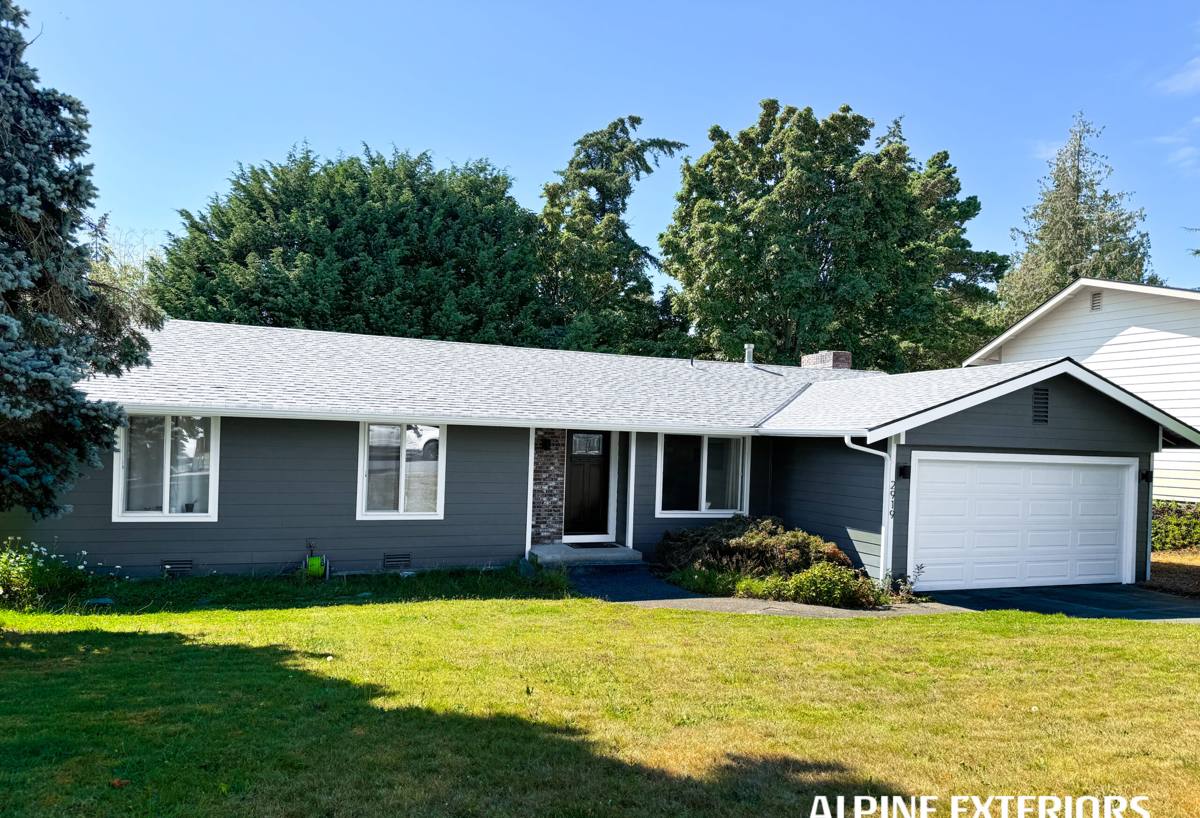
Signs a Fairhaven Home Needs Replacement, Not Just Repair
Not every siding problem calls for a full tear-off. But there's a point where patching and re-caulking stop being worth it, and a homeowner is better served by starting over with a system built for this climate. Watch for these signs:
- Paint or coating that's bubbling, peeling, or chalking across large sections rather than one isolated spot
- Boards or panels that feel soft, spongy, or give slightly when pressed
- Moss or dark streaking that keeps returning to the same areas within a season of cleaning
- Visible warping, cupping, or gaps opening up at butt joints and trim
- A noticeable jump in heating costs, which often points to moisture-compromised insulation behind the siding
- Siding that was never engineered for a wet coastal climate to begin with — vinyl showing UV brittleness, or wood/composite siding with a history of repeated repairs
If two or three of these show up at once, it's usually a sign the underlying weather barrier has been compromised, not just the visible surface.
What a Correct Siding Replacement Job Actually Involves
Siding replacement is often sold as a cosmetic upgrade, but the work that actually protects a house happens underneath the new boards. In a wet, salt-exposed neighborhood like Fairhaven, skipping these steps is how a ten-year-old siding job ends up with rot behind it.
Tear-Off and What's Underneath
Removing the old siding is the only real chance to see the sheathing and framing underneath. On older Bellingham-area homes, this is where problems that never showed on the surface get found — soft sheathing near window and door openings, missing or degraded building paper, or framing that's taken on moisture over the years. A replacement done right treats this inspection as a required step, not an afterthought, and addresses what it finds before anything new goes up.
Weather-Resistive Barrier and Flashing
A correctly lapped weather-resistive barrier, along with properly integrated flashing at windows, doors, and any horizontal trim, is what actually keeps driving rain from reaching the wall assembly. Siding is the visible layer, but it's the drainage plane behind it doing the real work. This is also where corners get cut on rushed jobs, and it's the single biggest factor in whether a house stays dry through a Fairhaven winter.
Fastening, Clearances, and Caulking
Fiber cement siding has specific fastening patterns, nailing zones, and minimum clearances from grade, roofing, and other surfaces — clearances that matter even more in a climate where standing moisture and splashback are a daily reality. Gaps that need to breathe should be left open; joints that need to be sealed should be sealed with a product rated for exterior movement, not general-purpose caulk.
Factory-Finished vs. Field-Painted
Where the finish is applied changes how it holds up. A factory-applied finish, cured under controlled conditions, resists fading, cracking, and moisture intrusion at the surface far better than paint applied on-site in variable weather — which matters directly in a place where the paint has to survive salt air and near-constant humidity, not just occasional rain.
Why We Install Only James Hardie Fiber Cement
We standardized on James Hardie siding for every home we work on, including Fairhaven, and it's not a brand preference — it's a match between the product and the climate. Hardie's fiber cement is non-combustible, doesn't absorb moisture the way wood-based products can, and is manufactured in climate-specific formulations engineered for regions with sustained moisture exposure like the Pacific Northwest, rather than a single generic product sold everywhere.
ColorPlus Technology — Hardie's factory-applied finish system — is baked on and backed by its own finish warranty, which means the color coat is designed to resist the fading and peeling that field-applied paint struggles with in this kind of coastal, low-sun-exposure environment. Hardie also backs its siding with a strong transferable warranty, which matters to a homeowner who wants the investment protected even if the house changes hands.
Practically, that means options that fit both older and newer Fairhaven homes: HardiePlank lap siding for a traditional look, HardieShingle for homes where a shingle profile suits the character of the neighborhood, and HardiePanel with HardieTrim for more modern facades. All of it is installed to the same moisture-management standard, regardless of which profile a homeowner chooses.
Comparing Siding Options in a Wet, Salt-Exposed Neighborhood
Every siding material has a marketing pitch. What matters is how it actually performs a few blocks from Bellingham Bay, year after year, through moss season and driving rain.
| Material | Salt Air & Driving Rain | Moss & Moisture Resistance | Typical Maintenance |
|---|---|---|---|
| Vinyl siding | Can warp or become brittle with UV and temperature swings; seams are a moisture entry point | Moss grows readily on textured surfaces; doesn't trap water itself but hides problems underneath | Periodic washing; limited repair options if a panel cracks |
| Cedar / wood siding | Attractive but absorbs moisture at end grain and joints; salt air accelerates coating breakdown | Highly susceptible to moss, mildew, and rot without diligent upkeep | Frequent refinishing and vigilant caulk/paint maintenance |
| Engineered wood (e.g. LP SmartSide) | Treated to resist moisture but remains a wood-based substrate, sensitive to installation quality | Moisture intrusion at cut edges or poorly sealed joints can lead to swelling over time | Regular inspection of seams, edges, and caulking |
| James Hardie fiber cement | Engineered for high-moisture climates; does not warp, rot, or absorb water like wood-based siding | Resists moisture damage; factory finish holds up to repeated wet/dry cycling | Occasional gentle washing; no repainting on the typical ownership timeline |
Our Siding Replacement Process
- Walk-through and assessment — we look at the current siding, trim, flashing, and any problem areas you've already noticed, and talk through what's realistic for your home and budget
- Tear-off and sheathing inspection — old siding comes off and we check what's underneath before anything new goes up, flagging any repairs needed to sheathing or framing
- Weather barrier and flashing installation — a properly lapped weather-resistive barrier and correctly integrated flashing at every penetration, window, and door
- Hardie siding and trim installation — installed to manufacturer fastening specs and proper clearances, using the profile that fits your home
- Caulking and finish detail work — sealing only where it should be sealed, leaving drainage paths clear where they need to be
- Cleanup and final walkthrough — job site cleared, and we walk the finished exterior with you before calling it done
Why a Crew That Already Works Fairhaven Matters
Siding installation isn't identical from neighborhood to neighborhood. A crew that regularly works in Fairhaven and the surrounding Bellingham area already knows what to expect from older homes in this part of Whatcom County — original sheathing that may or may not still be sound, houses built before modern weather-barrier standards existed, and lots where equipment access and staging take some planning.
There's also the character question. Fairhaven has a mix of older and newer homes, and matching a siding profile and reveal to a home's existing character is part of getting the job right, not just picking whatever's fastest to install. A crew with local experience has already worked through those decisions on similar houses and can tell you honestly what will look right and hold up, rather than defaulting to whatever's easiest.
Finally, permitting and inspection expectations vary by jurisdiction. A contractor who regularly pulls permits and passes inspections in Bellingham knows what the local process actually requires, which keeps a project from stalling on paperwork that an out-of-town crew might not anticipate.
Keeping New Siding Looking Right Through Moss Season
Fiber cement siding needs far less upkeep than wood or vinyl, but "low maintenance" isn't "no maintenance," especially this close to the bay. A few habits go a long way:
- Trim back vegetation and tree limbs that shade siding and limit airflow, since shaded areas are where moss establishes first
- Rinse siding gently once or twice a year to clear salt residue, pollen, and early moss growth before it takes hold
- Avoid aiming a pressure washer directly under laps or at seams — it can force water behind the siding rather than just cleaning the surface
- Check caulking at trim and penetrations periodically, since caulk is the one component that does eventually need attention over the life of the siding
Questions to Ask Before You Hire
A siding replacement is a significant investment, and the quality of the installation matters as much as the material itself. Before signing with anyone for a Fairhaven project, it's worth asking:
- Are you licensed and insured to do exterior work in Washington State?
- Are your installers certified by James Hardie, and do you install exclusively to their fastening and clearance specifications?
- Will the scope of work in writing include the weather-resistive barrier and flashing details, not just the visible siding?
- Can you speak to other work you've done in Bellingham or nearby neighborhoods with similar exposure?
- What does the warranty actually cover, and is it transferable if the home is sold?
If you're weighing a siding replacement for a Fairhaven home, we're happy to take a look and give you a straightforward, no-pressure estimate — what your siding actually needs, what it would take to do it right, and what that looks like for your budget. There's a form below to get started.