 Bellingham Window
 Ferndale's Climate Asks More of Siding Than Most Places
Ferndale sits close enough to Bellingham Bay and the Strait of Georgia that salt-laden air is a real factor in how exterior materials age, not just a talking point. Add Whatcom County's long wet season, driving rain that comes in sideways off the water during winter storms, and the shade and moisture that keep moss and algae active for much of the year, and you have a climate that is genuinely harder on siding than the regional average. Homes a few miles inland deal with plenty of rain too, but Ferndale properties closer to the water take on a combination of salt exposure and wind-driven moisture that accelerates wear on the wrong materials.
This matters most at the seams, the bottom edges, and anywhere siding meets trim, windows, or the foundation. Those are the places where water finds a way in if the product or the installation isn't right for the conditions, and they're the first places moss and mildew take hold when a wall doesn't get enough sun or airflow to dry out between storms. A siding choice that works fine in a drier inland town can struggle here.
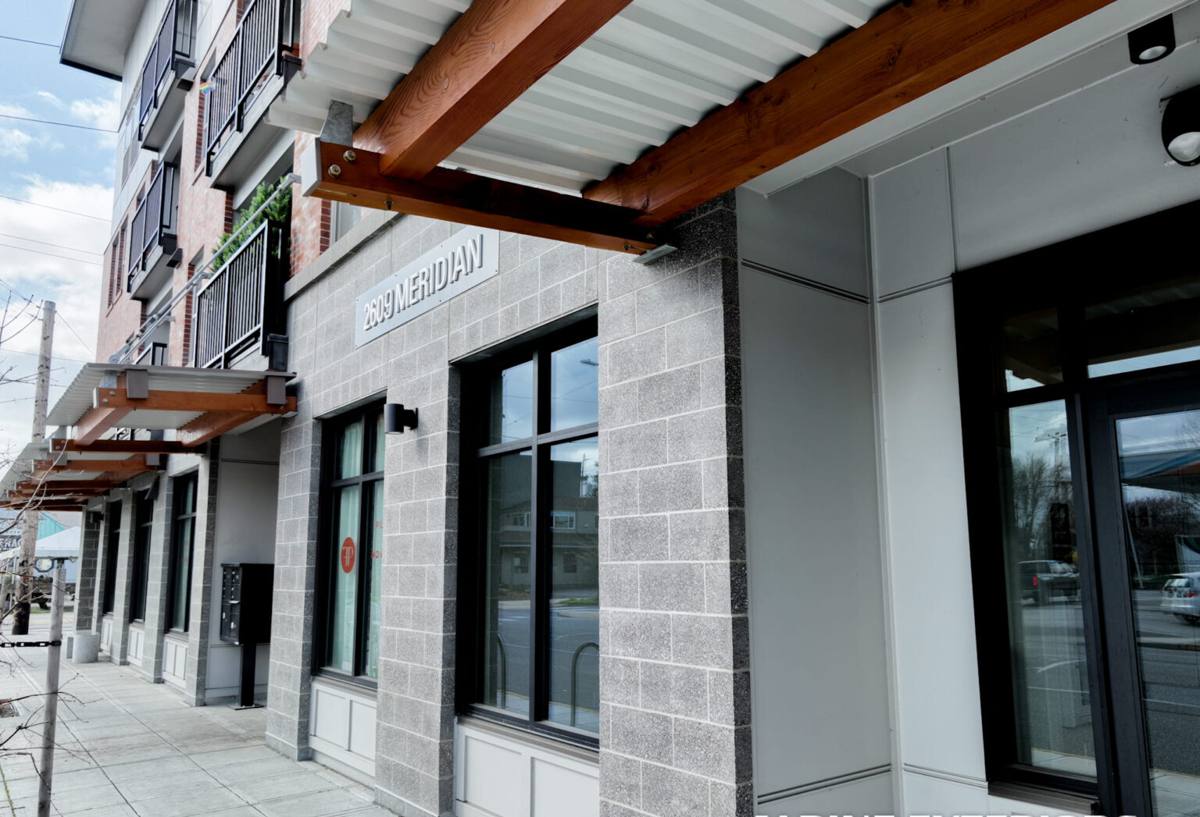
Why We Install Only James Hardie in Ferndale
We don't install vinyl, LP SmartSide, Cemplank, Allura, primed spruce, or cedar. That's not a marketing angle — it's a standard we hold to because we've seen how each of those products behaves over time in exactly this kind of marine, high-moisture environment, and we'd rather turn down a job than install something we don't trust to perform on a Ferndale home for the next 30 years.
Vinyl expands and contracts with temperature swings and can warp or crack under impact in cold weather; it also traps moisture behind it if house wrap and flashing details aren't perfect, which is a bigger risk in a climate that stays damp for months at a time. Wood products like cedar and primed spruce look good on day one, but they need ongoing paint, caulk, and moisture management to avoid rot — maintenance that's a bigger burden near the water where salt air breaks down finishes faster. Engineered wood products such as LP SmartSide are treated to resist moisture better than raw wood, but they're still wood-based, and wood-based products are more sensitive to sustained wet conditions than fiber cement. Fiber cement competitors to Hardie exist, and some are reasonable products, but we've standardized on one manufacturer so our crews install one system, know its details cold, and can back every job with a single, well-documented warranty structure instead of juggling installation specs across several brands.
James Hardie fiber cement is non-combustible, doesn't rot, doesn't provide a food source for moss and mildew the way wood does, and comes factory-finished with ColorPlus technology so the color coat is baked on and warranted separately from the substrate. That combination is exactly what a salt-air, high-rainfall, moss-prone property needs.
What a Correct James Hardie Installation Actually Involves
It Starts Before the Siding Goes Up
The single biggest factor in how well fiber cement siding performs isn't the product — it's the installation. Hardie publishes detailed fastening, clearance, and flashing specifications, and skipping them is how a good product ends up with a bad outcome. On a Ferndale job, that means:
- A weather-resistant barrier installed correctly behind the siding, with all seams and penetrations properly sealed against wind-driven rain
- Rigid starter strips at the base for a straight first course and correct drainage plane
- Proper flashing at every window, door, and roofline intersection — the highest-risk spots for water intrusion in driving rain
- Minimum clearance gaps (typically a quarter inch at trim and butt joints, more at roofing and decks) so the material can handle moisture cycling without trapping water
- Corrosion-resistant fasteners driven to the correct depth — overdriven nails crack the board's edge and create a failure point
- A rainscreen or drainage gap where conditions call for one, giving any moisture that does get behind the siding a path to escape and dry
None of this shows on a finished wall. It's also exactly what separates a Hardie installation that looks the same as a competitor's for the first year from one that's still performing at year twenty.
Cutting and Handling Matter Too
Fiber cement produces silica dust when cut, so proper cutting methods (score-and-snap tools or dust-reducing saw setups) aren't optional from a jobsite safety standpoint, and rushed or careless cuts also lead to chipped edges that show up as visible defects once the siding is up. A crew that's done this work repeatedly in this region moves through it efficiently without cutting corners on either safety or finish quality.
Choosing the Right Product Line and Panel Type
James Hardie's HZ5 line is engineered for the Pacific Northwest's moisture-heavy, moderate-freeze climate zone, which is the correct baseline for a Ferndale home. Beyond the climate engineering, the choice of panel style is mostly about the look you want and how it interacts with your home's exposure:
| Panel Type | Typical Look | Best Fit |
|---|---|---|
| Lap siding (HardiePlank) | Traditional horizontal boards, various reveal widths | Most homes; the standard choice for full re-sides |
| Shingle siding (HardieShingle) | Staggered or straight-edge shingle look | Accent gables, dormers, or a full traditional/craftsman look |
| Panel siding (HardiePanel) | Vertical board-and-batten or smooth panel | Modern facades, accent walls, garages |
| Soffit and trim | Matching factory-finished trim boards | Completing the system at eaves, corners, and window surrounds |
ColorPlus finishes come in a curated palette and carry their own finish warranty, which matters in salt air — a factory-baked finish resists fading and chalking far better than field-applied paint, and it means you're not repainting the house within a decade the way you might with a wood product exposed to this much weather.
Our Process, Start to Finish
Estimate and Assessment
We walk the exterior, check the condition of the existing siding and sheathing, and look specifically for moisture damage around windows, at the base of walls, and anywhere the house has been shaded and damp for long stretches — common trouble spots in this climate. This is also when we talk through panel style, reveal, and color.
Tear-Off and Sheathing Check
Old siding comes off and we inspect the sheathing underneath. Any soft or water-damaged sheathing gets addressed before anything new goes up — installing new siding over compromised sheathing just hides a problem instead of fixing it.
Weather Barrier and Flashing
This is the step that determines how the wall performs in wind-driven rain for the next several decades, and it's where we spend the time other crews rush through.
Installation
Siding, trim, and soffit go up to Hardie's fastening and clearance specs, with attention to consistent reveals and clean corners.
Final Walkthrough
We check caulking, touch-up points, and clearances with you before calling the job done, and go over basic care so you know what routine maintenance actually looks like.
What Affects the Cost of a Ferndale Siding Job
We don't publish fixed prices because every home is different, but these are the factors that actually move the number:
| Factor | Why It Matters |
|---|---|
| Home size and wall complexity | More corners, gables, and dormers mean more cutting, flashing, and labor time |
| Condition of existing sheathing | Rot or moisture damage found during tear-off adds repair scope before new siding goes on |
| Panel style and reveal | Shingle and board-and-batten styles generally take more labor than standard lap |
| Trim scope | Full trim, soffit, and fascia replacement adds material and labor beyond just the field siding |
| Access and site conditions | Tight lots, multi-story sections, or landscaping close to the house affect staging and time |
| Color and finish selection | Some ColorPlus finishes and custom trim colors carry different material costs |
We'll walk through all of this during your estimate so you know what you're paying for and why, not just a lump-sum number.
Living With Fiber Cement Siding Near the Water
James Hardie siding is low-maintenance compared to wood, but "low-maintenance" doesn't mean "no maintenance," especially with Whatcom County's moss season running long parts of the year. A simple annual routine keeps a Ferndale home looking right and prevents small issues from becoming bigger ones:
- Rinse the exterior with a garden hose (not a pressure washer at close range) once or twice a year to clear salt residue, pollen, and grime
- Check shaded, north-facing walls and areas under trees for early moss or algae growth and clean it gently before it spreads
- Keep gutters clear so overflow doesn't run down the siding face repeatedly in heavy rain
- Trim back shrubs and trees so siding gets airflow and occasional direct sun to dry out
- Inspect caulking at trim and penetrations every couple of years and have gaps resealed before they become entry points for water
- Touch up any impact damage promptly rather than letting an exposed edge sit through a wet winter
None of this is heavy work, but skipping it in a climate this wet is how even a good product underperforms.
Why It Matters That We Already Work in Ferndale
A crew that installs siding across a lot of different climates has to relearn the local conditions every time they show up somewhere new. A crew based in and around Bellingham and Whatcom County already knows how the wind comes off the water, which wall orientations stay damp longest, and how much clearance and drainage detail this specific climate actually calls for versus the manufacturer's baseline minimums. That local familiarity shows up in the small decisions on a jobsite — where to add extra flashing attention, how to sequence work around a wet forecast, which details are worth doing more carefully than the spec sheet strictly requires.
It also means we're not going anywhere. If a question comes up two or five years after the job, we're still a local company working in the same towns, not a crew that moved on to the next region.
Is James Hardie the Right Call for Your Ferndale Home?
If you're dealing with aging wood siding that needs constant paint and caulk upkeep, vinyl that's cracked or faded, or you're simply planning ahead for a re-side, fiber cement engineered for this climate is worth a serious look. It's a bigger upfront investment than vinyl and comparable to or less than a quality wood installation once you account for long-term maintenance, and it's the product we're willing to put our name behind in a marine environment like this one.
If you'd like a straightforward, no-pressure look at what your home would need — panel style, product line, condition of what's currently on the walls — we're glad to come take a look and give you an honest estimate. Use the form below to get started.