 Bellingham Window
 Ferndale's Climate Is Hard on Siding
Ferndale sits close enough to the water that salt-laden air is a real factor in how siding ages here, not just a talking point. Add Whatcom County's long stretch of driving rain each fall and winter, plus a moss season that can run half the year in shaded, north-facing spots, and you have a combination that finds every weak point in a home's exterior. Siding that would coast along for decades in a drier climate can start failing years early in Ferndale if it was installed with a gap in the flashing, a poorly caulked seam, or the wrong material for the job.
None of this means every home needs new siding. Most of the time, the damage is localized — a section near a downspout, a corner that catches wind-driven rain, a low run of trim that never fully dries out. The goal of a repair is to find the actual cause, fix it correctly, and stop the same failure from coming back next winter.
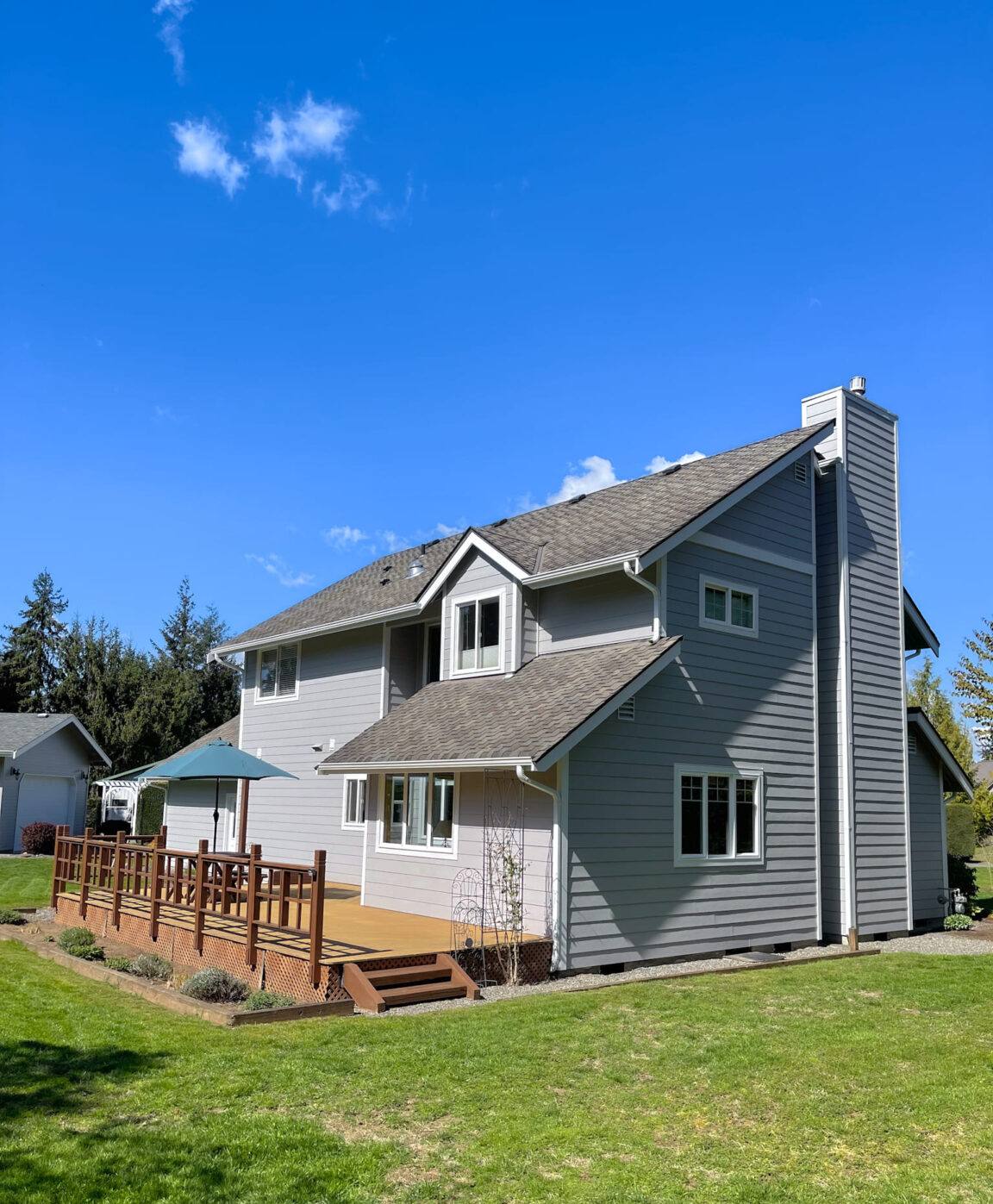
Signs Your Siding Needs Repair
Some damage is obvious. Other damage hides behind siding that still looks fine from the driveway. Here's what we look for on Ferndale homes:
- Soft or spongy spots when you press on a panel, especially near the bottom courses
- Visible cracking, buckling, or warping in individual boards or panels
- Paint that's bubbling, peeling, or failing faster than the rest of the house
- Persistent moss or dark streaking in the same spots year after year
- Gaps opening up at seams, corners, or where siding meets trim and window frames
- Staining or discoloration on interior walls near exterior corners — often a sign moisture has already gotten past the siding
- Nail pops, loose panels, or sections that move in strong wind
Any one of these can be a simple fix. Several at once, especially combined with interior staining, usually means water has been getting behind the siding for a while and the repair needs to address the water barrier underneath, not just the visible surface.
What a Correct Siding Repair Actually Involves
A repair that only replaces the damaged board is a patch, not a fix, if it doesn't also address why that board failed. A correct repair process works through a few steps in order:
1. Find the actual entry point
Water rarely shows up where it enters. It travels behind the siding and shows itself lower down or at a seam. Before anything gets pulled off, we trace the damage back to its source — a cracked caulk joint, missing kick-out flashing, a butt joint that was never sealed, or trim that's channeling water into the wall instead of away from it.
2. Check the water-resistive barrier
Siding is the visible layer, but the house wrap or building paper underneath is what actually keeps bulk water out of the wall assembly. If that layer is torn, missing, or was never lapped correctly at the original install, replacing the siding on top of it just resets the clock on the same failure.
3. Match the material and profile
Repairs that don't match the existing siding's exposure, profile, and finish stand out immediately, and mismatched material can also behave differently in wet weather than what's around it. Getting the right product — including matching factory-finished color where possible — is part of doing the job right, not just a cosmetic nicety.
4. Re-flash and re-seal properly
Every seam, corner, and penetration (hose bibs, vents, light fixtures) gets proper flashing and sealant designed for exterior use in a wet climate, not just a bead of caulk over the old gap.
Repair Approaches by Siding Material
How a repair is handled depends heavily on what's already on the house. Ferndale has a real mix of siding ages and types, and each behaves differently once water gets involved.
| Material | Repairability | Common Failure in This Climate | Notes |
|---|---|---|---|
| Cedar / wood | Moderate — rot often spreads past the visible damage | Rot at butt joints and lower courses from prolonged dampness | Often more wood needs to come off than expected once opened up |
| Vinyl | Limited — panels can crack or fade unevenly and matching old panels is difficult | Cracking in cold snaps, warping near heat sources, color mismatch on repairs | Older vinyl runs are frequently discontinued, complicating color matching |
| Primed wood composite (older LP-style) | Low once moisture has entered — swelling is usually permanent | Edge swelling and delamination at seams | Damaged sections typically need full panel replacement, not patching |
| James Hardie fiber cement | Good — panels can be individually replaced without disturbing surrounding sections | Caulk failure at joints, impact damage, flashing gaps at original install | Non-combustible, resists moss growth better than wood, factory finish simplifies color matching on replacement boards |
This is a big part of why we standardized on James Hardie fiber cement for the replacement work we do: when a section does eventually need attention, it can usually be addressed on its own rather than forcing a full re-side. That's a real advantage in a climate that's constantly testing every seam on a house.
Repair or Replace?
Not every damaged section is worth repairing in isolation. Sometimes the honest answer is that a full re-side makes more sense than chasing repairs on siding that's near the end of its service life. A few questions guide that call:
- Is the damage isolated to one or two areas, or showing up across multiple elevations?
- Is the water-resistive barrier underneath still intact where we've opened it up?
- Is the existing material still available to match, or would a repair look patched forever?
- Is the siding older wood or composite that's already showing widespread wear beyond the damaged spot?
If the answers point to isolated, addressable damage on a house with a sound water barrier, repair is the right call and the more cost-effective one. If the damage is widespread or the underlying material is failing broadly, we'll say so plainly rather than billing for repairs that won't hold.
Our Ferndale Siding Repair Process
- Inspection. We walk the exterior, check the areas you've flagged, and look for related damage nearby that isn't obvious yet.
- Diagnosis. We identify the actual water path and explain what we find in plain terms — what failed, and why.
- Written plan. You get a clear scope: what's being repaired, what material is used, and what it costs, before any work starts.
- Repair. Damaged material comes off, the barrier underneath is checked and corrected if needed, matching siding goes back on, and every seam and penetration is properly flashed and sealed.
- Walkthrough. We review the completed repair with you so you know exactly what was done and what to watch going forward.
Why Hiring a Crew That Already Works Ferndale Matters
Siding repair is one of those trades where local experience shows up directly in the quality of the fix. A crew that regularly works Whatcom County homes has already seen how salt air, wind-driven rain, and long wet stretches affect siding in this specific area — which corners of a house tend to fail first, which original installation shortcuts cause problems years later, and which materials hold up versus which ones just look fine until they don't. That's different knowledge than a crew that mostly works drier inland climates and treats every job the same way.
It also means faster, more accurate diagnosis. When you've repaired dozens of homes in the same weather pattern, you're not guessing at where water is getting in — you're checking the spots that experience says are the likely cause first.
Protecting the Repair — A Maintenance Checklist
A correctly done repair should last, but a little seasonal attention helps it go the distance in this climate:
- Rinse moss and algae off shaded, north-facing siding before it builds up and holds moisture against the surface
- Check caulking at seams, trim, and penetrations once a year and re-seal anything that's cracked or pulling away
- Keep gutters clear so water isn't overflowing onto siding below
- Trim back vegetation that keeps siding shaded and damp longer than the rest of the house
- Walk the exterior after major windstorms and check for loosened panels or new gaps
If you're seeing soft spots, staining, or recurring moss on your Ferndale home, it's worth getting a straight answer on what's actually happening before it spreads. We're happy to take a look and give you a clear, no-pressure estimate on what a correct repair involves — no obligation either way.