 Bellingham Window
 York sits close enough to Bellingham Bay and the Salish Sea that salt-laden air, wind-driven rain, and months of gray, damp weather all show up on the outside of a house before they show up anywhere else. If you've owned a home in this neighborhood for a while, you've probably already noticed it — paint that won't hold past a few seasons, trim going soft at the corners, or a north-facing wall that never seems to fully dry out between storms. Siding takes the brunt of that weather, and in Whatcom County, not every siding product is built to take it well.
What York's Climate Actually Does to Siding
Bellingham's marine climate is mild compared to a lot of the country, but "mild" doesn't mean easy on a house. It means long stretches of moisture, short recovery windows between rain events, and air that carries salt off the water. That combination is harder on exterior materials than a drier climate with heavier but less frequent rain.
Salt Air and Corrosion
Homes in York and other neighborhoods near Bellingham Bay are close enough to the water that salt in the air is a real factor, not a theoretical one. Salt accelerates corrosion on fasteners, flashing, and any metal trim that isn't properly rated for coastal exposure. Siding materials and hardware that aren't engineered with that in mind tend to show rust streaks, pitting, and premature failure at the fastener points years before the field of the siding itself gives out.
Driving Rain, Not Just Rain
It isn't just how much rain falls — it's how it arrives. Wind off the water pushes rain sideways into walls, not straight down onto roofs, which puts real pressure on siding laps, seams, and butt joints. A siding system that only performs well in calm, vertical rain will get moisture pushed behind it in a wind-driven storm. That's where poor installation — not the material itself — usually causes the most damage.
The Long Moss Season
Whatcom County's damp season runs long, and anything that holds moisture against a wall for extended periods becomes a growing surface for moss, algae, and mildew. Siding that absorbs water, or that's installed too tight to the framing without room to dry out, stays damp longer than it should — and that's exactly the condition moss needs to take hold on siding, trim, and fascia.
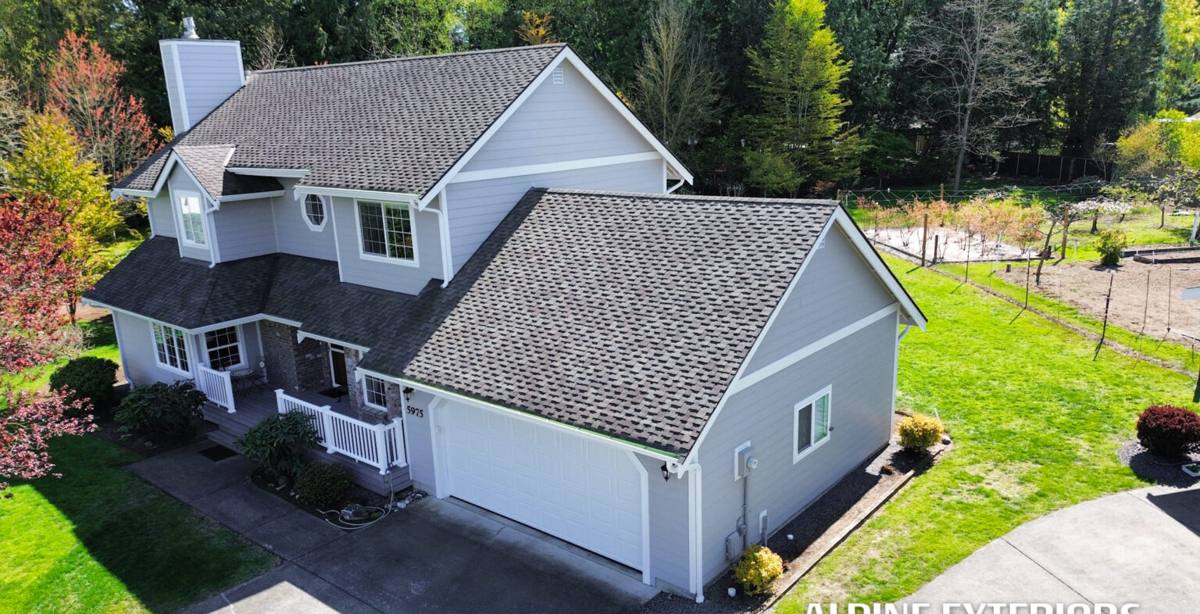
Why We Install Only James Hardie Fiber Cement
We standardized on James Hardie fiber cement siding and don't install vinyl, LP SmartSide, or other fiber cement brands like Allura or Cemplank. That's not a marketing position — it's a practical one, built around what actually holds up in this climate over the long run.
Fiber cement itself is a mix of cement, sand, and cellulose fibers, which makes it non-combustible and dimensionally stable — it doesn't expand and contract with moisture the way wood does, and it doesn't soften or warp in prolonged damp conditions the way engineered wood products can. James Hardie's HardieZone system engineers its products specifically for regional climate exposure, which matters in a place like York where salt air and sustained moisture are part of daily weather, not an occasional event. On top of that, Hardie's ColorPlus factory finish is baked on and warrantied against fading and peeling in a way field-applied paint on other siding materials isn't, which matters a lot given how much UV and moisture cycling this region's siding goes through year after year.
We're not going to tell you every other product is junk — plenty of them have real strengths. But when we're the ones standing behind the installation, we want a material with a track record for this exact climate, a factory finish that doesn't rely on field paint quality, and a warranty structure that's actually transferable if you sell the house.
What a Correct Fiber Cement Installation Involves
Fiber cement siding is only as good as the installation behind it. Most of the siding failures we see on older homes in this area weren't caused by the material — they were caused by shortcuts in how it went on. In a climate like York's, a few details matter more than they would somewhere drier:
- A drainage plane and properly lapped weather-resistive barrier behind the siding, so any moisture that does get past the surface has somewhere to go
- Correct fastener spacing and type — coastal-rated, corrosion-resistant fasteners driven at the manufacturer's specified pattern, not just "close enough"
- Proper flashing at every window, door, and roof-to-wall intersection, since these are the spots where wind-driven rain actually gets in
- Minimum clearance between the siding's bottom edge and grade, decks, and roof lines, so splashback and standing water don't sit against the material
- Correctly caulked and painted cut edges on any field-cut boards, since an unsealed cut edge is one of the few ways moisture can get into fiber cement
Skip any one of these and you can end up with a wall that looks fine from the curb but is trapping moisture behind it — which, in a neighborhood that sees as much sustained damp weather as York does, tends to surface as staining, soft trim, or moss growth well before the siding's actual service life is up.
James Hardie vs. Other Siding Materials in a Marine Climate
Here's how the materials homeowners in York typically compare siding actually stack up against the conditions this area sees:
| Factor | James Hardie Fiber Cement | Vinyl | Cedar / Wood |
|---|---|---|---|
| Moisture behavior | Dimensionally stable, doesn't absorb and swell | Doesn't absorb water, but can warp or buckle with heat/cold cycling | Absorbs moisture; prone to rot without diligent maintenance |
| Salt air / coastal exposure | Engineered for regional climate exposure | Can become brittle and discolored over time near salt air | Vulnerable to accelerated weathering and decay |
| Finish durability | Factory-baked ColorPlus finish, warrantied against fading/peeling | Color is through-body but can chalk and fade; not repaintable easily | Requires repainting or restaining on a recurring cycle |
| Fire resistance | Non-combustible | Combustible, can melt or deform near heat | Combustible |
| Typical maintenance | Periodic washing, occasional caulk checks | Low, but limited repair options if damaged | Regular painting/staining, moisture and pest monitoring |
None of these materials are "bad" in every situation. But for a neighborhood dealing with salt air, driving rain, and a long moss season every year, fiber cement's combination of dimensional stability and factory-cured finish is why it's what we put on homes.
Our Process for a York Siding Project
Every home is different, but the process we follow stays consistent:
- Assessment. We walk the exterior, check existing siding, trim, and flashing condition, and look specifically for moisture damage around windows, roof lines, and grade level — the spots most affected by York's weather.
- Tear-off and inspection. Once old siding comes off, we can see the sheathing and framing underneath. If there's hidden rot or moisture damage, we address it before anything new goes on — covering a problem with new siding just hides it for a few more years.
- Weather barrier and drainage plane. A properly lapped, correctly fastened weather-resistive barrier goes on before any siding, giving the wall assembly a path to dry out.
- Installation. James Hardie boards go up to manufacturer spec — fastener pattern, clearances, and flashing details all matched to the conditions this region actually sees.
- Trim, caulking, and final detail work. Cut edges get sealed, joints get properly caulked, and every penetration is checked before we call the job finished.
Signs Your York Home's Siding Needs Attention
You don't need to wait for visible failure to have your siding looked at. Common early warning signs on homes in this area include:
- Paint that's peeling, bubbling, or won't hold for more than a couple of years
- Soft or spongy spots when you press on siding or trim, especially near the bottom edge
- Persistent moss or algae growth that comes back quickly after cleaning
- Visible gaps, warping, or boards that have pulled away from the wall
- Rust staining running down from fasteners or metal trim
- Rooms with exterior walls that feel damp, musty, or noticeably colder than the rest of the house
Any one of these on its own might be minor. Several together, especially on a wall that faces prevailing wind and rain, usually means it's worth having someone take a closer look before it becomes a bigger repair.
Caring for Hardie Siding After Installation
Part of why we like putting Hardie on homes in this climate is that the maintenance load afterward is genuinely light. A periodic rinse to keep salt residue and organic buildup from accumulating, an occasional look at caulk lines around windows and trim, and prompt attention if a joint ever opens up from settling or impact damage — that's most of it. There's no repainting cycle to plan around the way there is with wood, and no brittleness to worry about the way there can be with vinyl after years of sun and salt exposure.
Why Hiring a Crew That Already Works in York Matters
Siding installation isn't just about the product — it's about how well the crew understands the specific conditions of the wall they're covering. A contractor who's worked on homes throughout Bellingham and Whatcom County knows which walls take the worst of the wind-driven rain, where salt air does the most damage to fasteners and trim, and how much clearance actually matters at grade level in a neighborhood that sees the kind of sustained damp weather York does. That local familiarity shows up in the details — flashing choices, fastener selection, where extra attention goes — in ways that a generic, one-size-fits-all installation doesn't account for.
If your York home's siding is showing its age, or you're planning ahead for a replacement, we're happy to take a look and walk you through what we're seeing — no pressure, no obligation. Fill out the form below to request a free estimate.