 Bellingham Window
 Building a Custom Deck for Happy Valley
Happy Valley is one of Bellingham's older, more established neighborhoods — a hillside, tree-covered pocket of south Bellingham with a mix of early-1900s homes and newer infill construction on lots that slope more often than they sit flat. That combination of mature tree canopy and uneven terrain shapes what a deck actually needs here more than most homeowners expect going in. A deck built for a flat, open lot in a drier part of the country doesn't automatically hold up on a shaded Happy Valley hillside, where salt-tinged marine air, wind-driven rain, and a moss season that runs most of the year all work on the structure at once.
A custom deck for this neighborhood isn't just a layout and material choice. It's a set of decisions about framing, fastening, drainage, and grading that account for what Bellingham's climate and Happy Valley's specific terrain do to an outdoor structure over years, not just what looks good on the day it's finished. This page covers what that actually involves.
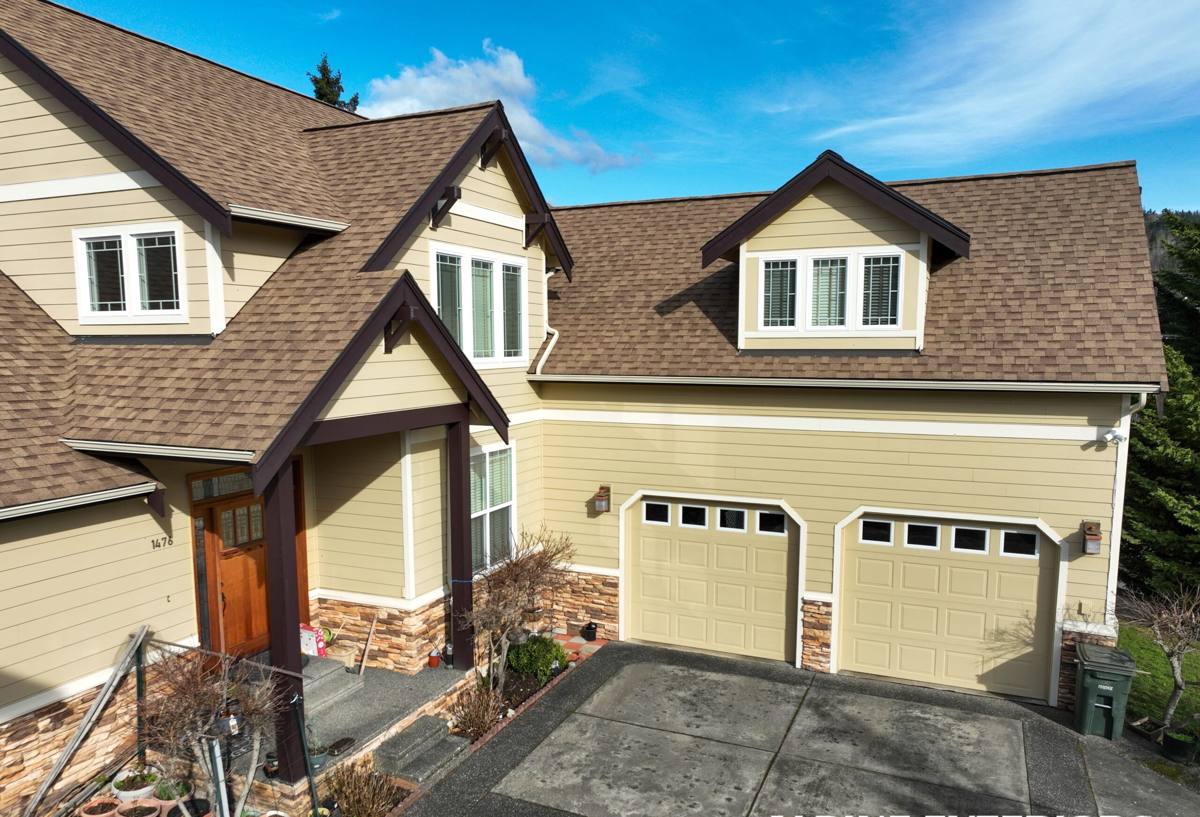
What Happy Valley's Climate and Terrain Do to a Deck
Salt-Tinged Marine Air, Even Away From the Water
Happy Valley sits inland from Bellingham Bay compared to the waterfront neighborhoods, but it's still well within reach of the moisture-laden, salt-tinged air that moves through the whole city. That exposure is quieter here than it is on a bluff overlooking the water, but it's steady, and it works on exposed metal — fasteners, brackets, railing hardware, post connectors — the same way it does closer to the shoreline, just on a longer timeline. A deck built with standard-grade hardware instead of corrosion-resistant fasteners will show it eventually, whether it's three blocks from the bay or thirty.
Driving Rain Against a Sloped Lot
Wind off the bay and the Salish Sea pushes Bellingham's rain sideways more often than it falls straight down, and on a sloped Happy Valley lot that rain doesn't just land on the deck surface — it runs downhill across it, pools at low points, and finds its way under railings and into ledger connections if the grading and drainage weren't planned for the specific slope of that yard. A deck design that ignores how water actually moves across a hillside lot is starting from the wrong assumption.
A Moss Season That Runs Most of the Year Under Tree Cover
The mature tree canopy that gives Happy Valley a lot of its character also means more shade, more fallen leaves and needles, and slower drying times than an open, sun-exposed lot gets. Moss and mildew don't need much of an opening — a decking surface with any real porosity, or boards gapped too tight to dry between rains, gives them one. Shaded decks under a tree canopy are usually the first place it shows up, and once it's established on a horizontal surface, it's a lot easier to prevent than to remove without damaging the material underneath.
Substructure Demands of a Hillside Lot
A meaningful share of Happy Valley properties sit on grades steep enough that a deck's substructure has to do more than support weight evenly — footings may need to be stepped or engineered for the slope, post heights vary across the same deck, and drainage underneath has to be planned so runoff from uphill doesn't just collect against the framing. That's a structural design problem as much as a decking-material one, and it's specific to lots like the ones common in this neighborhood.
Choosing the Right Decking Material for This Neighborhood
Material choice carries more weight in a shaded, sloped, marine-climate neighborhood like Happy Valley than it does on an open, sun-exposed lot further from the water. The three categories most homeowners weigh are pressure-treated or cedar wood, capped composite, and cellular PVC.
Wood
Pressure-treated lumber and cedar are the traditional choice, and both can look excellent when new. Both also need regular sealing or staining to keep moisture out, and both are more vulnerable to moss taking hold on a shaded surface that doesn't dry quickly between rain events. On an unmaintained wood deck under tree cover, moss and graying are usually the first visible signs of neglect, often within a season or two.
Capped Composite
Capped composite boards use a plastic shell around a wood-fiber composite core, which resists moisture absorption, staining, and the kind of surface porosity moss needs to grip. In a shaded, damp neighborhood like Happy Valley, that cap layer is doing real work rather than just adding a marketing line — it's the difference between a deck that needs occasional washing and one that needs a maintenance schedule to keep up with.
Cellular PVC
PVC decking has no wood fiber at all, so it doesn't absorb moisture at cut edges or fastener holes the way even capped composite can. It typically costs more and can flex more under concentrated point loads, but for a heavily shaded deck that rarely gets direct sun to help it dry, some homeowners decide the added moisture resistance is worth the higher price.
| Material | Handling Shade & Sustained Moisture | Moss Resistance | Upkeep |
|---|---|---|---|
| Cellular PVC | Excellent — no wood fiber to absorb moisture | Strong, smooth non-porous surface | Occasional washing |
| Capped composite | Strong — cap layer resists moisture and staining | Good on most product lines | Occasional washing |
| Uncapped composite | Moderate — some moisture absorption at exposed fiber | Fair; more prone to buildup under tree cover | Periodic cleaning |
| Cedar | Moderate — natural resistance, but needs sealing | Fair when sealed and maintained | Regular oiling or sealing |
| Pressure-treated wood | Weak against sustained shade and moisture over time | Poor without regular treatment | Regular sealing or staining |
What a Correctly Built Deck Involves Here
The decking surface gets most of the attention when homeowners picture a custom deck, but on a Happy Valley lot, the framing, fasteners, and drainage underneath are what actually decide how long it lasts. A build done right for this neighborhood includes:
- Footings and posts engineered for the specific slope of the lot, not a generic flat-lot layout adjusted after the fact
- Framing material rated for sustained moisture exposure, sized correctly for the span and load it will actually carry
- Stainless steel or coastal-grade corrosion-resistant fasteners throughout, since standard hardware corrodes faster in this marine climate than most homeowners expect
- Hidden fastener systems on the walking surface where the decking product allows, reducing exposed metal and giving a cleaner finish
- Correct board gapping for drainage and material movement, so the surface can actually dry between the region's frequent rain events instead of staying damp
- Proper ledger board flashing where the deck ties into the house — one of the most common places moisture gets into the structure on a poorly built deck
- Grading and drainage planning underneath the deck that accounts for uphill runoff on sloped lots, not just the water that falls directly on the deck itself
- Railing and post attachment sized appropriately for the site, with extra attention on elevated decks built out from a hillside
Skip any of these and the deck can still look fine on day one. What shows up later — a soft joist, a loosening post, staining from fastener corrosion, moss taking hold in a shaded corner — tends to appear a few wet seasons in, once the shortcuts have had time to matter.
Design Considerations Specific to Happy Valley Properties
Beyond material and structure, a handful of site-specific questions come up repeatedly on Happy Valley projects. Tree cover affects both moss-resistance priorities and how much natural light a deck will realistically get through the day, which changes which materials and colors make sense. Slope and grade determine stair placement, railing height changes across the span of the deck, and how much substructure work is involved before decking ever goes down. Proximity to mature trees also raises practical questions about root systems near footings and how much seasonal leaf and needle drop the deck will need to shed, since a design that ignores that ends up trapping organic debris in corners and against railings. None of these are one-size-fits-all answers, which is part of why a custom deck designed for a specific Happy Valley lot performs differently than a stock layout dropped onto any site in the city.
How Our Process Works
Site Visit and Assessment
We start by walking the actual lot — existing structure condition on a replacement, the grade and how water currently moves across the site, how much sun versus shade the deck area gets through the day, and how close the nearest trees sit to where footings would go. On a sloped, tree-covered lot, that assessment shapes the design more than it would on flat, open ground.
Design and Material Selection
From there we talk through decking material, layout, and railing options that fit the budget and how the space will actually get used, along with how the substructure needs to be engineered for the specific slope involved.
Permitting
Permitting in Bellingham and the rest of Whatcom County generally follows standard setback, structural, and elevation requirements, and steeper lots can bring additional engineering review into the process. We handle that as part of the job rather than leaving it for the homeowner to sort out.
Construction
Once permitted, substructure and framing go in first, sized and fastened for the site's actual slope, moisture, and shade exposure, followed by the decking surface, railing, and any stairs or trim work. We finish with a walkthrough covering what the specific material you chose needs going forward — for most modern decking that's minimal, but it isn't nothing.
What Your Deck Still Needs From You
Even a well-built deck in the right material needs some routine attention in a climate like Bellingham's to reach its full lifespan. A short list worth keeping in mind:
- Clear leaves, needles, and other organic debris out of board gaps regularly, especially on a deck under tree cover, so water and airflow can move through as designed
- Rinse the deck surface periodically to clear salt residue, pollen, and organic buildup before it works into the surface or cap layer
- Check railing posts and hardware once a year for early corrosion or loosening, especially heading into the wet season
- Trim back branches that overhang the deck or hold moisture and shade against it longer than necessary
- Watch drainage paths on sloped lots after heavy rain to make sure water is still moving the way it's supposed to and not pooling against the substructure
- Address any soft framing or standing water underneath right away — that's a structural issue, not a cosmetic one, and it doesn't improve with time
Cost Factors for a Happy Valley Deck
Every deck project is priced around the specific site, but a few factors move the cost on Happy Valley properties more consistently than others:
| Factor | Why It Matters |
|---|---|
| Slope and substructure needs | Stepped footings and variable post heights add engineering and labor time compared to a flat lot |
| Tree proximity | Root systems near footing locations may require adjusted placement or additional planning |
| Decking material | Wood, capped composite, and cellular PVC carry different material costs and installation labor |
| Access and site conditions | Hillside lots with limited equipment access can add labor time for material staging and hauling |
| Railing and stair complexity | Elevation changes across a sloped lot often mean more stairs and more linear feet of railing |
| Existing structure condition | On a replacement, hidden rot or inadequate drainage found during demo needs addressing before rebuilding |
We'll walk your specific lot and give you real numbers rather than a rough estimate based on square footage alone — two Happy Valley properties of similar size can have very different costs depending on slope, tree cover, and access.
Why It Matters That We Already Work Happy Valley and Bellingham
A crew that mostly builds on flat, open lots can still put together a competent deck, but a Happy Valley project brings variables that don't come up as often elsewhere — engineering a substructure for real slope, working around established tree root systems, and accounting for a moss season that runs longer under shade than it does on an open lot across town. Working this neighborhood regularly means we're not guessing at those requirements on your project. We've seen which decking materials actually hold up under Happy Valley's specific combination of tree cover, hillside drainage, and Bellingham's salt-tinged, wind-driven rain, and which framing and fastener details are worth the extra attention rather than an upsell.
That familiarity also shows up in smaller judgment calls — how to orient stairs and railings on a sloped lot, where a deck needs extra ventilation underneath because of how a particular yard drains, or being straightforward about what a deck here actually needs to last versus what's just an added cost.
Get a Straight Answer About Your Deck
Whether you're replacing a tired deck, building new on a sloped lot, or want an honest read on what a custom deck would take on your Happy Valley property, we're happy to walk the site with you and lay out the options plainly. Reach out below for a free, no-pressure estimate.