 Bellingham Window
 Roofing in Happy Valley Faces a Specific Set of Problems
Happy Valley sits close enough to Bellingham Bay to catch salt-laden air off the water, tucked into enough tree cover to stay shaded through a good chunk of the year, and squarely in the path of the same wet, wind-driven storm systems that move through Whatcom County every fall and winter. That combination is harder on a roof than any one of those factors alone. Salt air accelerates corrosion on metal fasteners and flashing. Shade and tree cover keep roof surfaces damp long after a storm has passed, which is exactly what moss needs to take hold. And driving rain, especially when it comes in sideways off a southwest wind, finds every weak seam, lifted shingle tab, and undersized flashing detail a roof has.
None of that means Happy Valley homes need exotic materials or unusual construction. It means the ordinary parts of a roof replacement — underlayment selection, flashing detail, ventilation, and moss-resistant material choices — matter more here than they would on a roof in a drier, more open part of the county. A roof replacement done to a generic standard will function fine on paper and still underperform in this specific microclimate. A roof replacement done with Happy Valley's conditions in mind holds up the way it's supposed to.
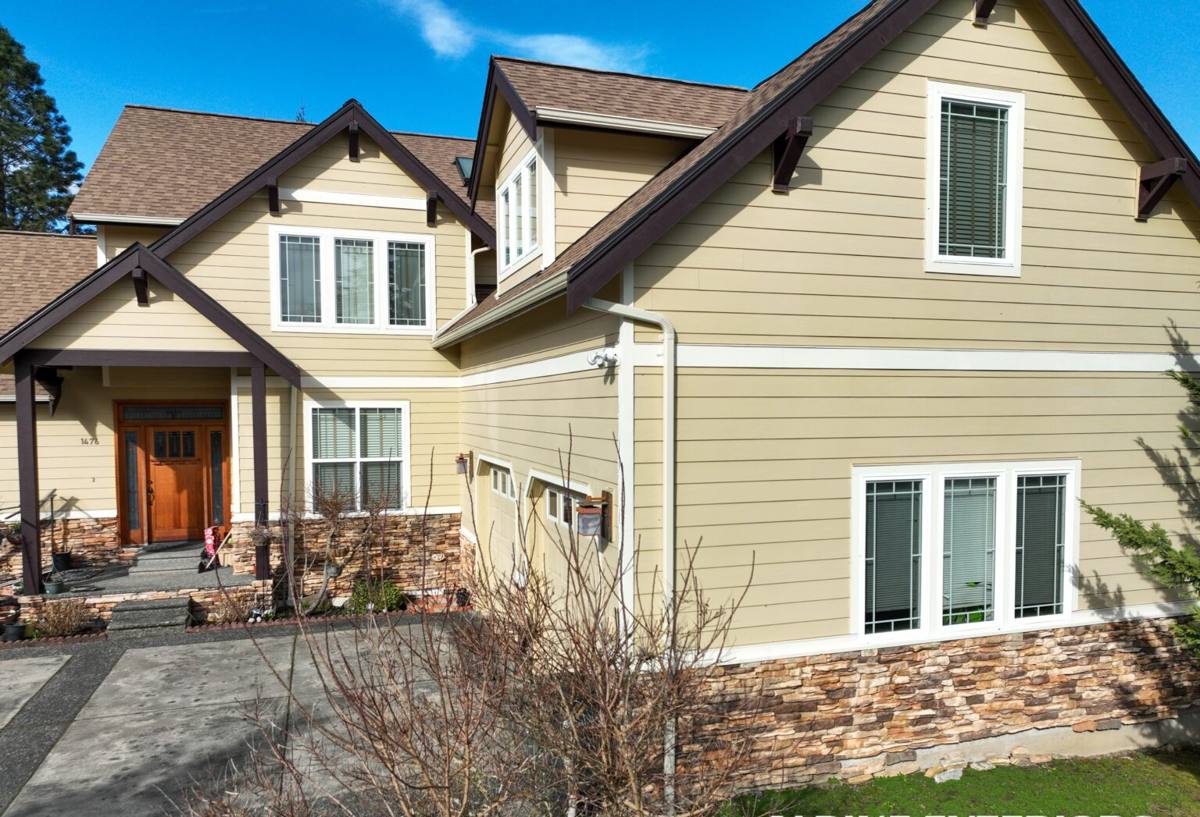
Signs a Happy Valley Roof Replacement Shouldn't Wait
Most roofs don't fail all at once. They send signals for months or years before a leak actually shows up inside the house. Because tree cover and shade keep moisture sitting on these roofs longer than on more exposed properties, small problems tend to progress faster here than the national average timelines you'll read about online. Watch for:
- Moss or algae that keeps returning within a season or two of cleaning, especially in shaded valleys and north-facing slopes of the roof
- Granules collecting in gutters or at downspout outlets, a sign the shingle surface is wearing thin
- Shingles that are curling, cupping, or have lifted tabs, particularly on the sides of the house that catch the prevailing wind
- Dark streaking or a consistently damp-looking roof plane long after rain has stopped elsewhere on the property
- Rusted, stained, or visibly deteriorating flashing around chimneys, skylights, and roof-to-wall transitions
- Daylight visible through the roof deck from inside an attic, or soft, spongy decking underfoot during an inspection
- Interior ceiling stains, especially ones that appear or worsen after a wind-driven rain event rather than a steady soak
Any one of these can often be addressed with a repair. Several of them together, or a roof that's already at or past its expected service life, usually points to replacement being the more sensible investment than continuing to chase individual failures.
Why Repairs Stop Making Sense
A roof is a system, not a collection of independent parts. Once the underlayment has been compromised in multiple spots, once flashing has failed in more than one location, or once the deck itself has taken on moisture damage, patch repairs start costing nearly as much as replacement while solving less of the actual problem. We'll always tell you honestly when a repair is the right call — but we'll also tell you when it isn't, rather than stringing a homeowner along with repeat service calls on a roof that's already past the point of cost-effective patching.
What a Correct Roof Replacement Actually Involves
A roof replacement is more than stripping old shingles and nailing down new ones. Done correctly, it's a sequence of steps where each one protects the next:
Tear-Off and Deck Inspection
Full removal of the old roofing material down to the deck, followed by an actual inspection of that deck — not a glance. Damp climates like this one are exactly where hidden deck rot shows up around old flashing points, valleys, and low-slope sections. Any soft, delaminated, or water-damaged sheathing gets replaced before anything new goes down. Covering over a compromised deck is one of the most common shortcuts in the industry, and it's one we don't take.
Underlayment
This is the roof's real waterproofing layer, and it matters more in a place that gets sustained, wind-driven rain than it does somewhere drier. We use underlayment suited to the exposure of each roof plane, with extra attention — and often self-adhered, high-moisture membrane — in valleys, eaves, and around penetrations where water concentrates.
Flashing
Flashing failure is the single most common source of leaks on an otherwise sound roof, and it's almost always due to reused or improperly detailed flashing rather than the shingles themselves. Chimneys, skylights, sidewalls, and any roof-to-wall transition get new, correctly lapped flashing as a standard part of the job, not an upsell.
Ventilation
A roof deck that can't breathe traps moisture from the underside, which speeds up rot and shortens the life of the new roofing above it — a real risk on shaded, tree-covered lots where the roof itself already stays damp longer. We check intake and exhaust ventilation as part of every replacement and correct imbalances rather than just replacing what was there before.
Final Layer and Detailing
Starter strips, ridge caps, fastening patterns, and nail placement all follow manufacturer specifications, because that's what keeps the material's warranty intact and keeps the roof performing in wind. Corner-cutting here doesn't show up as a problem on day one — it shows up two or three winters later.
Choosing a Roofing Material for This Neighborhood
There's no single "best" roofing material — there's a best fit for a given home, budget, and exposure. For Happy Valley specifically, moss resistance, moisture behavior, and how a material handles salt-influenced air are the factors we weigh most heavily.
| Material | Moss & Moisture Behavior | Considerations for This Area |
|---|---|---|
| Architectural asphalt shingles | Good performance with algae-resistant granules; needs periodic moss removal on shaded planes | Most common, cost-effective choice; algae-resistant lines are worth the small upcharge here |
| Standing seam metal | Sheds moss and moisture very well due to smooth, steep-shedding surface | Higher upfront cost; fasteners and flashing should be corrosion-resistant given the salt air |
| Cedar shake | Attractive but holds moisture and is more prone to moss and rot in shaded, damp settings | We'll walk through the maintenance commitment honestly before recommending it for heavily shaded lots |
| Synthetic/composite shingle | Resists moisture absorption better than wood; moss can still form without regular cleaning | A reasonable middle ground where the look of shake is wanted without wood's moisture sensitivity |
We don't push one material as universally superior. We'll tell you plainly how each option is likely to perform on your specific roof plane, sun exposure, and tree cover, and let you weigh appearance, budget, and maintenance tolerance from there.
What Drives the Cost of a Roof Replacement
Every roof is priced individually after an on-site look, but the factors that move the number up or down are consistent. Rather than quote a number that means nothing without context, here's what actually determines cost:
| Factor | Why It Matters |
|---|---|
| Roof size and number of planes | More square footage and more valleys, hips, and transitions mean more material and labor |
| Deck condition | Rotted or delaminated sheathing found during tear-off requires replacement before new roofing goes down |
| Pitch and access | Steep or hard-to-access roofs, common on hillside lots in this area, take longer and require more safety setup |
| Material choice | Asphalt, metal, and cedar carry different material and labor costs, as outlined above |
| Flashing and penetrations | Chimneys, skylights, and multiple roof-to-wall junctions add detail work beyond a simple field of shingles |
| Ventilation corrections | Adding or rebalancing intake and exhaust vents is worthwhile work, but it's additional scope beyond the shingles themselves |
We'll break the estimate down by these factors so you understand what you're actually paying for, not just a bottom-line total.
How Our Process Works, Start to Finish
- On-site assessment. We walk the roof and attic where accessible, checking deck condition, ventilation, flashing, and moss/moisture patterns specific to your lot's sun and tree exposure.
- Written estimate. A clear, itemized quote covering material, tear-off, deck repair allowances, flashing, and ventilation — no vague lump-sum guessing.
- Scheduling around weather. Given how much rain this area sees, we plan tear-off and dry-in around forecast windows so your home isn't left exposed longer than necessary.
- Tear-off and deck inspection. Full removal, honest reporting on deck condition, and your sign-off before any deck repairs beyond the original estimate proceed.
- Underlayment, flashing, and installation. Installed to manufacturer specification, with extra moisture protection in valleys and low-slope areas.
- Cleanup and final walkthrough. Site cleared of debris and nails, and we walk the finished roof with you before calling the job done.
Why It Matters That We Already Work in Happy Valley
A crew that already works this neighborhood regularly isn't guessing at conditions — we know what a roof under mature tree cover with bay-influenced weather actually goes through year over year. That translates into practical decisions: which flashing details tend to fail first on hillside lots, where moss reliably comes back regardless of material, and how much ventilation a shaded roof plane really needs versus what a generic spec sheet suggests. It also means straightforward logistics — material staging, equipment access on sloped or tight driveways, and scheduling around this area's weather patterns — that a crew unfamiliar with the neighborhood has to figure out on the fly, often at your expense in time or quality.
Whatcom County and City of Bellingham permitting requirements apply to most full roof replacements, and we handle that paperwork as part of the job rather than leaving it for the homeowner to sort out. Working locally also means we're not disappearing after the final invoice — if a question comes up two winters from now, we're still the same crew you can call.
Protecting the Investment After the New Roof Goes On
A new roof still needs basic upkeep, especially in a neighborhood prone to moss and shade-driven moisture. A short list of habits goes a long way:
- Have moss growth removed gently, before it thickens, rather than pressure-washed aggressively, which can strip granules and shorten shingle life
- Keep gutters clear so water isn't backing up under eave edges during heavy rain
- Trim back overhanging branches where reasonable, since reduced shade and debris buildup slow moss regrowth
- Have flashing and roof penetrations checked every couple of years, since that's where leaks most often start even on a newer roof
- Address any small leak or stain promptly rather than waiting for it to become an interior repair
None of this requires a maintenance contract or constant attention — just a bit of seasonal awareness suited to this particular climate.
Get a Straight Answer About Your Roof
If your Happy Valley roof is showing moss that won't quit, curling shingles, or you're just past due for a real inspection, we're glad to take a look and give you an honest read on repair versus replacement. There's no pressure and no obligation — just a clear assessment and a written estimate you can think over. Fill out the form below to get started.