 Bellingham Window
 Siding Replacement in Happy Valley: What the Neighborhood Actually Needs
Happy Valley sits close enough to Bellingham Bay and the surrounding hills that its homes take a specific kind of weather beating: salt-laden air moving in off the water, long stretches of driving rain through fall and winter, and a moss season that seems to start earlier every year and end later. None of that is unusual for Whatcom County, but it adds up differently depending on how a house is built and what its siding is made of. A product that holds up fine in a drier inland climate can start showing problems here in half the time.
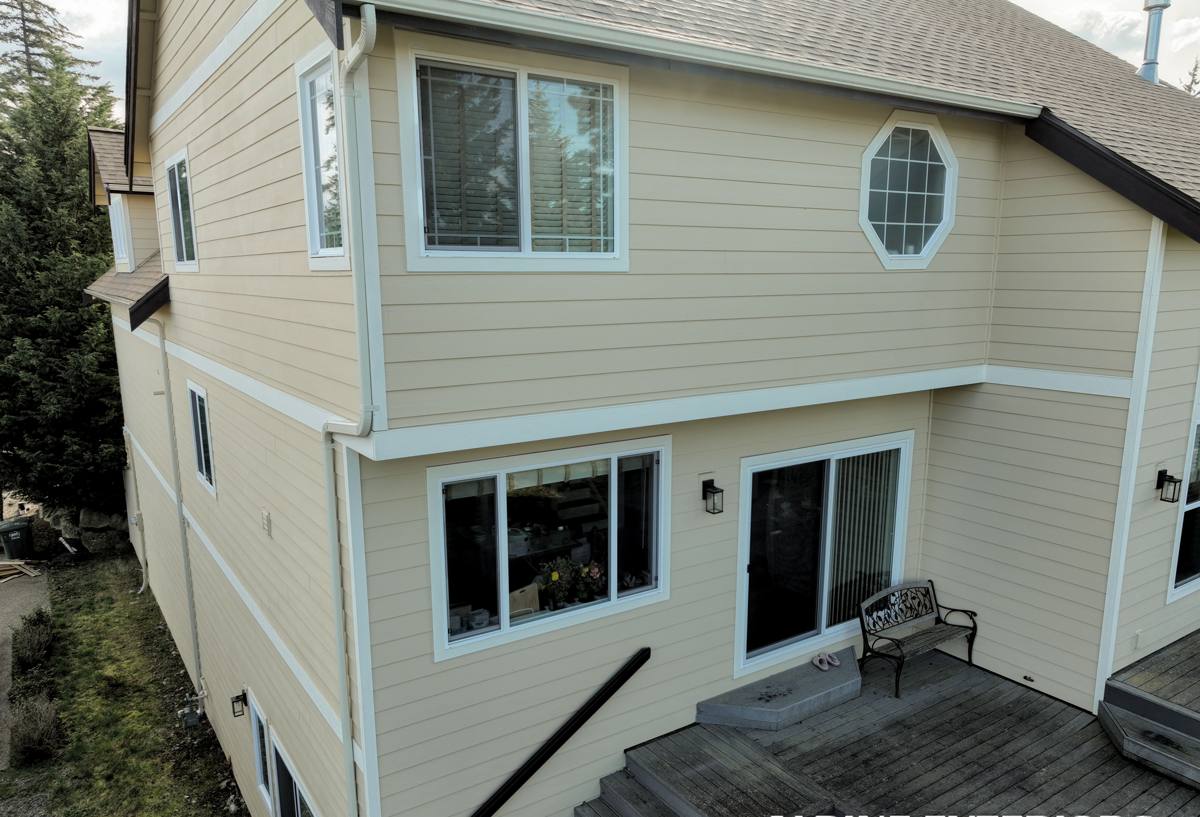
This page is about one job in one neighborhood: replacing siding on a Happy Valley home the right way, with a material and installation approach that's actually built for this climate. We're not going to give you a generic rundown of siding types — we install James Hardie fiber cement exclusively, and we'll explain why that matters specifically for houses in this part of Bellingham.
How Happy Valley's Climate Wears Down Siding
Salt Air and Moisture
Proximity to the bay means airborne salt is a constant, low-grade factor in how exterior materials age here. Salt-laden moisture accelerates corrosion on fasteners and trim metal, and it can speed up the breakdown of finishes that weren't engineered to handle it. Over years, this shows up as chalking, fading, or a chronic damp feel to the wall assembly behind poorly sealed siding.
Driving Rain
Bellingham's rain doesn't just fall straight down — a lot of it comes in sideways during winter storms, which puts real pressure on horizontal laps, butt joints, and any place siding meets trim, windows, or roof lines. Siding that isn't installed with correct overlaps and flashing details will let water find its way behind the cladding, and once that happens the sheathing and framing underneath are at risk regardless of how good the siding itself looks from the curb.
Moss and Organic Growth
Shade, moisture, and mild temperatures make Whatcom County ideal for moss, algae, and mildew growth on exterior surfaces. Siding that stays damp longer — because of poor drainage, tight tree cover, or a north-facing wall that never fully dries — is going to host more of it. Some siding materials also give organic growth more to hold onto, or absorb enough moisture themselves to feed it.
Why We Only Install James Hardie Fiber Cement
Every siding replacement we do in Happy Valley uses James Hardie fiber cement. We don't install vinyl, LP SmartSide, cedar, primed spruce, or other fiber cement brands, and that's a deliberate standard, not a sales preference. Here's the honest reasoning:
- It's non-combustible. Fiber cement doesn't feed a fire the way wood-based products can, which matters for long-term risk regardless of region.
- It's dimensionally stable in wet-dry cycles. Fiber cement doesn't swell, cup, or rot the way wood-based siding can when it takes on repeated moisture, which is exactly the stress pattern Bellingham's rain creates.
- The factory finish is engineered for weather, not just looks. Hardie's ColorPlus finish is baked on in a controlled environment and backed by its own finish warranty — a meaningfully different proposition than field-applied paint that has to cure in unpredictable weather.
- There's a climate-specific product line. Hardie's HZ5 formulation is engineered for wetter, colder climates like ours, which is the version we use here.
- The warranty is transferable and substantial. That protects the investment for you and for whoever buys the house down the line.
We're not going to tell you other products are junk — plenty of them have real strengths. But when we weigh moisture behavior, long-term maintenance, and how a product holds up specifically against salt air and sustained rain, fiber cement from Hardie is what we're willing to put our name behind and warranty.
Signs a Happy Valley Home Needs Siding Replaced, Not Patched
Not every issue means a full tear-off. But there's a point where repairing an aging or failing siding system just delays a bigger problem — and costs more in the long run than doing it once, correctly. Watch for:
- Soft or spongy spots when you press on the siding, especially near the bottom courses or below windows
- Persistent moss or dark staining that comes back within weeks of cleaning
- Visible warping, cupping, or separation at seams and butt joints
- Paint that won't hold — repeated peeling or bubbling within a year or two of repainting
- A musty smell or visible staining on interior walls that share an exterior wall with problem siding
- Fastener heads showing rust streaks or popping out of the siding face
If you're seeing two or more of these, it's worth having someone look at what's happening behind the siding, not just at the surface.
What a Correct Siding Replacement Involves
Replacing siding well is mostly about what happens before the new material ever goes up. A rushed tear-off and re-side looks fine for a season and then starts failing where it matters — behind the wall.
Tear-Off and Inspection
Removing the old siding is also the only real chance to see the sheathing and framing underneath. In a climate like this, we're checking for water staining, soft sheathing, and any signs that moisture has been getting behind the old cladding — sometimes for years without an obvious exterior symptom.
Weather-Resistive Barrier and Flashing
A correctly installed water-resistive barrier, properly lapped and taped, is what actually keeps driving rain out of the wall assembly. Flashing at windows, doors, and any horizontal transition needs to direct water outward and downward, never into the wall. This detail work matters more in Bellingham than in drier climates, because the margin for error is smaller.
Fastening and Clearances
Hardie siding has specific fastening patterns and minimum clearances from grade, roofing, and other surfaces — these exist specifically to manage moisture and prevent the kind of wicking that leads to premature failure. Skipping or fudging these clearances is one of the most common ways an otherwise good product underperforms.
Finish and Sealant Details
Factory-finished ColorPlus siding still needs correctly matched, compatible caulking at joints and penetrations, and cut edges need to be treated per manufacturer specification. These are small steps that are easy to skip and impossible to notice until years later.
Our Process for Happy Valley Siding Replacement
- On-site assessment. We look at the current siding, the wall assembly where accessible, drainage and grading around the foundation, and sun/shade exposure that affects moisture and moss.
- Written scope and product selection. We walk through which Hardie product line and profile fits the home, plus a clear, itemized scope — no vague allowances.
- Tear-off and structural check. Old siding comes off, sheathing gets inspected, and any needed repairs are flagged and discussed before we move forward.
- Weather barrier and flashing installation. This is the step that actually determines how the wall performs in Bellingham's rain, and we don't shortcut it.
- Hardie installation to manufacturer spec. Correct fastening, clearances, and joint treatment, done by a crew that installs this specific product regularly.
- Final walkthrough. We go over the finished work with you before calling the job done.
Cost Factors for Siding Replacement in Happy Valley
Every home is different, and we won't quote a number without seeing the project — but these are the factors that actually move the price:
| Factor | Why It Matters |
|---|---|
| Home size and wall complexity | More square footage and more corners, dormers, and trim details mean more material and labor |
| Condition of existing sheathing | Water damage found during tear-off may require sheathing repair or replacement before new siding goes up |
| Siding profile and accessories | Lap width, trim style, and accent details (like board and batten sections) affect material cost |
| Access and site conditions | Tight lots, steep grades, or limited equipment access can add labor time |
| Number of stories | Multi-story homes require more scaffolding and safety setup |
| Existing moisture damage | Rot repair, mold remediation, or structural framing work adds to scope beyond the siding itself |
Why It Matters to Hire a Crew That Already Works This Area
A siding installer who works across Whatcom County regularly already understands how Bellingham's rain patterns and coastal moisture affect installation decisions — where extra flashing attention pays off, which orientations on a house tend to hold moisture longer, and how moss growth patterns typically show up on local homes. That's different from a crew installing siding here for the first time and treating it like any other job. Local experience shows up in the small decisions: where a drip cap gets added even though it's not strictly required, how tight the reveal is set on a lap that faces prevailing wind-driven rain, or which areas of a Happy Valley lot tend to need extra ventilation behind the siding.
It also matters for follow-through. A local crew is accountable for how the job performs through an actual Bellingham winter, not just how it looks on installation day.
Maintaining Your New Siding in a Happy Valley Climate
Fiber cement is low-maintenance compared to wood-based options, but "low-maintenance" doesn't mean "no maintenance" — especially here:
- Rinse siding annually to remove salt residue and organic buildup before it becomes established moss or algae
- Keep gutters clear so overflow doesn't run down the siding face repeatedly in one spot
- Trim back vegetation and tree cover that keeps specific wall sections shaded and damp
- Inspect caulking at trim and penetrations every year or two and recaulk as needed
- Address any impact damage or chipped paint promptly so moisture doesn't get behind the finish
If your Happy Valley home's siding is showing its age, or you're planning ahead for a replacement, we're happy to take a look and walk you through what we'd actually recommend for your house — no pressure, no obligation. Reach out for a free estimate using the form below.