 Bellingham Window
 Fairhaven's Climate Is Harder on Siding Than People Expect
Fairhaven sits close to Bellingham Bay, and that proximity to the water shapes what siding has to deal with year-round. Salt-laden air drifts in off the bay, driving rain comes in sideways during winter storms, and the shaded, damp stretches of fall and winter create a moss season that can last for months. Add in mature tree cover on many Fairhaven lots, and you get siding that rarely gets a chance to fully dry out between weather events.
This isn't a climate that punishes siding overnight. It's a slow, cumulative problem: moisture that doesn't fully evaporate, organic growth that holds dampness against the wall, and salt air that accelerates corrosion on fasteners and hardware that aren't rated for it. Older siding materials, and even some newer ones, struggle with this combination over a 15-20 year span. That's the backdrop for every decision we make on a Fairhaven siding job.
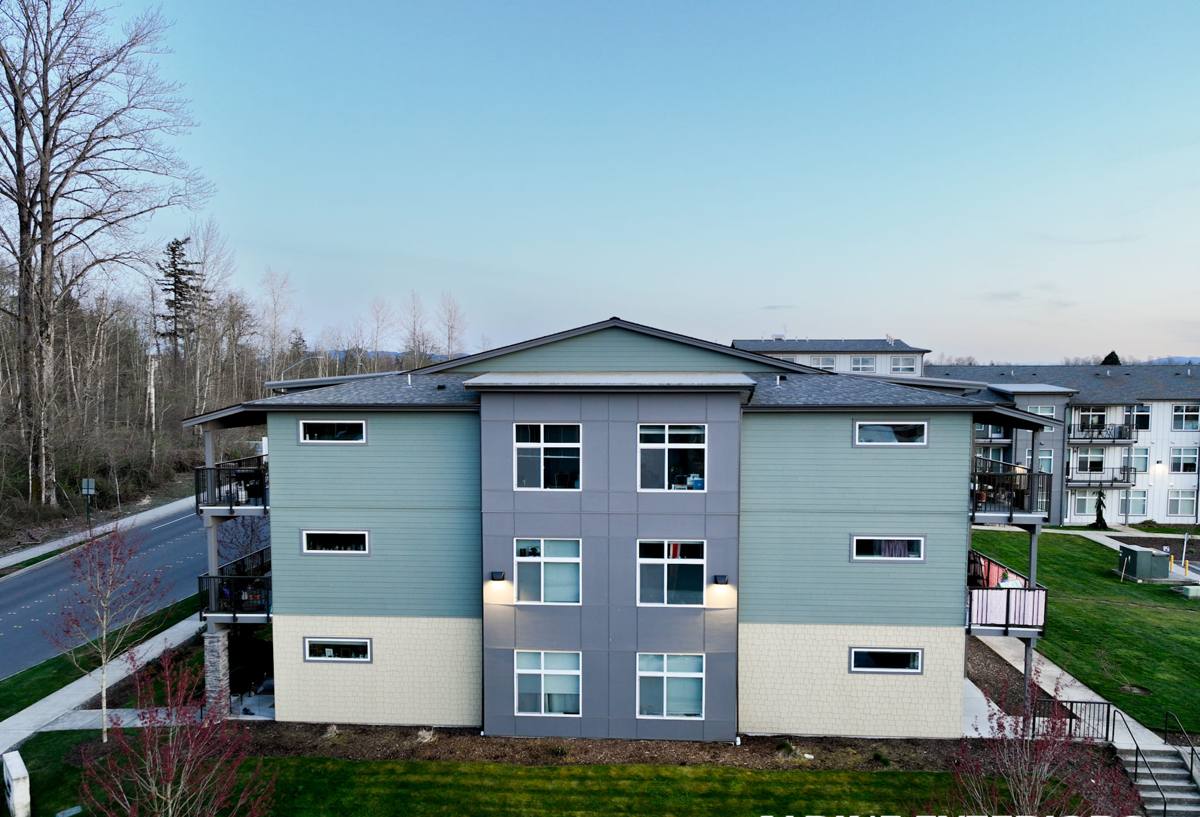
Why We Install Only James Hardie Fiber Cement Here
We don't install vinyl, LP SmartSide, cedar, or primed spruce, and Fairhaven's climate is a big part of why. Fiber cement is non-combustible, dimensionally stable, and doesn't feed the kind of organic growth that thrives in a shaded, moist environment. Wood-based products, even engineered ones, still have wood fiber at their core, and wood fiber wants to absorb moisture. Vinyl handles water fine but moves a lot with temperature swings and can become brittle over decades of coastal exposure. James Hardie's fiber cement system is built from cement, sand, and cellulose fiber, and it holds its shape and finish through the wet-dry cycles that define a bay-side climate like Fairhaven's.
HZ5 Engineering for the Pacific Northwest
James Hardie engineers its siding by climate zone, and the HZ5 line is built for regions with significant moisture exposure, which fits Bellingham and Whatcom County well. HZ5 products are formulated with moisture and freeze-thaw resistance in mind, which matters more here than in drier inland climates where a standard product might be adequate.
ColorPlus Factory Finish
Most Fairhaven jobs we do use James Hardie's ColorPlus finish, which is baked on at the factory rather than applied on site. That matters in a climate where field-applied paint has fewer good drying windows. A factory finish cures under controlled conditions, adheres more consistently, and comes with a longer finish warranty than site-painted siding typically gets. It also means less repainting over the life of the siding, which is a real maintenance cost saved over 15-20 years.
What a Correct Installation Actually Involves
James Hardie siding is only as good as the installation behind it. The product is engineered to handle moisture, but if it's installed without proper flashing, gapping, and fastening, water can still find its way behind the panels and cause problems that have nothing to do with the siding itself. This is where a lot of siding jobs go wrong, on any product, not just fiber cement.
- Weather-resistive barrier installed correctly behind the siding, lapped shingle-style so water sheds outward
- Rain screen or drainage gap where conditions call for it, so water that gets behind the siding has somewhere to go
- Proper flashing at every window, door, and roofline transition, not just caulk covering a gap
- Correct fastener spacing and type, driven so the head sits flush without crushing the material
- Manufacturer-specified gaps at butt joints and trim, sealed with a quality sealant rated for the exposure
- Field-cut edges primed or sealed before installation so raw cement board isn't left exposed to moisture
Moisture Management Matters More Near the Bay
On a Fairhaven job, we pay particular attention to the drainage plane and flashing details because the siding spends more of the year damp than it would further inland. A small installation shortcut that might never cause a problem in a drier part of Whatcom County can turn into a moisture issue here within a few seasons. Getting the water management layer right the first time is cheaper than fixing a callback two winters later.
Comparing Siding Options for a Fairhaven Home
Every siding material has trade-offs. Here's how the options homeowners usually consider stack up against the specific demands of a salt-air, high-moisture, moss-prone site like Fairhaven.
| Factor | James Hardie Fiber Cement | Vinyl | Wood / LP SmartSide |
|---|---|---|---|
| Moisture behavior | Engineered for wet climates (HZ5), doesn't swell or rot | Sheds water well but can trap moisture behind if installed poorly | Wood fiber core absorbs moisture over time even with treatment |
| Moss and organic growth | Resists organic growth better than wood-based products | Resists growth but can look dull/stained over time | More susceptible in shaded, damp conditions |
| Salt air exposure | Cement-based composition holds up well; use corrosion-resistant fasteners | Generally stable but can become brittle with age | Finish and substrate more vulnerable to accelerated wear |
| Finish life before repaint | ColorPlus factory finish, long finish warranty | Color molded in, doesn't need painting but can fade | Field-applied paint, shorter repaint cycle |
| Fire resistance | Non-combustible | Combustible | Combustible |
| Upfront cost | Mid-to-higher | Lower | Mid |
| Long-term cost | Lower with reduced maintenance and repainting | Low maintenance but shorter practical lifespan in this climate | Higher due to more frequent maintenance and repainting |
We're not going to tell you vinyl or engineered wood siding can't work anywhere. They can, in the right climate and with the right installation. But for a neighborhood that sits this close to the water and holds this much seasonal dampness, we've made fiber cement our standard, and we stand behind that with every quote we write.
Our Process for a Fairhaven Siding Project
Every job starts with a walk-around of the home, looking specifically at moisture history: staining, soft spots, past patch jobs, and how the property sits relative to shade and prevailing wind and rain direction off the bay. That assessment shapes the flashing and drainage plan before a single panel goes up.
From there, the sequence is straightforward but has to be done in order: remove old siding and inspect the sheathing underneath, repair or replace any damaged sheathing, install the weather-resistive barrier and drainage plane, flash all penetrations, then install the James Hardie panels or lap siding with correct fastening and gapping. Trim, corners, and any ColorPlus caulking are finished last, matched to the factory finish so the whole system reads as one piece rather than patched-together parts.
Older Homes Need a Closer Look
A number of homes in and around Fairhaven are older, which usually means original sheathing, older window flashing details, and sometimes multiple layers of past siding work. We factor that into the estimate up front rather than discovering it mid-project, because what's underneath the existing siding often tells you more about what a home needs than the siding itself does.
Why It Matters to Hire a Crew That Already Works This Neighborhood
Fairhaven isn't a generic subdivision, and a crew that's worked here before knows what to expect before they pull the first piece of old siding off. That includes anticipating the moisture conditions behind existing siding on homes near the bay, knowing how local permitting works with the City of Bellingham, and being realistic about weather windows for a job during Whatcom County's wetter months. A crew installing James Hardie for the first time in this kind of climate is learning on your house. A crew that already knows Fairhaven's conditions is applying lessons they've already learned elsewhere.
There's also a practical side to local familiarity: knowing which details on older Fairhaven homes tend to need extra attention, having a realistic sense of scheduling around the region's rain patterns, and being available for a warranty check or a caulking touch-up without a long drive. That kind of continuity matters more with siding than with almost any other exterior project, because siding problems that do show up tend to show up slowly, years after installation.
Maintaining Your James Hardie Siding in This Climate
James Hardie siding is genuinely low-maintenance compared to wood, but "low-maintenance" doesn't mean "no maintenance," especially in a moss-prone, salt-air environment. A little seasonal attention goes a long way toward hitting the full lifespan the product is capable of.
- Rinse siding annually with a garden hose to clear salt residue and light grime, more often if the home is directly exposed to bay winds
- Check for and gently remove moss or algae buildup, especially on shaded north- and west-facing walls
- Inspect caulking at trim, corners, and window flashing yearly, and re-caulk any cracked or separated joints promptly
- Keep gutters clear so overflow doesn't run down the siding face repeatedly during heavy rain
- Trim back vegetation and tree cover that keeps siding shaded and damp longer than necessary
- Watch for any soft spots, staining, or paint failure and address them early rather than waiting
What This Means for Your Fairhaven Home
Siding in a neighborhood like Fairhaven has to do more than look good. It has to hold up to salt air, shrug off driving rain, resist a long moss season, and still look right ten and twenty years down the road. That's a specific set of demands, and it's exactly why we've built our business around one product installed correctly rather than a menu of options installed the same way everywhere.
If you're weighing a siding project on a Fairhaven home, we're glad to walk the property, look at what your current siding is telling you, and put together a straightforward, no-pressure estimate for a James Hardie install built for this specific spot on the map.