 Bellingham Window
 Puget's Climate Asks More of Your Siding Than Most Homes Ever Face
Puget sits close enough to the water and the weather patterns that roll off Bellingham Bay that its homes deal with a specific combination of stresses: salt-laden air, long stretches of driving rain, and a moss and mildew season that can run most of the year in shaded spots. Any one of these is manageable on its own. Together, they wear down siding materials that aren't built for sustained moisture exposure and airborne salt, and they do it faster than most homeowners expect.
We install James Hardie fiber cement siding exclusively, and we don't say that as a sales pitch — it's a standard we set because of what we've seen happen to other materials in exactly this kind of environment. This page is about what Puget homes specifically need from their siding, what a correct James Hardie installation looks like here, and how our process is built around the realities of this neighborhood.
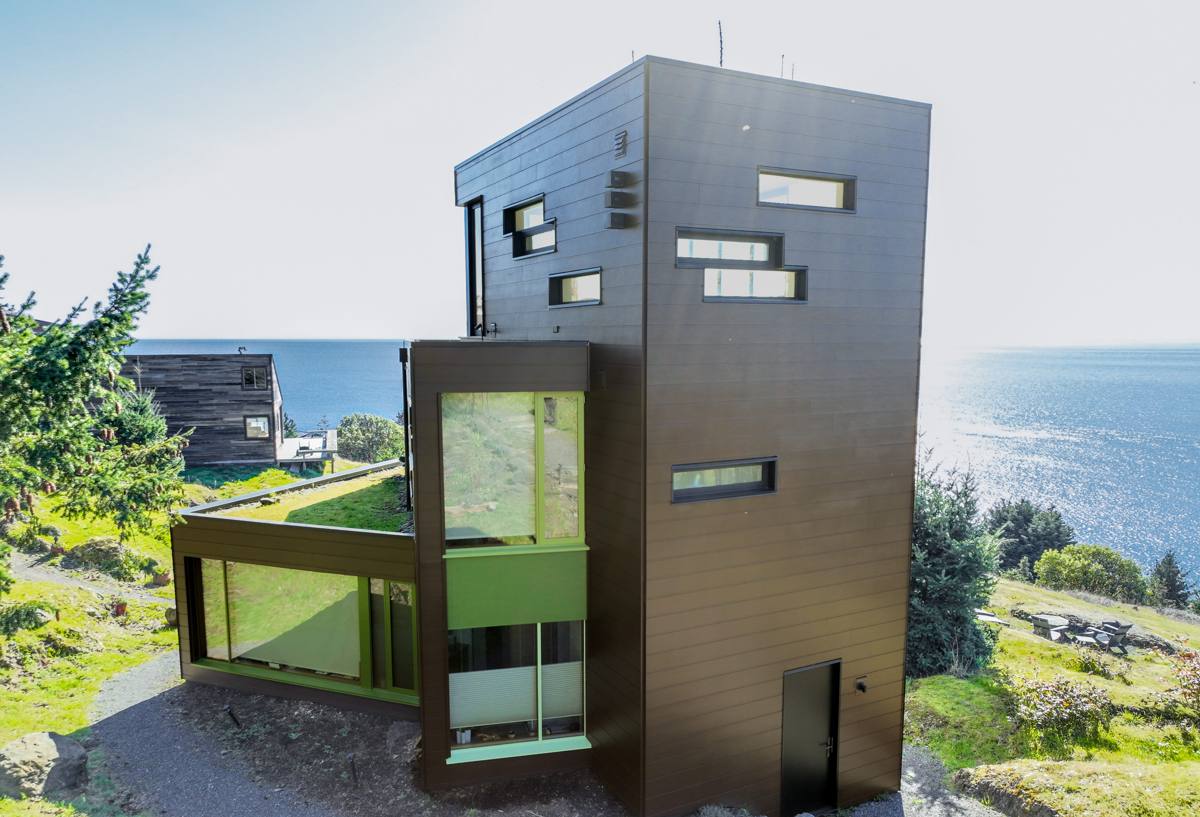
Why Salt Air and Moss Season Matter More Than People Think
Salt Air
Homes closer to Bellingham Bay and the Sound get a steady, low-level exposure to salt-carrying air. It's not dramatic, but it's constant. Salt accelerates corrosion on fasteners, trim hardware, and any exposed metal, and it can gradually break down finishes that aren't formulated to resist it. Over years, siding that looked fine at installation starts chalking, fading unevenly, or failing at the seams first — the places where moisture and salt find the smallest gaps.
Driving Rain
Whatcom County doesn't just get rain — it gets wind-driven rain that hits siding at an angle instead of running straight down. That matters because it pushes water into laps, seams, and butt joints that a vertical rain would never reach. Siding systems that rely on caulk or paint film alone to keep water out tend to fail here faster than in drier climates, because the water finds a way in even when the surface looks intact.
Moss and Mildew Season
Shaded north-facing walls, tree-covered lots, and the sheer number of overcast, damp days in Puget create ideal conditions for moss, algae, and mildew growth on exterior surfaces. Organic growth on siding isn't just cosmetic — it holds moisture against the surface and, on materials with wood content, can contribute to rot over time.
What James Hardie Brings to This Specific Combination of Problems
James Hardie fiber cement is made from cement, sand, and cellulose fibers — there's no wood content for moisture to feed on, no wood fiber for moss to root into over time the way it can with cedar or engineered wood products. That matters directly for a neighborhood dealing with sustained damp and shade.
Hardie's ColorPlus finish is a factory-applied, baked-on finish system rather than a field-applied paint job. That's relevant to salt exposure and driving rain both: a factory finish cures under controlled conditions and adheres more consistently than paint applied on-site in variable weather, which means better resistance to fading, chalking, and moisture intrusion at the surface over the life of the siding.
James Hardie also engineers products by climate zone (HZ5 for the Pacific Northwest), which accounts for moisture exposure and freeze-thaw behavior specific to this region rather than a one-size-fits-all national product.
| Hardie Product | Best Use on a Puget Home | Why It Fits |
|---|---|---|
| HardiePlank Lap Siding | Most wall areas, primary siding | Traditional lap profile sheds driving rain well when installed with correct overlap and gapping |
| HardiePanel Vertical Siding | Accent walls, modern facades, gable ends | Fewer horizontal laps means fewer water entry points on high-exposure walls |
| HardieShingle | Accent areas, dormers, architectural detail | Matches Pacific Northwest shingle-style aesthetics without the moisture concerns of real wood shingles |
| HardieTrim | Corners, window and door surrounds | Non-combustible, moisture-stable trim that won't cup or rot at joints the way wood trim can |
What a Correct Installation Actually Involves
The siding material is only half the equation. In a climate like Puget's, the installation details determine whether that material performs for decades or fails early — and this is where we see the most corners cut by crews that don't specialize in Hardie.
- Proper weather-resistive barrier: A correctly lapped and sealed moisture barrier behind the siding, not just tucked or stapled loosely
- Rainscreen or drainage gap where appropriate: A small gap behind the siding lets bulk water that gets past the surface drain and dry out instead of sitting against the sheathing
- Correct nailing pattern and fastener depth: Overdriven or underdriven fasteners are one of the most common causes of early siding failure
- Manufacturer-spec gapping at butt joints and trim: Hardie siding needs a small gap at joints, caulked with the right sealant — tight-butted joints trap moisture and can cause buckling
- Flashing at every horizontal transition: Window heads, roof lines, and deck ledgers all need proper flashing detail, not caulk used as a substitute for flashing
- Minimum clearance from grade, decks, and roof lines: Siding installed too close to the ground or a roof surface stays wet longer and is more prone to moisture damage
Where We See Installations Go Wrong
We get called to look at homes in and around Puget where the siding itself is fine, but the installation is causing problems — moisture staining at butt joints, caulk that's failed and pulled away, panels installed tight against trim with no gap. These aren't defects in the James Hardie product. They're the result of a crew installing it like standard lap siding without following Hardie's specific fastening, gapping, and flashing requirements.
This is part of why we standardized on one product line instead of installing several. Knowing James Hardie's installation manual in detail — and applying it consistently on every job — produces a more reliable result than a crew that installs five different siding products and treats them all the same way.
Our Process on a Puget Home
1. Site Assessment
We start by looking at the whole envelope, not just the visible siding — checking for existing moisture damage, trim condition, flashing at windows and rooflines, and how much sun and shade each wall gets, since that affects both moss exposure and finish color performance.
2. Tear-Off and Substrate Check
Old siding comes off and we inspect the sheathing underneath for rot or soft spots before anything new goes on. Covering up an existing moisture problem is one of the most common ways siding jobs fail early, regardless of the product used.
3. Weather Barrier and Flashing
We install or verify the weather-resistive barrier and flashing at every penetration and horizontal transition before the first piece of siding goes up. This step matters more in Puget's driving-rain conditions than almost anywhere in the county.
4. Installation to Manufacturer Spec
James Hardie siding, trim, and accessories go on following Hardie's published fastening schedule, gapping requirements, and clearances — not a generalized approach carried over from other siding products.
5. Final Inspection
We walk the finished job checking caulk lines, fastener seating, and trim details before calling it complete.
Cost Factors on a Puget Job
Every home is different, but these are the main variables that move the price on a James Hardie installation in this area:
| Factor | Why It Affects Cost |
|---|---|
| Substrate condition | Rot or moisture damage found during tear-off requires repair before new siding goes on |
| Product mix | Combining lap siding with panel accents or shingle detail adds material and labor complexity |
| Trim scope | Full trim replacement with HardieTrim costs more than reusing sound existing trim |
| Home height and access | Multi-story walls and difficult access (slopes, tight lot lines) increase labor time |
| Color and finish | Factory ColorPlus finishes vs. field painting affect both material cost and long-term maintenance |
Living With James Hardie Siding in a Marine Climate
Fiber cement siding is low-maintenance, not no-maintenance. In Puget, that means periodically rinsing off moss, algae, or dirt buildup on shaded walls — a garden hose and soft brush is usually enough, no pressure washer needed, which can actually drive water into joints if used carelessly. Keeping gutters clear and vegetation trimmed back from walls reduces how much moisture and shade the siding sits in. Because ColorPlus is a factory finish, most homeowners go many years without repainting, which is a real advantage over field-painted materials that need repainting on a shorter cycle in a climate this wet.
Why a Crew That Already Works Puget Matters
A siding contractor who works this specific stretch of Whatcom County regularly already knows which walls tend to hold moss, how far driving rain typically pushes water into a wall assembly here versus a more sheltered inland lot, and where the older housing stock in this area tends to have flashing or trim issues that need addressing during a re-side. That local pattern recognition doesn't replace following the manufacturer's installation manual — it adds to it, helping us flag problems before they're covered up behind new siding rather than after.
If you're weighing a siding replacement or repair on a Puget home, we're happy to take a look and talk through what your home specifically needs — no pressure, no upsell to a product we don't stand behind. Request a free estimate below and we'll walk the property with you.