 Bellingham Window
 Window Replacement for Lynden Homes
Lynden sits inside the same Whatcom County weather system that shapes every home from downtown Bellingham out to the county line — long wet winters, a short dry summer, and enough moisture in the air most months to keep moss, mildew, and swollen wood a constant background problem. Windows take the brunt of that. A window that was installed correctly fifteen or twenty years ago is often still functional today but no longer efficient, no longer sealing the way it should, and quietly letting in more cold air and moisture than most homeowners realize until they start paying attention to drafts, fogging glass, or a heating bill that keeps climbing.
This page is about one job, done right, in one area: replacing windows on homes in and around Lynden. Not a general overview of window brands, not a county-wide sales pitch — just what actually matters when you're replacing windows on a home that has to hold up to this specific climate, year after year.
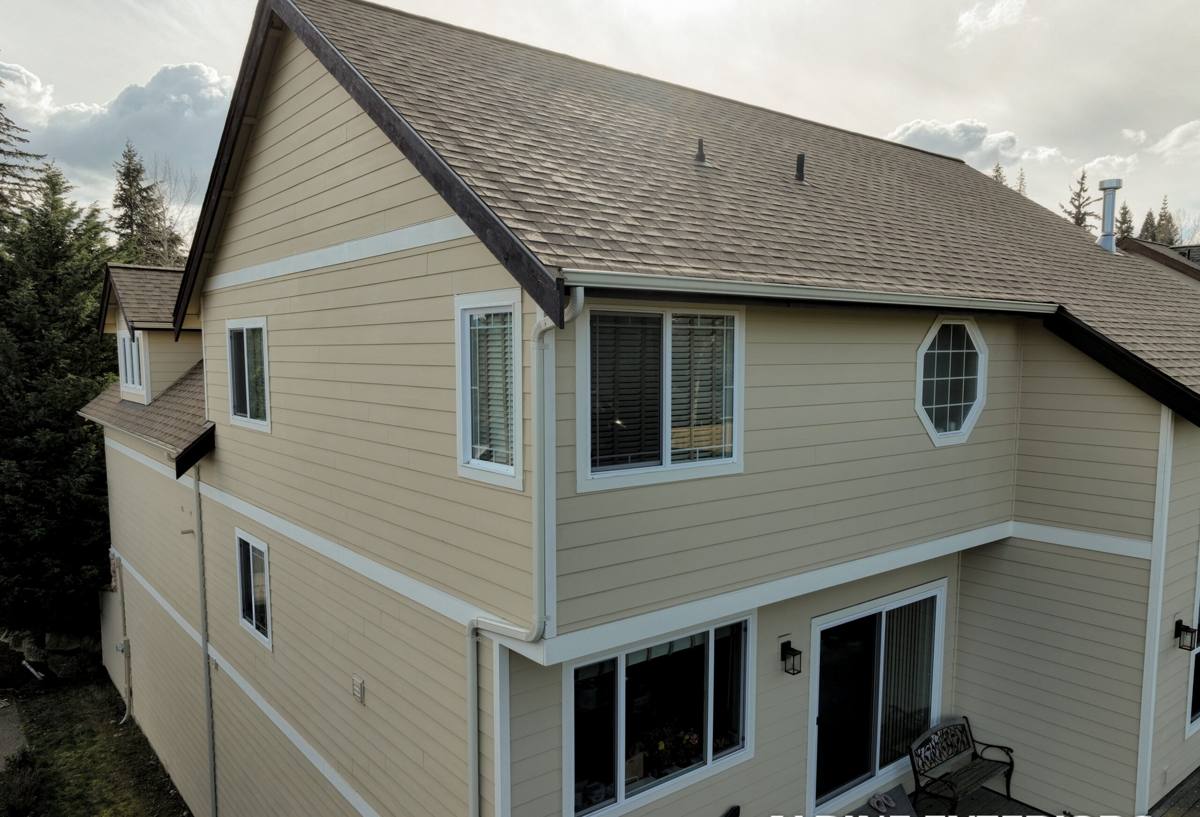
How Whatcom County Weather Wears Down Windows
Whatcom County's climate is a maritime one — driving rain that comes in sideways during winter storms, humidity that lingers even when it's not actively raining, and a moss season that can stretch from fall through spring on anything shaded or north-facing. Homes closer to the water deal with more salt-laden air, which accelerates corrosion on metal hardware and fasteners; homes further inland, including much of Lynden, still deal with the same driving rain and damp air, just with less direct salt exposure. Either way, the moisture load on window frames, sills, and the wall assembly around them is high for most of the year.
Old or failing windows respond to that environment in predictable ways:
- Wood frames and sills absorb moisture, swell, and eventually rot from the inside out, often before it's visible from outside.
- Aluminum frames conduct cold straight through, which shows up as condensation and sometimes frost on the inside of the glass on cold, damp mornings.
- Failed seals let moist air migrate into the wall cavity, which is how you end up with hidden mold or soft framing that nobody notices until a remodel or a sale inspection turns it up.
- Moss and algae buildup on sills and tracks holds moisture against the frame far longer than open air would, speeding up whatever rot or corrosion is already underway.
None of this happens overnight. It's a slow accumulation, which is exactly why so many homeowners underestimate how much a window is costing them until the frame itself is compromised.
Signs Your Lynden Home Needs New Windows
You don't need to wait for a window to fail outright. The earlier signs are usually smaller and easier to miss:
- Visible fogging or a haze between the panes of a double-pane window — this means the seal has failed and the insulating gas or air gap is gone for good.
- Windows that are hard to open, close, or lock, especially if that changed gradually rather than all at once.
- Soft, spongy, or discolored wood at the sill or lower frame corners.
- Persistent condensation on the inside of the glass during cold snaps, even when the rest of the house feels dry.
- Visible daylight or a draft you can feel with your hand held near the frame on a windy day.
- Moss or dark staining building up on the sill or exterior trim faster than you can keep it cleaned off.
- A noticeable difference in room temperature near the window compared to the rest of the house.
Any one of these on its own might just mean a minor repair. Several of them together, especially on windows over fifteen to twenty years old, usually means the smarter money is on replacement rather than continuing to patch a frame that's already past its useful life.
What a Correct Window Replacement Job Actually Involves
It's Not Just the Window Unit
Swapping in a new window is the easy part. The work that actually determines whether that window performs well for the next twenty years happens around it — the flashing, the sealing, and how well the new unit is tied into the existing wall assembly. In a climate that pushes rain sideways into walls during winter storms, a window that looks fine but was installed without proper flashing and sealant detail can leak for years before anyone notices water damage inside the wall.
What We Check and Do on Every Job
- Remove the old unit and inspect the rough opening, sill, and surrounding framing for hidden rot or moisture damage before anything new goes in.
- Repair or replace any compromised framing or sheathing rather than installing a new window over a damaged opening.
- Install or correct flashing so water is directed out and away from the opening, not trapped behind the new window.
- Set the new unit level, square, and properly shimmed so it operates smoothly and seals evenly for its full lifespan.
- Seal and insulate the gap between the window frame and the rough opening with the right materials — not just a bead of caulk on the outside trim.
- Finish exterior trim and caulking in a way that sheds water rather than holding it against the frame.
Skipping any one of these steps is how a "new window" ends up with the same moisture problems as the old one within a few years, just hidden behind fresh trim.
Choosing the Right Window for This Climate
There's no single "best" window material — the right choice depends on the home, the budget, and how much upkeep you're willing to take on. Here's how the common options generally compare for a home in this kind of climate:
| Frame Material | Moisture Behavior | Maintenance | Typical Lifespan |
|---|---|---|---|
| Vinyl | Won't rot or corrode; handles humidity well | Low — occasional cleaning | 20-30+ years |
| Fiberglass | Very stable in wet/dry cycles; minimal expansion or contraction | Low | 25-30+ years |
| Wood | Prone to swelling and rot if finishes aren't kept up | High — regular refinishing needed | Varies widely with upkeep |
| Wood-clad | Exterior cladding resists moisture; interior wood still needs some care | Moderate | 20-30 years with upkeep |
| Aluminum | Corrodes over time, especially with salt air; conducts cold | Moderate | 15-25 years |
For most Lynden homes, we lean toward vinyl or fiberglass frames simply because they hold up to the wet/dry cycling of this climate with the least ongoing maintenance. That's a professional recommendation based on moisture behavior and upkeep, not a knock on wood or aluminum windows installed and maintained correctly — those can still be the right call for a specific style of home, as long as the owner understands the maintenance commitment that comes with them.
Glass Matters as Much as the Frame
Double-pane glass with a low-E coating is the practical standard for this region — it cuts heat loss and helps control condensation in a climate where the inside and outside temperature and humidity can differ sharply for months at a time. Triple-pane glass adds further insulation value but at higher cost and weight, and it's worth discussing case by case rather than assuming it's automatically the right upgrade for every home.
Our Process, Start to Finish
1. On-Site Assessment
We look at the actual condition of your existing windows and the framing around them, not just take measurements. This is where hidden rot or moisture damage usually gets caught early.
2. Honest Recommendation
You get a straightforward rundown of what needs replacing now, what can wait, and what your realistic options are for materials and glass — without being steered toward the most expensive option by default.
3. Written, Itemized Estimate
You should be able to see exactly what you're paying for — units, labor, disposal, and any framing repair — before work starts, not find surprises on the final invoice.
4. Installation
Old units come out, framing gets inspected and repaired as needed, new windows go in with proper flashing and sealing, and the site is cleaned up daily — not left in a half-finished state overnight if it can be avoided.
5. Final Walkthrough
We check operation, sealing, and finish work with you before calling the job done, so any adjustment gets handled while we're still on site.
Why a Crew That Already Works Lynden Matters
Window replacement isn't just a product — it's an installation job, and installation quality is where most long-term problems either get prevented or get built in. A crew that regularly works homes in Lynden and the surrounding Whatcom County area has already seen how local framing conventions, common siding types, and this specific climate interact over time. That familiarity shows up in small but important decisions on site: how much flashing overlap is enough given how hard the rain drives here, which sealants actually hold up through a full wet season instead of just the first year, and where moisture tends to collect on homes built to this region's older construction standards.
It also matters for something simpler: showing up. A crew based nearby and already scheduling work in your area is easier to get back out for a warranty check or a follow-up question than one that has to route a truck across the county for a single callback.
What Affects the Cost of a Window Replacement
Every home is different, so we won't quote a number without seeing the job, but the main factors that move the price up or down are consistent:
- Number of windows being replaced and whether it's a full-home job or a partial one.
- Frame material chosen — vinyl and fiberglass are typically more budget-friendly than wood or wood-clad.
- Glass package — standard double-pane low-E versus triple-pane or specialty coatings.
- Condition of the existing framing — hidden rot found during removal adds repair work that a quote can't predict until the old window is actually out.
- Window size and configuration — large picture windows, bay windows, or custom shapes cost more than standard-sized units.
- Access and site conditions, including how many stories the window is on.
We'd rather walk you through these factors honestly during an estimate than throw out a broad range that doesn't reflect your actual house.
Get a Straightforward Estimate
If your Lynden home has windows that are fogging, drafting, sticking, or just past their prime, it's worth having someone take a real look before you decide anything. Fill out the form below for a free, no-pressure estimate — we'll assess what's actually going on with your windows and give you honest options for fixing it.