 Bellingham Window
 Building Right the First Time in Sudden Valley
Sudden Valley sits southeast of Bellingham along Lake Whatcom, and it's one of the few spots in Whatcom County where new home construction still happens on a regular basis — wooded lots, hillside sites, and lake-adjacent builds that each bring their own window challenges. When you're framing a new home, you get exactly one chance to set the window openings, flashing, and water management correctly before siding, trim, and interior finishes close everything in. Get it right and the windows disappear into the background for decades. Get it wrong and you're chasing leaks and rot behind walls that are expensive to open back up.
We install new-construction windows for builders, remodelers, and homeowners working on lots in and around Sudden Valley. That means we already know what the terrain, tree cover, and lake-influenced weather do to a window system over time — and we build the installation around that, not around a generic spec sheet.
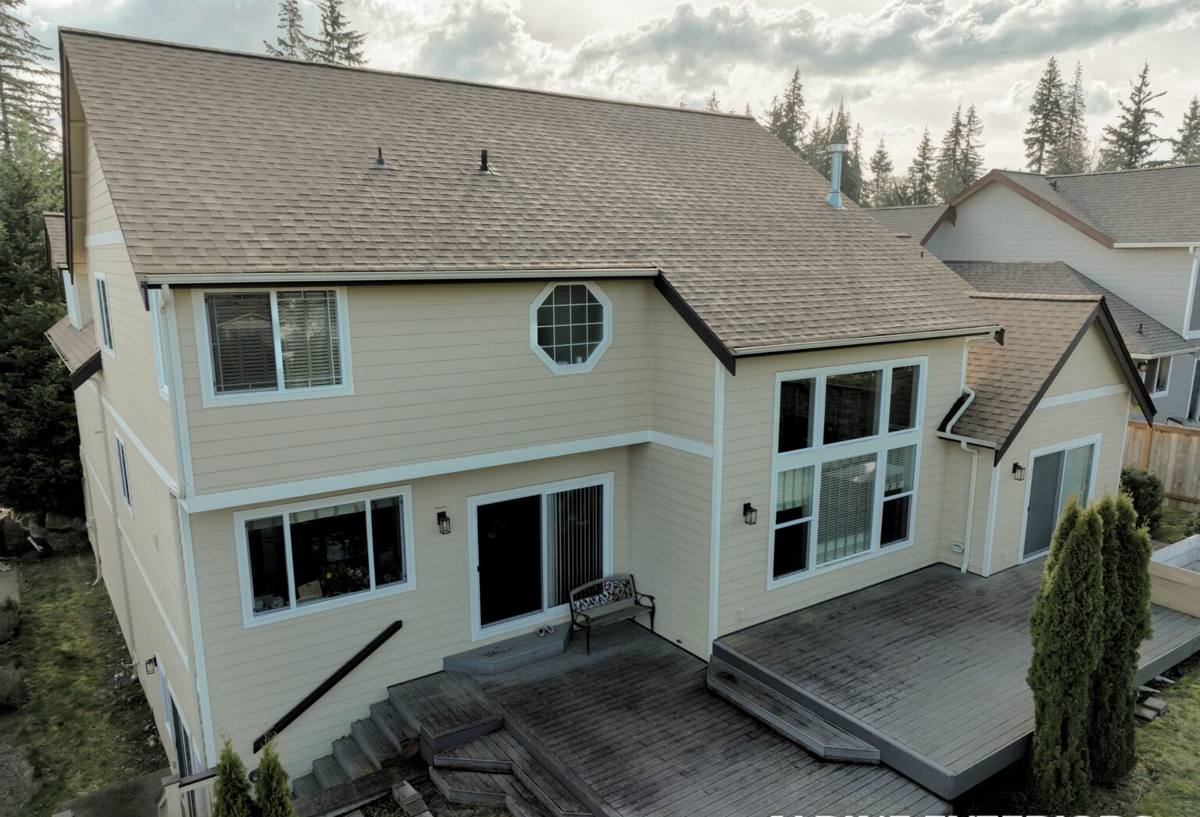
What Sudden Valley's Climate and Terrain Demand From New Windows
Shade and Moisture from the Tree Canopy
Many Sudden Valley lots sit under heavy conifer cover, which keeps homes cool in summer but also means less direct sun to dry out siding, trim, and window sills after a storm. Damp surfaces that stay damp longer are exactly what moss and algae need to take hold, and once moss establishes itself around a window frame it holds moisture against the material far longer than open rain exposure would. New-construction framing is the right time to plan for this — with drainage details and sill flashing that shed water instead of letting it pool against the frame.
Wind-Driven Rain and the Lake Effect
Whatcom County's marine climate pushes damp air off Puget Sound and across the lake basin, and Sudden Valley's hillside exposure means some elevations and orientations take wind-driven rain harder than others. A window that's watertight in a still rain can still leak under wind pressure if the flashing and sealant details weren't built for it. We factor orientation into how we detail each opening, not just the product spec.
Hillside Lots and Drainage
A lot of Sudden Valley building sites are sloped, which changes how water moves around a foundation and up against lower-floor window openings. Rough openings on downhill walls need extra attention to drainage planes and weep paths so water that does get behind the cladding has somewhere to go besides the window frame.
Getting New-Construction Installation Right
New-construction windows are installed before the exterior finish goes on, which is a real advantage over retrofit work — but only if the sequencing is done correctly. The steps that matter most:
- Rough openings checked for square, level, and correct size before the window ever shows up on site
- Water-resistive barrier (house wrap) integrated with the window flange in the correct shingle-lap order, not just taped on afterward
- Sill pan flashing installed under every opening so any water that gets past the frame drains back out, not into the wall cavity
- Corrosion-resistant fasteners and compatible sealants — mixing incompatible tapes and caulks is a common cause of early flashing failure in wet climates
- Head flashing and drip caps set to shed water away from the opening, especially on walls exposed to wind-driven rain
This is a coordination job as much as an install job. We work directly with framers, siding crews, and general contractors so the window installation lines up with what happens before and after it — house wrap, trim, and siding all need to lap correctly with the window flashing for the whole system to work.
Choosing Materials That Hold Up Here
There's no single "best" window material — the right choice depends on budget, maintenance appetite, and how exposed the opening is. Here's how the common options compare for a wet, shaded, Whatcom County build:
| Material | Moisture Resistance | Maintenance | Typical Cost Tier |
|---|---|---|---|
| Vinyl | Good — won't rot, but can warp with poor installation | Low | Entry to mid |
| Fiberglass | Very good — dimensionally stable in temperature swings | Low to moderate | Mid to upper |
| Aluminum-clad wood | Good exterior protection, wood interior needs care | Moderate | Upper |
| Solid wood | Requires diligent upkeep in this climate | High | Upper |
Our standard for new construction here leans toward vinyl and fiberglass for most openings, with clad-wood reserved for homeowners who want the interior wood look and are willing to keep up with exterior finish maintenance. We won't push a low-maintenance sales pitch on a product that's going to need real upkeep in a shaded, damp lot — that's a conversation we have honestly, before the order goes in.
Our New-Construction Window Process
- Plan review. We go over the architectural window schedule, check sizes and swing directions against the actual framing plan, and flag anything that looks off before ordering.
- Rough opening verification. Once framing is up, we confirm every opening is built to spec — square, plumb, and correctly sized — before windows arrive.
- Ordering and lead time. Custom sizes and specialty glass packages take longer to manufacture; we build the schedule around realistic lead times so the build doesn't stall waiting on windows.
- Flashing and installation. Sill pans, house wrap integration, and window setting happen in the correct sequence, coordinated with whoever is doing your siding.
- Sealing and trim-out. Interior and exterior sealant, trim, and hardware installed and tested.
- Final walk-through. Every window operated, checked for square and smooth function, and inspected for a clean, weathertight seal before we call the job done.
Energy Code and Performance Considerations
Washington's energy code sets minimum performance requirements for new-construction windows, and those minimums have gotten stricter over recent code cycles. For a Sudden Valley build, that generally means double-pane windows with low-E coatings as a baseline, with triple-pane or upgraded glass packages an option where a builder or homeowner wants better performance on north-facing or heavily shaded walls that never get direct sun to help with winter heat gain. We size glass packages to the specific wall and orientation rather than specifying one glass type for the whole house — a south-facing opening and a shaded, tree-covered north wall don't need the same glass.
We also coordinate window U-factor and air-leakage numbers with whatever energy compliance path your builder or designer is using for permitting, so there are no surprises at inspection.
What Drives the Cost of a New-Construction Window Package
| Factor | Why It Matters |
|---|---|
| Number and size of openings | More glass and larger units mean more material and labor |
| Material choice | Vinyl, fiberglass, and clad-wood carry different price tiers |
| Glass package | Standard double-pane vs. upgraded low-E or triple-pane glass |
| Custom shapes or sizes | Non-standard openings (arches, oversized units) cost more to manufacture |
| Site access | Hillside lots and limited crane or lift access on wooded sites add labor time |
We're not going to quote a whole-house number without seeing the plans and the site — but broadly, new-construction window packages scale with the size of the home and the glass package chosen, and a straightforward lot costs less to work on than a steep, wooded one with tight access.
Why Local Experience in Sudden Valley Matters
Sudden Valley isn't a typical suburban subdivision — it's a private, hilly, tree-covered community with its own roads and access patterns, and building crews who haven't worked there before sometimes underestimate site logistics: narrow or steep driveways, limited staging space on a wooded lot, and coordination around the community's private road system. A crew that already works in the area shows up knowing how to stage materials, where deliveries can and can't reach, and which lot orientations are going to need extra attention to flashing and drainage before the siding goes on.
That local knowledge also shows up in smaller ways — knowing which weeks of the year give you a realistic weather window for exterior work between Whatcom County's wet stretches, and not scheduling a critical flashing step the day before a system rolls in off the sound.
Protecting the Investment After Installation
New-construction windows are built to last, but a little homeowner attention keeps them performing the way they should in this climate:
- Rinse pollen, moss spores, and debris off frames and sills a couple of times a year, especially on shaded elevations
- Keep gutters and downspouts clear so overflow doesn't run down onto window heads
- Check exterior caulking annually and re-seal any cracked or separated joints before the wet season
- Trim back branches or foliage that keep a window's exterior surface shaded and damp longer than necessary
- Operate every window at least once each season so hardware doesn't seize up from disuse
If something does look off — a sticking sash, a soft spot in trim, a drafty corner — catching it early is a lot cheaper than catching it after water's gotten behind the wall.
If you're planning new construction or a major addition in Sudden Valley, we're happy to walk the plans with you and give you a straight, no-pressure estimate. Fill out the form below and we'll get back to you to talk through your project.