 Bellingham Window
 Siding Built for Puget's Weather, Not Just Any Weather
Puget sits close enough to the water that homes here take a different kind of beating than siding fifty miles inland. Salt-laden air off the Sound works into seams and fastener heads. Driving rain during fall and winter storms hits walls at an angle, not just straight down, which means siding has to shed water sideways as well as down. And for a good stretch of the year, low sun angles and persistent damp keep north- and west-facing walls shaded and wet longer than homeowners in drier climates ever have to think about. That combination — salt, wind-driven rain, and a long moss season — is exactly the kind of environment that separates siding materials that hold up from siding materials that just look good on install day.
We install exclusively James Hardie fiber cement siding, and Puget is a good example of why. This page covers what the local climate actually demands from a siding job, what correct installation looks like on a home in this specific area, and what our process looks like from first walkaround to final cleanup.
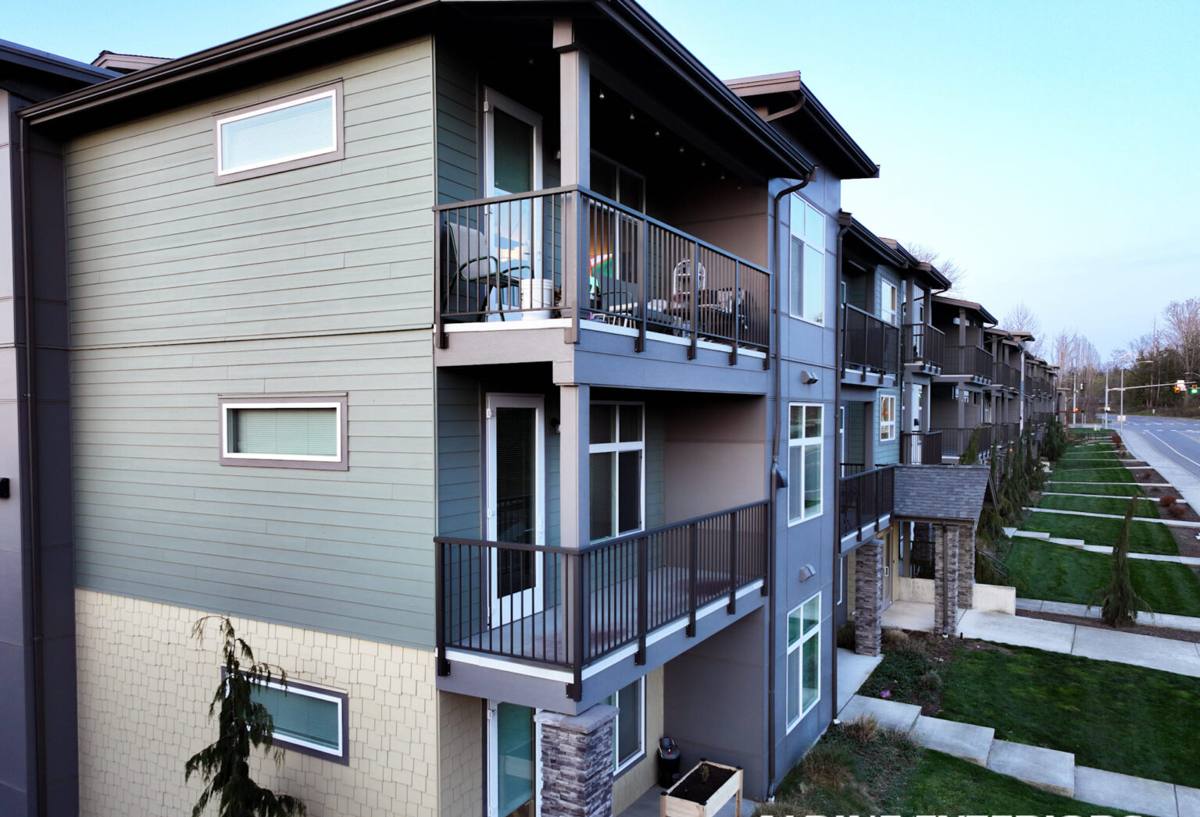
What Puget's Climate Actually Does to Siding
Salt Air and Corrosion
Homes closer to Bellingham Bay and the Sound deal with airborne salt that accelerates corrosion on anything metal — fasteners, flashing, trim connectors. Cheap or mismatched hardware on a siding job shows rust streaks and failure points years before the siding material itself would ever give out. The fix isn't exotic; it's using corrosion-resistant fasteners and flashing rated for coastal exposure, every time, not just on the street-facing elevation.
Driving Rain and Wall Assemblies
Wind off the water pushes rain into laps, seams, and butt joints that would stay dry in a calmer climate. This is a water-management problem more than a materials problem — it's about how the siding, the weather-resistant barrier behind it, and the flashing at every penetration work together as a system. A siding product can be excellent and still fail early if it's installed without proper drainage gaps, correct lap exposure, and flashed openings.
Moss, Shade, and Prolonged Moisture
Whatcom County's tree cover and cloud cover mean a lot of Puget homes have at least one wall that rarely gets direct sun. Moss and algae take hold on surfaces that stay damp, and once established, they hold moisture against the siding surface even longer, which is a real problem for materials that swell, rot, or delaminate when wet for extended periods. Fiber cement doesn't rot and doesn't provide the organic material moss needs to root into the substrate the way wood-based products can, which makes it a meaningfully better fit for shaded, moss-prone walls.
Why James Hardie Fiber Cement Fits This Environment
Fiber cement is cement, sand, and cellulose fiber — non-combustible, dimensionally stable, and unaffected by the moisture cycling that causes wood and wood-composite products to swell, cup, or rot over time. James Hardie engineers its HZ5 product line specifically for climate zones like ours, which see a lot of moisture and moderate freeze-thaw rather than extreme heat or extreme cold. That's a real distinction — siding engineered for a hot, dry climate zone doesn't perform the same way here.
The factory-applied ColorPlus finish matters just as much as the substrate in a climate like this. Field-applied paint on any siding material is the first thing to fail under UV exposure and repeated wet-dry cycling — it chalks, fades unevenly, and needs recoating on a cycle homeowners have to track and pay for. ColorPlus is baked on in a controlled factory process with a finish warranty backing it, so the color holds consistently across the whole house, including on shaded walls where mildew and moss growth would otherwise show discoloration fastest.
What a Correct Fiber Cement Installation Actually Involves
Fiber cement is only as good as the installation behind it. A rushed or generic install can undercut everything the product is engineered to do, and in a wet climate the mistakes show up faster. On every Puget project, correct installation means:
- A properly lapped weather-resistant barrier behind the siding, with all seams taped and all penetrations flashed before the first board goes up
- Correct minimum clearances from grade, roof lines, decks, and other flatwork — Hardie specifies these for a reason, and skipping them is one of the most common causes of early moisture damage
- Manufacturer-specified fastener type, length, and placement — coastal-rated fasteners driven at the correct depth, not overdriven or underdriven
- Correct lap exposure and butt joint treatment, with joints backed and sealed per Hardie's installation guidelines rather than just butted and caulked
- Flashing and proper gapping at every window, door, and utility penetration, since these are the highest-risk points for water intrusion
- Factory-mitered or properly caulked corners and trim details that stay tight through seasonal expansion and contraction
None of this is unusual or exotic — it's simply what the manufacturer's installation instructions call for. The problem is that skipping steps is invisible on install day and only shows up two, five, or ten years later as staining, soft trim, or a failed section of siding. We install to spec because that's the only way the material performs the way it's designed to in a climate that doesn't forgive shortcuts.
Our Process on Puget Homes
1. Walkaround and Assessment
We start with a full walkaround of the home, checking existing siding condition, trim, flashing, and any problem areas — especially shaded walls and spots where moss or staining are already visible. This tells us what's driving the need for new siding and whether there's underlying moisture damage to address before new siding goes up.
2. Scope and Product Selection
We walk through Hardie's plank, panel, and trim options and colors, and talk through what fits the home's exposure — for instance, whether a shaded elevation calls for extra attention to drainage detailing. We give a clear, honest scope before any work starts.
3. Tear-Off and Substrate Check
Old siding comes off and we check the sheathing underneath for rot or soft spots, particularly around window and door openings and at the base of walls, which is where water damage tends to concentrate in this climate. Any damaged sheathing gets addressed before the new weather barrier goes on.
4. Weather Barrier and Flashing
A new weather-resistant barrier goes on with correctly lapped seams, and every window, door, and penetration gets flashed before siding installation begins. This step is where most long-term water problems are prevented or created.
5. Installation
Hardie siding, trim, and accessories go on per manufacturer spec — correct fasteners, correct clearances, correct lap and joint treatment, on every elevation, not just the ones visible from the street.
6. Final Walkthrough and Cleanup
We walk the finished job with the homeowner, check caulking and trim details up close, and clean up the site fully before we consider the job done.
Signs a Puget Home May Need New Siding
- Persistent moss or algae growth that keeps returning after cleaning, especially on shaded walls
- Soft or spongy spots when you press on siding or trim, which usually means moisture has reached the substrate
- Paint that's peeling, bubbling, or chalking unevenly across different walls
- Visible gaps, warping, or separation at seams, corners, or trim boards
- Rust streaking near fasteners or flashing
- Rising energy bills that may point to a compromised weather barrier behind the siding
What Drives Siding Project Cost
| Factor | Why It Matters |
|---|---|
| Home size and wall area | More square footage means more material and labor hours |
| Number of stories | Two- and three-story homes require more scaffolding, staging, and safety setup |
| Existing siding removal | Tear-off and disposal of old material adds time, especially if multiple layers are present |
| Sheathing or substrate repair | Rot or moisture damage found during tear-off has to be fixed before new siding goes on |
| Trim and architectural detail | Homes with more corners, dormers, or trim work take longer to flash and finish correctly |
| Product line and profile | Plank width, panel style, and trim accessories vary in material cost |
| Site access | Tight lots, fencing, or limited staging area can add labor time |
We give a written, itemized estimate after the initial walkaround so there are no surprises once work starts.
Why a Local Crew Matters in Puget Specifically
Siding crews that work across a wide, varied region tend to install the same way everywhere. A crew that regularly works Puget and the surrounding Bellingham area knows which walls typically stay wet longest, where moss tends to establish first, and how driving rain off the water behaves against a wall assembly here versus a more sheltered inland lot. That local pattern recognition shows up in small decisions — extra attention to a shaded north wall, more conservative flashing at a low-clearance area near grade — that a generic install crew might not think to prioritize.
It also matters for accountability. A local crew is easy to reach if a question comes up after the job, and has a reputation in the community worth protecting on every house, not just the ones a homeowner might leave a review for.
Maintenance After Installation
Fiber cement is low-maintenance compared to wood or wood-composite siding, but "low-maintenance" doesn't mean "no maintenance" in a moss-prone climate. A periodic soft wash on shaded walls keeps moss and algae from getting a foothold, and an annual check of caulking at trim joints and penetrations catches small issues before they become water intrusion problems. Because ColorPlus finish is factory-applied and warrantied, homeowners aren't stuck on a repainting cycle the way they would be with field-painted siding — that's one less recurring cost and one less thing that can be done incorrectly by whoever gets hired to repaint it later.
If your Puget home's siding is showing its age or you're planning ahead for a replacement, we're happy to walk the property, answer questions honestly, and put together a clear estimate — no pressure, no obligation. Use the form below to get started.