 Bellingham Window
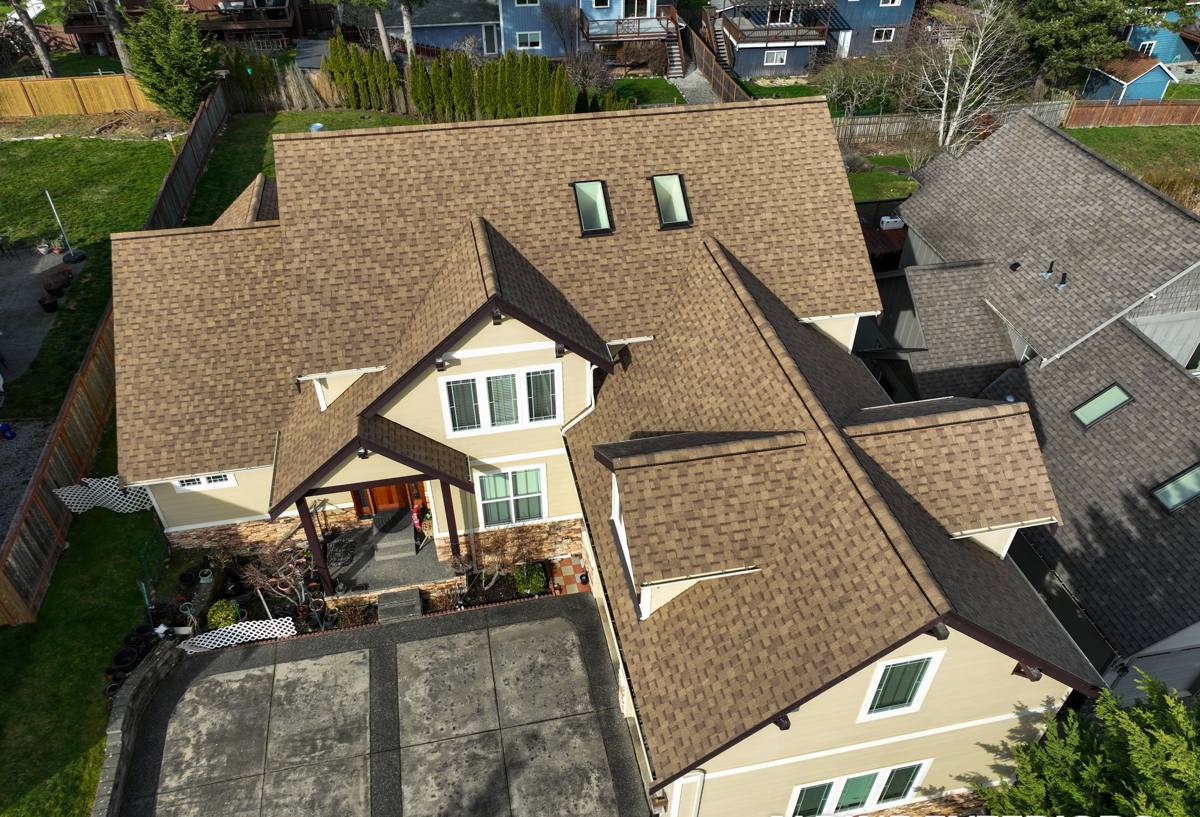
 New Roof Installation in Puget: Built for This Corner of Bellingham
Puget is a residential neighborhood within Bellingham, sitting inside Whatcom County's marine-influenced weather system along with the rest of the city. Homes here run the same gauntlet every roof in this part of Washington faces: salt-tinged air moving in off the water, rain that arrives sideways as often as it falls straight down, and a moss season that stretches across most of the year rather than a few wet months. None of that is unusual for this region. What it means practically is that a roof installed with generic, one-size-fits-all detailing tends to show its age faster here than the same roof would in a drier inland climate.
Bellingham Window Co installs new roofs for homes throughout Puget and the rest of Bellingham, alongside our window, siding, and deck work. We treat a roof the way we treat any other exterior component — as one part of a system that has to work together, not a standalone product that just needs to look good going on. On a new roof installation specifically, that means building every layer underneath the visible surface to hold up against this neighborhood's actual weather, not just the national average conditions a shingle's warranty is rated for.
What Puget's Climate Does to a Roof
Salt Air and Corrosion
Whatcom County sits close enough to the water that salt-carrying air reaches homes well beyond the immediate shoreline, and Puget is no exception. Over years, that steady exposure works on exposed metal — flashing, fasteners, vent caps, gutter hangers — corroding lower-grade materials faster than a roof's shingles themselves tend to wear out. A roof can look structurally sound from the ground while its flashing and fasteners are quietly losing holding power at every penetration.
Driving Rain and Wind-Driven Water Intrusion
Rain in this part of Washington rarely falls straight down for long. Wind pushes it sideways and sometimes upward under shingle edges and along flashing laps, which is a very different load than a calm, straight-down rain event. That sideways pressure is a bigger test of installation detail than of the shingle product itself — underlayment laps, flashing integration, and how tightly a roof deck is sealed all matter more here than they would in a sheltered, drier market.
A Long Moss and Algae Season
Mild temperatures and frequent moisture give moss and algae a long window to establish themselves, especially on shaded or north-facing roof slopes that don't get much direct sun. Moss doesn't just sit on top of a roof — its rhizoids work down into the granule layer and lift shingle edges as they grow, and left long enough, it holds moisture against the roof surface for months at a stretch. A new roof in Puget needs to account for this from day one, not treat moss as a maintenance afterthought.
Signs a Puget Home Needs a New Roof, Not Another Repair
Most homeowners don't need to get on the roof to spot the warning signs. A walk around the exterior and a look in the attic usually tell the story.
- Shingles curling at the edges, cupping, or missing outright across more than one area of the roof
- Granules collecting heavily in gutters or at the base of downspouts
- Moss or dark algae streaking covering large sections rather than a single shaded corner
- Flashing around chimneys, vents, or skylights that's visibly rusted, lifted, or repeatedly caulked over
- Daylight visible through the roof boards or dark water staining on the attic decking
- A history of two or more leak repairs in different spots over the past few years
- Soft or spongy sheathing when pressed on, especially near eaves or valleys
One or two of these on their own might point to a targeted repair. Several together, particularly on a roof that's already near the end of its expected lifespan, usually mean the honest answer is a full replacement rather than another round of patching.
Roofing Materials: What Actually Holds Up in Puget
There's no single correct material for every home — budget, roof pitch, and how long you plan to stay in the house all factor into the decision. What matters is understanding how each option actually performs under sustained coastal moisture and a long moss season before committing to one.
| Material | Moisture & Moss Behavior | Typical Maintenance | Realistic Lifespan Here |
|---|---|---|---|
| Architectural (laminate) asphalt shingles | Solid performer with algae-resistant granule options; needs good ventilation to avoid deck moisture buildup | Periodic moss removal on shaded slopes | 20-25 years |
| 3-tab asphalt shingles | Thinner profile wears and loses granules faster under sustained wet conditions | More frequent moss and granule monitoring | 12-18 years |
| Standing seam metal | Sheds moisture and moss well; performance depends heavily on fastener and flashing quality | Low; occasional flashing and seam checks | 35-50 years with proper detailing |
| Composite/synthetic shingle | Resists moisture absorption better than wood; moss resistance varies by product | Low to moderate | 25-40 years |
| Wood shake | Absorbs moisture readily; moss and rot risk is highest of this group without diligent upkeep | High; regular treatment and moss control | 15-20 years with consistent maintenance |
Algae-resistant granule technology, available on most architectural shingle lines, is worth serious consideration on any Puget roof with shaded or north-facing slopes — it doesn't stop moss forever, but it measurably slows the dark staining and organic growth that standard granules develop within a few wet seasons.
What a Correct New Roof Installation Involves
A new roof is more than pulling off the old material and nailing down new shingles. In a climate that delivers this much wind-driven rain and sustained dampness, what goes on underneath the visible surface determines whether the roof performs for decades or starts leaking within a few years.
Tear-Off and Deck Inspection
A full tear-off exposes the decking underneath, which is the only reliable way to catch moisture damage from a failing old roof before it's sealed up under a new one. Any soft, delaminated, or rotted sheathing gets replaced before anything new goes down.
Underlayment
A quality synthetic or self-adhered underlayment gives a second line of defense if wind ever drives rain up under a shingle tab, which happens more often here than in calmer, drier climates.
Flashing
New flashing at every chimney, skylight, sidewall, and valley — not caulk smeared over old, corroded flashing. This is one of the most common places a cut-rate roof job cuts corners, and exactly where salt-air corrosion does the most damage over time.
Ventilation
Proper intake and exhaust ventilation keeps the attic deck dry and helps prevent the moisture buildup that leads to premature sheathing rot, which matters in a climate with this much sustained damp weather.
Ice-and-Water Shield at Vulnerable Areas
Extra protection at eaves and valleys, where water is most likely to back up or pool during heavy, sustained rain events rather than a quick passing shower.
Our Process for a Puget Roof Installation
- An in-person roof inspection, including a look in the attic, before we quote anything
- A written, itemized estimate covering tear-off, underlayment, flashing scope, and material choice
- Scheduling that accounts for Whatcom County's wetter months and builds in reasonable weather flexibility
- Full tear-off with deck inspection, and any needed sheathing repair done before new material goes down
- Installation of underlayment, flashing, and the roofing material itself to manufacturer specification
- A final walkthrough and full site cleanup, including a magnetic sweep for stray fasteners
We build every step around what this specific climate does to a roof, not a generic national checklist. That's the difference between a roof that looks right on install day and one that's still performing correctly a decade or two later.
Cost Factors for a New Roof in Puget
Two estimates for the same roof can differ by thousands of dollars, and the gap is rarely about one contractor simply overcharging. It usually reflects real differences in scope and material grade.
| Cost Factor | What It Affects | Why It Matters in Puget |
|---|---|---|
| Tear-off vs. layover | Labor scope and ability to inspect the deck | A full tear-off catches decking damage from long-term moisture that's common under older roofs in this climate |
| Underlayment type | Water resistance under the roofing material | Synthetic and self-adhered underlayments handle wind-driven rain far better than older felt products |
| Shingle or material grade | Wind rating, algae resistance, expected lifespan | Algae-resistant granules directly address the length of the local moss season |
| Flashing scope | Valleys, chimneys, skylights, wall intersections | Most roof leaks in this region start at flashing, not the open field of the roof |
| Ventilation upgrades | Attic moisture control and roof lifespan | Poor ventilation traps moisture that accelerates deck rot and moss growth from underneath |
| Roof pitch and access | Labor time, staging, and safety equipment | Steeper or harder-to-access roofs on older Puget homes add real labor time |
When comparing bids, ask each contractor to walk through exactly what's included — tear-off depth, underlayment type, flashing scope, and cleanup. A detailed written estimate is worth more than a one-line price, even when the number is higher.
Why a Crew That Already Works Puget Matters
A crew that installs roofs across Bellingham through every season sees firsthand how salt air, wind-driven rain, and moss actually behave on real houses over years, not just how a shingle performs on a manufacturer's spec sheet. That shows up in practical decisions on install day: how much ventilation a given attic actually needs, how far up a valley the ice-and-water shield should run given how this neighborhood's roofs tend to hold moisture, and which flashing details are worth the extra time so a homeowner isn't dealing with a leak two winters later. It also means understanding that a shaded, tree-covered lot and an open, sun-exposed one nearby can call for different maintenance expectations, even on the same street.
Get a Free, No-Pressure Estimate
If your Puget home's roof is showing its age, or you'd simply like an honest read on where it stands, we're glad to take a look. Reach out using the form below to schedule a free, no-pressure estimate for a new roof installation — no upsell script, just a straight answer about what your roof actually needs.