 Bellingham Window
 Why Siding Wears Faster on Puget-Area Homes
Homes in the Puget community sit close enough to the water that salt-laden air is simply part of daily life. That air carries moisture and fine salt particles that settle on exterior surfaces, and over years it accelerates corrosion of fasteners, breaks down paint films, and works into any seam or crack in the cladding. Add in Whatcom County's long stretch of driving rain each fall and winter, plus a moss season that can run from October well into spring, and you have a climate that is genuinely harder on siding than most of the country deals with.
None of this means a house here is doomed to constant repairs. It means the siding system has to be chosen and installed with this specific exposure in mind. A product and installation approach that works fine sixty miles inland, away from the Sound, can fail years early on a lot that catches wind straight off the water. That is the starting point for every siding replacement we do in this area: design for the site you actually have, not a generic Pacific Northwest average.
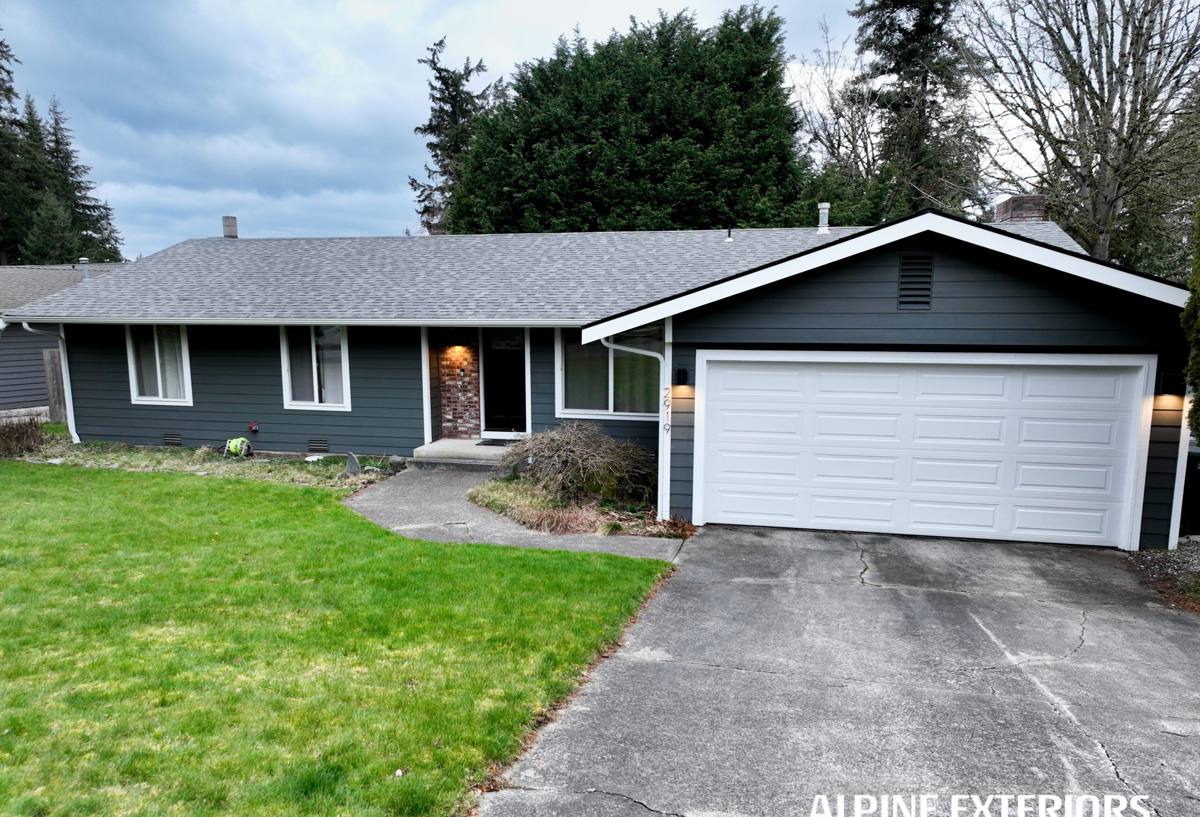
Signs a Puget Home's Siding Has Reached the End of Its Life
Siding failure on the water side of Bellingham rarely shows up as one dramatic problem. It is usually a handful of smaller signs that, taken together, mean it is time to stop patching and start planning a replacement.
- Soft or spongy spots when you press on the siding, especially near the bottom courses and around window and door trim
- Paint that is peeling, bubbling, or chalking heavily within just a few years of the last paint job
- Persistent moss or dark streaking that returns within weeks of cleaning, particularly on north- and west-facing walls
- Visible gaps, warping, or cupping in individual boards or panels
- Rust streaks below nail heads or fasteners
- A musty smell in an adjacent room, or interior wall discoloration, which often points to moisture already past the siding
- Siding that is more than 20-25 years old and made of untreated wood, older hardboard, or a builder-grade product not rated for coastal exposure
One or two of these on their own might mean a repair. Several together, especially combined with the home's age and its exposure to wind off the Sound, usually mean the underlying water-management layer has been compromised and a full replacement is the more honest recommendation.
What a Correct Siding Replacement Actually Involves
Siding replacement is not just swapping old boards for new ones. Done correctly, it is a full rebuild of how the wall manages water, and that is where most of the long-term performance comes from — not the siding material alone.
Full Tear-Off and Inspection
We remove the old siding down to the sheathing rather than installing over it. This is the only way to actually see what is happening underneath — soft sheathing, rotted framing, old flashing that was never installed correctly, or trim details that were sealed instead of properly lapped. On a home exposed to salt air and driving rain, hidden damage behind old siding is common enough that we plan for it rather than treat it as a surprise.
Repair Before Cover-Up
Any damaged sheathing or framing gets repaired or replaced before anything new goes on the wall. Covering rotten wood with new siding just hides the problem for a few more years; it does not fix it.
Water-Resistive Barrier and Flashing
A new weather-resistive barrier goes on correctly lapped, shingle-style, so water is always directed outward and down, never trapped behind the cladding. Flashing at windows, doors, deck ledgers, and any roof-to-wall intersections gets installed to actually shed water — this is one of the most common places we find shortcuts on older homes near the water, and it is one of the most important details to get right given how much rain this area sees.
Rainscreen Gap
On most Puget-area replacements we install a rainscreen gap — a thin drainage space between the barrier and the new siding. It lets any moisture that does get past the cladding drain and dry out instead of sitting against the wall, and it also lowers the risk of moss and mildew taking hold on the siding face itself, which matters given how long this area's moss season runs.
Siding Installation to Manufacturer Spec
Fastener type, spacing, and placement, joint treatment, and clearance from grade and roof lines all follow the manufacturer's published installation instructions. This is not a formality — it is what keeps the warranty valid and what determines whether the siding actually performs the way it is engineered to.
Why We Install Only James Hardie Fiber Cement
We do not install vinyl, LP SmartSide, Cemplank, Allura, primed spruce, or cedar siding. That is a deliberate standard, not a lack of options, and it comes down to how these products hold up specifically in salt air, sustained rain, and heavy moss exposure over decades, not just in a showroom or a dry climate.
Wood species like cedar and primed spruce look good going up, but they are organic materials in a climate that stays damp for much of the year. Moss, algae, and rot are a constant maintenance fight, and repainting or restaining on a cycle is part of the deal for as long as you own the house. Vinyl is low-maintenance in a different way — it does not rot — but it can warp or become brittle with age and UV exposure, its seams and butt joints are a long-term weak point for wind-driven rain, and it offers little in the way of impact resistance. Engineered wood products like LP SmartSide use resin-treated wood strands, which is an improvement over raw wood, but any breach in the factory coating still exposes wood fiber to moisture, and that is a real risk on a site that gets this much sustained rain.
James Hardie fiber cement is made from cement, sand, and cellulose fiber. It does not rot, it is not a food source for moss or mildew the way wood is, it holds paint and factory finish far longer than wood substrates, and it is non-combustible, which is worth something anywhere wildfire smoke and ember exposure has become a statewide concern. Hardie also engineers specific product lines (their HZ5 formulation) for the wetter, more variable climate zones on the West Coast, which is a meaningful difference from a one-size-fits-all siding product. The ColorPlus factory finish is baked on under controlled conditions, which holds up better against fading and chipping than field-applied paint, and it carries a strong transferable warranty when installed to spec — which is exactly why our installation process follows Hardie's requirements to the letter.
How Siding Options Compare for a Site Like This
| Material | Behavior in Salt Air & Rain | Moss/Algae Resistance | Typical Maintenance |
|---|---|---|---|
| James Hardie Fiber Cement | Excellent — cement-based, engineered HZ5 line for wet coastal climates | High — not an organic food source | Occasional wash; factory finish holds up for years |
| Cedar / Primed Spruce | Fair — absorbs moisture, prone to cupping and rot over time | Low — organic material feeds moss and mildew | Regular re-staining or repainting; moss treatment |
| Vinyl | Fair — seams and joints vulnerable to wind-driven rain; can warp with age | Moderate — surface growth is common but doesn't feed on the material | Low, but limited repair options if damaged |
| Engineered Wood (LP SmartSide) | Good if coating stays intact; risk rises once the surface is breached | Moderate — resin-treated but still wood-based | Periodic inspection of seams and cut edges |
Our Process for a Puget Siding Replacement
- On-site assessment. We walk the exterior, check for soft spots and signs of moisture, and look at how the home is currently oriented to wind and rain off the Sound.
- Written scope and estimate. You get a clear breakdown of tear-off, repairs, water-management upgrades, and the Hardie product line and profile recommended for your home.
- Tear-off and sheathing inspection. Old siding comes off, and any hidden damage gets documented and addressed before we move forward.
- Barrier, flashing, and rainscreen installation. This is the layer that actually keeps water out — we do not shortcut it to save a day of labor.
- Hardie siding installation to spec. Fastening, spacing, and joint details follow manufacturer requirements so the warranty stays intact.
- Final walkthrough. We go over the finished work with you before calling the job done.
What Drives the Cost of a Replacement
Every home is different, and we will not put a number on your project until we have actually looked at it, but a few factors consistently move the price up or down on jobs in this area.
| Factor | Why It Matters |
|---|---|
| Extent of hidden damage | Rotted sheathing or framing found during tear-off adds repair scope that can't be known until the old siding is off |
| Home size and wall complexity | More corners, dormers, and trim details mean more labor and material cuts |
| Siding profile chosen | Lap, shingle, and panel Hardie profiles carry different material and installation costs |
| Existing water management | Homes with outdated or missing flashing need more rebuild work at doors, windows, and roof lines |
| Site access | Tight lots, second-story exposure, or limited staging space can affect labor time |
Why It Matters That We Already Work in This Community
A crew that regularly works Puget-area homes already knows what this exposure does to a wall over time, without needing to learn it on your project. We know to expect more moisture behind older siding on the sides that face the water, we know which flashing shortcuts show up most often on homes built before current code required better water-resistive barrier detailing, and we know how much of a difference a properly built rainscreen gap makes in a moss season that can stretch for more than half the year. That familiarity shortens the assessment, reduces surprises during tear-off, and means the recommendations we make are based on what actually happens to siding here, not a generic checklist.
It also means we are not guessing at product selection. Bellingham and the surrounding Whatcom County coastline see enough sustained rain and salt exposure that the HZ5 Hardie formulation, correct clearance details, and a real drainage plane are not optional upgrades — they are what keeps a replacement from turning into a repeat job in ten years.
After the Job: Keeping Fiber Cement Siding Performing
One of the practical benefits of switching to Hardie fiber cement is how little upkeep it asks for compared to wood, but "low-maintenance" is not "no-maintenance." A simple annual routine goes a long way in this climate:
- Rinse the siding with a garden hose once or twice a year to clear salt residue and organic buildup, especially on walls that face prevailing wind and rain
- Walk the exterior each fall and check caulking at trim, windows, and doors for cracking or gaps
- Keep gutters clear so overflow doesn't run down the siding face repeatedly in one spot
- Trim back vegetation that keeps a wall shaded and damp, since that is where moss takes hold fastest
- Address any impact damage or chipped finish promptly rather than letting it sit through a wet winter
If you're seeing signs of wear on your Puget-area home, or you just want an honest read on how much life is left in your current siding, we're glad to take a look. Reach out for a free, no-pressure estimate using the form below.