 Bellingham Window
 South Hill's Climate Puts Real Demands on Vertical Siding
South Hill sits up above the rest of Bellingham, and that elevation cuts both ways. Homes up here catch more wind off Bellingham Bay and take driving rain straight into their walls during a Whatcom County winter, but many lots are also shaded by mature trees, which keeps siding damp longer after a storm passes. That combination — wind-driven moisture on one side of the house and slow-drying shade on the other — is exactly the kind of exposure that separates siding materials that hold up from siding materials that don't.
Board and batten is a vertical siding profile, and vertical siding sheds water differently than horizontal lap siding. Done right, the battens direct rain down and away from the seams. Done wrong — with the wrong fastening pattern, the wrong gap behind the panel, or a material that swells and shrinks with moisture — those same seams become the entry point for rot, mildew, and the moss that Bellingham's long wet season is famous for. On South Hill specifically, we see more moss growth on north-facing and tree-shaded elevations than almost anywhere else in the city, simply because those walls stay wet the longest.
Why Board & Batten Fits South Hill's Character Homes
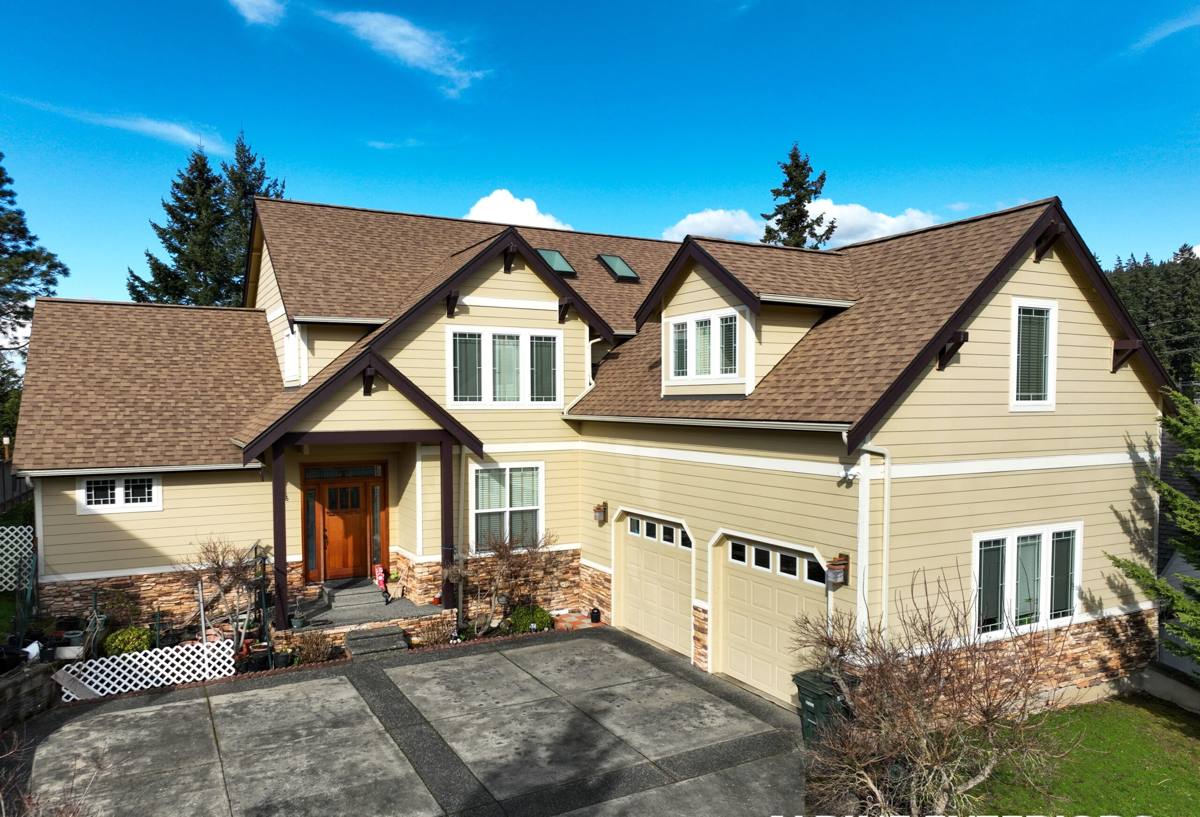
South Hill has a strong mix of older character homes and updated builds, and board and batten shows up in both. It's a natural fit for gable accents, dormers, and garages on more traditional homes, and it's become the go-to look for full-house farmhouse-style exteriors on newer construction and remodels. The vertical lines read as taller and more architectural than flat lap siding, which is part of why we get so many requests for it on the hill's more visible, elevated lots.
The look only holds up if the material underneath it does. A board and batten profile with wide, flat panels and thin battens has more surface area exposed to sun, rain, and temperature swings than a lapped profile does. That's not a reason to avoid it — it's a reason to be precise about what goes into it.
What Correct Board & Batten Installation Actually Involves
Substrate and Weather-Resistive Barrier
Everything starts underneath the siding. A weather-resistive barrier — installed continuously, lapped correctly, and detailed around every window and penetration — is what actually keeps bulk water out of the wall assembly. Vertical siding depends on this layer even more than horizontal siding does, because the battens and panel seams run straight down the wall instead of overlapping like shingles.
Vertical Panel Spacing and Fastening
Fiber cement panels need a gap behind them for drainage and airflow, and they need to be fastened according to the manufacturer's exposure and wind-load tables — not just "however the last job was done." South Hill's wind exposure means fastening schedules matter more here than on a sheltered in-town lot.
Batten Placement and Flashing
The battens themselves need consistent spacing, proper fastening into framing (not just into the panel), and correctly flashed transitions at windows, corners, and the base of the wall. This is the detail work that either sheds water for thirty years or quietly lets it in behind the trim for five.
Caulking and Paint Line
Factory-finished panels reduce how much field caulking and painting is needed, which matters in a climate where a freshly caulked joint doesn't always get a dry, curing window before the next rain rolls in off the bay.
Why We Install James Hardie for Board & Batten Projects
We install James Hardie fiber cement exclusively — we don't do vinyl, LP SmartSide, Cemplank, Allura, or bare cedar. For board and batten specifically, that means HardiePanel vertical siding paired with HardieTrim battens, both engineered as a matched system rather than parts sourced from different manufacturers and hoped to work together.
Fiber cement doesn't expand and contract with humidity the way wood-based products do, which matters on a profile that's mostly flat panel exposed to weather. It's also non-combustible, which is worth something to homeowners thinking about wildfire smoke seasons even here in Western Washington. Hardie's ColorPlus factory finish is baked on and warrantied against fading and chipping, so the color you pick is the color that's still there in a decade — no repainting a whole gable just because one section faded unevenly. And Hardie backs its siding with a strong, transferable limited warranty, which protects the investment if a South Hill home changes hands.
None of this means other products are junk. Cedar looks great when it's new. Vinyl is inexpensive. LP SmartSide is engineered wood, not solid lumber, and performs better than old-school wood siding. But each of them asks the homeowner to take on a trade-off — more maintenance, more moisture sensitivity, or a shorter realistic lifespan in a wet coastal climate — that we're not willing to install and then have to explain later.
Material Comparison for South Hill's Wet, Shaded Exposure
| Material | Moisture Behavior | Moss & Mildew Resistance | Ongoing Maintenance |
|---|---|---|---|
| James Hardie fiber cement | Dimensionally stable, doesn't swell or rot | Resists mildew growth; factory finish sheds moss more easily than wood | Occasional wash; no repainting for the life of the finish |
| Cedar (natural or primed) | Absorbs moisture, prone to cupping and checking | Susceptible to moss, algae, and rot in shaded areas | Regular refinishing and moisture monitoring |
| Vinyl | Doesn't rot, but can warp under heat or trap moisture behind it | Moss grows on the surface in shaded, damp spots | Low, but panels can crack and aren't repairable in sections |
| LP SmartSide (engineered wood) | Better than solid wood, but still wood-based and moisture-sensitive at cut edges | Requires sealed edges to resist moisture intrusion | Periodic caulk and paint upkeep, especially at seams |
Our Process for a South Hill Board & Batten Project
1. On-Site Assessment
We walk the specific elevations that take the worst weather — usually the sides facing prevailing wind and rain, and any shaded, tree-covered walls — and check the existing siding, trim, and sheathing for hidden moisture damage before we ever talk product.
2. Tear-Off and Prep
Old siding comes off, the substrate gets inspected and repaired as needed, and a new weather-resistive barrier goes on correctly lapped and taped at every seam and penetration.
3. Panel and Batten Installation
HardiePanel goes up to Hardie's fastening and clearance specifications, followed by HardieTrim battens set to consistent spacing and fastened into framing.
4. Flashing, Trim, and Finish Detail
Windows, corners, and the base of the wall get flashed and detailed before any caulking happens, and we check weather conditions so caulk and touch-up paint actually get a proper cure.
5. Final Walkthrough
We go over the finished job with the homeowner and point out anything they should keep an eye on going forward, particularly on shaded elevations where moss shows up first.
Maintenance That Actually Matters in This Climate
- Rinse siding annually, focusing on shaded, north-facing, or tree-covered walls where moss and algae take hold first
- Trim back branches and vegetation that keep a wall damp or block airflow
- Check caulking at trim joints and window flashing every year or two, since gaps here are where water gets behind the siding
- Clear debris out of gutters and downspouts before the fall rains so overflow doesn't run down the wall face
- Address any soft trim, staining, or bubbling paint promptly rather than waiting for the next dry season
Why Hiring a Crew That Already Works South Hill Matters
South Hill isn't a flat, uniform tract — lot grading, tree cover, and sun exposure change block by block, and that changes how a siding job should be detailed. A crew that's already worked the neighborhood knows to spend extra attention on the shaded, slow-drying elevations and to plan around Bellingham's rain patterns instead of getting caught mid-install by them. We're also familiar with the City of Bellingham's permitting process for exterior work, which keeps a project moving instead of stalling on paperwork.
Just as important is knowing when to say no to a shortcut. A board and batten job with wide, exposed panels leaves very little room for a rushed installation — every gap, missed fastener, or skipped flashing detail is a callback waiting to happen in a climate this wet. We'd rather take the time to do it correctly the first time.
If you're considering board and batten siding for a South Hill home, we're happy to take a look and give you a straightforward, no-pressure estimate — just fill out the form below.