 Bellingham Window
 Siding Replacement Built for South Hill's Microclimate
South Hill sits above downtown Bellingham on a wooded, sloped section of the city, and that position creates a specific set of conditions for exterior siding. Homes here catch bay-driven moisture off Bellingham Bay, sit under mature tree canopy that keeps north and shaded walls damp for days after a storm, and face the long, gray stretch of Pacific Northwest winter where rain doesn't so much fall as linger. Add in Whatcom County's salt-tinged coastal air and you get a combination that is genuinely tougher on siding than what a home twenty miles inland deals with.
That combination is why we treat South Hill siding replacement as its own conversation, not a copy-paste version of what we'd recommend elsewhere in Bellingham. The slope, the tree cover, and the exposure on a given lot all change how a wall assembly needs to be built and what material belongs on it.
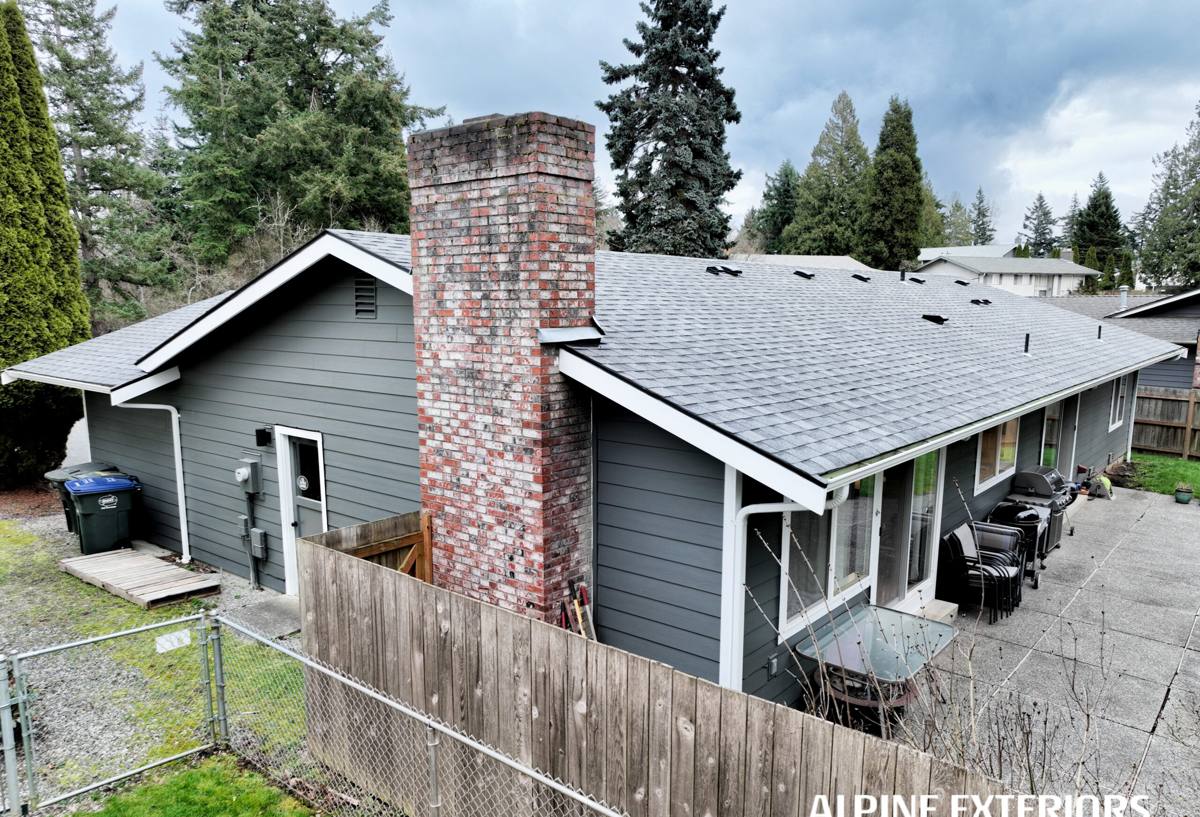
Why Siding Fails Faster on South Hill Than Homeowners Expect
Most South Hill homeowners don't call us because their siding looks bad — they call because something changed. A section stayed damp longer than it used to. Paint started bubbling in the same spot every spring. A contractor doing gutter work pointed out soft trim. These are the predictable results of three climate factors stacking on top of each other:
Driving Rain and Wind-Driven Moisture
Bellingham's storms frequently come in sideways off the water, which pushes moisture into seams, laps, and butt joints that would stay dry in a straight-down rain. Siding systems that rely on caulk and paint film as their primary defense — rather than proper drainage and flashing — lose that fight over time.
Moss, Algae, and Shade
The tree cover that makes South Hill attractive also means many walls get limited direct sun. Moisture sits on the surface longer, and moss and algae take hold on materials that hold water at the surface. Left unaddressed, that organic growth traps moisture against the substrate underneath.
Salt Air and Coastal Exposure
Proximity to the bay adds a low but constant level of salt-laden air to the mix. Over years, this accelerates the breakdown of unprotected fasteners, thin paint films, and any material that wasn't engineered with coastal exposure in mind.
Signs Your South Hill Home Needs Siding Replacement
Some of these are obvious from the ground; others require getting closer to the wall. If you're noticing more than one or two of these, it's worth having someone look before the underlying structure is affected.
- Paint that's peeling, bubbling, or needs repainting more often than every 7-10 years
- Soft or spongy spots when you press on siding, especially near the bottom courses or under windows
- Visible warping, cupping, or gaps opening up at seams and butt joints
- Persistent moss or algae staining that returns shortly after cleaning
- Rising heating bills that suggest the wall assembly is no longer insulating or sealing properly
- Siding that's original to a home built more than 20-25 years ago, particularly if it's wood, hardboard, or older vinyl
- Visible rot or staining on trim boards, window casings, or corner boards
What a Correct Siding Replacement Actually Involves
Siding replacement is not just removing old material and nailing up new panels. On a South Hill home, where moisture management is the whole game, the details underneath the visible siding matter as much as the siding itself.
Tear-Off and Substrate Inspection
Once the old siding is off, we inspect the sheathing underneath for rot, soft spots, or prior water damage. This is often the first time hidden moisture damage becomes visible, and it needs to be addressed before anything new goes up — covering damaged sheathing with new siding just hides the problem.
Weather-Resistive Barrier
A properly lapped weather-resistive barrier (WRB) is what actually keeps bulk water out of the wall assembly; the siding itself is the first line of defense, not the only one. On a home exposed to driving rain, correct lap direction and sealed penetrations matter more than they would in a drier climate.
Flashing at Every Penetration
Windows, doors, hose bibs, vents, and any other wall penetration need proper flashing that directs water back out and away from the framing. This is one of the most common places we find shortcuts on older installs, and it's usually where the rot starts.
Correct Fastening and Clearances
Fiber cement siding has specific fastening patterns, and manufacturer clearances from grade, roof lines, and decks exist for a reason — they keep splash-back and standing moisture away from the bottom edge of the siding. Skipping these clearances is a common cause of early failure at the lowest courses, which is exactly where we see the most damage on older South Hill homes.
Why We Install Only James Hardie Fiber Cement
We standardized on James Hardie siding across every job we do, including here on South Hill, and we don't install vinyl, LP SmartSide, or other fiber cement brands. That's a deliberate choice based on how these products perform over decades in a climate like this one, not a sales preference.
James Hardie fiber cement is non-combustible, holds paint and factory finish far longer than wood or hardboard products, and doesn't swell, delaminate, or absorb water the way engineered wood siding can when it stays damp under tree cover. Hardie also engineers specific product lines — its HZ5 formulation — for wetter, harsher climate zones like the Pacific Northwest, which is a meaningful difference from siding built to a single national spec. The factory-applied ColorPlus finish is baked on under controlled conditions and backed by a real finish warranty, which matters on shaded walls where paint film is under constant moisture stress.
None of this means other products are unusable everywhere — it means that for the specific demands of a coastal, tree-covered, high-rainfall market like Bellingham, Hardie is the material we're willing to put our name behind.
Our Siding Replacement Process
We keep the process straightforward and communicate at each stage, since siding replacement is disruptive and homeowners deserve to know what's happening and why.
- On-site assessment — we walk the exterior, check current siding condition, note problem areas, and discuss goals and budget.
- Written estimate — a clear scope covering removal, any substrate repair anticipated, materials, and installation.
- Tear-off and inspection — old siding comes off, sheathing is inspected, and we flag any damage found before covering it back up.
- WRB and flashing installation — the moisture management layer goes in correctly before any new siding is hung.
- Hardie installation — installed to manufacturer specification for fastening pattern, clearances, and joint treatment.
- Final walkthrough — we review the finished work with you and address any questions before calling the job complete.
What Affects the Cost of a South Hill Siding Project
Every home is different, but these are the factors that most commonly move the price of a siding replacement up or down on South Hill properties specifically.
| Cost Factor | Why It Matters | South Hill Consideration |
|---|---|---|
| Home size and story count | More square footage and higher walls mean more material and labor, plus access equipment for two- and three-story sections | South Hill's sloped lots often mean walk-out lower levels or taller uphill-facing walls |
| Existing siding removal | Some materials come off cleanly; others (old hardboard, multiple layers) take longer | Older South Hill homes sometimes have layered siding from prior partial repairs |
| Substrate repair | Any rotted or damaged sheathing found during tear-off needs to be replaced before new siding goes on | Shaded, tree-covered walls are the most likely spot for hidden moisture damage |
| Trim and detail work | Corner boards, window casings, and architectural trim add labor time | Varies by home style — older South Hill homes often have more trim detail than newer builds |
| Siding profile and finish | Lap width, texture, and ColorPlus finish color all affect material cost | No regional premium, but darker ColorPlus finishes may be worth discussing given UV exposure on sun-facing walls |
| Access and site conditions | Steep grades, limited driveway space, and mature landscaping affect setup and staging time | Common on sloped South Hill lots with established trees and gardens |
Why a Crew That Already Works South Hill Matters
Siding work on a sloped, tree-covered lot is logistically different from a flat, open one. Scaffolding and staging have to account for grade changes, material staging space is often tighter, and protecting mature landscaping during tear-off takes more planning than on a newer subdivision lot. A crew that has already worked South Hill's terrain isn't guessing at any of this.
There's also a permitting and code side to it. Bellingham and Whatcom County both have requirements around exterior work, and a crew that pulls permits and works in this jurisdiction regularly moves through that process without the delays that come from unfamiliarity. None of that is exotic knowledge, but it's the kind of thing that either saves you time or costs you time, and it's worth asking a contractor directly whether they've worked in your specific neighborhood before.
Caring for Your New Siding Through Moss Season
Correctly installed Hardie siding needs less maintenance than most alternatives, but South Hill's shaded, damp conditions still call for a bit of seasonal attention:
- Rinse shaded, north-facing, or tree-covered walls once or twice a year to keep moss and algae from establishing
- Keep gutters clear so overflow doesn't run directly down siding during heavy storms
- Trim back branches and foliage that keep a wall shaded and damp longer than necessary
- Check caulking at trim joints and penetrations periodically, since even correctly installed siding relies on maintained sealant at transitions
- Address any new soft spots, staining, or paint failure quickly rather than waiting for it to spread
If your South Hill home is showing signs of siding wear, or you'd just like an honest read on where things stand, we're happy to take a look. We offer free, no-pressure estimates and will tell you plainly what we see — whether that's a full replacement, a repair, or nothing urgent at all. Reach out using the form below to get started.