 Bellingham Window
 Roofing in Sudden Valley: A Different Set of Conditions
Sudden Valley sits in a wooded, lake-adjacent setting on the south side of Bellingham, and that setting changes what a roof has to deal with compared to a house out in the open or closer to downtown. Heavy tree canopy holds shade and moisture on a roof plane long after a storm has passed. Needles, cones, and leaf litter collect in valleys and behind chimneys. Combined with Whatcom County's damp Pacific Northwest climate, that adds up to conditions that are genuinely harder on a roof than what a lot of manufacturers' warranty language assumes.
We work on homes in this neighborhood regularly, and we've built our new roof installation process around what actually happens to a roof here over ten, twenty, and thirty years — not just what looks good on a spec sheet in dry weather.
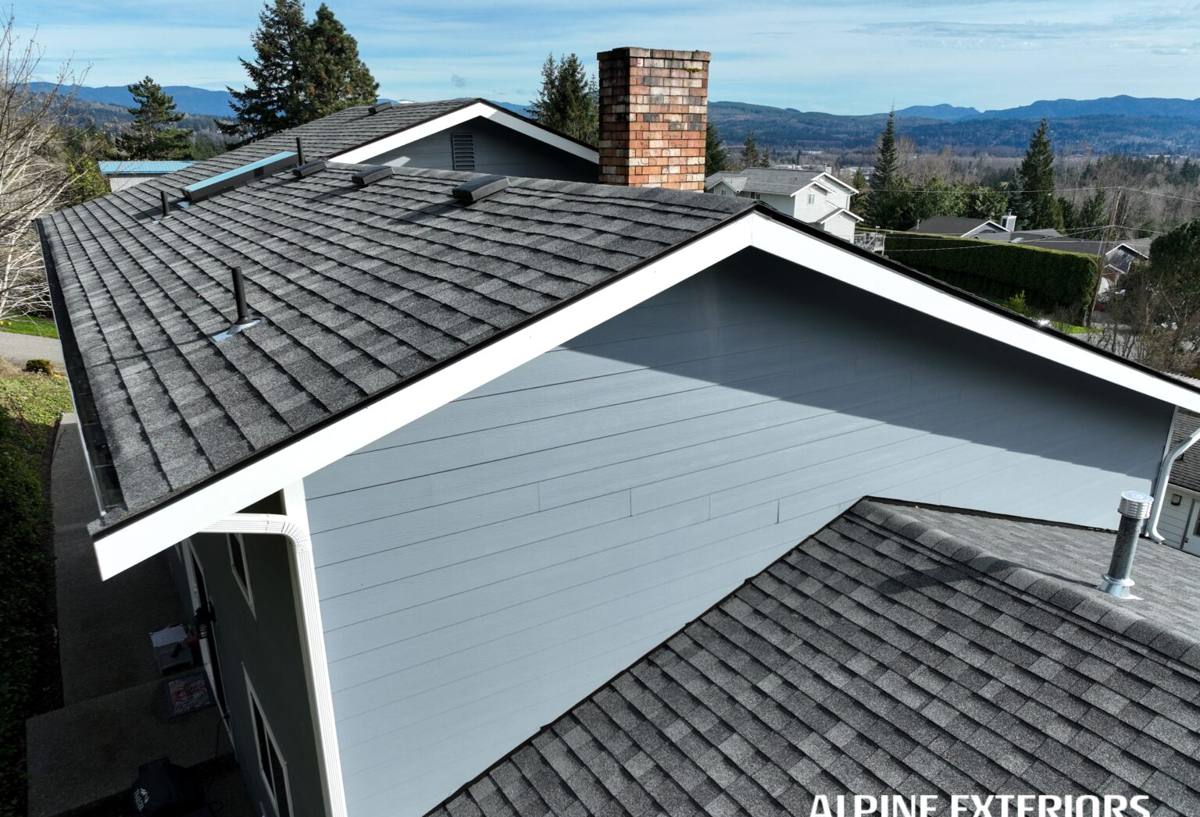
What Bellingham's Climate Does to a Roof Over Time
The regional climate is the starting point for every roofing decision we make, and it shows up in three main ways.
A Long Moss Season
Bellingham's moss season runs long — cool, wet weather for much of the year gives moss and algae plenty of time to establish, especially on north-facing slopes and anywhere shade lingers. In Sudden Valley, tree cover extends that shade even further, so moss can take hold on parts of a roof that would stay drier on a more exposed lot. Left alone, moss holds moisture against the shingle surface, lifts tabs, and shortens the life of the roofing material underneath it.
Driving Rain
Storms off the water bring wind-driven rain that doesn't just fall straight down — it gets pushed sideways under shingle edges, around vents, and into any flashing detail that isn't sealed correctly. A roof that would perform fine in a calmer climate can leak here if the flashing, underlayment, and fastening weren't done with wind-driven rain specifically in mind.
Salt Air and Coastal Moisture
Bellingham's proximity to salt water adds airborne moisture and mild corrosive exposure to the mix, which matters for metal flashing, fasteners, and any exposed hardware on a roof system. Materials and fasteners that aren't rated for that exposure corrode faster than homeowners expect, and corroded flashing is one of the more common causes of a roof leak that has nothing to do with the shingles themselves.
None of this means a roof in Sudden Valley is doomed to fail early. It means the installation details — the ones that are easy to shortcut and hard to inspect after the fact — matter more here than they would somewhere drier and more exposed to sun and wind.
Signs a Sudden Valley Home Needs a New Roof, Not Another Repair
Repairs make sense for isolated damage on a roof that's otherwise sound. A full replacement is the right call when the underlying material is worn out everywhere, not just in one spot. Here's what we look for when we're deciding which one a home actually needs:
- Granule loss heavy enough that you can see bare, shiny patches on multiple shingles, not just one or two
- Shingles that are cupping, curling, or cracking across large sections of the roof, especially on south- and west-facing slopes
- Moss or algae growth that comes back within a season or two of cleaning, even after treatment
- Soft spots, sagging, or visible movement in the roof deck when walked or inspected from the attic
- Daylight visible through the roof deck from inside the attic, or water staining on rafters and sheathing
- Flashing around chimneys, skylights, and valleys that's rusted, lifted, or was clearly patched with sealant instead of properly reinstalled
- A roof that's at or past the manufacturer's expected service life for its material and has multiple issues at once rather than one clean problem
- Rising energy bills paired with poor attic ventilation, which often points to a roof and ventilation system that need to be addressed together
If a roof shows two or three of these at once, patching individual spots usually just delays a bigger cost. We'll always tell you honestly if a repair is the more sensible option — a full tear-off isn't the right recommendation for every situation, and we'd rather give you an accurate read than sell a bigger job than the roof needs.
What a Correct New Roof Installation Actually Involves
A new roof is only as good as the parts nobody sees once it's finished. Here's what we consider non-negotiable on every installation, and why it matters more in a wooded, damp-climate setting like Sudden Valley.
Full Tear-Off and Deck Inspection
We remove existing roofing down to the deck rather than layering over old material. That lets us actually see the plywood or OSB underneath, replace any sections that are soft, delaminated, or water-damaged, and confirm the deck is fastened properly before anything new goes down. Roofing over a compromised deck just hides a problem that will resurface.
Underlayment Built for Wet Climates
We install synthetic underlayment as the standard moisture barrier, with ice-and-water shield in the areas most exposed to wind-driven rain and ice damming — valleys, eaves, and around every roof penetration. This is the layer that protects the deck if wind ever pushes water up under the shingle edge, which is exactly the failure mode driving rain causes.
Flashing Done Right, Not Just Sealed
Chimneys, skylights, sidewalls, and valleys get properly formed and step-flashed rather than relying on sealant or roofing cement to bridge a gap. Sealant fails; correctly lapped flashing sheds water on its own and doesn't depend on caulk staying intact for twenty years. Given the corrosive potential of coastal air, we also pay attention to flashing material compatibility so dissimilar metals aren't left to corrode against each other.
Ventilation That Matches the Attic
Balanced intake and exhaust ventilation keeps the attic close to outside temperature and humidity, which reduces condensation on the underside of the deck and helps prevent the kind of trapped moisture that feeds rot and, indirectly, moss growth on the surface above. We size and place vents based on the specific attic, not a one-size-fits-all vent count.
Fasteners and Hardware Rated for the Exposure
We use corrosion-resistant fasteners and flashing hardware throughout, since standard hardware corrodes faster in this region's air than most homeowners expect. It's a small line-item cost that prevents an expensive failure years down the road.
Choosing a Roofing Material for a Wooded, Lake-Adjacent Lot
There's no single "best" roofing material — the right choice depends on the home's exposure, budget, and how much long-term maintenance the homeowner wants to take on. Here's how the common options stack up specifically against Sudden Valley's shade and moisture conditions:
| Material | Moss & Moisture Resistance | Typical Lifespan | Maintenance Reality |
|---|---|---|---|
| Architectural (dimensional) asphalt shingle | Good, especially with algae-resistant granules | 25-35 years | Periodic moss/debris cleaning recommended under tree cover |
| Standing seam metal | Very good — sheds moisture quickly, little surface for moss to grip | 40-60 years | Low; occasional debris clearing near valleys |
| 3-tab asphalt shingle | Fair — less wind rating and shorter surface life under heavy moss pressure | 15-20 years | More frequent moss treatment needed to hit expected lifespan |
| Synthetic/composite shingle | Good, varies by product line | 30-50 years (product-dependent) | Low to moderate; check manufacturer guidance for shaded roofs |
We typically recommend architectural shingle or metal for shaded, moss-prone lots like most of Sudden Valley, simply because both hold up better against sustained moisture exposure than lighter-weight options. That's a maintenance and lifespan judgment, not a claim that other products are defective — every material on this list is a legitimate choice under the right conditions, and we'll walk through the honest trade-offs for your specific roof before you decide.
What Drives the Cost of a New Roof Here
Every roof is priced individually after an on-site look, but the same handful of factors move the number up or down on almost every Sudden Valley project:
| Cost Factor | Why It Matters Here |
|---|---|
| Roof pitch and access | Steeper roofs and tree-obstructed access slow crew movement and material staging |
| Deck condition | Wooded lots with a history of moss and trapped moisture more often need deck repair, discovered during tear-off |
| Number of penetrations | Chimneys, skylights, and vents each need individual flashing work, which adds labor |
| Material choice | Metal and heavier architectural shingle cost more up front but typically cost less over the roof's full life in a moss-prone setting |
| Debris removal and disposal | Tree-heavy lots often generate more tear-off debris and yard cleanup than an open lot |
We give a written, itemized estimate before any work starts, so you can see exactly what's driving the price rather than a single lump-sum number.
Our Process for Sudden Valley Projects
- On-site inspection — we walk the roof and attic, check the deck, ventilation, and flashing, and note anything specific to the home's tree exposure or shade pattern.
- Written estimate — a clear scope of work and itemized pricing, with material options explained honestly, including trade-offs.
- Scheduling around weather — we plan installation windows with Bellingham's rain patterns in mind rather than rushing a tear-off into an exposed deck ahead of a storm.
- Tear-off and deck repair — full removal of old roofing, deck inspection, and replacement of any damaged sheathing before anything new is installed.
- Installation — underlayment, flashing, ventilation, and final roofing material installed to manufacturer specification and to our own standards for wind-driven rain and moss resistance.
- Final walkthrough — we go over the finished roof with you, including basic maintenance guidance for a shaded, tree-adjacent lot.
- Cleanup — full site and gutter debris cleanup before we consider the job done.
Why a Crew That Already Works Sudden Valley Matters
A roofing crew that's worked this neighborhood before already understands the practical realities: which slopes tend to hold shade and moss longest, how tree cover affects access and staging, and what flashing and ventilation details actually hold up here versus in a drier or more exposed part of Whatcom County. That local familiarity shows up in small decisions — where to route extra ice-and-water shield, which vents to prioritize, how to sequence a tear-off around a wet forecast — that a crew unfamiliar with the area might miss on a first pass.
It also means faster, more accurate estimates. We're not guessing at how Sudden Valley's setting affects a roof; we've seen it directly on homes in the same conditions yours is in.
Maintaining Your New Roof After Installation
A correctly installed roof still benefits from basic upkeep, especially under tree cover:
- Clear gutters and valleys of needles and debris at least once or twice a year
- Have moss treated promptly if it reappears, rather than letting it spread across a full slope
- Keep overhanging branches trimmed back to reduce shade, debris, and physical contact with the roof surface
- Schedule a periodic inspection every few years, or after any major storm, to catch small flashing or fastener issues before they become leaks
We're happy to take a look at a roof we didn't install, too, if you just want an honest read on its condition.
If you're weighing a new roof for a Sudden Valley home, we're glad to come take a look and put together a straightforward, no-pressure estimate — no obligation, just an honest assessment of what your roof actually needs. Use the form below to get started.