 Bellingham Window
 Sunnyland sits close enough to Bellingham Bay that salt-laden air, wind-driven rain, and long stretches of shade and moisture are simply part of owning a home here. Siding in this neighborhood works harder than siding in a dry inland climate, and it shows in ways homeowners notice years before they expect to: fading paint, soft trim, streaks of moss, and seams that start to gap. A correctly installed, correctly specified siding system is the difference between a home that ages gracefully through Whatcom County winters and one that needs attention every couple of years.
Why Sunnyland's Location Puts Extra Stress on Siding
Sunnyland is a residential neighborhood close to the water, and that proximity matters more for siding than most homeowners realize. Salt air carries fine airborne moisture that settles on exterior surfaces daily, not just during storms. Combined with Bellingham's marine climate, this creates a near-constant low-grade exposure that standard building materials were never designed to shrug off indefinitely.
Salt Air and Driving Rain
Wind off the bay pushes rain sideways into wall assemblies, not just straight down onto roofs. That means siding, trim, and the seams between them need to resist not just water landing on them, but water being forced horizontally into laps, corners, and butt joints. Materials and installation details that work fine in a sheltered inland yard can fail here within a few seasons if they're not built for driving rain.
The Long Moss Season
Shaded north walls, mature landscaping, and Bellingham's extended damp season give moss and algae months at a time to establish themselves on siding that holds moisture. Once moss gets a foothold in a seam or behind a warped panel, it holds water against the wall assembly around the clock, which accelerates rot, paint failure, and fastener corrosion. Siding that can't shed water quickly, and that isn't finished with a coating built to resist organic growth, loses this fight over time.
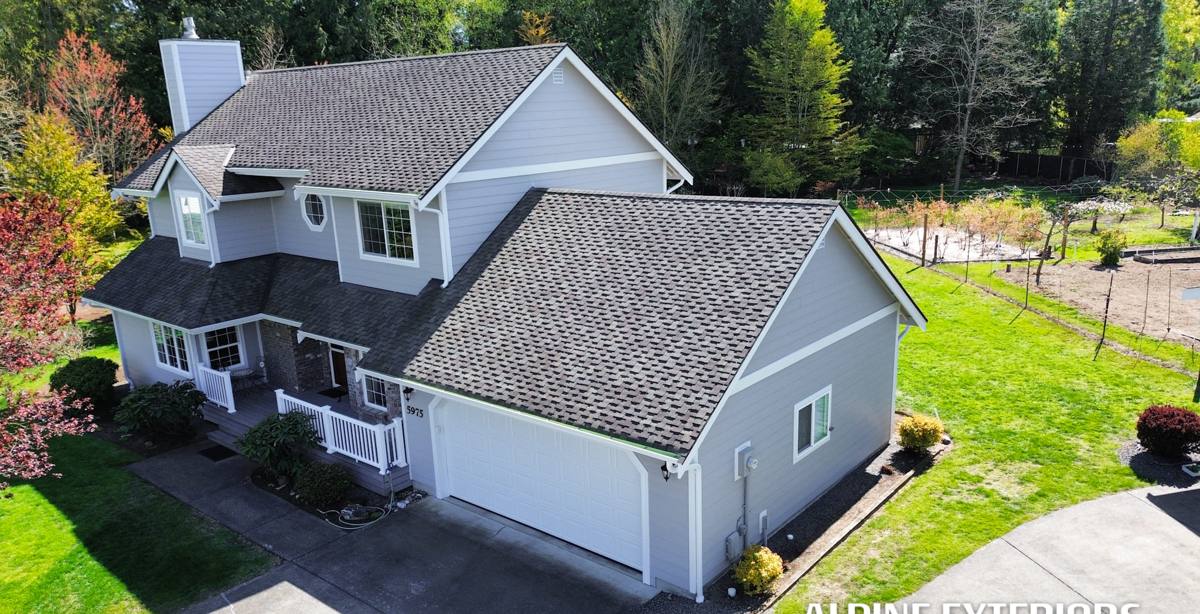
What a Correct Siding Installation Actually Involves
Siding is a system, not a single product. A house can have the "right" siding material and still fail early if the assembly behind it is wrong. For a Sunnyland home, we treat the following as non-negotiable, not optional upgrades.
Weather-Resistive Barrier and Drainage Plane
Every wall gets a continuous weather-resistive barrier installed before siding goes on, lapped correctly at every seam, window, and penetration so water is directed out and down instead of into the wall cavity. On homes exposed to driving rain and salt air, we also look at whether a drainage gap behind the siding makes sense, so any moisture that does get past the cladding has somewhere to go besides the sheathing.
Flashing at Every Transition
Windows, doors, decks, roof-to-wall intersections, and utility penetrations are where siding jobs fail first. Proper step flashing, head flashing, and kick-out flashing at rooflines aren't cosmetic details; they're what keeps water from tracking behind the cladding at exactly the spots where it's already trying hardest to get in.
Fastening to Spec
Fiber cement siding has manufacturer-specified nailing patterns, fastener types, and minimum embedment depths for a reason: get it wrong and panels can crack, pop loose in wind, or trap moisture at the fastener head. We follow James Hardie's published installation instructions exactly, including corrosion-resistant fasteners appropriate for a coastal-influenced climate.
Caulking and Joint Treatment
Butt joints, trim edges, and penetrations get sealed with a high-quality, paintable exterior sealant rated for the movement and moisture exposure siding sees here. Skipping this step, or using a bargain caulk, is one of the most common shortcuts that turns into a callback within two years.
Why We Install Only James Hardie Fiber Cement
We made a deliberate decision to install one siding system: James Hardie fiber cement. We don't offer vinyl, LP SmartSide, Cemplank, Allura, primed spruce, or cedar, and we're upfront about why. Each of those products has legitimate strengths, but none of them holds up as consistently as Hardie does under the specific combination of salt air, driving rain, and moss pressure that Sunnyland homes face.
Where Other Products Fall Short Here
Vinyl siding can warp or buckle under direct heat and impact, and its seams and J-channels give wind-driven rain more places to work its way behind the cladding over time. Wood products, including primed spruce and cedar, require diligent, ongoing maintenance to resist the rot and moss growth that this climate encourages, and a missed repaint or a failed caulk joint can let moisture in fast. Engineered wood products like LP SmartSide perform well in many climates but are still wood-based at the core, which means edge and cut-end sealing has to be perfect and maintained forever, something that's hard to guarantee over a 20- or 30-year ownership period.
What Hardie Gets Right
James Hardie fiber cement is non-combustible, dimensionally stable across our wet winters and drier summers, and finished at the factory with ColorPlus Technology, a baked-on finish that resists fading and holds up to the coastal UV and salt exposure far better than field-applied paint. Hardie's HZ product lines are engineered specifically for climate zones like ours, and the company backs installations with a strong transferable warranty when the product is installed to spec, which is exactly the kind of paper trail we want standing behind our work.
| Factor | James Hardie Fiber Cement | Vinyl / Engineered Wood / Cedar |
|---|---|---|
| Moisture behavior near the bay | Dimensionally stable, resists warping from salt air and rain | Can warp, swell, or require constant sealed edges |
| Moss and algae resistance | Factory finish resists organic growth better than field paint | Often needs regular cleaning and repainting to keep pace |
| Fire resistance | Non-combustible fiber cement | Vinyl can melt/deform; wood is combustible |
| Finish longevity | Baked-on ColorPlus finish, factory-controlled | Field-applied paint or stain, wears faster in this climate |
| Long-term maintenance | Periodic washing and caulk checks | Ongoing repainting, edge sealing, or panel replacement |
Our Installation Process for Sunnyland Homes
The process is the same discipline on every job, adjusted for each home's exposure and existing condition. Here's the sequence, start to finish:
- On-site inspection of existing siding, trim, and sheathing to check for hidden rot or moisture damage before we quote anything
- Careful removal of old siding and trim, with sheathing repaired or replaced wherever water has already gotten in
- Installation of a continuous, correctly lapped weather-resistive barrier over the entire wall surface
- Flashing installed at every window, door, deck ledger, and roof-to-wall transition before a single piece of siding goes up
- James Hardie panels, planks, or shingles installed to manufacturer spec, with corrosion-resistant fasteners and correct nailing patterns
- All butt joints, trim edges, and penetrations sealed with exterior-rated sealant
- Final walk-through with the homeowner to review the finished work and care instructions
We sequence work around Bellingham's weather rather than fighting it, scheduling wall openings for stretches of drier weather where possible so sheathing and framing aren't left exposed longer than necessary.
Signs a Sunnyland Home May Need New Siding Now
Because moisture problems in this climate often start behind the siding, by the time damage is visible from the street it's usually been developing for a while. Watch for:
- Persistent moss or algae streaking that comes back within weeks of cleaning
- Paint that's peeling, bubbling, or chalking faster than a normal repaint cycle would suggest
- Soft spots, especially near the bottom courses, corners, or below windows
- Visible gaps, warping, or buckling in panels or lap seams
- A musty smell near exterior walls or noticeably higher indoor humidity
- Siding that's original to an older home and has never been replaced
Any one of these on its own might be minor. Several together usually mean the wall assembly, not just the surface, needs attention.
Maintenance After Installation
James Hardie siding is far lower-maintenance than wood or vinyl, but "low-maintenance" doesn't mean "no-maintenance," especially this close to the water. A simple annual routine goes a long way: rinse the siding to remove salt residue and organic buildup before it can establish itself, check caulking at joints and trim for cracking or separation, and keep gutters and downspouts clear so water isn't dumping directly onto wall sections. Trimming back vegetation that shades and dampens north- and west-facing walls also helps slow moss growth before it starts. None of this is difficult, but skipping it is how even a good installation ends up looking tired ahead of schedule.
What Affects the Cost of a Siding Project Here
Every home is different, but the same handful of factors drive most of the cost variation we see on Sunnyland projects. We give firm, itemized quotes after seeing the home in person rather than estimating blind, but this is what typically moves the number:
| Cost Factor | Why It Matters |
|---|---|
| Condition of existing sheathing | Hidden rot found during tear-off means repair work before new siding can go on |
| Home size and wall complexity | More corners, dormers, and trim details mean more labor and material waste |
| Siding profile chosen | Lap, shingle, and panel Hardie products differ in material and labor cost |
| Existing siding removal | Multiple layers of old material add demolition and disposal time |
| Access and site conditions | Tight lots, mature landscaping, or multi-story walls affect staging and labor |
| Trim and flashing scope | Full flashing replacement costs more up front but prevents early callbacks |
Why Local Experience in Sunnyland Matters
A crew that already works in and around Sunnyland knows what to expect before they pull the first piece of old siding off a wall: where moisture tends to hide behind north-facing walls, how much punishment a west exposure takes in a winter storm, and which details on a Bellingham home tend to have been shortcut by whoever installed the siding decades ago. That familiarity shows up in fewer surprises during tear-off, more accurate quotes, and a finished installation that's actually built for the exposure the home sees, not a generic spec sheet. It also means a crew that's still around, in the same area, if a warranty question ever comes up down the road.
If your Sunnyland home needs new siding, or you're not sure whether what's on the walls now is holding up the way it should, we're happy to take a look. Reach out for a free, no-pressure estimate using the form below.